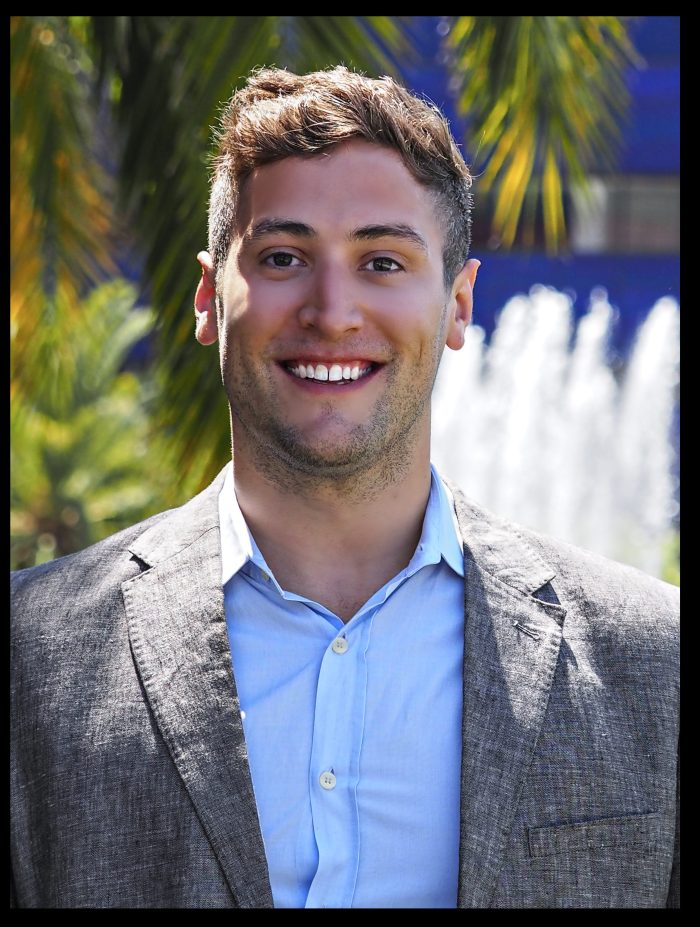
Lucky by John M. Erickson

This past weekend, I was asked by an individual why I decided to get my Ph.D. in American Religious History focusing on LGBTQ spirituality and sexuality.  Now, I’ve been asked this before, and if you know anything about me, you know I like to shock people at times, so my usual response is: “I have always been fascinated with people tell me I was going to hell.” 

It’s almost the end of Pride Month and I wanted to take a moment to reflect on where we’ve come and where we must go.

This past weekend, I was asked by an individual why I decided to get my Ph.D. in American Religious History focusing on LGBTQ spirituality and sexuality.  Now, I’ve been asked this before, and if you know anything about me, you know I like to shock people at times, so my usual response is: “I have always been fascinated with people telling me I was going to hell.” 

Continue reading “Lucky by John M. Erickson”

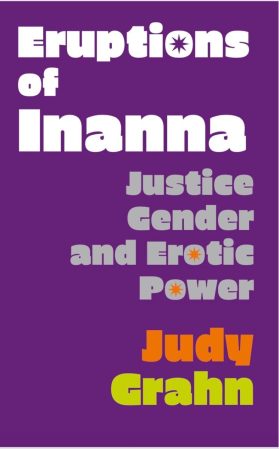
Eruptions of Inanna: Justice, Gender, and Erotic Power by Judy Grahn BOOK REVIEW by Carolyn Lee Boyd

Judy Grahn Eruptions of Inanna

Any new book by Judy Grahn is cause for celebration. For decades, Grahn has been a lyrical and passionate poet, author, mythographer, and cultural theorist whose work  features both goddess wisdom and contemporary culture centering on women and queer people. Nightboat Books has just published her newest book, Eruptions of Inanna: Justice, Gender, and Erotic Power, which offers ancient yet fresh world views with which to approach such issues as injustice, sexuality and gender, climate change, and more just when we need it most. 

In Eruptions of Inanna, she brings what she calls her “poet’s eye” to eight stories featuring the Sumerian goddess Inanna as well as religious practices of those devoted to her. She explores how these have directly influenced our world and, in her words, can continue to “feed our needs and help us take better care of each other and our world.” According to Grahn, Inanna “is a combination of human, creature, erotic and other energetic forces, and civilization. She also inherited very old powers that grew out of women’s rituals” (55).  Her essence engenders sovereignty and self-worth, especially in women and queer people.  She is a goddess of love, espousing passion and the joy of eroticism as integral to both life and society. She practices an expansive justice that creates positive outcomes in response to horrific acts. She creates a civilization of the arts, beautiful and useful crafts, abundance, and a jubilant communal life. She demands respect for nature and ecological sustainability.  

Continue reading “Eruptions of Inanna: Justice, Gender, and Erotic Power by Judy Grahn BOOK REVIEW by Carolyn Lee Boyd”

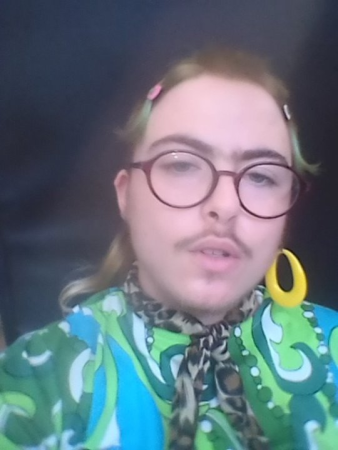
A Shared Bridge by Lou Hartmann and Diana


A fellow college classmate, Diana, and I wrote this poem together as we were inspired by the likes of Adrienne Rich and Sara Ahmed. We wanted to touch on the animosity between trans folk and cis women that often exists between them, and bridge our collective and often shared feelings of joy, rage and injustice into writing. We welcome you to walk the bridge with us. 

Pt. 1

What is a woman? A woman can’t satisfy.
Because if she’s not “woman” enough in one aspect or the other she’s not deserving of that title at all.
Gender is a societal construct so I wouldn’t really know how to define a woman.
For many, being a woman means that her brain is in between her legs but how do we persuade them that it’s fucking not?
I know a lot of women who aren’t born with the biology of what a woman is expected to be
I know a lot of women who don’t have breasts, who don’t carry typical reproductive organs within their systems.

Continue reading “A Shared Bridge by Lou Hartmann and Diana”

Subversive Sister Saints by Angela Yarber


As the American Embassy was bombed in 1999, I was hunkered in a Russian Orthodox Church, gazing at the brooding, whitewashed faces of icons, hands raised in endlessly frightening benediction. Hundreds of men met my eye, as I found myself asking, “Where are all the women?” In 2005, the sun peaked over the horizon on Mount Sanai as I entered the chapel at Saint Catherine’s Monastery, which houses the oldest collection of Christian orthodox icons in the world. As a sensory overload accosted my eyes, ears, and nose, I scanned the scene to find only two women crammed among all the icons; one was a nameless daughter sacrificed by her own father. Where were all the women? A few years later, I knelt at the Temple of 1,000 Buddhas in Thailand. Not a woman could be found. Where are all the women?

For over a decade, I’ve painted folk-feminist icons of revolutionary women from history and mythology, a subversively artistic attempt to answer my own question by painting the women who have been ignored, excluded, or strategically erased. From Pauli Murray to Sarasvati, Gloria Anzaldua to Papahanoumoku, this work continues to be a gift, joy, and a tremendous part of the mission of my non-profit, the Tehom Center, which empowers marginalized women by teaching about revolutionary women through art, writing, retreats, and academic courses. Continue reading “Subversive Sister Saints by Angela Yarber”

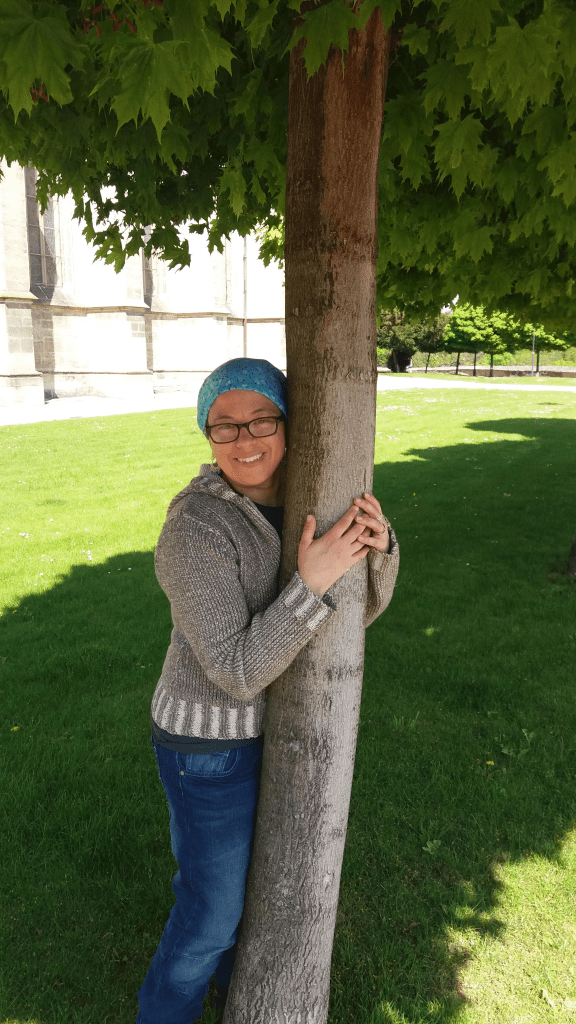
Post-Hysterectomy Reflections: Not All Women Bleed by Ivy Helman

Around the age of 8, or maybe 10, I learned my aunt had had a hysterectomy.  I remember visiting her house either shortly before or after the operation.  I can’t remember which, and it doesn’t really matter.  At the time, I don’t think I even knew what a uterus was or that I too had one.  
Just like me, she had suffered from uterine fibroids. This year, at the end of May, after nearly two years of various treatments including a failed myomectomy and ineffective prescription medication, I followed in her footsteps.  It was really the only option for me, although it was not an easy decision.  After surgery, there was the usual post-op pain and restrictions, but luckily my body has been healing well.  

Since the surgery, and as I prepare to teach “Gender and Religion” again in the fall, I’ve been thinking about a conversation I had with a student the first time I offered the class at Charles University.  We were about to begin discussing the article, “Why Women Need a Feminist Spirituality,” by Judith G. Martin, when a student pressed me on why we weren’t acknowledging that not all women bleed.  What he really wanted was to make sure that in our category of women, we were including transwomen.   Continue reading “Post-Hysterectomy Reflections: Not All Women Bleed by Ivy Helman”

When Life Hands You Lemons… by John Erickson

“When life hands you lemons, sometimes you have to make applesauce.”

I’ve been thinking a lot about something my grandmother would always tell me: “When life hands you lemons, sometimes you have to make applesauce.” I know, it sounds crazy, but life right now appears to be more on the crazy than the sane side.

We’re all in a state of uncertainty right now. The news is scary. Twitter is scary. Heck, even TikTok is losing parts of its humor. Everywhere we seem to turn, it’s more information about COVID-19, new cases, new lockdowns, and new things that we shouldn’t do for the foreseeable future. Continue reading “When Life Hands You Lemons… by John Erickson”

The Explosion of the TV Show Queer Eye: Part One By Anjeanette LeBoeuf

AnjeanetteIn 2019, when mentioning Queer Eye, Queer Theory isn’t on the table, but the Global Netflix hit show is. Responses will range from how each episode gets the viewer to cry, the love of avocado, the French Tuck, and how much this new show means for representation, visibility, and the ardent need for these types of conversations to take place on television screens and homes globally.
Continue reading “The Explosion of the TV Show Queer Eye: Part One By Anjeanette LeBoeuf”

Sappho’s Poems as an Ethos for Women’s Ritual by Jill Hammer

Photo by: Zac Jaffe

For by my side you put on

many wreaths of roses

and garlands of flowers

around your soft neck


and with precious and royal perfume

you anointed yourself.


On soft beds you satisfied your passion.


And there was no dance

no holy place

from which we were absent.


–Sappho (trans. Julia Dubnoff)


Sappho, the poet from Lesbos (630-570 BCE), was considered one of the greatest poets of her time—one of her epithets was “the tenth Muse.” I discovered the poems of Sappho in my thirties and was utterly captivated.  I had newly embarked on a relationship with a woman and Sappho’s love poetry (though by no means exclusively lesbian) supported the expression of eros between women.  Yet even more than that, Sappho’s poems supported an erotic relationship between self and world—a relationship that included ritual as a form of intimacy.  I’m not a Greek scholar—I experience Sappho’s poems in translation. Yet the translations I read back then were a revelation: a world in which women lived in circle with one another.

Continue reading “Sappho’s Poems as an Ethos for Women’s Ritual by Jill Hammer”

We Won’t Go Back by John Erickson

Bottom line: abortion is healthcare. Nearly a fourth of women in America will have an abortion by age 45. Every day, people across the United States make deeply personal decisions about their pregnancies. Those decisions deserve respect.

Someone once asked me: John, why are you a feminist?  It is always a jarring question because I believe all people should be feminists and we should all fight for gender equality no matter what.  I’ve been drawn to Martin Niemöller’s prolific quote:

First they came for the socialists, and I did not speak out—because I was not a socialist.
Then they came for the trade unionists, and I did not speak out— because I was not a trade unionist.
Then they came for the Jews, and I did not speak out—because I was not a Jew.
Then they came for me—and there was no one left to speak for me.

Right now, it seems like a full on frontal assault against all of us.  No matter what community you’re in, you can draw back to an instance of discrimination you’ve faced both pre-2016 as well as after the election of President Trump. Continue reading “We Won’t Go Back by John Erickson”

Photo Essay–Long Beach, California by Marie Cartier

Long Beach Pride 2019
50 YEARS OF PRIDE CELEBRATING
THE STONEWALL REBELLION of 1969!
**All photos by: Marie Cartier**
See the photo essay from last year’s Pride week-end here.
And the photo essay from Pride 2017 here.

Continue reading “Photo Essay–Long Beach, California by Marie Cartier”