

 In the space of twelve days I will have taken two inter-continental and two transcontinental flights to attend two conferences. I will have slept in my own bed in sunny Los Angeles for only four of those nights and been away from my family in either Bochum, Germany or Chicago for the remaining eight. Thank God this kind of travel is far from normal for me. Continue reading “A Tale of Two Conferences (Or Reflections of a Parent Who Occasionally Travels for Work) by Grace Yia-Hei Kao”
Category: Politics
The Politics of Miztvot by Ivy Helman
 Recently, Ben of Ben’s Tallit Shop commented on an older post of mine on this website entitled: “How Literal is Too Literal? My Experience with Tallit Katan.” He wrote, “In my opinion, it makes sense to first try the mitzvah of tzitzit in private for a month or two to ensure you are undertaking it for the right reasons. Making a political statement is not a valid reason (though some people, I imagine, would argue otherwise). Mitzvahs and politics don’t mix.”
First of all, this comment is both sexist and patronizing! A man would never suggest to another man to do what he suggested I do and “try the mitzvah… in private… to ensure you are undertaking it for the right reasons.” I’d dismiss it entirely if I was that kind of person, but I’m not. Sexism and patronizing aside (as if one could do that really), I would like to engage with his thoughts on the mixing of politics and mitzvot because I think that can lead to great reflection and insight for Jewish feminists.
Not all mitzvot have an inherently political nature, but many do. In fact, one could even argue something as seemingly apolitical as lighting Shabbat candles could be political. Lighting candles ushers in Shabbat peace for one’s household and ideally for one’s community even if that peace is only for one day a week. Since this is at odds with the world’s political environment of fighting, war and violence, it could be interpreted as a political act. After all, won’t every day in the redeemed world be Shabbat? Continue reading “The Politics of Miztvot by Ivy Helman”
Feminist Professors Are Not Secluded Monks by Kwok Pui-lan
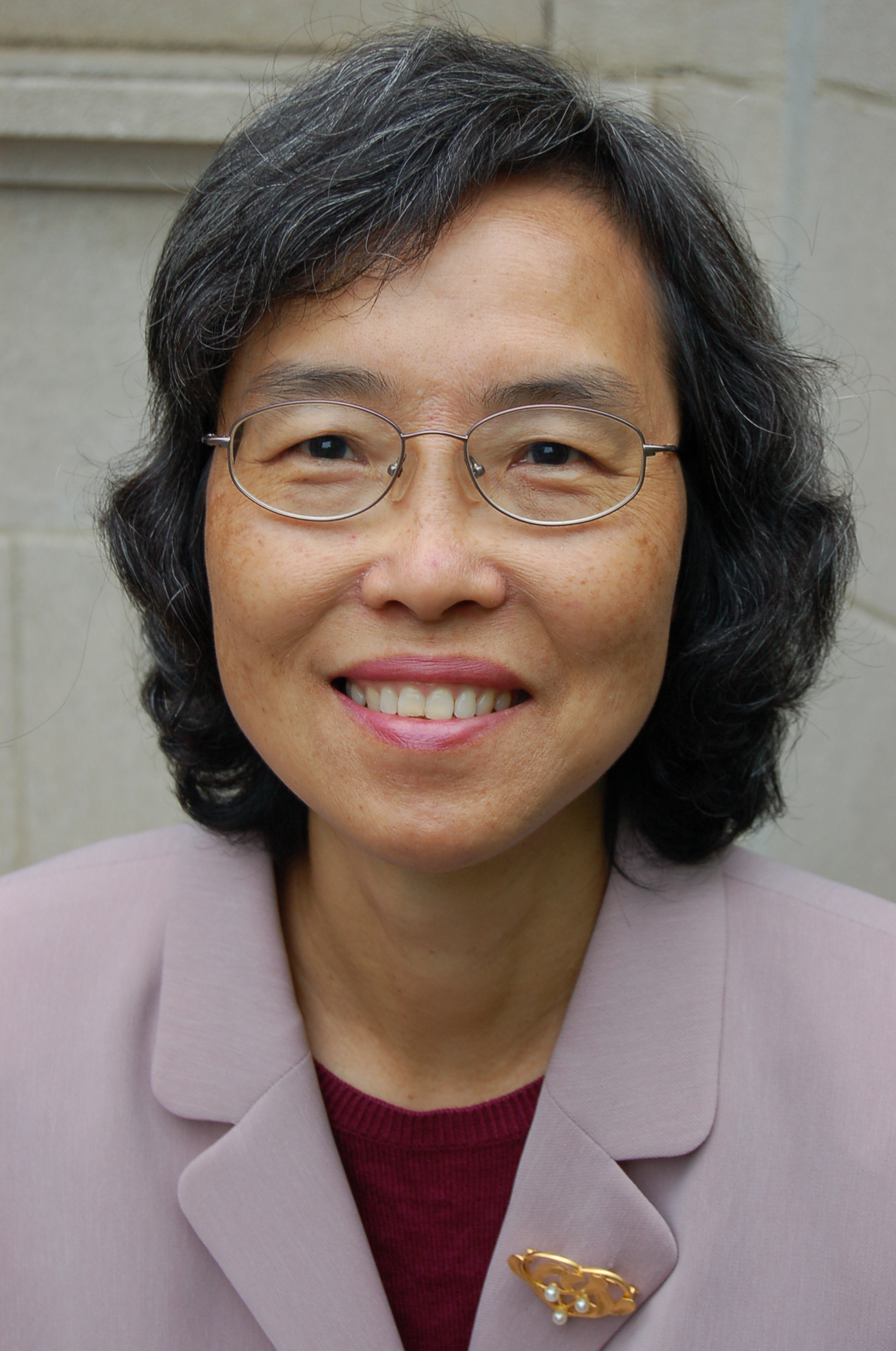 In his column “Professors, We Need You!” New York Times columnist Nicholas Kristof charges that most university professors “just don’t matter in today’s great debates” and admonishes them not to cloister themselves “like medieval monks.”
Many academics and others took offense at what he has written. A Twitter hashtag #engagedacademics sprung up and many have posted opposing views.
That Kristof imagines the professors who isolate themselves from the real world as “medieval monks” betrays his bias that the professors to whom he is addressing and the public intellectuals he longs to see are male (and possibly white)! Continue reading “Feminist Professors Are Not Secluded Monks by Kwok Pui-lan”
The Real Reasons America Hates “Octomom” by Tricia Pethic
 Many of us participate in dehumanizing Nadya Suleman, depriving her even of her own name by virtue of using the term ‘Octomom.’ Suleman has few people on her side of the ring, partly because she embodies what both conservatives and liberals hate most. Suleman recently made news again on charges of welfare fraud; she may spend up to eight years in prison. If Suleman does go to prison, I hope she ends up where I work so I could tell her what I really think: that America’s hatred of her has more to do with them than it does with her. And I’d remind her of God’s mercy and compassion: something I think has been absent from this discussion.
We recognize the name Nadya Suleman, yet how many people recognize the name Michael Kamrava? Kamrava was the doctor who injected Ms. Suleman with twelve embryos which earned him a suspension of his medical practice. Why is Ms. Suleman not known primarily as a victim of medical malpractice? Continue reading “The Real Reasons America Hates “Octomom” by Tricia Pethic”
Sex, Religion, and Discourse: An Interview with Judith Butler
One of my academic joys is interviewing people I find particularly interesting (see most of my posts here). This time I am honored to present a recent interview I did with Judith Butler.

Many wonder how gender performance relates to chromosomes, phenotypes, genitalia, and other scientific “evidence” for innate sexual differences. Continue reading “Sex, Religion, and Discourse: An Interview with Judith Butler”
Evangelical Missionaries Preach Death in Uganda by Andreea Nica
 A former evangelical Christian friend of mine sent me information on the intriguing documentary God Loves Uganda. The newly released documentary addresses how the American evangelical movement has prompted a political and social shockwave in the country of Uganda. While missionaries are typically associated with delivering aid and improving the conditions of third world countries, the spreading of Christian values and ideals has inflicted suffering upon ethnic communities through evangelical indoctrination.
The intent of the film is to raise awareness of the political and social brutality that the evangelical missionaries are instigating; specifically through their teaching that homosexuality is a sin and should be dealt with accordingly. In Uganda this means death. Given the rise of globalization, transnational religious actors have been more enabled to engender other nations with their respective religious beliefs, often with minimal regard for the cultural and political landscape of the nation they wish to transform. Continue reading “Evangelical Missionaries Preach Death in Uganda by Andreea Nica”
Three Wishes for the New Year: Peace, Kindness, and Dialogue in the Catholic Church by Michele Stopera Freyhauf
 While I sit and write this post, Christmas celebrations are concluded and I prepare, with the rest of the world, to embark on a new year; a year with my idealistic hopes and want for a better future for humanity. So for New Year’s I am taking out my golden lamp and making three big wishes: peace, kindness, and dialogue in the Catholic Church.
Peace
“True peace is not a balancing of opposing forces. It’s not a lovely façade which conceals conflicts and divisions…. peace calls for daily commitment.” – Pope Francis
Peace transcends governments and countries. Peace should be a daily commitment that each one of us lives every day and practiced in each of our relationships. Looking forward to a new year, I hope to put this into practice and we will see a shift in politics and attitudes that reflect an ideal of peace and reconciliation – not just nationally, but communally.
With peace also comes reconciliation. Fighting takes too much energy. Making a point to reconcile with that relative or friend that you had a falling out with is a goal that has the potential to bear fruit and be restorative.
Kindness
“Kindness is the language which the deaf can hear and the blind can see.” – Mark Twain
With peace and reconciliation comes kindness. This wish is a large request and one that the Pope calls us to embrace. A kindness is required that reaches the poor and oppressed, that reaches non-Catholics including atheists, and, that touches every race, class, and orientation. We do not have the right to judge – a sentiment that the Pope continues to reiterate.
According to Julia Baird, “even scientists are now touting the physical and psychological benefits of kindness, compassion, and selflessness. Multiple studies now show: a single act of kindness can trigger dozens more … and repetitive acts of kindness can make people happier, and less depressed.” This is not a new revelation, but a reminder of the benefits of kindness – a reminder we need to carry into the New Year.
We should, however, remember help the homeless, the children, and the oppressed. This group of people is often ignored the news media, but lack of attention to a problem does not diminish it. According to the Pope, scandals are the news of today, but the children without food are not news worthy. According to Pope Francis, we should not “interfere in the lives of others” in a way that is malicious, like gossiping or being boastful. This behavior brings hurt, bitterness and envy. Kindness is necessary for a better future for all of humanity.
Dialogue with the Catholic Church
“Fifty years ago, Vatican II spoke of communications. Let us listen to, dialogue with, and bring Christ all those we encounter in life.” – Pope Francis
Let us not focus on rituals and rules in the Church; rather, we need to focus on the people of the Church. People,

after all, make up the Church – not brick and mortar. Because of this, we need to focus on dialogue – a dialogue with each other, regardless of belief or life choices. This dialogue should be rooted in a positive attitude and carried out with love and humility. It should include a focus that reaches out to facilitate peace. This dialogue should also include the discussion of women’s roles in the Church. There are so many things to discuss. The Church is a human church. With the invitation to dialogue and re-address so many of the untouched or misinterpreted teachings of Vatican II, might we move forward and rebuild this Catholic Church on the shoulders of one who served the poor, loved everyone, and gave of himself?
What are your wishes for the new year? I would love to hear from you.
From my family to yours, may you have a peace-filled, prosperous, and delightful 2014.
Michele Stopera Freyhauf: Doctoral Student in the Department of Theology and Religious Studies and a Member of the Centre for Catholic Studies at Durham University as well as an Instructor at John Carroll University’s Department of Theology and Religious Studies, Adjunct Professor in Religious Studies at Ursuline College and the University of Mount Union. Michele has an M. A. in Theology and Religious Studies from John Carroll University, and did post-graduate work at the University of Akron in the area of History of Religion, Women, and Sexuality. She is also a Member-at-Large on the Student Advisory Board for the Society of Biblical Literature and the student representative on the Board for Eastern Great Lakes Biblical Society (EGLBS). Michele is a feminist scholar, activist, and author of several articles including “Hagia Sophia: Political and Religious Symbolism in Stones and Spolia” and lectured during the Commission for the Status of Women at the United Nations (2013). Michele can be followed on Twitter @msfreyhauf and @biblicalfem. Her website can be accessed here and is visible on other social media sites like LinkedIn and Google+
Yes, You’re a Homophobe by John Erickson
Jesus loved sinners and Jesus would rather be dancing with me in West Hollywood on a Friday night than lugging through a swamp luring ducks into a trap with a duck caller made by a clan who think that my sexual actions are similar to that of an individual having sex with an animal.

To be able to walk down the street holding the hand of the one you love is a great feeling and an action that some of us aren’t able to perform without fear.
A line has been drawn in the sand between those who support gay rights and those who do not. While some call it being on the “right side of history,” I simply now refer to it as not sounding and looking like a bigot in the halls of history and in the various books, Facebook posts, and Tweets that our children will one day read. Continue reading “Yes, You’re a Homophobe by John Erickson”
Painting Sappho by Angela Yarber

“Someone, I say, will remember us in the future,” she once wrote. To my knowledge, she was never dubbed a prophet. A muse, yes. A romantic, perhaps. But never a prophet, rarely holy, and nary an icon. Until now. Hailed as one of the best Greek lyric poets, many have tried to forget her, or at least the more provocative elements of her life. The passionate poet Sappho was born on the island of Lesbos around 620 BCE (sometime between 630-612 BCE). The word lesbian stems from the place of her birth and her name is the origin of the word sapphic, though most scholars assert that little is known of her actual life and that the majority of her poetry is not autobiographical. Yet her lyric poetry speaks of love for both sexes and myriad people.
What is more, the idea of homo and heterosexuality are not transhistorical essences, but instead are relatively recent socio-historical constructs. To say that there were strict sexual binaries in the ancient world in which Sappho lived would be an anachronism. Sexuality was much more fluid. Not surprisingly, many scholars have tried to name and claim male lovers for Sappho, a heteronormative attempt to erase her fluid sexuality, her hope to be remembered in the future dashed, demeaned, forgotten. In fact, during the Victorian Era, many asserted that Sappho was the headmistress of a girls’ school, another attempt to straighten out her memory, her poetry, her love. Continue reading “Painting Sappho by Angela Yarber”
Baby, You Are My Religion by Marie Cartier

—it’s a girl and she weighs 240 pages!
I just heard from the United States distributor of my book, Baby, You Are My Religion: Women, Gay Bars, and Theology before Stonewall.
This blog has to be about that. I feel like I am waiting for my child to arrive and, as I’ve already written about in a previous post, I am announcing the “birth” of my book. The book is on the East Coast – it’s almost here!
The book was published in the United Kingdom by Acumen Publishing and it has taken several weeks for the books to “cross the pond.” So although the book has been in my hands in galley form three times and I know it was published in the U.K. I have yet to see the finished copy! Continue reading “Baby, You Are My Religion by Marie Cartier”
 Feminism and Religion