THERE’S ONLY LOVE by Esther Nelson

Charlie Kirk embodied characteristics lauded by people I remember from my fundamentalist, Christian upbringing.  Confident “believer” who knew the absolute “truth,” a willingness to proselytize (or better known in fundamentalist circles as spreading the Good News of Jesus Christ), and a pugnacious personality essential to fight Satan and his minions in this “ungodly” world.

In a New York Times article titled “We Need to Think Straight about God and Politics” (9/25/25), David Brooks writes: “As people eulogized Kirk, it was rarely clear if they were talking about the man who was trying to evangelize for Jesus or the one trying to elect Republicans.” A spokesperson at Turning Point USA said, “He [Kirk] confronted evil and proclaimed the truth and called us to repent and be saved.” Brooks asks, “Is that what Kirk was doing when arguing with college kids about tariffs?”

I want to focus here on some of the brilliantly choreographed, yet deceptively cruel imagery present at Kirk’s memorial service, showing how the MAGA movement uses a religious group’s theology to foment hatred—with the goal of gaining/retaining political power.

Continue reading “THERE’S ONLY LOVE by Esther Nelson”

We’ve Seen This Playbook Before by Janet Maika’i Rudolph

Wikimedia Commons

ICE has been doing mass round-ups of anyone who looks like “the other.” The people cheered.  “This is my country,” they shouted to the deportees. “Go back where you came from.” The people are flush with excitement thinking this is what we voted for, meanwhile ignoring that they came from someplace too. We know this is a publicity stunt. How? Dr. Phil tagged along on one of round-ups.  Newly minted secretary Kristi Noem also took her role in the spotlight attending one in NYC and saying dehumanizing words I will not repeat here. 

We’ve seen this playbook before. Creating chaos, disorientation and suffering for political points, TV or other publicity ratings. It doesn’t end well – EVER!

The NY Times had a report of how deportees were treated in a dehumanizing manner, being held on a broken plane in the Amazonian heat with no AC, people shackled, children were on board.  There are always people available to treat other people as less than human. “I was just doing my job.”  “I was only following orders.” 

We’ve seen this playbook before.  It doesn’t end well – EVER!

Continue reading “We’ve Seen This Playbook Before by Janet Maika’i Rudolph”

Asking For What You Really Want…by Mary Gelfand

As no doubt everyone reading this knows, this election season is full of twists and turns and highly unpredictable.  I struggle daily with ways to manage my stress without destroying my health.

As a practicing Wiccan, my faith does not encourage me to curse or ill-wish anyone, no matter how tempted I may be.  In response to that, I wanted to create something I could do on a daily basis to promote the electoral outcome I desire from a spiritual perspective.  A long-forgotten quote from Rumi provided me with the key to what I want.  “The breeze at dawn has secrets to tell you.  Don’t go back to sleep.  You must ask for what you really want.”

“You must ask for what you really want.”   As a woman reared in the south in the 1950s, I am not really accustomed to asking for what I want.  So Rumi quote liberated me.  I can ask for what I really want as the outcome of this election.  Although I completely support the only feminist candidate, what I really want is a president that embodies certain traits and characteristics that, from my perspective, make a strong and creative leader.  So I’ve created a simple little ritual that anyone can do that gives me a framework to ask for what I really want—to spread my prayers and intentions to the cosmos.

Continue reading “Asking For What You Really Want…by Mary Gelfand”

BRINGING IN THE KIN-DOM by Esther Nelson

I’ve mentioned before that I’m quite the fan of Jim Rigby, one of the current ministers at St. Andrew’s Presbyterian Church in Austin, Texas. Jim writes a short column four or five times a week and posts them on Facebook.  I, along with many others, follow him there; however, I’ve also begun to join the Sunday morning service at St. Andrew’s via Zoom.

As a preface to the Sunday morning services I’ve attended, Jim gives a short explanation of his use of the word “kin-dom” instead of kingdom, fully acknowledging that the word kin-dom was coined by Ada Maria Isasi-Diaz (1943- 2012), a Cuban-American, Mujerista theologian. (Mujer is the Spanish word for woman.)

Continue reading “BRINGING IN THE KIN-DOM by Esther Nelson”

From the Archives: Writing Through the Body: Betty Smith’s A TREE GROWS IN BROOKLYN by Joyce Zonana

This was originally posted on April 29, 2017

In her 1975 manifesto, “The Laugh of the Medusa,” French feminist Hélène Cixous urges women to write: “Writing is for you, you are for you; your body is yours, take it. . . . Women must write through their bodies, they must invent the impregnable language that will wreck partitions, classes, and rhetorics, regulations and codes . . .”

“The Laugh of the Medusa” remains a thrilling essay, challenging and inspiring women to “return to the body” and to language.  “Woman must write woman,” Cixous insists, “for, with a few rare exceptions there has not yet been any writing that inscribes femininity.”

Continue reading “From the Archives: Writing Through the Body: Betty Smith’s A TREE GROWS IN BROOKLYN by Joyce Zonana”

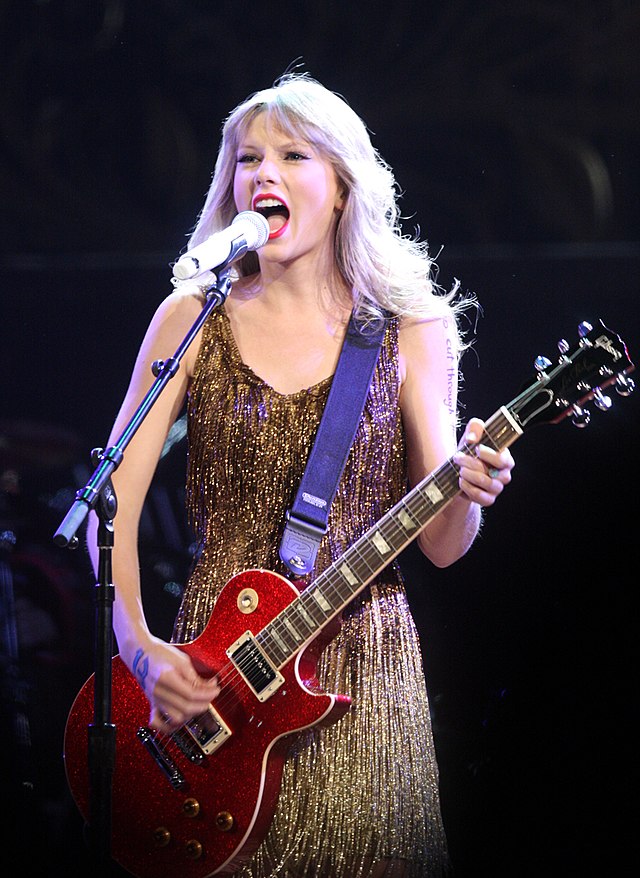
Dear Taylor Swift by Marie Cartier

Taylor Swift – Speak Now World Tour Sydney

February 5, 2024

Dear Taylor Swift-

Am I completely lost? I haven’t listened to your music –I mean NOT REALLY listened to it…that I totally know of–and now I see on the Grammys that you have won more best albums than anyone in history- can I be excused because I’m a writer?

I think you seem like a kick ass take no bullshit kind of woman, which I like… being one myself…but so are a lot of women in the music industry—which I am not…but listen, if you get far enough to have won the most best album Grammys of anyone ever then—girl you had to be kicking some serious ass…and…well…you had to be…we’ll talk about that. I mean, Beyonce.

 I mean I am so excited for your relationship – with the NFL player—Travis Kelce…again, I don’t watch football but I am on social media, I mean I’m not hopeless…I’m just as I said, a writer…and I’m happy for you and I think the bubbas who hate that you show up at football should take a back seat or no seat at all because hey! It looks like you are saving football by showing up as your diva self and… you know…you go girl!

Continue reading “Dear Taylor Swift by Marie Cartier”

Label or Be Labelled Part 3: Toward Embodied Presence

In Part 1 of this series on labelling, I highlighted the difference between naming and labelling, and the search for a personal label as ‘participation ticket’ for life.

In Part 2 on professional and spiritual identity, I looked at what we can learn from the autoethnographic practice of disclosing various selves in research situations. I also discussed the effects of Christianity on the suppression of pagan traditions in northwestern Europe, and nature-based spirituality as part of our generic spiritual DNA.

Today I share a few final reflections including what groups celebrate their differences with ‘prides and games’, and which ones remain invisible? What are the effects of woke ideology on fear of expression and loss of voices, and an invitation for embodied presence as one characteristic of our shared humanity.

Continue reading “Label or Be Labelled Part 3: Toward Embodied Presence”

Label or Be Labelled Part 2: Professional and spiritual identity

This post continues from Part 1, where I situated this essay as a reflection on Xochitl Alvizo’s article Human, Just HumanThere, I questioned the difference between the power of naming versus the pressure to label. I then described my search for a personal identifier as ‘participation ticket’ to life. This feels important nowadays to join the conversation and not be dismissed by default. However, I wondered whether looking for things that set us apart emphasises otherness rather than shared humanity.

Today, I question what can we learn from autoethnography about the many selves we bring to different professional situations and how they might hide more than they reveal. I also describe the challenges of naming nature-based practices in a geographical area where 2000 years of Christianity forced our pagan traditions underground.

Continue reading “Label or Be Labelled Part 2: Professional and spiritual identity”

We Are Barbie by Esther Nelson

I recently (July 2023) watched “Barbie,” the popular summer, blockbuster movie directed by Greta Gerwig.  I liked the film enough to see it twice!  Among other things, it seemed to be a narrative where women struggle to become fully human in spite of our patriarchal social system.  I am not going to review the movie.  American film critic for the New York Times, Manohla Dargis, has done that quite well already. 

What I will do is explore parts of the film that were meaningful to me.

Continue reading “We Are Barbie by Esther Nelson”

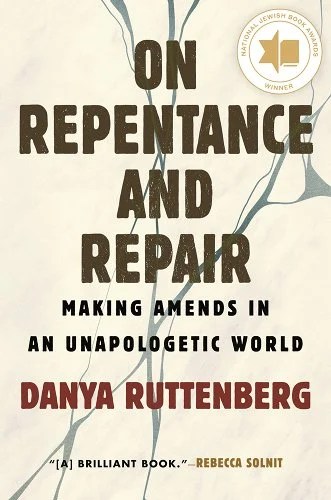
On Repentance And Repair: Making Amends in an Unapologetic World by Rabbi Danya Ruttenberg

This is an excerpt of Rabbi Danya Ruttenberg’s On Repentance And Repair: Making Amends in an Unapologetic World, which comes out in paperback on September 12th. Called “A must-read for anyone navigating the work of justice and healing.” by Congresswoman Ayanna Pressley, it applies Maimonides’ Laws of Repentance to contemporary personal and systemic issues. This is an excerpt from Chapter Four, which addresses institutional repentance.

Most of us are part of many institutions—places of work, our own and/or our children’s schools and universities, houses of worship, co-working spaces, community organizations, sports leagues, social networking websites, the list goes on. And these institutions can and do perpetrate harm.  Sometimes, that harm impacts us as individuals—as stakeholders or beneficiaries of those institutions, or as those excluded or hurt by them—and sometimes it can impact our local or national culture.

Continue reading “On Repentance And Repair: Making Amends in an Unapologetic World by Rabbi Danya Ruttenberg”