Breaking the Stained Glass Ceiling? Conflict in Religious Histories by Meagen Farrell

Meagen Farrell, women's ordination

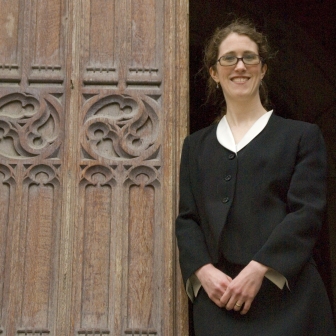
In attempting to research and write about the process and arguments in the development of women’s ordination in the Anglican Church of Ireland (which I first wrote about here on Feminism and Religion), I am frustrated by the polarization of language. While “objectivity” is fruitless, I strive for what Warren Nord calls philosophical fairness: when teaching about contested religious territory, to characterize each position in the terms they would choose for themselves.

How do I fairly label an historical debate on whether or not to admit women to the diaconate and priesthood? Using the phrase “women’s ordination” in my current Kickstarter campaign already puts me in a particular camp. The constraints of the medium require brevity. I have to make a choice. Continue reading “Breaking the Stained Glass Ceiling? Conflict in Religious Histories by Meagen Farrell”

Pope Francis: A Fisherman for Our Times? by Dawn Morais Webster

Dawn Morais Webster, the Pope off to his summer palace, Castel Gandolfo. He tells the world he will now become just a “humble pilgrim.”

 A thoughtful non-Catholic friend, Mei Li, in largely Muslim Malaysia, wondered aloud in a Facebook chat after the election of Pope Francis: “How many people get to start anew like this?   A new name, a new life, a new kingdom here on earth. He could be what keeps thousands, maybe millions of people from getting AIDS. Even if my vote does not count, so to speak, I have to care what he teaches.”

Yes, believers or not, we all have to care.  The skeptics were right.  Picking a Pope from the ranks of the nuns was expecting the current crop of cardinals to cast their net further than they could. But Pope Francis may yet prove to be a fisherman who casts a different kind of net.

Countries of the South, where Catholics still fill the churches, rejoice at the selection of a Pope with whom they might claim a closer kinship. It is unclear whether he can ensure the success of a soccer team, or even whether his election proves that God is an Argentine.  But the fact that even the weary are tuning in is a good sign. Continue reading “Pope Francis: A Fisherman for Our Times? by Dawn Morais Webster”

Hate Mail and the Privilege of Having a Voice by Gina Messina-Dysert

Gina Messina-Dysert profileThis past week I was honored to have the opportunity to talk with Tavis Smiley on PBS about the resignation of the Pope and the future of the Catholic Church.  Although some have argued that the pope stepping down means little if anything for Catholics, I think this acknowledgment that tradition can change is at least a step in the right direction.  While an end to sexism in the Church is still far off, in the spirit of a feminist ethic of risk, I think we must recognize this step and continue on in the struggle.

What a privilege it was and is to have a platform to share these thoughts.  As a feminist progressive Catholic I have repeatedly received friendly and not so friendly warnings about sharing my beliefs.  In an age characterized as “the New Inquisition,” the Vatican has worked hard to keep individuals like myself from challenging Church teaching.  Any mention of reproductive justice or women’s ordination can quickly lead to one’s livelihood being threatened and the very real possibility of excommunication – just ask Fr. Roy Bourgeois.  That said, we each still have the responsibility to retain our power, refuse to be silent, and use our voices to encourage and create change.    Continue reading “Hate Mail and the Privilege of Having a Voice by Gina Messina-Dysert”

Let the Walls Come Tumbling Down by Dawn Morais Webster

Dawn Morais Webster, the Pope off to his summer palace, Castel Gandolfo. He tells the world he will now become just a “humble pilgrim.”

If we want to see real change in the church, Catholics need a Rosa Parks moment.

Thousands fill St. Peter’s Square for the final blessing. A gleaming helicopter whisks the Pope off to his summer palace, Castel Gandolfo. He tells the world he will now become just a “humble pilgrim.”  But this humble pilgrim will be housed in an apartment behind the “Apostolic Palace,” be addressed as “His Holiness,” share a secretary with the new Pope, carry the newly created title of Pope Emeritus Benedict XVI and continue to wear his white cassock.  Sound like a humble pilgrim to you?

Speaking with Tavis Smiley recently, theologian Gina Messina-Dysert pointed to the resignation of this pope as probably the most progressive sign in the recent history of the Catholic church. She argued that an act so singular, it has not happened in more than 600 years,  suggests that the church can also break with other traditions.

Continue reading “Let the Walls Come Tumbling Down by Dawn Morais Webster”

Second Class Rape Victims: Rape Hierarchy and Gender Conflict

Deconstructing masculinity isn’t the key to solving social, sexual, and domestic violence across the world but it is a step worth taking when attempting to engage men in affecting change to stop these violent actions since men, statistically are the perpetrators of such crimes that both cause such outcry as well as perpetual silence.

johnThe most disturbing part of the 2006 documentary Deliver Us from Evil isn’t the fact that Father Oliver O’Grady is rewarded by the Catholic Church with a new congregation in Ireland after his short stint in prison for the rape of dozens of children in the 1970s, but rather the hierarchy of gendered victimization which is often created throughout the various rape cases that are both reported and unreported throughout history.

I am often troubled by the ways in which rape cases are discussed and deconstructed via mediums such as blogs, online communities, social media networks, the news, and popular culture.  No series of events troubled me more than the Jerry Sandusky trial, but more importantly, the ways in which the young boys and adult men who were subjected to Sandusky’s abuse quickly overshadowed the other rape cases that are reported on a daily basis, specifically those involving young girls and women. Continue reading “Second Class Rape Victims: Rape Hierarchy and Gender Conflict”

What Happens When Women Are Not Ordained? by Meagen Farrell

Meagen Farrell, women's ordinationWhat is a vocation to the Christian clergy? A woman or man feels a calling from God, and that spirit is tested in the community of believers. After discernment through study, prayer, and service that person submits herself for ordination. Simple, right?

Of course, as readers of the F-word blog, you know it is not that simple. Though women’s ordination is a common practice in many Christian denominations, it is far from universal. The issue has caused division within the Anglican Communion and dissension in the Roman Catholic Church. Despite the controversy, the number of women in discernment (contemplating  or preparing for ordination) and the denominations ordaining them continue to grow. Continue reading “What Happens When Women Are Not Ordained? by Meagen Farrell”

Don’t Worry, I Won’t Marry Your Girlfriend: Sexuality, Identity, and the Easy Laugh

No longer having to deconstruct the larger cultural and sexual narratives, heterosexuals who do not support marriage equality or feel threatened by homosexuals return to their one source of power that reinforces the ideology that they are on the right path: the Bible. “Marriage is between a man a woman,” or “A man shall not lie with another man as he would a woman,” becomes the newly reinforced heterosexual rallying cry and the progressive progress that occurred in the past becomes nothing more than a joke.

johnI must say, I will be the first to admit that the recent outbreak of videos promulgating the idea that gay men will marry a straight guy’s girlfriend or lesbians will marry a straight girl’s boyfriend all for the sake of marriage equality left me stifling my laughter as I attempted to pay attention in class.

However, after the calamity died down I took a moment to reflect upon the intrinsically embedded aspects of misdirected norms of sexuality, gender, and misogyny latent within the laugh lines and the guffaws throughout each video. Continue reading “Don’t Worry, I Won’t Marry Your Girlfriend: Sexuality, Identity, and the Easy Laugh”

Please Excuse Me for Having a Penis: Taking a Back Seat to Privilege and Power by John Erickson

Male feminists must be aware that we not only engage in an ongoing struggle against sexual and gender inequality, but more importantly an ongoing fight with ourselves.

I have often struggled with that little voice, call it my conscience if you will, that speaks to me during times of distress.  Although I consider myself a proud feminist, I still struggle with aspects of what I call, internalized misogyny, or more aptly defined as a male born characteristic trait that imparts the idea that men are not only dominant but also more powerful than the other 50% of the species.

For many reasons, I believe religion is one of the main culprits of this growing evil, one that we all witnessed throughout this last election cycle.  However, instead of placing blame solely on religion and images of the male Godhead we have to begin deconstructing the sociological consequences these subconscious social, sexual, religious, and gendered norms have on men but more importantly men who identify as feminists. Continue reading “Please Excuse Me for Having a Penis: Taking a Back Seat to Privilege and Power by John Erickson”

“From Teshuvah to Justice: Jonah’s Call to Change” by Ivy Helman

(I offer here an abridged version of the sermon I gave on Yom Kippur (5773) at Temple Emanuel in Lowell, MA.  The full version will be available on their website soon.  The book of Jonah is always read on Yom Kippur in the afternoon service as the Haftorah.  It is rather traditional that someone (usually the Rabbi) offer an interpretation of it.  Temple Emanuel asked me this year.  I thank the congregation for the honor and I hope my words offered them, and now you, food for thought.)

Scholars believe the Greek philosopher Plato lived between 428 BCE and 348 BCE.  The Allegory of the Cave is one of Plato’s most famous stories.  It illustrates the effects of a change in knowledge, education and experiences on the human being.  Some of you may know it or have read it at some point but for those of you who don’t, let me offer a very brief summary.

There are human beings shackled to a cave in a way that they can only see the wall directly in front of them.  Continue reading ““From Teshuvah to Justice: Jonah’s Call to Change” by Ivy Helman”

Validating the Gospel of “Jesus’ Wife” is not Necessary to Prove Female Discipleship by Michele Stopera Freyhauf

The Gospel of “Jesus’ Wife” is certainly at the center of a battle that was last seen when questions of authenticity were raised about the James (Jesus’ brother) ossuary.  In a New York Times article, September 30th, Judith Levitt states that this document adds weight to theological and historical flaws surrounding the issue of the ordination of women.  The Vatican believes that their theology is still sound, calling the document a forgery.

The Gospel of “Jesus’ Wife.” [www.boston.com]
Frankly we do not need this document to validate the existence of female deacons and disciples – we have the biblical text and writings of the early church to validate this position.

Nor do we need this document to show that the standing from the Vatican’s point of view of ordaining women is theologically and historically flawed.

“In 1976, experts of the Pontifical Biblical Commission determined that there were no scriptural reasons preventing women’s ordination. The Congregation for the Doctrine of Faith overturned the commission’s judgment and instead wrote its own statement (Inter Insigniores, 1976) stating that women do not image Jesus who was a man; and therefore only male priests can adequately represent Christ.” – Women’s Ordination Conference

John Ortberg, in the Huffington Post, addressed a bigger issue surrounding female leadership in the Church brilliantly:

“perhaps what matters most in this discussion is the impact Jesus had — not on one woman — but on the status of women as a whole.”

Continue reading “Validating the Gospel of “Jesus’ Wife” is not Necessary to Prove Female Discipleship by Michele Stopera Freyhauf”