

 After the horrific events of September 11, 2001, Haroon Moghul, the undergraduate leader at New York University’s Islamic Center, was called upon to be a representative voice for Muslims in America even as he negotiated his own relationship with Islam. He recounts his religious journey, alongside personal encounters with suicide and bipolar disorder, in his recently published memoir: How to be a Muslim: An American Story. Recognized by Ausuma Zehanat Khan in The Washington Post as “an extraordinary gift,” the memoir offers, what Khan calls, “an authentic portrait of a vastly misunderstood American community.”
The vulnerability and honesty exemplified in Moghul’s writing actualizes a pathway for understanding his experience of Muslim life in the United States post 9/11. His personal perspective and sensitivity foster an empathic response. Emma Green of The Atlantic recognizes his focus on a more intimate encounter with religion, pinpointing how Moghul’s narrative represents “writing about Islam that’s not about terrorism or war.” Continue reading “Psychology and Religion Collide in the Journey of an American Muslim by Stephanie Arel”
 Since I am teaching in a charter high school this year, this is the level of education I am speaking about. I teach college English, and often craft my writing classes in thematic ways. This semester, I did units on mindfulness and the environment. Some of my younger students were resistant to the texts that were Buddhist in tradition, and when I suggested, perhaps to take a more comparative and inclusive approach, we actually do a world religions unit for my classes next semester, the administration was very kind and supportive, yet hesitant due to the “conservative” nature of our institution. I am grateful that the administration is willing to work with me and possibly allow me to do the unit next academic year with some guidance and advisement. But, again on the younger student level, I hear “This is an English class and not a Religious Studies class” or even the question, “Can we study religion in school?”
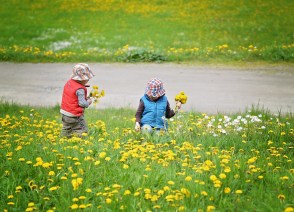
 A female friend recently posted an article by a woman writer about motherhood. The article was entitled “Children are NOT life’s flowers” (referring to a famous Russian saying which means that children are what makes life beautiful).
 It is amazing that in the current atmosphere of bringing out into the open so many issues, motherhood is not much discussed. Sexuality, gender and abuse are OK to speak about and question. At the same time, it is only within medical profession that such issues as “baby blues” or post-partum depression are valid topics.
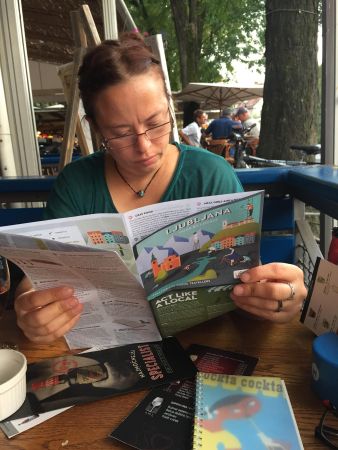 When my dad was in town for the wedding, he asked me a question about Prague. I didn’t know the answer. So, I said, “let me look on my all-knowing phone.” I googled the question, found a reliable website and told him what it said.
 One of the concerns of ecofeminism is the modern materialistic mindset of capitalism. Materialism in capitalism instills not just owning many possessions, but it also inculcates the “need” to own the newest innovation. In addition, materialism advocates a throw-it-away mentality. In other words, it is often cheaper to buy a new shirt or computer than to have them repaired. Similarly, it is not enough to have a cell phone. Rather, one must have the newest and best one! The environment pays the price.
 Recently (September 2016), the Bishop Walter F. Sullivan Catholic Studies Symposium took place in the university where I teach. The main speaker (a Roman Catholic priest) addressed the topic, “How Pope Francis is Creating a Culture of Encounter.” There were three other participants. One delivered “A Protestant Perspective;” another “A Jewish Perspective;” and the third “A Muslim Perspective.” All of them, including the moderator (chair of the Catholic Studies program), are white men.
 When I was a little boy I was terrified that I would live to experience the end of the world. Whether it was by an asteroid, Y2K, or a zombie plague, I would make myself sick by picturing these horrible things that could befall me and my family. Although I was a precocious child, the crippling fear that would lurch its way up my stomach and into my head would sometimes make it impossible to sleep at night. While I like to think I grew out of that phase, I now sit here feeling that way again. I’m crippled with fear that the end of the world is at hand and there may be nothing we can do to stop it. How will the world end? No, it isn’t Lucifer himself coming from hell to bring in the end times, it is someone far worse, and his name is Donald Trump.
 Feminism and Religion