

 I am so frustrated that we are still fighting to affirm women’s place in leadership. I’ve been thinking about this struggle in the context of church ministries (especially preaching) and social activism, seeing a stark contrast between the way institutional churches and universities promote and subvert women’s authority and the ways movements like Black Lives Matter do.
Particularly, I’ve been struck by the ways that more radical movements employ language and practices that are based in spirit more than hierarchical authority. I have found a theme emphasizing equality in humanity’s access to spirit in both historical and contemporary movements and writings about religious experience. I’m certainly not the first one to notice or discuss how appeals to Spirit have empowered those excluded from dominant systems of power to challenge constrictive social structures, but I would like to share how this dynamic has become more visible to me so that, together, we might find encouragement, inspiration, and food for thought.
Continue reading “The Spirit and Jarena Lee: Inspiration to Break Boundaries by Elise M. Edwards”
 It is quite common, I think, for Jewish feminists to gravitate to the first creation story of Genesis/Bereshit as an example of human equality but struggle to claim this same passage as an example of the goodness of embodiment. Genesis/Bereshit 1:27 reads, “So G-d created humankind in the divine image, in the image of G-d, the Holy One created them; male and female G-d created them.” In this passage, we have not only equality between men and women, in direct contrast to the second creation story, but also a description of human nature.

 There are quite a few post-apocalyptic shows out these days.
  There is some very helpful guidance in the Qur’an for how we should and should not treat the earth. In my exploration of Qur’anic verse
 I have entitled this post
 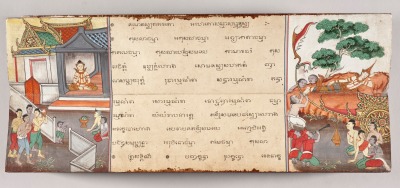 One of the most popular texts in Thai Buddhism (which is of Theravada tradition) is called
 Earlier this week, social media was all abuzz about the Pope’s investigation into restoring women to the diaconate. In the
 Feminism and Religion