

The phone rings loud on the bedside table near my head, and I wake with that tiny heart attack that only truly jarring things, like middle of the night phone calls, seem to trigger. It takes me a moment to gather myself, to remember who I am, where I am, and what that sound is… and then I grab the phone, hop out of bed and cross the hall into the office where I can finally answer.
It’s a familiar voice, Eli, my colleague and friend from the domestic violence and sexual assault shelter where I volunteer. They’ve just received a call from the emergency room about a sexual assault survivor asking for an advocate and I’m the volunteer on-call this week.
Eli handles himself so very well, knowing that while he is awake working the night shift I am still trying to grasp his words, trying to shake the sleep from my body and my mind. As his words sink in I write down the survivor’s name and start pulling on clothes to head to the hospital.
Though I’ve taken a fair amount of these calls during daylight hours, this middle of the night call is a new experience for me. I live in the upper peninsula of Michigan and while I love it here, this particular night also happens to be yet another night with significant snowfall, and it takes me quite a while to dig my car out enough to get it out of the tiny alley next to our house and up the hill toward the emergency room.
 Event Update: This post was largely written before the Saturday shooting at the Chabad Synagogue in Poway, California. I have added a few sentences at the end of this post in light of this new sacred space violence.


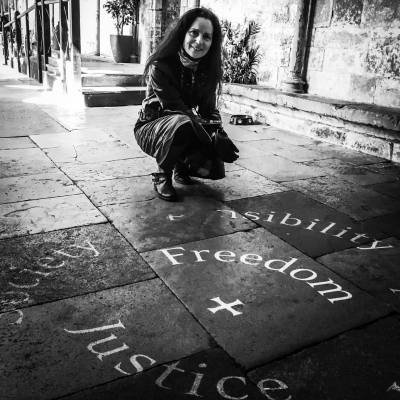
 I’ve been thinking a lot about abuse. Of course, most of us know about the domination, exploitation and need for control meted out by patriarchy, but I wonder if we have actually normalized many abuses? Abuse in the home, in the workplace, in our culture. Perhaps we accepted it unconsciously because so many of us are conditioned by religions that tell us to make noble sacrifice and tolerate suffering silently. I wonder if we’re calling it out when we see it – often and loudly – or if we’ve become conditioned to quietly accept the abuse with little push back.
 A few weeks ago, a former colleague invited me to visit one of his classes, to discuss Mary Wollstonecraft Shelley’s 1818 novel Frankenstein; or, The Modern Prometheus and the essay I’d published about it almost thirty years ago, “
 I can’t even save myself. I make bad decisions just like the ones in the world – bombs and wars and the industrial revolution with chains of greed. But then I go on and, without even knowing any part of the story, want to save others.
  The parshah for next week is Beshalach (Exodus 13:17 – 17:16). There are a lot of very important events happening in just four chapters. In fact, one could write a blog on any one of the following topics: the Israelite escape from Egypt; the parting of the Red Sea (literally the sea of Reeds); the Israelites being pursued by the Pharaoh and his army; the death of Pharaoh and his army in the sea; the incessant complaints of the Israelites in the desert; and the first descriptions of Shabbat observance.
 Feminism and Religion