

 I’ve been called a downer because I take what seems like a jaundiced perspective on the early history of pious and Sufi women. There is a tendency in some scholarship, and nearly all contemporary popular treatments of these women’s lives, to over-focus on the positive. They fasten to aspects of their lives that we (post) moderns regard as “positive” or even “liberating,” while ignoring what we find less attractive or troubling. For them, these treatments tell a story of a lost tradition of feminine and egalitarian spirituality representing a golden period that we only need to reclaim to overcome the present state of sexist affairs in our religion. I know these kinds of stories work for women, or they would not keep retelling them. But they don’t work for me. Continue reading “Dr. Debbie Downer Discourses on the Lives of Early Pious and Sufi Women by Laury Silvers”
Category: Women’s Spirituality
Religion: Trapped in Love Through Shame by Andreea Nica
 I was first introduced to shame in the church. Shame paradoxically drew me closer to God, prevented me from committing sins, and helped me repress certain natural urges. The church I grew up in indoctrinated its congregation to believe that shame would transform us into true and wholehearted believers – that as carnal beings, we needed to feel both guilt and shame in order to be saved and transformed into spiritual entities.
One question that permeated my mind growing up, but I’d never dare to publicly ask:
Why would Jesus die for me when I never asked Him to? Continue reading “Religion: Trapped in Love Through Shame by Andreea Nica”
Echoes of Mesopotamia by Molly
Echoes of Mesopotamia
small figures from ancient places
ancient times
and ancient faces
ancient words
and ancient wisdom
still flowing in my veins
Clay in my hands
clay in her hands
running on the rivers of time
spiraling in the mysteries of being
spinning in the eddies and ripples of eternity…
I have a strong emotional connection to ancient Paleolithic and Neolithic goddess sculptures. I do not find that I feel as personally connected to later goddess imagery, but very ancient figures call to something deep and powerful within me. I have a sculpture of the Goddess of Willendorf at a central point on my altar. Sometimes I hold her and wonder and muse about who carved the original. I almost feel a thread that reaches out and continues to connect us to that nearly lost past—all the culture and society and how very much we don’t know about early human history. There is such a solid power to these early figures and to me they speak of the numinous, non-personified, Great Goddess weaving her way throughout time and space. Continue reading “Echoes of Mesopotamia by Molly”
Why I Don’t Believe in Female Pastors by Andreea Nica
 It may come as a surprise to those who identify as both feminists and religious practitioners that I don’t believe women should be pastors of any dominant religious congregation. This includes most religions which, I assert, are rooted in and structured by the tenets of patriarchy. Does that mean I think women should be congregants of a patriarchal-originated religious system? You guessed it – no. While this may seem like a radical notion to some, it took me quite some time to come to terms with my own conflict in being both feminist and a believer.
My transition from the Pentecostal sect was a long, intricate process that involved life-altering decisions. The notion of leaving the church was driven by my immersion in women’s studies during my undergraduate degree. There were many difficult questions I simply didn’t have an answer for, as the church didn’t provide me with them.
One of them being: Can women instruct an entire congregation of believers?
For those who are female pastors, I’m sure you’ve heard this one a million times, but somehow it never fades from religious and secular discourse. Whether it’s the Islamic, Jewish, Christian, or Mormon faith, women have had to constantly fight for their right to preach religious doctrine. In the beginning of my transition, I was on the side of: Preach it ladies! Continue reading “Why I Don’t Believe in Female Pastors by Andreea Nica”
Let’s Build an Altar for Springtime by Barbara Ardinger
 With spring springing up all over and warm days coming back in the colder climates, let’s build an altar to celebrate life. Now don’t worry—I’m not advising you to worship idols and do anything to insult your god. We’re not building a churchly altar, but one based on the concept of love respect for the earth we live on, the powers of Mother Nature, and the indisputable fact that we are all kin. This altar represents no disrespect for any religion, faith, sect, or denomination. Its purpose is to focus our awareness that the galaxy, the universe, the earth, the continent we live on, the town we live in, and spaces where we live and work are all sacred. The purpose of this altar is to remind us every day that every religion is sacred and that even the most humble among us have a place on the planet.
We start by considering the four elements—fire, air, water, and earth—which go back at least as far as classical Greek philosophy. Long ago, people believed that everything partook of these four elements. They looked around and saw the elements in action every day: ovens and lightning, soup and rivers, breezes and birds, gardens and hills. The four elements became the four humours, which came to the principles of medieval medicine that ruled our temperaments. The elements are also prominent in alchemy and astrology. Continue reading “Let’s Build an Altar for Springtime by Barbara Ardinger”
Awakening to Life: Hildegard’s Cure for Seasonal Depression by Mary Sharratt

In midwinter 2002, I moved from the sun-drenched San Francisco Bay Area to Lancashire, in northern England, further north than I had ever lived. In bleak December, it was as though someone had switched off the lights. The sun barely managed to rise at 8:45 am. By 4:00 pm, it was pitch black. Even during the daylight hours, the sky remained muffled in oppressive clouds. There was no glittering white snow, either, just lashing, relentless rain. It was so oppressively dark, I felt as though I were trapped inside some claustrophobic gothic novel. For the first time in my life I began to suffer what they call winter depression. It didn’t help that it was Christmas and that I was new to the country and didn’t know anybody.
Every religious tradition that evolved in the northern reaches of the Northern Hemisphere honored the great mystery of the birth of the Divine Light from teeming midwinter darkness. As well as formal religious observances, countless folkways, carols, and mumming plays helped bring meaning and radiance to cold midwinter nights. Continue reading “Awakening to Life: Hildegard’s Cure for Seasonal Depression by Mary Sharratt”
How I Loved Myself through Charismatic Worship by Andreea Nica
Breaking up with your first love can be an excruciating process; especially when it happens to be completely entangled with your being. God was my first love and he stayed for a long while. We had many exhilarating times together, particularly within the branch of Christianity I was raised in: Pentecostalism. I fell in love with God when I uttered his divine language at 13 years of age.
Currently, I’m writing my memoir and narrative nonfiction, Freeligious ™, for which I explore the scientific explanations of my charismatic experiences in the church, which inevitably led to a closer attachment to God. In the Pentecostal church, we were encouraged to connect with God through supernatural phenomena.
Examples include: speaking in tongues (glossolalia), healings, trances (drunk in the holy spirit), visions (hallucinations), prophetic messages (delusions), rebuking evil spirits (paranoia), and many more god-friendly activities. While some of my church peers and most outsiders found the charismatic ordeal to be phantasmical and plain ol’ crazy, I became enchanted by the initiation. The initiation process was quite simple really. As believers in Christ, we must receive the baptism of the holy spirit which usually took the form of speaking in tongues, clinically known as glossolalia. Continue reading “How I Loved Myself through Charismatic Worship by Andreea Nica”
IS IT ESSENTIALIST TO SPEAK OF EARTH AS OUR MOTHER? by Carol P. Christ
 The charge of “essentialism” has become equivalent to the “kiss of death” in recent feminist discussions. In this context it is taboo to speak of Mother Earth. Yet, I would argue there are good reasons for speaking of Mother Earth that do not add up to essentialism. What if the values associated with motherhood are viewed as the highest values? What if the image of Mother Earth encourages all of us to recognize the gift of life and to share the gifts we have been given with others?
For those not familiar with the “essentialism” debate in feminist theory, it might be useful to define “essentialism.” In philosophy, essentialism is the idea that every “thing” has an “essence” which defines it. In its pure form, essentialism is a by-product of Platonic “idealism” which states, for example, that the “idea” of table is prior to every actual table and that every actual table is an embodiment of the idea of table.
Aristotle disagreed with the Platonic view “way back then,” arguing that the idea of what a table is can be inferred from actual tables, and so on for every “thing.” There is no need for an idea to exist prior to the existence of anything. Rather ideas help us to name and categorize existing things. In the 20th century “existentialism” again challenged “essentialism,” asserting that “existence precedes essence.” Existentialism argued that free individuals are defined by what they do, not by what they “are” prior to or apart from their actions.
When Whitehead said that all western philosophy can be understood as a footnote to Plato, he was referring in part to disagreements among philosophers about the relationship of ideas to things and existence to essence.
In the context of feminist theory, the charge of “essentialism” is used to criticize theories which speak of woman as opposed to man or feminine as opposed to masculine. Continue reading “IS IT ESSENTIALIST TO SPEAK OF EARTH AS OUR MOTHER? by Carol P. Christ”
The Quiet Voice of the Frame Drum by Oxana Poberejnaia
 Layne Redmond passed away on 28 October 2013. Days before her death I received by post her signature Lotus Tambourine which Layne developed with Remo, manufacturer of world frame drums. Remo posted a tribute to her on her page as a Remo artist. Percussive Arts Society published an In Memoriam of her, along with the link to an article by Layne Redmond “Frame Drums and History”. Facebook and especially Women Frame Drumming page exploded with expressions of gratitude, sympathy and testimonials of how Layne changed people’s lives. Here is an account of Layne’s last summer by a person who supported her in her end-of-life transition.
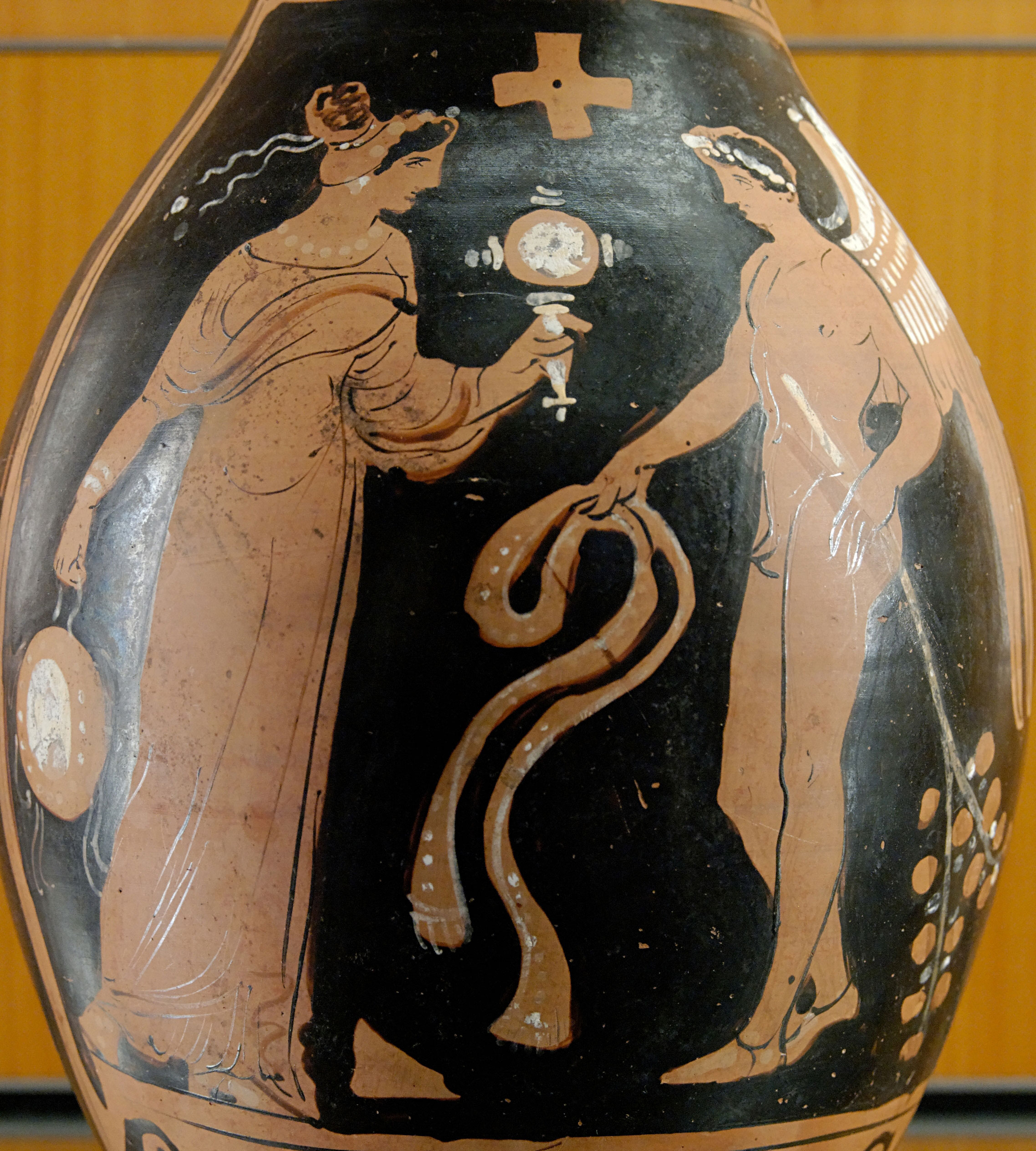 Layne Redmond was intensely busy with two projects during this time: completing her film about drumming spiritual practices to dream awake Afro-Brazilian Gods and Goddesses, and preparing her seminal book When The Drummers Were Women for re-printing with new materials and photos. She put out appeals for both projects, including on Karen Tate’s show “The Voices of the Sacred Feminine” in June 2013, and people helped with their money and time.
Continue reading “The Quiet Voice of the Frame Drum by Oxana Poberejnaia”
Longing for Hermitage by Elizabeth Cunningham
 At least since the days of the Desert Mothers in the 4th and 5th centuries CE, there have been women in the Christian tradition (and doubtless other traditions) who have lived lives in religious solitude, whether by choice or circumstance. In Medieval Europe many churches had anchorholds, small enclosures inhabited by men or women dedicated to a life of solitude and prayer. The word anchorhold implies that the presence of the anchoress or anchorite grounded the church community, but the word derives from the ancient Greek verb (pronounced anachōreō) for to retire or withdraw. Anchoress Julian of Norwich is still revered as the author Revelations of Divine Love, possibly the earliest surviving book written by a woman in the English language. Six centuries after her death, her vision of Jesus our Mother continues to challenge, comfort, and inspire.
I grew up in an Episcopal rectory, daughter of a secretly agnostic mother who loathed being a minister’s wife (living in a fishbowl, she said) and a father who preached and practiced the social gospel as had his father before him. If you weren’t directly feeding, clothing, visiting “the least of these my brethren,” your pieties (as my father dismissed them) were worthless. At every meal we prayed, “make us always mindful of the needs of others.” Selfishness and individualism were synonymous. The pronoun “I” was frowned upon. The only route to salvation was social and/or political activism. My father walked his talk, literally, taking part in the 1965 march from Selma to Montgomery.
Continue reading “Longing for Hermitage by Elizabeth Cunningham”
 Feminism and Religion