An Omer Calendar of Biblical Women by Jill Hammer

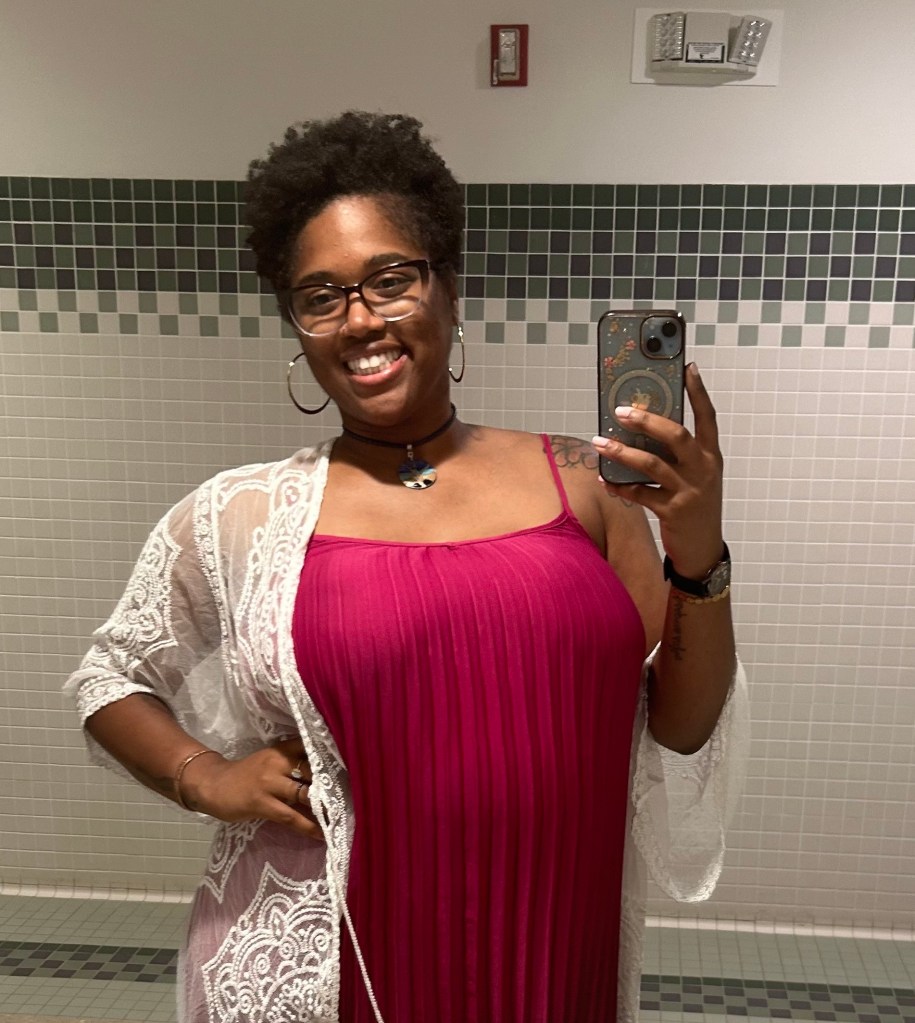
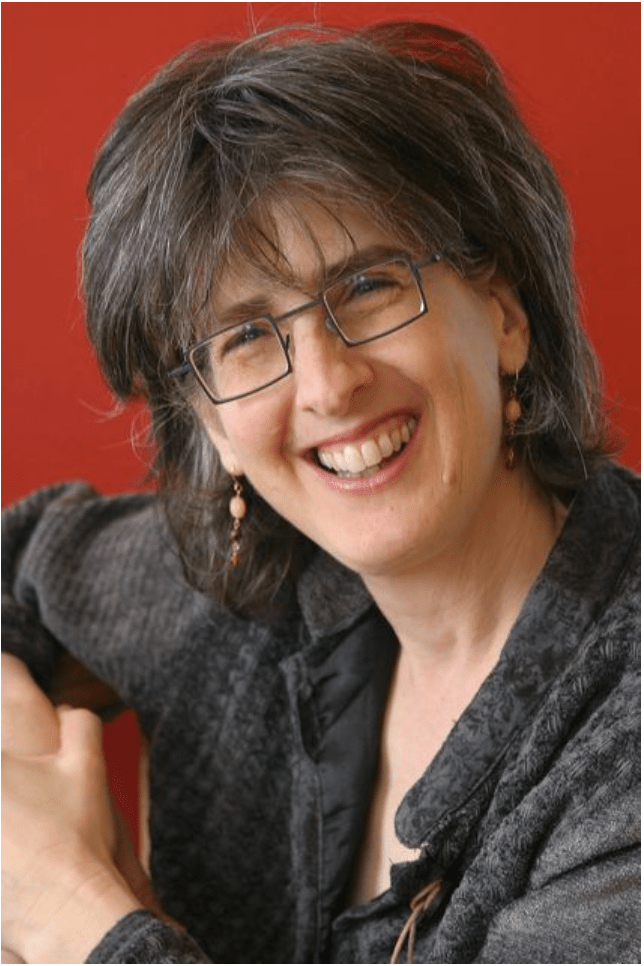
Jill as the prophetess Huldah

Right before Passover every year, my wife and I visit a botanical garden to look at the spring flowers: daffodils, tulips, cherry and apple blossoms, magnolia.   One year, in 2004 or so, we were on our way there when I had an idea. I grabbed a pen and started scribbling long lists of biblical women.

“What are you doing?” my wife asked.

“Making an Omer Calendar,” I said. 

Since biblical times, there is a Jewish practice of counting the forty-nine days between the holiday of Passover (the barley harvest and festival of freedom) and the holiday of Shavuot (the first fruits festival and the season of receiving Torah).  These forty-nine days were the time of the barley and wheat harvest and were a fraught time for biblical farmers.  According to the Talmud, each day of the Omer must be counted along with a blessing.  One must count consecutively each day (usually in the evening) and one loses the right to say the blessing if one misses a full day of the count.  The Omer is often understood as a time of semi-mourning because of plagues said to occur during this time, but it is also a joyful season when nature’s abundance is at the forefront.  This seven-week period embodies both fear that the harvest will be damaged and gratitude for the harvest.

Continue reading “An Omer Calendar of Biblical Women by Jill Hammer”

Legacy of Carol P. Christ: Shadows Of The Goddess In Greek Orthodox Tradition: Easter And The Dormition Of The Virgin

This post was originally published on Aug. 13th, 2012

While I would not wish to argue that Greek Orthodoxy is in any way a “feminist” tradition, the shadow of the Goddess falls long over the two great festivals of spring and midsummer.

In Greek Othodox tradition, there are two major spiritual holidays– Easter in the spring and the Dormition/Assumption of the Virgin at midsummer.  The Panagia, She Who is All Holy, also known as Mother of God, Virgin, and Mary, is a central figure in people’s faith–dethroned neither by the Reformation nor by Vatican II.  Indeed when I speak of the need for the “rebirth of the Goddess” in Greece, I am often told, “the Panagia is our Goddess.”  This may not be theological orthodoxy, but it expresses a truth of practice. Continue reading “Legacy of Carol P. Christ: Shadows Of The Goddess In Greek Orthodox Tradition: Easter And The Dormition Of The Virgin”

Blodeuwedd; The Flower that Does Not Bloom and the Transhuman Death Spiral by Kelle Ban Dea

Blodeuwedd is often viewed as a Spring goddess, a personification of flower and bud and bloom. And why not; she is made of flowers after all; flowers and magic. It’s only when you read her original myth in the Fourth Branch of the Mabinogi that you realise how dark it is.

Of all the famous women – now seen as goddesses by many – in these ancient Celtic legends, Blodeuwedd is the only one who is not a mother, and therefore not seen as an aspect of the mother goddess, Modron. Bloduwedd cannot be a mother, because although she is made of flowers, she is a flower that will never bloom, that cannot reproduce.

In both ancient mythology and in the neopatriarchy we live in today, women who either cannot or will not be mothers (despite these being very different things; one a choice, one a lack of choice) are viewed with suspicion. As the opposite of the nurturing, fecund Mother, Bloduwedd instead brings betrayal and death to the hero of the tale. Yet, it was never Blodeuwedd at fault. She is created by the rapist magician Gwydion and given without her consent to be the wife of Lleu, the king, and our shining ‘hero’ of the story. Lleu has been cursed by his own mother to never have a human wife or children, so Bloduwedd is the best that Gwydion can conjure up, and he is celebrated for this marvellous feat of magic.

No-one, of course, bothers to ask Blodeuwedd what she might want.

Continue reading “Blodeuwedd; The Flower that Does Not Bloom and the Transhuman Death Spiral by Kelle Ban Dea”

Journey to Freedom: Harriet Tubman Still on the Move, part 2 by Maria Dintino

Part 1 appeared yesterday

Additional Developments

Although there’s a significant dearth of statues depicting real women in our country, Tubman’s image and legacy have done much to address this gap and put a serious dent in the bronze ceiling.

There are said to be at least 9 full-figure sculptures of Tubman with others in the works, along with plaques, busts,  parks and museums named in her honor. Also, three commemorative coins have been released, each depicting a particular phase in Tubman’s life.

Speaking of currency, the plan to replace President Andrew Jackson’s image with that of Harriet Tubman’s on the twenty-dollar bill is still in the works. It’s an important endeavor that’s taking far too long. Annie Linskey with The Philadelphia Tribune explains:

“There has never been a Black person on the U.S. currency, nor has there been a woman on a bill in the modern era, despite repeated attempts to diversify the currency.”

Continue reading “Journey to Freedom: Harriet Tubman Still on the Move, part 2 by Maria Dintino”

Sacred Secrets: The Legacy of Women’s Wisdom Across Generations by Rabbi Nadya Gross

From my earliest memories, I saw things that others didn’t see and knew things I had no business knowing. But at the time, I didn’t realize that others didn’t witness the dance of light around their bodies or the life forms at the base of trees. I didn’t know that the insights I had into people’s emotions were not universally shared. My curiosity led me to ask questions about these things… until my grandmother, Savta (Heb), took me into the kitchen (where everything important happened), closed the doors, and told me never to talk about these things with anyone except her. And so, my training began.

Savta was gifted in ways different from mine. She had grown up in a circle of women and their daughters, a circle where women educated each other, shared their unique gifts and insights, and passed down a legacy of wisdom.

The wisdom she shared with me was as ancient as the land on which we lived. We began with reverence for the Earth and all her elements—pre-patriarchal Goddess wisdom. We explored what it means to be intimately connected to all aspects of Creation, understanding that we are interdependent. Harm to a tree, an insect, or the water harms us. We learned that the respect we wish to receive from others must first be shown by us. I learned to never pick up a beautiful stone that caught my attention without first asking permission to remove it from its resting place. When harvesting fruit from one of the many trees in my grandparent’ yard, I expressed deep gratitude to the mother-tree whose body nurtured that fruit to ripeness.

Continue reading “Sacred Secrets: The Legacy of Women’s Wisdom Across Generations by Rabbi Nadya Gross”

Practicing Mistakes in Karate by Xochitl Alvizo

One of my earliest lessons from karate, which I am still working to integrate, is about the necessity of making mistakes. I used to apologize every time I make a mistake, “I’m sorry,” I’d immediately say to my instructor. She would smile at me and at the end of class would say, “You don’t have to apologize for making a mistake; your body is just learning to do this for the first time, so of course you’re going to make mistakes. Mistakes are part of the process.”   

The necessity of making mistakes was something I needed to learn to embrace. As with other areas of life, making mistakes in karate made me feel like a fool. I would get frustrated with myself and would feel embarrassed, and would feel like my teachers were disappointed in me too. But one of the things that has helped me embrace my mistakes is seeing how I have indeed improved in my practice. The mistakes I now make are new ones and are about higher level forms and techniques—things that used to absolutely seem impossible for me. 

Continue reading “Practicing Mistakes in Karate by Xochitl Alvizo”

Womanist Sapphic Reflections on Sex, Desire, and Power by Chaz J.

**This post is based on my personal experience, research, survivor of the purity movement, and professional experience as a therapist and spiritual advisor of 5 years.

**Sapphic = women loving women <3

Everything is sex, except sex- which is power. Now ask yourself who is screwing you. – Janelle Monae

Desire, a flame that flickers, not always fanned to embers of the flesh, but today, let’s speak of its carnal heat, its dance with power, its intimate embrace with sex. 

A tempest roils within, desire’s current a raging, untamed beast. A lifetime shrouded in the gloom of putrified dread, where yearning was condemned, branded a scarlet path to eternal fire, has left its indelible scar. The hollow pronouncements of warning, like the venomous whisper of James 1:14-15, still slither within, etched into the marrow of my bones: “Temptation comes from our own desires, which entice us and drag us away. These desires give birth to sinful actions. And when sin is allowed to grow, it gives birth to death.” These words, seared into my soul, a brand of shame, a constant, gnawing reminder of the perceived treachery of wanting, the supposed sin of simply feeling and wanting.

Continue reading “Womanist Sapphic Reflections on Sex, Desire, and Power by Chaz J.”

Love Without Want by Arianne MacBean

I have only felt love without want twice in my life. The first time was when I was invited to my therapist’s funeral. The summons arrived without surprise. Strangely, my therapist and I had talked about it, before dying any time soon was a thing either of us thought would occur. After my own mother had just received her second breast cancer diagnosis, I impulsively asked my therapist during our session, “How will I know if something happens to you? Will someone call?” Someone would call. I was on a list – a list of people to call if my therapist died.

In session, we talked through how her unexpected disappearance might go – playacting for therapeutical reasons, but not knowing we were setting the stage for a true and imminent exit. She asked me if I would like to come to her funeral. There was no hesitation. Yes. I had been seeing her for twelve years. She had gotten me through life, she had gotten me through me. Of course, I wanted to go to her funeral. Then, we talked about what would happen if I died. I asked her if she would come to my funeral. Yes. I asked her if she would give the eulogy. She laughed, “That might be a little weird.” Just two months later, she received her own gut-wrenchingly aggressive cancer diagnosis. We needed no list. She told me herself. The funeral was planned and when it arrived, I sat in the back row not knowing anyone there, listening to stories about a woman I didn’t know but knew. Because as much as I didn’t know anything about her, I knew her so fully through the way she loved me. The funeral invitation, her last selfless gift.

Continue reading “Love Without Want by Arianne MacBean”

The Field of Belonging, by Molly Remer

May we be resilient
in the face of conflict and change.
May we lean in,
reach out,
root down,
and deepen into
the practices that nurture us
and sustain us.
May we cultivate wise discernment.
May we persist in reclaiming our power
and our attention.
May we embody our prayers.
May we dance bravely
on the bones of the coercive systems
that try to drag us down.
May we lift our heads
to meet the eyes of life.
May we persist in seeing,
in being,
in lifting our resilient and stubborn joys
up to soar.

I know we are weary, overwhelmed by how much damage can be done by sweeps of pen and distant deciding, callous disregard seeming to seep into all the edges and change how the world feels to live in. We may feel frozen with indecision, unsure of what to do or how to help or what to say. So much asks for our attention and our time, asks us to look and to not turn away. We wonder what there is to celebrate in the face of so much anger and so much need. It is hard to feel so small and human, hard to keep hoping, to trust in our own inherent magic and that goodness and beauty are still at work amid the pain. 

Continue reading “The Field of Belonging, by Molly Remer”

Preaching with a Predator in the First Pew by Angela Yarber

Seeing him in the first pew was distracting. Legs splayed in expert manspreading fashion, both arms draped unaware across either side of the backrest, belly protruding over a worn leather belt. He wasn’t a tall man, yet his sprawling body occupied nearly six feet of space. A slight smirk was always smeared across his lips and his eyes were fixed on me.

Preaching to a predator is never easy. So, while I could never imagine what it would be like to speak truth to power like Bishop Budde at the National Prayer Service, I’m confident that, like me, every clergywoman in America knows what it’s like for a pussy grabber to leer at you from the first pew. Even the finest vestments, highest clerical honors, and the divine herself cannot protect you from that.

Continue reading “Preaching with a Predator in the First Pew by Angela Yarber”