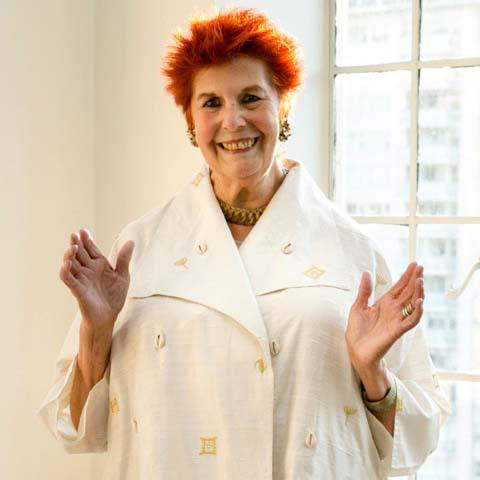
She in Archetypes, Images, Energy… Emerging by Dale Allen

If it weren’t for my mother, I wouldn’t have gone to church on Saturday evening at 5pm.  It was a special trip made by me, my daughter and my 89-year-old mother who is visiting here in Connecticut from Ohio.  We are met at Holy Name of Jesus Church in Stamford, CT by one of my aunts, some cousins, one of my sisters, a brother-in-law, nieces and nephews – part of our big family.

Holy Name of Jesus Church is in walking distance from the house where my mother grew up: the house where her Polish-immigrant parents raised 8 children. My mother and her siblings attended Holy Name of Jesus Catholic School next to the church from 1st through 9th grade. The school is still there and now houses a daycare and learning center.

Continue reading “She in Archetypes, Images, Energy… Emerging by Dale Allen”

And Then Everything Changed: Part Two: Joy by Beth Bartlett

(part one was posted yesterday)

Author’s Note: I wrote this post shortly after Pres. Biden stepped down as the Democratic candidate for the presidency and endorsed Kamala Harris, long before the Kamala-Harris ticket adopted “joy” as their watchword. The reference to the “joy” of this campaign has now become so ubiquitous that I fear it will become trivialized and merely a slogan. I hope instead that they meaningfully embrace a politics of joy and the capacity of joy to heal divides, not just in this country, but throughout the world. 

* * *

. . . and then everything changed. 

What is this feeling that has been filling me of late? Ah, yes, I remember — hope, enthusiasm, excitement, optimism!  It’s been so long since I’ve felt this — on the political scene, for our country, for the world. But lately I’ve felt buoyant – something I haven’t felt at least since 2016. Rather than avoiding the news, now I am eager for it, seek it out. 

The energy, vitality, and yes, laughter that Kamala Harris has brought to the presidential campaign has infused myself and many others I know with a sense of joy, a welcome contrast from the doom and gloom that has been surrounding the campaign for so long. Her ability to laugh, to smile, to find the positives in people, in life, that has brought new life to this campaign. Yet for some reason, the opposing side has chosen to focus on Harris’s easy laughter as a target for derision. 

Continue reading “And Then Everything Changed: Part Two: Joy by Beth Bartlett”

I Am an American, Too by Marie Cartier

I am an American.
I am proud to be an American.
I am not proud of everything America does—
But I am proud of democracy—
of the idea of democracy.
And I do not want to waste my shot, either.

Continue reading “I Am an American, Too by Marie Cartier”

A Healing Shrine by Joyce Zonana

From October 5, 2023. Joyce posted the blogpost which she titled: Nineteen months and Counting: Experiencing  the Web of Life

On February 28, 2022, I unknowingly drove into a deep snowbank, shortly after finding myself in  a strangely  unfamiliar landscape. Suspecting a TIA, my primary care physician  urged me to go to an emergency room for a possible CAT scan. There, a lesion in my right parietal lobe was quickly discovered.

Continue reading “A Healing Shrine by Joyce Zonana”

How the Nineteenth-Century Spiritualist Movement Gave Voice to American Women -Part 2 by Theresa Dintino

Moderator’s Note: This post is presented as part of FAR’s co-operation with The Nasty Women Writers Project, a site dedicated to highlighting and amplifying the voices and visions of powerful women. The site was founded by sisters Theresa and Maria Dintino. Part 1 was posted yesterday

Spiritualism began with two young girls, the Fox sisters, hearing knocking sounds in their home near Rochester, N.Y . They determined the knocking to be coming from a man who was murdered and buried under their home. The knocking was soon categorized into an alphabet out of which seances began. In seances groups of people gathered and put their hands on a table while asking questions of ancestors who made themselves known by rapping and knocking in response. Next, mediums in the form of young women speaking the answers of the dead as the bereaved asked them questions, emerged. Instructions were disseminated on how to be a medium and how to run a seance. The movement took off.

The movement was largely white, northern Protestants but other ethnicities were  involved. The Black population may have influenced the arising of these practices with traditions brought with them from West Africa.

Continue reading “How the Nineteenth-Century Spiritualist Movement Gave Voice to American Women -Part 2 by Theresa Dintino”

How the Nineteenth-Century Spiritualist Movement Gave Voice to American Women -Part One by Theresa Dintino

Moderator’s Note: This post is presented as part of FAR’s co-operation with The Nasty Women Writers Project, a site dedicated to highlighting and amplifying the voices and visions of powerful women. The site was founded by sisters Theresa and Maria Dintino.

Throughout history women have found power and position in spiritual communities. They have acted as leaders, priestesses, oracles, mediums, disciples, saints, preachers and more. And yet these roles and positions of power are often overlooked in the story of women, and the general story of humans.

Still today many women function as leaders in a variety of spiritual disciplines, yet they do not receive the attention, respect and clout that men in similar positions do. More often women who hold roles of power in spiritual communities are dismissed or discredited.

If their spiritual community is not considered a formally accepted religion where their position was bestowed to them by a man ranking above them, women spiritual leaders are often ignored. This marginalization goes unquestioned.

Continue reading “How the Nineteenth-Century Spiritualist Movement Gave Voice to American Women -Part One by Theresa Dintino”

Healing What Ails Us and Coming Together: Politics and Other Forbidden Subjects by Caryn MacGrandle

I met my best friend growing up in Third Grade.  I moved around the country after high school, but regardless, her and I have managed to stay in touch.  I spoke with her last weekend and asked about her parents.  Even though its been years since I’ve seen them, I remember them as if it were yesterday. Going out to their cabin at Lake Texoma. Seeing them around the house. 

You see Kim and I were tight.  We saw each other pretty much daily for years.  In some ways it was a much more innocent time.  I remember summers leaving the house in the morning and not going back until sunset, muddy and barefoot.  Crawdads and horse models.  Playgrounds and baseball games.  

But in some ways, it was a much less innocent time. We dabbled in quite a lot that we should not have as the term helicopter parent was unheard of.  Our skies were wide open.  The good and the bad. The large majority of us were latch key kids, and we raised ourselves.  No apps to tell our parents where we were or check in. We went as the wind blew us.

Continue reading “Healing What Ails Us and Coming Together: Politics and Other Forbidden Subjects by Caryn MacGrandle”

In My End: My Beginning by Margot Van Sluytman

In my end is my beginning.
T. S. Eliot

This year two colleagues of mine died. And my heart roared. Tears aplenty accompanied me. Poet that I am. Word-lover. Image-seeker. Meaning-making-hound-dog. Doggedly seeking a place to plant myself so that the ache of these losses within the crucible in which I find myself grounded, honed, chiselled, challenged, challenging, writing, wording, rewording, sculpting relationship with my students, who are too my teachers, is soothed. By tiny shards. Soothed. And death finds home everywhere. In each nook. Cranny. Crevice. Concreted crenellation or grassy llano, there she be.

What research, I ask myself, can we do when the heart fails to cease its eking, leaking ache, and crushing sorrow? What academic skill need we birth, resurrect, divine in order to erase this over-whelming tsunami of acknowledging our finitude? Where to look? What book? What paper? What journal? To what podcast need we creep, crawl, scurry, bound, fling ourselves in order to quell brutal, blistering despair? Self-immolation cannot work, for too, too many teeming tears douse the flames.

Continue reading “In My End: My Beginning by Margot Van Sluytman”

To Childless Cat Ladies by Janet Maika’i Rudolph

I feel you. In a patriarchy where women’s reproductive abilities determine our worth, to be childless is a curse. We can thank VP candidate JD Vance for revealing this truth in all its ugly fullness. He is a walking billboard for patriarchy. Bottom line: Patriarchy is all about women’s bodies, our reproductive abilities and men’s desire to control them. We saw this in the Dobbs decision where it was declared that women have no constitutional right to the basics of healthcare, in Texas where it’s pretty much illegal to have a poor pregnancy outcome, and in Ohio where raped children are expected to give birth to their abuser’s child. Its endless 

But it is JD who made it plainer than plain what this is all about. Besides childless cat ladies being an old trope, just think of the judgement involved. Who is JD to decide on anyone’s family constellation? Or their pets? He also made disparaging remarks about the “childless left,” who have no “physical commitment to the future of this country.” That is a statement that only a person who totally lacks empathy can make. He is making a sweeping generalization that people without children don’t care about the future. This statement is more confession than truth. He reveals that until he had children, he had no care about the future of our world. It’s beyond egocentric. If only his kids are the center of his “caring,” that shuts out most of the world’s other children.

Continue reading “To Childless Cat Ladies by Janet Maika’i Rudolph”

The Case for Women’s Visionary Films by Freia Serafina

Power in the woods.
Creation of artist Jym Davis.

As a film history professor, I am intimately aware that women’s representation on screen is historically lacking. While preparing to teach a new course, I found myself hard-pressed to uncover significant academic discourse that highlights the divine feminine that doesn’t solely live in the realm of a Christian worldview. Indeed, film scholar Tenzen Eaghll points out that much of the existing scholarship from the past 100 years “all tend to equate religion with Christian theology in some manner, and … focus[es] narrowly upon Christian themes such as Jesus, salvation, faith, etc.” He states that scholars of religion and film essentialize all religion as Christianity, and that many scholars of cinema additionally speak of religion as an all-encompassing umbrella organization giving us a condensed notion of a shared theological worldview, devoid of nuance and alternate meaning. Eaghll goes on to argue, as I do, for a more critical approach to the study of film that requires us to pay closer attention to how “representations of religion in film conceal issues of race, class, gender, colonialism, secularism, and capitalism – common themes in ideological critique – as well as notions of origin, authenticity, narrative, violence, and identity.” I believe the solution lays in the inclusion of women’s visionary films.

Continue reading “The Case for Women’s Visionary Films by Freia Serafina”