

 Our human connection to Cow goes back to the days of prehistory. Aurochs (wild oxen), cattle’s wild ancestors, are found in prehistoric cave art throughout Europe, India and Africa. About 10,500 years ago modern cattle were domesticated from only 80 wild oxen in southeastern Turkey. This was not an easy task as wild aurochs are much bigger than cattle and not at all docile. But succeed they did and cattle became a foundation of human civilization. They provided not only food and clothing but also became beasts of burden for agriculture. An estimated 1.4 billion cattle exist today.
Continue reading “Cow, Nursemaid to Humanity by Judith Shaw”

 Amongst Celtic peoples, the capacity to speak poetically was a divine attribute, regarded as a transformative power of the Deity, who was named by those peoples as the Great Goddess Brigid: She was a poet, a Matron of Poetry (along with her capacities of smithcraft and healing). And at Delphi in Greece, the oracular priestesses delivered their prophecies in poetic form: Phemonoe invented the poetic meter, the hexameter. And from Sumeria, humans have the first Western written records of literature, which is poetry written by the High Priestess of Inanna, Enheduanna in approximately 2300 B.C.E.. Poetry has been recognised as a powerful modality: Barbara Mor and Monica Sjoo described “poetic thinking” as an wholistic mode, wherein “paradox and ambiguity … can be felt and synthesized. The most ancient becomes the most modern; for in the holographic universe, each ‘subjective’ part contains the ‘objective’ whole, and chronological time is just one aspect of a simultaneous universe” (
 I struggled with what to write about for my May post. Would I write about the ridiculous notion which has countless Americans buying into the idea that COVID19 is a hoax? I could write about how it is fool hearty for us to even consider lifting stay at home orders when the number of infected patients are still rising daily. The list goes on due to the rising pressures, frustrations, and anxieties that are surrounding each one of us.
 The reason and the importance of ritual in all world religions and spiritual paths, is the achievement of a more awakened consciousness, to touch on all of the physical senses in such a way as to awaken one to a higher level of spiritual awareness. Think, for example, of the movements of the ministers on TV. Everything moves in a certain order, and if this order is not followed, people are unsettled.
 Brother Francesco, known to the world as Saint Francis of Assisi, left us many sweet and lovely poems and songs. In “The Canticle of the Sun,” he wrote about the gifts of nature. Brother Sun, his light and radiance.
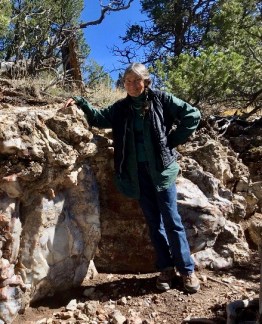 I was writing an article when a sharp crack slammed through the house. I jumped out of bed to identify the frightening sound and found nothing. It wasn’t until I was in the bathroom that I saw that the floor had separated from its molding. Frightened out of my wits I crawled into my cellar to discover a supporting beam had collapsed. Others would follow. I was leaving for New Mexico in a week.
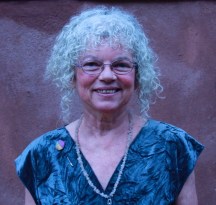 The term ‘PaGaian’, which became the title of my work, was conceived in at least two places on the planet and in the opposite hemispheres within a year of each other, without either inventor being aware of the other’s new expression. It was some time before they found each other … one party in Australia, myself having published a book with
  Feminism and Religion