Seeding In by Sara Wright

I watered the soil thoroughly because it was so dry. Like my foremothers and the women who came before them I intended to plant seeds, and May has been a month of bizarre weather extremes. The last waxing moon frost occurred this week with temperatures in the mid 20’s. Finally, it was time…

When I awakened during the night a light drizzle sweetened the air as a solitary gray tree frog trilled from the brook. At dawn I was disappointed that rain had barely wet the leaves and yet the sky was soft with dark gray clouds, and it was delightfully cool, a perfect day for planting.

I felt excitement rising as I gathered my chosen seeds and began raking smooth the damp sweet earth, marveling of the fact that each seed contains the miracle of its own becoming. I was imagining the riot of color that would be visible by early August as I poked each seed into its home, tamped it down, and afterwards, watered again. Nasturtiums and Scarlet Runner beans would provide the back-drop for the perennial flowers in the lower garden all of which had escaped the frost. I was well pleased. Because of the light drizzle the seeds would not dry out today, I thought, with some satisfaction.
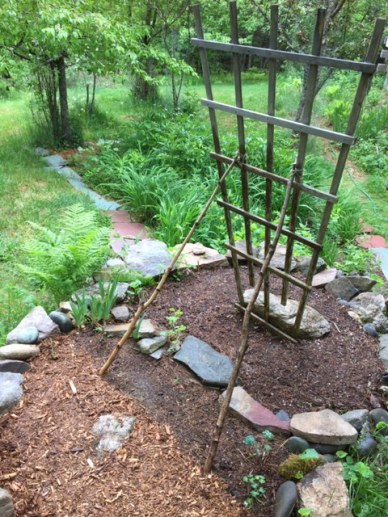
Finishing with the rock garden I moved up the hill to my herb patch. I planted four basil plants, the dill seedlings were nestled next to the lettuce, with parsley in between; happily the lemon thyme was recovering from its winter ordeal. Finally I seeded more basil directly into the soil and poked more trailing nasturtiums around the lettuce because the latter would be gone before the nasturtiums were big enough to shade the plants.

This simple little herb patch gave me as much pleasure as having a big vegetable garden once did. It was the relational act of co creating with the earth that mattered.

Afterwards I walked to the pond in the still gray air. I love humidity when it’s cool because the moist air holds the scents of so many trees plants, bushes and flowers. The combined effect is intoxicating. Especially now with the lilacs.

When the rain began I was back in the house. Instantly my eyes witnessed electric green emanating from the trees – all plants were breathing, saturating themselves with moisture. The evergreens stretched their fingers out, and the deciduous trees turned their leaves upward opening them to the sky. The grosbeaks, red wings, and cardinals sang love songs. Everyone loves the Cloud People.

Seeding in officially marks the end of heavy garden work for me. For two months I have been digging and moving plants from the big cottage garden into a smaller one that I can see from the screened and glassed in porch, our summer living room.

Reflecting over the past few years I remembered becoming disenchanted with gardening – the work was becoming too hard – so much so that I thought I was ready to let go. I was wrong. When the grass began to crowd out the delicate spring flowers and other old fashioned perennials so dear to me I realized I was missing my old friends.

At that point I left for the NM desert where I tried to garden in a hostile environment on land that did not belong to me. After attempting to create an oasis in impossible heat and wind I was forced to give up gardening for a second time, this time out of necessity. In that process I had developed a new perspective on gardening in Maine. It might be hard work but the rewards were worth it. I was ready to try again.

When I returned home this spring I knew that necessary construction would ruin what was left of the old fashioned overgrown cottage garden. Trusting that this work will happen ‘sometime’ motivated me to move plant after plant – choosing carefully what to keep and what to let go. The result is that I have created a lovely cottage garden that contains my most beloved perennial flowers. Hopefully I can care for these, at least for a few more years. It’s been quite a process, and I have learned the hard way that gardening is as necessary to me as breathing.

June’s full moon is upon us. Because so many wildflowers are sprouting fruiting bodies besides strawberries I have re named this solstice moon the Berry Moon… There is an old purple Berry Woman that lives in this forested wood inside an Elderberry bush I recently planted who can be coaxed out of hiding if the need is great. I hope she will help me break out of the  paralyzed state I find myself in. I need help believing that I can find the builder, the help I need…

Once, a few years ago she left me a seed…


Sara is a naturalist, ethologist ( a person who studies animals in their natural habitats) (former) Jungian Pattern Analyst, and a writer. She publishes her work regularly in a number of different venues and is presently living in Maine.
The Eldest, Truest Olympians by Barbara Ardinger

Scene: A comfy lecture hall in the temple on the summit of Mount Olympus. The feminist historians have taken their seats. The eldest Olympians rise to speak. Let us attend to their words.
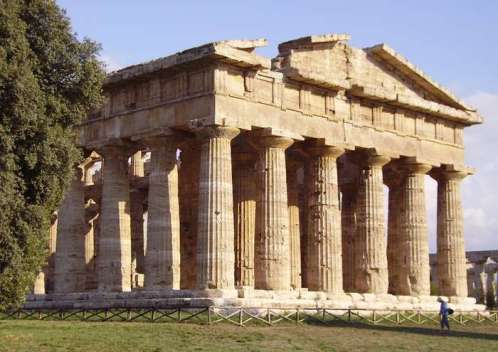
I am Hera, Queen of All, Daughter of Gaia, Daughter of the Great Mother, whose body is our holy earth, whose bodily fluids are our springs and oceans, whose mind is our precious air and holy fire. I am Mother of the Fates, Sister of Hestia, protector of homes, and sister of Memory, whose daughters are the Muses, sponsors of our culture. I live in contentment with my wife, Zeusina.

I am Zeusina, Co-Queen of All, Wife of Hera, Co-Mother and Sacred Guardian of all lands. You’ve heard the stories of that rapacious lecher who usurped my place? Don’t believe them! That dirty dog stole my throne, my wife, and even my name. Now one of my constant duties is to battle against the armies that are invading our peaceful lands and bringing their thunder-gods to cast us down and stand in dominion over us. The generals of those armies are bringing ruin and desolation to our lands and cities. Another of my tasks is to correct the stories the speakers for the thunder-gods tell. I rescue young women like Leda and Danae and Europa from their greedy fathers, who would sell them to the highest bidders. So many young women have I had to rescue!

I am Poseidis, Queen of Waters. When I was young, I swam and played with mermaids and seals and dolphins and whales. Now I find I must protect them from the ravages of royal navies and ruthless fishermen. I spend my days and nights working to clean up after the careless men who discard their trash in my waters. I yearn to swim and play again. Can you help me clean our waters?

I am Demeter, Queen of Crops and Farmlands. You perhaps know the story of my daughter Persephone. Men have told how she was kidnapped by my little brother, Hades. Don’t believe it! She went to visit the lands beneath the earth because she could hear the crying of souls caught in boredom in the Elysian Fields. She visited them to sing to them and to teach them to protect and fertilize the roots of plants that grow on the surface of the earth. Friends, let us work to save our lands from harm. And let us always celebrate Our Holy Mysteries.

I am Athena, Queen of Holy Wisdom. From my birth among the Amazons of Libya and my childhood among the Amazons who live near the Black Sea, I have sought learning and inspired humans to think and write. You have no doubt heard of my so-called friendship with Odysseus, that hubristic king of such a tiny island. Don’t believe what you’ve read about him! My perpetual chore is to cleanse him of that sneaky cunning and to teach him to be friendlier to the people he meets in his travels. Actually, he needs to stay home with his family.

I am Apolla, Queen of Music and Sunlight. When your day is bright and the sun is shining down upon you, think of me. When you hear a lyre or a lute or a guitar, think of me. I invented all musical instruments, and my greatest joy is the symphony orchestra. Perhaps you’ve heard the tale about how I “conquered” Delphi and took over the oracle? Don’t believe it. Like her sister sibyls, the oracle was growing elderly. I went to help her interpret some obscure riddle and liked that vale so much I bought a timeshare and now spend much of my time there. The oracles and I are aging gracefully together.

I am Ares-ma, Queen of Armies. I am so angry! Warriors should not be mercenaries working for greedy kings. They should be honorable explorers. I am so angry that kings prefer to abandon justice and their goddess-given healing touch and sit on higher and mightier thrones. I am so angry at the armies and their thunder-gods that all I want to do is fight against them and defend our ancient mothers against their burning weapons. I am so angry!

I am Aphrodite, Queen of What Is Best of Love. I am the Great Creatrix of gardens and landscaping. I inspire your poets and bring colors to your world. You’ve no doubt heard about my so-called girdle. Well, it’s really just a fancy golden belt. It’s supposed to strike men and women with profane love, to make women surrender to godlets and men who think they’re gods. Don’t believe it! I use my belt to draw magical borders between peaceful realms and teach humans about compassion and charity.

I am Hephaestia, Queen of Forges and Crafts. I have taught people to fashion metal into works of art…but some turned my lessons inside out and used my forges to create weapons. Oh, shame upon them! Do you engage in any craft? The roots of all crafts lie in my smithy, and I teach humans to do clever things with ordinary materials. We bring beauty to the world.

I am Hermia, Queen of Written Languages, Messenger between the divine worlds and the ordinary ones. You’ve heard the old tales that “Hermes” and his son Autolycus are thieves? Well, maybe they were, but I am not…well, sometimes I borrow things to show to humans and give them pleasure. I am forever speeding with messages between the worlds and lands. So much fun!

I am Dionysia, Drama Queen. Oh, yes, indeedy…I invented drama. Plus tragedy and comedy. That was when someone told me about consensual reality and I found it soooo boring. Let’s have our stories acted and sung and danced on stages (which I also invented). Let’s have elevated reality and great festivals. Hooray for Shakespeare, Moliere, and Chekhov. And the Gershwins and every performer who’s ever stepped on a stage and brought entertainment to the people!


Note: This bit of nonsense woke me up at 4:00 this morning. I’m pretty sure I wasn’t dreaming. Voices in my head? Who could resist? They were telling me that most of the Greek myths we’re familiar with are patriarchal fantasies. So there, Robert Graves—you’ve written the phallocentric versions. Now it’s our turn.  


Barbara Ardinger, Ph.D. (www.barbaraardinger.com), is a published author and freelance editor. Her newest book is Secret Lives, a novel about grandmothers who do magic.  Her earlier nonfiction books include the daybook Pagan Every DayFinding New Goddesses (a pun-filled parody of goddess encyclopedias), and Goddess Meditations.  When she can get away from the computer, she goes to the theater as often as possible—she loves musical theater and movies in which people sing and dance. She is also an active CERT (Community Emergency Rescue Team) volunteer and a member (and occasional secretary pro-tem) of a neighborhood organization that focuses on code enforcement and safety for citizens. She has been an AIDS emotional support volunteer and a literacy volunteer. She is an active member of the Neopagan community and is well known for the rituals she creates and leads.

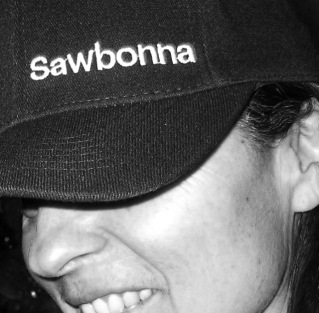
Gaia Delights: Sawbonna Resilience and the Pandemic by Margot Van Sluytman/Raven Speaks

In a recent interview about my current published paper and my life’s-work, Sawbonna, which is a model of both social and restorative justice, I was struck by how being locked down due to this global pandemic not only rips us to the core of our fears and forebodings; but, as well, invites us, if challenges us, to witness with and for each other, as we come to see the depth of resilience that has been a kindred companion throughout the ages. From time immemorial, Gaia delights by firing our hearts of justice with creativity. With love.

My interview took place over Zoom, a virtual bridge of connection and connecting. In this instance, that bridge stretched between Toronto, Canada and Cork, Ireland, where activist and researcher Jane Mulcahy and I spoke about Sawbonna, which is contextualized in the crucible of shared-humanity and human-rights. We discussed therapeutic writing, voice, trauma, poetry.  Our conversation [which will be on Jane’s SoundCloud platform later this year] was infused with a crystal clear knowing that trauma and grief are in symbiotic sisterhood with resilience and voice. Continue reading “Gaia Delights: Sawbonna Resilience and the Pandemic by Margot Van Sluytman/Raven Speaks”

“What If We Touched Ourselves Lovingly Every Day?” by Trelawney Grenfell-Muir

I watched her hand stroke along my arm, so gently, so lovingly. Her voice whispered, “I love you, Trelawney. I love you, Trelawney.” The soft, tender caress felt poignant, healing, magical. I wept with gratitude.

It was my own hand stroking me. My own voice. Continue reading ““What If We Touched Ourselves Lovingly Every Day?” by Trelawney Grenfell-Muir”

“Side of the Angels Statement” by Natalie Weaver

As a feminist, I have learned how important it is to limit the scope of my claims to a reasonable space, demarcated by some genuine historical or current investment, connection, or participation.  There are many things in this world about which I passingly feel or think something.  And, even if I think about something quite a bit, if I have nothing but opinion, even an informed one, I find it best to keep to myself.  I therefore tread lightly here.  Nevertheless, I do have some opinions born out of years of studying the relationship between Christianity and slavery, professional risk in dealing with these subjects, and my own different, but very real, history of abuse by which I analogically understand some measure of pain and exploitation.

I am dismayed by the overuse of written, right-side statements of position in times of crisis.  I really feel as though they serve to say something like, “Hey, Everyone, We, the __________  (Church, School, Charity, Business), are on the side of the angels.  We have the right attitude about this thing, and we’re putting it out there publicly so that everyone knows we’re legitimate.  Keep trusting us.” Continue reading ““Side of the Angels Statement” by Natalie Weaver”

A Beary Peaceful Day by Sara Wright

Photo by Sara Wright

It is overcast and a few drops of rain are falling. I have been out talking to Tree Bear (TB), a yearling who has brightened my life in these dark soul days. Tree Bear comes up the mossy pine strewn path to the clearing and peeks at me from behind his white pine intermittently as he snacks.

There are so many old felled trees full of tasty grubs and ants now that the spring grasses have matured and gone by; soon the berries will ripen and Tree Bear will begin to put on weight. Acorns will be the choice of food for fall. Few people know that Black Bears are 93 percent vegetarian.

The other night I watched TB in the cherry tree, sitting in the branches like a monkey calmly combing out his thick under fur as he munched on cherry leaves and hard green cherries. He is a healthy looking and very beautiful yearling with brown eyebrows and a bump in his nose that is only visible from some angles. He probably weighs 50 – 60 lbs and has some brownish fur in places.

Continue reading “A Beary Peaceful Day by Sara Wright”

Her Magic in the Stone Circle by Glenys Livingstone

My ancestors built great circles of stones that represented their perception of real time and space, and enabled them to tell time: the stone circles were cosmic calendars. They went to great lengths and detail to get it right. It was obviously very important to them to have the stones of a particular kind, in the right positions according to position of the Sun at different times of the year, and then to celebrate ceremony within it.

I have for decades had a much smaller circle of stones assembled, representing the ‘Wheel of the Year’, as the annual cycle of Earth around Sun is commonly named in Pagan traditions. I have regarded this small circle of stones as a medicine wheel. It is a portable collection, that I can spread out in my living space, or let sit in a small circle on an altar, with a candle/candles in the middle. Each stone (or objects, as some are) represents a particular Seasonal Moment, and is placed in the corresponding direction. I have found this assembled circle to have been an important presence. It makes the year, my everyday sacred journey of Earth around Sun, tangible and visible as a circle, and has been a method of changing my mind, as I am placed in real space and time. My stone wheel has been a method of bringing me home to my indigenous sense of being.  Continue reading “Her Magic in the Stone Circle by Glenys Livingstone”

The Sacred Love We Can Share through Kindness and Patience by Elisabeth Schilling

new FAR pic“Love is patient, love is kind.” – 1 Cor 13:4.
I think it was either Simone de Beauvoir or Betty Friedan who mentioned we live in a “sea of hostility.” Mainly it is the comment section of almost any post of photo or text where this can be evidenced. Since much of humanity spends a solid amount of time on social media these days, such negativity, judgment, criticism, canceling, and general snarky reactivity and pushing of opinion starts to leak into our veins. I was thinking about the human predicament the other day and what might be a central issue for many: the avoidance of pain.

We think we avoid suffering, discomfort when we project it on to another person. When we decide to play the game and live life for ourselves, acquiring more and more wealth, we forget there is a cost to the earth and often our near and far global neighbors. We try to avoid suffering when we demand our freedoms, trying to fashion a world according to our preference even as it means imposing our personal moralities onto others. Continue reading “The Sacred Love We Can Share through Kindness and Patience by Elisabeth Schilling”

Ruth the Priestess: Redemption and the Returning Grain by Jill Hammer

I spend a lot of time on Zoom these days and my current life in New York City is not tremendously familiar to me.  Home schooling, uncertainty about work, and concern for relatives are all part of my world right now. So I’ve been keeping myself sane, between the various kinds of curve balls thrown by social distancing, by walking in the park.  I now know when everything comes into season. I’ve watched the cherry blossoms bloom and the wisteria flower and the magnolia petals fall.  In this time, I’ve become more in tune with the piece of land I live on and its cycles.  And that helps me tune in to the mysteries of the Book of Ruth.

The Jewish holiday of Shavuot, first fruits festival and season of the giving of Torah, begins this Thursday night.  It is a custom that during this holiday, Jews read the story of the giving of the Ten Commandments on Mount Sinai.  And, there is also another story read: the book of Ruth.  The book of Ruth tells of a family who finds support and shelter at the time of the grain harvest, and Shavuot is a grain harvest festival.  The book of Ruth also describes the journey of Ruth to join the Israelite people, and so it is often understood as a conversion story.  The reason I love to read the Book of Ruth at this time is because I understand this story to have undercurrents out of Near Eastern myth—the joining of a priestess and a king, and the return from death to life.  While Ruth is usually seen as a devoted daughter-in-law, a feminist analysis might see her as the engine for redemption. Continue reading “Ruth the Priestess: Redemption and the Returning Grain by Jill Hammer”

My Green Spaces by Esther Nelson

I don’t do well being cooped up (staying at home) all day and every day.  Thankfully the state of Virginia, where I currently live, has kept their parks open during the COVID-19 pandemic.  For two months, I intentionally scheduled a “green space” time into my daily routine.  Usually I’d hike.  Sometimes I’d just sit in the car and look at the natural scenery in front of me.

The James River at Pony Pasture Rapids was my “go-to” place during the pandemic lockdown.  In addition to refreshing themselves by the river, people use Pony Pasture as their launching point for a variety of floatation devices, but mostly kayaks, to paddle around the river.

Pleasant Creek Trail is one among many paths along the James River at Pony Pasture.  After meandering a half mile or so, I came upon this view.  I call this scene “Entering the Emerald Forest.”

Showcasing Richmond, Virginia, in an attractive cityscape.  I walked along the floodwall to capture this Richmond skyline.

One day, I went to a local park (Maymont) and stared up at this tree like infants do with their mobiles hanging over their cribs.

Straight, sturdy tree trunk

Spreading its leafy branches

Green shelter in place

Richmond has had a goodly amount of rain this spring.  This is the James River after several inches of rain throughout the state.

Even when the rain came, I made it a point to get out of the house, sit in my car, dream a bit, and read from my Kindle for two or three hours.

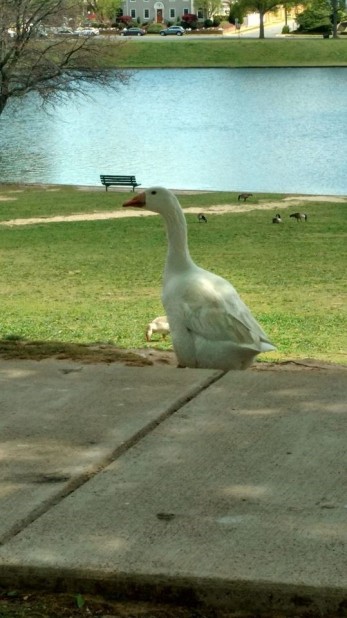
Had a visitor one day while enjoying the sunshine and breathing in fresh air at Byrd park.

Bench-sitting alone
Cold winds blowing through the trees
Mother Goose visits

Earlier in the spring, I watched the dogwood tree bloom in my front yard.

Amidst clouds and chill
Nature still blooms pink and white
In my damp front yard

One of my favorite days at Pony Pasture Rapids put me in touch with this family.

Blessed be!

In sunnier weather, I’d visit beautiful, old Hollywood Cemetery in Richmond.  From the web: “Hollywood Cemetery was designed in 1847 as a “rural” style garden cemetery to escape the grid-like monotony of city cemeteries. Landscape architect, John Notman, specifically left trees and other plants untouched when designing the cemetery’s landscape in order to create a peaceful haven for Richmonders. Today, our 135 acres of valleys and hills are covered with heritage roses, stately trees, and other blooms that live up to the name of a garden cemetery. In 2017, Hollywood Cemetery was named a recognized arboretum with the ArbNet Arboretum Accreditation Program.”

One day I went hunting (and I did have to hunt!) for inscriptions that made me take notice.  There’s such a paucity of creative, interesting text on tombstones.  Of those I’ve seen so far, Andrea Smith Kauder’s is my favorite.  “Neal, Adam and Bryan–I love you very much. I thank everyone for visiting. Now go and be happy.”  Andrea died as a relatively young woman—44 years old.  I think I would have enjoyed knowing her.

And, I’m moving again!  Going to a condominium just three miles down the road from my current address in Richmond, Virginia.  Wonder where in the world I will eventually land.  I can’t seem to settle down in any one spot.  Here I am scrubbing the floor of my new condo in preparation for move-in.  My only green space on this day was the green gloves I used to protect my hands during the onerous chore.

My grandmother, Jessie, often told me, “Only way to clean a floor, honey, is to get on your hands and knees and scrub.”  Jessie was right.  Perhaps a fitting text on my tombstone might reflect the necessity of women’s domestic labor to keep the wheels of society moving.

She cleaned like a fiend

Hoping…yes, always hoping

For a little dirt.


Esther Nelson is an adjunct professor at Virginia Commonwealth University, Richmond, Va. She has taught courses on Human Spirituality, Global Ethics, Christian-Muslim Relations, and Religions of the World, but focuses on her favorite course, Women in Islam. She is the co-author (with Nasr Abu Zaid) of Voice of an Exile: Reflections on Islam and the co-author (with Kristen Swenson) of What is Religious Studies? : A Journey of Inquiry.