

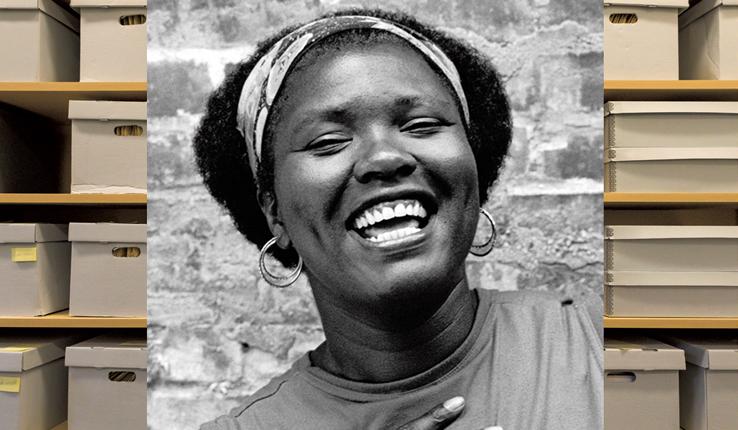
The Gloria Naylor Archive
I am beyond thrilled to learn of The Gloria Naylor Archive!
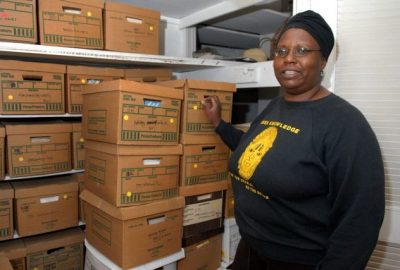
This extensive repository of Naylor’s work has been a joint labor of love, respect, and honor between Sacred Heart University in Fairfield, Connecticut (where Naylor was awarded an honorary degree in 1994) and Lehigh University in Bethlehem, Pennsylvania.
Suzanne Edwards, associate professor of English and director of the Humanities Center at Lehigh, explains:
“It’s this incredible resource, but it was also a resource that I didn’t see people engaging with in scholarship on Naylor. The materials weren’t easily accessible, and Sacred Heart didn’t have the staff or resources to digitize it.”
As a result, Edwards recommended a partnership that would “make the archive more accessible to fans of Naylor’s work, to teachers who are teaching her novels at the college level, on the secondary level, and to scholars who might find it difficult to make a trip to Fairfield”(Hochbein).
The results: a rich and expanding digital archive, as well as an invite to those doing research involving Naylor to schedule an appointment if they would like to engage with materials in person. (Before scheduling a trip, know that the physical materials belonging to the archive are back at Sacred Heart University in Connecticut as of 2023.)
This passage from The Gloria Naylor Archive mission statement is a reminder that archives not only serve as preservation, but create access to critical material for today’s consideration and beyond:
“Thus, we approach the Archive not only as a record of the past, but also as a movement toward new communities and different futures. In this sense, we take our cue from Naylor’s novels, like Mama Day, in which past, present, and future are mutually transformative. Written between 1981 and 2010, Naylor’s published works and her private papers offer fresh insights into pressing contemporary political issues today. For instance, her published and unpublished writings speak to issues of mass incarceration and police violence, migration and gentrification, religion and sexuality, racism and sexism in higher education, the enduring legacies of enslavement and colonization in North America, capitalism and globalization, as well as the power of Black joy, cultural traditions, and resistance.”
Fortunately, Gloria Naylor donated her manuscripts, research notes, outlines, letters and more to Sacred Heart University, leading to a prescient partnership with Lehigh University, ultimately creating an invaluable resource for us all.
The Women of Brewster Place
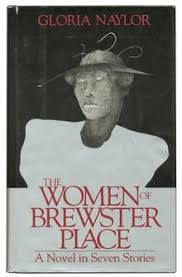
It seems Gloria Naylor had a serious knack for transformation. She illuminated the potential and strength in entities deemed by others unimportant, hopeless and out of reach. Take Brewster Place, the central setting in her first novel, a run down, isolated housing project, blocked from the rest of the thriving city by a solid brick wall. In this first novel, The Women of Brewster Place, Naylor traces the lives of seven black women who end up calling Brewster Place home, women “whose support of one another enables them to survive despite crushing poverty and personal tragedy”(Perry 217).
Gloria Naylor transforms the home, a typically mundane space assigned to women, “washing clothes, preparing meals, and diapering babies”(Montgomery 19), by revealing its bonding aspects, the elements that make home an indisputable foundation and sanctuary, wherever it is.
The Women of Brewster Place begins with the spotlight on a young, unwed, pregnant black woman, Mattie Michaels, who, through her unwavering perseverance, becomes a pillar of strength for the women around her. Haven’t we all known these women, those who hold power deep within and in sharing this strength with their community become the center of something so sustaining and vital, it’s transformative?
Gloria Naylor is “not so much concerned with restrictions associated with life in the city as she is with the creative ways that the folk mount a challenge to authoritarian rule”(Montgomery 2). And challenges run rampant on Brewster Place. But the image of Mattie Michaels, the matriarch on the block, rocking Ciel in her arms after her child dies, is one I will never forget. The nurturing power of women to help heal one another, (and clearly from the quote below there is an obscene amount of trauma to manage) through mutual knowing and understanding, transcends time and truly stuns in this scene:
“Ciel moaned. Mattie rocked. Propelled by the sound, Mattie rocked her out of that bed, out of that room, into a blue vastness underneath the sun and above time. She rocked her over the Aegean seas so clean they shone like crystal, so clear the fresh blood of sacrificed babies torn from their mother’s arms and given to Neptune could be seen like pink froth on the water. She rocked her on and on, past Dachau, where soul-gutted Jewish mothers swept their children’s entrails off laboratory floors. They flew past the spilled brains of Senegalese infants whose mothers had dashed them on the wooden sides of slave ships. And she rocked on” (qtd. in Montgomery 17).
I’d like to share this scene in its entirety, but for the sake of keeping the length of this piece manageable, I will not. I highly recommend reading the novel. The Women of Brewster Place television miniseries (1989) that Oprah Winfrey produced and starred in is worth the watch too, although, as usual, not in lieu of the novel.
As inspiring as the ending of this story feels, where the women of Brewster Place are breaking down the wall, dismantling it brick by brick, it’s a bit of a downer knowing how desperately such collective action is still needed today. It seems the only way to transform systemic discrimination remains fiercely tackling it piece by piece.
Gloria Naylor was the daughter of sharecroppers who migrated from Robinsonville, Mississippi to Harlem, New York to provide more opportunity for their children. Gloria slowly developed from a shy, unsure girl and young woman to one with a clear purpose: to allow the stories that haunted her to be told. This purpose became clearer when, in college, Gloria was introduced to the likes of Alice Walker, Toni Morrison, Zora Neale Hurston, black women writers she didn’t know existed. Astounded, she realized that perhaps the stories she had to share, those stories scribbled in her journal, were indeed valuable. Her novel The Women of Brewster Place received the 1983 National Book Award for First Novel. A black feminist writer was born.
part 2 tomorrow
Discover more from Feminism and Religion
Subscribe to get the latest posts sent to your email.

