From the Archives: Tree of Life: The Festival of the Trees in an Age of Treefall by Jill Hammer

This was originally posted on January 22, 2019

Almost every day, I walk in Central Park.  There are certain trees there I’ve come to know: the gnarled cherry trees by the reservoir, the bending willows and tall bald cypress by the pond, the sycamores that drop their bark each summer, the hawthorn not far from Central Park West.  Lately I’ve been taking photos of the trees to try to capture their essence, their posture in the world.  The trees around me feel like friends, which is what an ancient midrash (interpretation/legend) called Genesis Rabbah says about trees: that they are friends to humankind.  To me, they’ve always been a central manifestation of Mother Earth.

Currently, the national parks in the United States have no staff because of the government shutdown. Some people have taken the opportunity to cut down the rare and endangered Joshua trees in the Joshua Tree National Park—just for fun, I guess, or as a trophy of some kind.  Meanwhile, President Bolsonaro of Brazil recently has indicted that he wants to remove protection for the rainforest, in order to allow development.  It appears that my friends the trees have enemies.  Sometimes the enmity is for personal/corporate gain, and sometimes the enmity seems to have no reason at all.

Continue reading “From the Archives: Tree of Life: The Festival of the Trees in an Age of Treefall by Jill Hammer”

“Now I Will Have Respect”; “Now I Will Be Looked Up To” – Women Assert Their Worth in the Christmas Story by Liz Cooledge Jenkins

“The Giver of Breath has looked upon me with kindness and has taken away my shame. Now I will have respect in the eyes of my people.” -Elizabeth (Luke 1:25, First Nations Version [FNV])

“From deep in my heart I dance with joy to honor the Great Spirit. Even though I am small and weak, he noticed me. Now I will be looked up to by all. The Mighty One has lifted me up!” -Mary (Luke 1:46-49a, FNV)

Two women, one older, one younger. Both unexpectedly pregnant. Both key players in the Christian Advent story. Both living in a world, not unlike ours today, where women were not fully acknowledged as complete human beings, with all the strength and agency this entails. And both, for this reason, starving for the respect of their loved ones and communities.

Continue reading ““Now I Will Have Respect”; “Now I Will Be Looked Up To” – Women Assert Their Worth in the Christmas Story by Liz Cooledge Jenkins”

From the Archives: Winter Solstice: Celebration of the Powers of Fire by Sara Wright

This was originally posted on Dec. 12, 2023

I have a problem with the belief that Winter Solstice is primarily about celebrating ‘the coming of the light.’ This one – sided thinking negates the cross-cultural reality that this is a festival during which candles are lit to light up the night and roaring fires blaze inside and out bringing warmth to all. Winter Solstice is above all else a Festival of Fire.

Fire is an ambiguous element (as all the elements are) carrying both a positive and negative charge. On one level fire brings warmth and light on cold winter nights. On the other hand, fire also incinerates, destroying everything it touches. Approaching a Festival that celebrates the Element of Fire should be done with consciousness and caution.

Continue reading “From the Archives: Winter Solstice: Celebration of the Powers of Fire by Sara Wright”

Legacy of Carol P. Christ: Is ‘Having To Have’ One Of The Roots Of Suffering?

Carol P. ChristThis post was originally published on Aug. 6th, 2012

There is a strong thread of fatalism in modern Greek culture that has been a powerfully healing antidote to my American upbringing in the culture of “I think I can, I can.”  When confronted with an obstacle, many Greeks throw up their hands, raise their eyebrows, and say, “What can we do?” This phrase is not an opening toward change, but a closing–an acknowledgment that there are many things in life that are not under our control.

In American culture we are taught that if we work hard enough, we can achieve our goals. This view can bring a light of possibility into fatalistic cultures. The truth, however, lies somewhere in the middle–between fatalism and belief in the power of individual or collective will.

In American culture the belief that we can “have it all” if only we work hard enough is the root of much personal suffering.  If things don’t turn out as we imagined they should have, we often blame ourselves. Continue reading “Legacy of Carol P. Christ: Is ‘Having To Have’ One Of The Roots Of Suffering?”

Gardens Bloom Between our Wombs by Chaz J.

For years, I have dedicated my life to empowering and uplifting all women in all ways. I have loved women as mothers, aunties, sisters, friends, cousins, teachers, mentors, daughters, God, and most recently myself. The depth of sweetness and emotion for women runs as deep as my life’s work. My life’s work centers and finds a deep well of inspiration in women and women’s lived experiences. My feelings concerning women were confusing for a long time and for a long time I have loved women in every way, except two: sexually and romantically. Giving myself permission to love women in every way has been one of the most liberating personal experiences of my life. It is one of my most radical revolutions. It is self-acceptance and self love in totality. 

The object of my desires is fluid and delicate. She is intuitive  and evasive. She is real and ethereal. She is Wombman. She created and is the fundamental elements that constantly gives birth to the world around us. She has given birth to all of us. She is fire and fury. She is Mother Gaia. She is the winds of change. She is water’s depth and grace. She is the sunlight after a storm. She IS the storm purging impurities. She is a creator and she is destruction. She simply IS…

Continue reading “Gardens Bloom Between our Wombs by Chaz J.”

The Wave: Poems from Hurricane Helene by Annelinde Metzner

For 37 years, I have resided with awe and delight in the Appalachian Mountains near Asheville, North Carolina.  With gratitude for the palpable strength and ageless beauty of the great mountains down to the tiniest ephemeral flowers, I have poured out poetry and music in honor of Her and my life here. In one day (or three, including the days of rain leading up,) Her pristine beauty and the homes and lives of thousands were destroyed by the violent winds and rain of Hurricane Helene.  I was dropped into a deep well of grief, which I still experience to this day.  But something very ancient, basic and fundamental pushed me to write poems, astounded as I was by the events and human interactions around me.  I hope these poems give you some sense of the experience.

Helene Wave
Continue reading “The Wave: Poems from Hurricane Helene by Annelinde Metzner”

Re-claiming Friday the 13th and Other Tidbits by Janet Maika’i Rudolph

I am struck by how language affects our thoughts, values and even our actions. One standout for me is Friday the 13th which is a day accused of being cursed and holding bad luck in modern beliefs. There is even a series of horror films created in the date’s honor. But why has this date been declared so negative?  Like so much, the answer is that it is a suppression of women and our strength. Although I have heard different explanations for its meaning, my favorite is this; there are 13 moons in a solar year. That means that a woman will menstruate 13 times in that solar year. Thirteen is a symbol of women’s power. And Friday? Friday is the only day of the week named for a Goddess. In English it is Freya’s day named in honor of the Norse Goddess of love. In Spanish it is viernes, in French vendredi, both named for Freya’s counterpart Venus. I present to you that this makes it an extremely powerful day. Perhaps a horror for misogynists but for we women a day to celebrate.

I have also been thinking about the roots of the word “history” – his story.  Many in feminist communities, including here at FAR, counter it with “herstory” – her story. But truly our past is not broken up into genders for the arc of the past affects us all, perhaps differently but all of us nevertheless. We all breathe the same air, live under a culture’s laws, etc.  … Here are some names I have been playing around with as replacements: Ancestorstory.  Ourstory. Hustory.   

Continue reading “Re-claiming Friday the 13th and Other Tidbits by Janet Maika’i Rudolph”

Resistance Checklist: Do It Loud. Do It Quiet by Karen Tate

Despite what you’re hearing out there, because it’s outdated information just being repeated in the echo chamber, Trump did not win by a landslide.  He has no legitimate mandate.  As of this writing one percentage point of the population separates how many votes each candidate got in this election and counting has not finished.

Many of us might still be recovering from the election disappointment and we’re trying to find our way forward.  Consider this:

“Many of us have been brought up on stories of praying to God the Father to save us, waiting for our prince to come, submitting to the greater wisdom of our husband or priest to guide us. We need to move from this way of being, into our own agency. But we must also recognise that we cannot do it all, nor do it alone, in the martyr mother myth so many of us have learned to embody.
This is not the time for being nice, biting our tongues or not rocking the boat. And yet these are also not times for making enemies or picking fights. Can we find other ways of engaging and challenging, visioning and contributing to transformation? What might these look like?” From Weaving Our Way Beyond Patriarchy – a compendium of over 80 women’s voices, launching today exclusively from Womancraft Publishing. com

Continue reading “Resistance Checklist: Do It Loud. Do It Quiet by Karen Tate”

Hydrangea Lessons, by Molly Remer

How to create a ritual:
Look at the sky.
Touch your skin.
Breathe deep in your belly.
Feel your heart beat.
Stand on the earth.
Let life carry you.

How to create a ritual:
Look at the sky.
Touch your skin.
Breathe deep in your belly.
Feel your heart beat.
Stand on the earth.
Let life carry you.

September 2024:

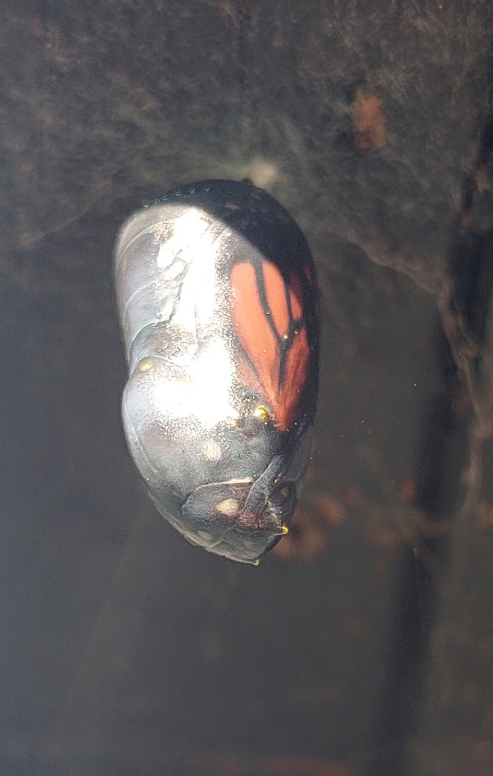
It is now that slender bush clover makes flower crowns along the roadside and coreopsis lifts its yellow faces to the sky. There is change in the air, whispering on cooling winds and shrieking by above the field on the feathers of broad-winged hawks. The last cicadas continue to drone and the apples hang rosy on the trees. The deck bears a sprinkling of yellow walnut leaves, and I picked up a brown and green patterned oak leaf to press into the pages of my prayers. It is now that I pause to steep, to listen to myself before pressing onward into the final part of the year. There is both an invitation and a summons here, to evaluate and renew, to consider the pace of life and whether to ease off or push onward. It is now that I remember that restoration is the antidote to depletion and I gather myself up, tenderly calling the fragments home, recollecting myself and taking time to look at where I am and what I have and what I’ve chosen. There are crows calling at the end of the driveway. I keep my eyes open for any passing monarchs. There is a slight hint of spiced pumpkin on the wind. The Virginia creeper has darkened to rusty red. 

Continue reading “Hydrangea Lessons, by Molly Remer”

The Story of Changing Woman, part 2 by Sara Wright

Part 1 was posted December 7th. You can read it here.

Commentary:

I love this story because it demonstrates the evolutionary and eternal nature of Woman; her intimate relationship to Nature, her ability to give birth, to mother, to let go, her ability to endure, her need for animals and plants as companions and her willingness to stand her ground until she is able to get what she needs. Changing Woman matures from a passive figure who is acted upon by the forces of Nature into a self-directed female power who knows what she wants, and one who finds peace in choosing relationships with animals, plants and humans on her own terms.

Initially, Changing Woman is impregnated by the wind – the power of the spirit moving across the land – and not through sexual intercourse. Spirit and the Body of the Earth are the two equally creative aspects involved in her birth. The same holds true for her children, who are male, but conceived and birthed in a similar manner without the need for male insemination (no room for Patriarchy to enter here), suggesting to me that all three are parts of one spiritual/bodily whole that cannot be separated. As creative principles (beyond gender stereotypes) they work together as a triad to rid the world of monsters, to make the Navajo world a safe place, and to secure the matrilineal line. According to Navajo mythology securing the matrilineal line is primarily how Changing Woman saves the world.

Continue reading “The Story of Changing Woman, part 2 by Sara Wright”