
There is an old Jewish custom to use a red thread, tied around a bedpost or a child’s wrist, to keep away demons. In particular, the red thread is said to keep away Lilith, the female demon who steals children. Women still give away red threads at the Western Wall in Jerusalem as a segulah, or protection amulet. Feminist poet Alicia Ostriker reclaims this symbol as a reminder of the umbilical cord, the connection between a human childbearer and a child, and an intimation of the cosmic interconnectedness of all things. She writes:
the disturbing red thread
invisible yet warm
travels between earth and heaven,
vibrates through starless void…does it carry the pulse
of our prayers
like a bulge in a snakedozing, like a stream
of hungry, bloody hope, do all
the red threads joinform a web
Alicia Ostriker, The Volcano Sequence (University of Pittsburgh Press, 2002), p.11-12.
Continue reading “The Red Thread, the Red Heifer, and Red Ritual by Jill Hammer”
 What is, would you think, one of the foremost problems that my Russian friends and relatives mention to me? Economy? Politics? Personal and family issues? Nope. It is immigrants in Europe. I hear genuine concern and aversion when my friends mention the number of Muslims in the UK or the fact that there are predominantly black arrondissements (city districts) in Paris.
 I am the mother of three adult children. I am also the mother of an addict living the nightmare of denial and the consequence of said addiction. Like many, my family of origin is riddled with alcoholics and addicts. I learned to “detach” (not always in love) from their demons, drawing clear lines in the sand for my own future. I thought a geographical relocation in another state would give me the distance and perspective needed to live my own life absent the insanity substance abuse can bring. When I discovered my spouse of then seven years was an addict my world fell apart. For the life of me I could not understand how this could happen—again. What did I miss?
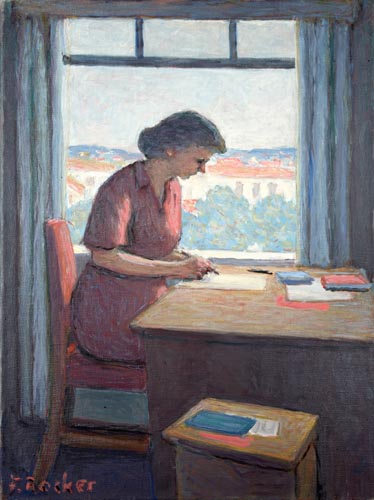
 The world at large might view artists and writers as free spirits rocking la vie bohème, but creative people know that it’s much more complicated than that, especially if we’re striving to earn even a modest living from our work. As a writer, I often fall into the trap of measuring my success or failure on factors completely beyond my control, such as the ups and downs of a fickle book buying market.
 I caught myself reinforcing the norm. The ever present default
 I try very hard this election season to avoid reading about, watching, or listening to Donald Trump: the man is a liar, a cheat, a bully, a narcissist, a racist, a sexist, the list goes on. Yet even progressive commentators are talking almost exclusively about him. And now I am joining them–despite my best intentions.
 Pelišky was one of the first movies I watched in the Czech Republic. It takes place in the year (maybe years) before the Soviet Occupation. It follows the lives and struggles of ordinary families. One of the best and funniest scenes takes place at a small post-wedding dinner. The couple receives some new-fangled plastic spoons as a wedding present. The gift-giver is very proud of the fact that they were made in Eastern Germany. One of the characters stirs her tea with the spoon and is about to lick it but as she takes it out of the hot tea it bends as if it was made of rubber. Soon the scene dissolves into arguments, frustrations and disappointments.