Activate your Body to Navigate Overwhelm

We live in a time of radical change, in a steam cooker of accelerated alchemy. No wonder most of us struggle with chronic overwhelm.

Beliefs, habits, thought patterns and organisational structures don’t change overnight, and we need ways to boost our resilience in the long arc of paradigm shifts. How can we look after ourselves during this personal and collective dance of change?

In this post I reflect on the connection between movement and health, breathing, and the role of our nervous system. I propose 5 simple steps to minimise and transform overwhelm when it happens.

Continue reading “Activate your Body to Navigate Overwhelm”

The Mothers, the Goddess, Lost and Found, part 2 by Elizabeth Cunningham

Excerpts in two parts adapted from My Life as a Prayer: A Multifaith Memoir. Part 1 appeared yesterday. You can read it here.

The Goddess finds me

Between the birth of my son and the birth of my daughter, I had a second miscarriage. The signs that something was wrong were subtle at first. I drove myself to a doctor’s appointment, hoping to be reassured that everything was all right (though I already sensed it wasn’t). En route to the office, perhaps to distract myself, I pondered why it was that I had never written about the church, or Christianity. Then…

I turn onto the main street. I glance at an old clock tower, and there she is superimposed against it, huge, big as the sky, vast as the earth.

I hear her voice.

You have been searching for me all your life.

She speaks inside me, all around me.

The wild mother, the witch in the wood.” [She shows me the stories I’ve written.] “You have been searching for me all your life.

Continue reading “The Mothers, the Goddess, Lost and Found, part 2 by Elizabeth Cunningham”

The Mothers, the Goddess, Lost and Found, part 1 by Elizabeth Cunningham

Excerpts in two parts adapted from My Life as a Prayer: A Multifaith Memoir
(Note: Both excerpts have been edited for brevity)

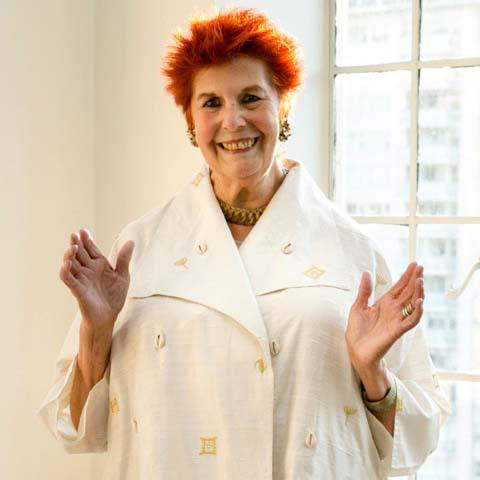
The author’s mother as an architectural student.

The Mothers

When I was fourteen years old, I had a dream. I was pregnant and riding a donkey through a landscape, all golds and browns, hills crowned with ancient trees. I arrived at a monastery where monks with brown hands helped deliver my baby. From that time on, I longed to have a child.

My first pregnancy ended in miscarriage. I was devastated. Not only had I lost my longed-for baby, I had always taken my body for granted. Despite illnesses and injuries, I had assumed my will and my body’s health and strength were one. Now I knew in my own flesh that I was not in control; doing all the right things (thinking all the right thoughts) could not save me from sorrow. I sat in my own small version of Job’s ash heap.

Continue reading “The Mothers, the Goddess, Lost and Found, part 1 by Elizabeth Cunningham”

Archives from the FAR Founders: Extending Compassion and Vegetarianism by Xochitl Alvizo

This was originally posted on June 26, 2013 and continues to be a story I love retelling!

“I did not know to recognize you as individuals when I bought you, but I know to recognize you as individuals now…”

I had been a vegetarian, and sometimes pescatarian, for more than 10 years before becoming vegan. Despite the length of my vegetarianism, in all that time I had not been inclined to go vegan. First, I really didn’t know too much about veganism and only began meeting a few vegans about five or six years ago here in Boston, none of whom had shared a compelling enough reason for their choice (at least not compelling to me). Further, I had no imagination for life without cheese or Cherry Garcia ice cream(!), and so I happily continued with my vegetarian ways. Then enters Carol Adams…

Continue reading “Archives from the FAR Founders: Extending Compassion and Vegetarianism by Xochitl Alvizo”

Prayer to the Bird Goddesses by Sara Wright

Every fall I look forward to the wild turkeys that visit me during the winter. This year visits are more sporadic but the friendship between the three male turkeys that I call the ‘kings’ or the three amigos has persisted for two years creating many questions for this naturalist regarding bird relationships (despite being ruthlessly hunted in spring and fall and randomly shot at).

These three friends still seem inseparable and last year I had a chance to get to know each individual. Two continue to defer to the king who is just a little larger than his friends, but I never witnessed conflict between any of these male birds. Last year they displayed and even mated together! This year there is a predator afoot and except for the king who acts as a protector standing watch while the mixed flock scratches for seed, the turkeys hide from me, so I am sure I am dealing with a human threat. Still, the turkeys come in to feed and that’s what matters. Only recently have the males begun to come separately. The flocks are splitting up for spring mating, still two months away. I am quite certain that the turkey friendships I am witnessing are replicated with the females but because they are more reticent it is harder to get to know them individually.

Continue reading “Prayer to the Bird Goddesses by Sara Wright”

Legacy of Carol P. Christ: To a Friend, on the Loss of her Daughter

This was originally posted on April 23, 2012

One test of a thealogy is whether it can help us “make sense” of our lives—even the senseless parts of them.

Recently a friend told me that the teen-aged daughter of a friend of hers had committed suicide. “What would your thealogy say to that?” she asked me. Here is what I might say to a friend who lost her daughter:

I am so sorry for your loss. This never should have happened.

I remember times when I wanted to commit suicide. My pain was intense and my mind was stuck. All I could think was: this hurts too much to go on, and it will never change, so I might as well die. I am so sorry if your daughter felt that way, because I know it is a horrible way to feel. I am sorry she was not able to understand that it could have–and probably would have–changed. Don’t blame her. Sometimes pain is so overwhelming you really cannot see beyond it. Don’t blame yourself either. I am certain you did everything you could think of to help her. I know that if you could have prevented her, you would have. It really was not your fault. I don’t blame you, and no one else should either.

Continue reading “Legacy of Carol P. Christ: To a Friend, on the Loss of her Daughter”

Touch, Intimacy, and the Christian Tradition by Stephanie Arel

I’ve been thinking more and more about physical touch, a subject I explore in my first book Affect Theory, Shame, and Christian Formation. The concept of touch – its presence and its frequent absence – beckons me again. In several posts, I will explore aspects of touch to get to my central concern – how good touch indicate, supports, and fosters intimacy, something confounding in human relationality. For this post, I consider the Christian tradition and touch.

In Tactile Engagements in Christian Understanding, Teresa Swan Tuite examines touch in biblical history as one way of “making explicit the ways in which bodies give sense to the theological landscape.” Swan Tuite brings to bear the notion of being known through touch, using as one example the disciple’s recognition of Jesus through touch in the Gospel of John. Caravaggio’s famous painting The Incredulity of St. Thomas depicts the scene which Shelly Rambo details in her blog post on this site.

Continue reading “Touch, Intimacy, and the Christian Tradition by Stephanie Arel”

Praise Arianrhod by Diane Finkle Perazzo

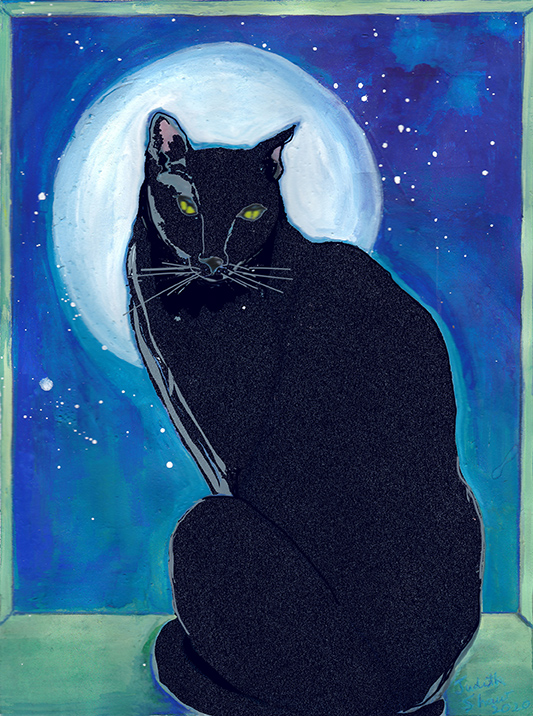
arianrhod-silver-wheel painting by Judith Shaw
Artwork: Judith Shaw from her post on Arianrhod, Feb 23, 2013 which can be read here.

Divine Arianrhod, Beloved Goddess.
Your truth is an inspiration to all living beings.
As you weave the light and the dark so do you scatter.
Joy is in our hearts while you live among the heavens

Celestial Arianrhod, Your crown shines among the stars.
You are the Goddess of the silver wheel upon which all magic is bound together.
Fortunate are we that you are a child of the land and the sky
and mother of the sea and the sun.

Continue reading “Praise Arianrhod by Diane Finkle Perazzo”

Mothering, Society, and The Goddess by Jennifer Eva Pillau

In what I believe was an attempt by my daughter to ease my “mother guilt” for the ways I felt I had let my kids down, she once told me that “the world’s problems can’t be attributed to crappy mothering.”  While I appreciated her apparent effort to soothe my inner turmoiI, I can make a solid case that to a significant degree, they can be.  In fact, the most critical issues we face in the modern world have everything to do with the fact that our social, economic, and cultural structures are materially thwarting, rather than effectively supporting and nurturing, the human animal – our entire species – and particularly children, in our efforts to survive and thrive. 

It is true that mothers are not to blame for all of the ills of the world (though popular psychology can certainly make us feel as if everything is our fault).  Nonetheless, in real and profoundly palpable ways, there are aspects of the human condition that are not receiving the attention, tenderness, and nourishment that we know very well – both by instinct and science – are crucial for physical, emotional, and spiritual resilience.  Predictably, the Earth Herself is suffering in much the same way. 

Continue reading “Mothering, Society, and The Goddess by Jennifer Eva Pillau”

Hijab: Word of God or Word of Man? By John Andrew Morrow: BOOK REVIEW by Esther Nelson

Dr. Morrow’s book is a treasure chest of facts that also includes a wide variety of scholarly opinions regarding hijab.  His meticulous scholarship, laser-like vision, and accessible writing style clearly differentiate between what the Qur’an requires of women’s dress and what the jurists (overwhelmingly male) have enforced.  Morrow’s book would be an invaluable addition to Islamic Studies curricula in the academy, yet it’s comprehensible enough to a lay person interested in learning about hijab.

I thoroughly enjoyed reading this substantial volume.  I got a fuller picture of the meaning of hijab over time.  Dr. Morrow is clear—women ought not to be forced (legally or socially) to wear hijab.  Muslims are fond of saying: There is no priesthood in Islam.  There is no mediator between an individual and Allah.  Yet, many Muslim clergy enforce a patriarchal bent (that social system absorbed from their culture and society) to their juristic rulings that constrict women from making a free choice.

Continue reading “Hijab: Word of God or Word of Man? By John Andrew Morrow: BOOK REVIEW by Esther Nelson”