Archives from the FAR founders: Rereading Adrienne Rich’s “Compulsory Heterosexuality and Lesbian Existence” by Xochitl Alvizo 

This was originally posted on Feb 10, 2024

I recently reread the essay titled “Compulsory Heterosexuality and Lesbian Existence,” by late poet and essayist Adrienne Rich, with my students this semester. Published in the summer of 1980, on the heels of the Women’s Liberation Movement, I found that the essay still maintains its relevance and challenges us to remember that feminism is a political movement that itself must be continually interrogated.  

The essay (which you can read here, with a foreword from Rich published 23 years after the original) has four sections which are titled only with the roman numbers I-IV. I labeled these sections for my students to try and capture the focus of each: I. Compulsory Heterosexuality – The Groundwork; II. Male Power and the Inequality of the Sexes; III. Lesbian Existence as Political Identity; and IV. Woman-Identification as Source of Power and Energy.  

Continue reading “Archives from the FAR founders: Rereading Adrienne Rich’s “Compulsory Heterosexuality and Lesbian Existence” by Xochitl Alvizo “

Chloe’s Shadow by Sara Wright

Gently nibbling seed
a bear bird’s
hind legs
charcoaled nose
glimpsed
through
shade fogged
windows…
Imagining…
Standing
where you just stood
matter is
frozen light
yours
a golden circlet
emerald star
circling
above us all
a beacon of
Cosmic Light
I weave a
crown of grape leaves 
round and
round crafting
Prayers
for body soul –
Your 
Protection
and mine…
Standing in your Shadow
One.
Still, Earth’s Keening
keeps us
awake at night.

Continue reading “Chloe’s Shadow by Sara Wright”

On Friendship: Part One by Beth Bartlett

I’ve been fortunate in my life to have friends, to be a friend, though I’ve also had periods of drought without the nourishing stream of friendship in my life. The nature of my friendships have changed over time – with friends in childhood being primarily playmates, in adolescence – friends traveling in packs – gangs of girls; in grad school, mostly my colleagues.  And then I discovered feminism.

 I bonded with people with whom I shared a passion, a cause, and the work to bring our vision into being.  We gathered in consciousness-raising groups where, in Nelle Morton’s phrase, we heard each other into speech.  We helped each other discover ourselves by sharing our truths out loud – without criticism, argument, interruption, advice – simply being heard.  The self-discovery in sharing the truths we had not even been willing to tell ourselves was powerful.  Most importantly for me was the feminist theorists I was reading – Adrienne Rich, Audre Lorde, Susan Griffin – who challenged me to be my authentic self, honest, open, no longer hiding behind the façade of being someone I thought others wanted me to be – myself.[i]  

Continue reading “On Friendship: Part One by Beth Bartlett”

No Day But Today by Beth Bartlett

Driving north on I-35 after having just left a powerful Somatic Experiencing® training session in which I relived significant moments of my heart transplantation, tears streamed down my face as I blasted the musical Rent at full volume on my car’s CD player.

There’s only us
There’s only this
Forget regret or life is yours to miss

No other road no other way
No day but today

There’s only now
There’s only here . . .
No other path
No other way
No day but today

Continue reading “No Day But Today by Beth Bartlett”

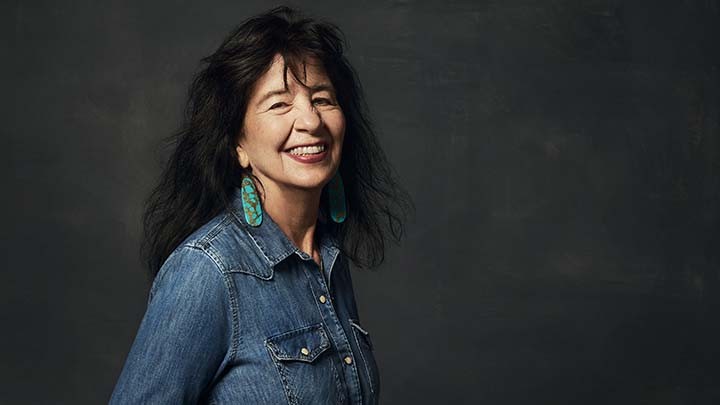
POET WARRIOR BY JOY HARJO: HEALING HEARTS AND NATIONS by Maria Dintino

Moderator’s Note: This post is presented as part of FAR’s co-operation with The Nasty Women Writers Project, a site dedicated to highlighting and amplifying the voices and visions of powerful women. The site was founded by sisters Theresa and Maria Dintino. This was posted on their site in 2021 and then again on March 21, 2023. You can see more of their posts here. 

“MY INNATE IMPULSE IS HEALING, WHICH IS ALSO STANDING UP FOR JUSTICE, WHICH CAN HEAL HEARTS AND NATIONS.” – JOY HARJO

Healing hearts and nations is what Joy Harjo does. Standing up for justice is what Joy Harjo does. Joy Harjo is a teacher and leader for our times, for all times.

When she asks this question in her book, Poet Warrior:

“What do I do with this overwhelming need for justice in my family, for my tribal nation, for those of us in this country who have been written out of the story or those who appear to be destroyed or perverted by false story?” (46),

Continue reading “POET WARRIOR BY JOY HARJO: HEALING HEARTS AND NATIONS by Maria Dintino”

Rereading Adrienne Rich’s “Compulsory Heterosexuality and Lesbian Existence” by Xochitl Alvizo 

I recently reread the essay titled “Compulsory Heterosexuality and Lesbian Existence,” by late poet and essayist Adrienne Rich, with my students this semester. Published in the summer of 1980, on the heels of the Women’s Liberation Movement, I found that the essay still maintains its relevance and challenges us to remember that feminism is a political movement that itself must be continually interrogated.  

The essay (which you can read here, with a foreword from Rich published 23 years after the original) has four sections which are titled only with the roman numbers I-IV. I labeled these sections for my students to try and capture the focus of each: I. Compulsory Heterosexuality – The Groundwork; II. Male Power and the Inequality of the Sexes; III. Lesbian Existence as Political Identity; and IV. Woman-Identification as Source of Power and Energy.  

Continue reading “Rereading Adrienne Rich’s “Compulsory Heterosexuality and Lesbian Existence” by Xochitl Alvizo “

Invisible Connections: The Hidden Web of Women Writers, part 1 by Theresa C. Dintino

Moderator’s Note: We are pleased to announce that we are forming a co-operation with The Nasty Women Writers Project, a site dedicated to highlighting and amplifying the voices and visions of powerful women.The site was founded by sisters Theresa and Maria Dintino. To quote Theresa, “by doing this work we are expanding our own writer’s web for nourishment and support.” This was originally posted on their site on Nov. 16, 2021. You can see more of their posts here. 

created by Data Visualization Specialist Mia S.Szarvas as part of a larger project of Nasty Women Writers about the Web of Women Writers

In the years that my sister Maria and I have been writing for Nasty Women Writers, one of the things that has become increasingly clear is how connected women writers are to one another. Every time I explore the life of a woman writer for Nasty Women Writers, I learn of other women writers she is connected to, inspired and supported by. Some of these connections are through time, meaning one woman writer reads and interacts with the body of work of a woman writer whose lifetime preceded hers chronologically, others are alive at the same time and they interact in person or through letter writing.

Continue reading “Invisible Connections: The Hidden Web of Women Writers, part 1 by Theresa C. Dintino”

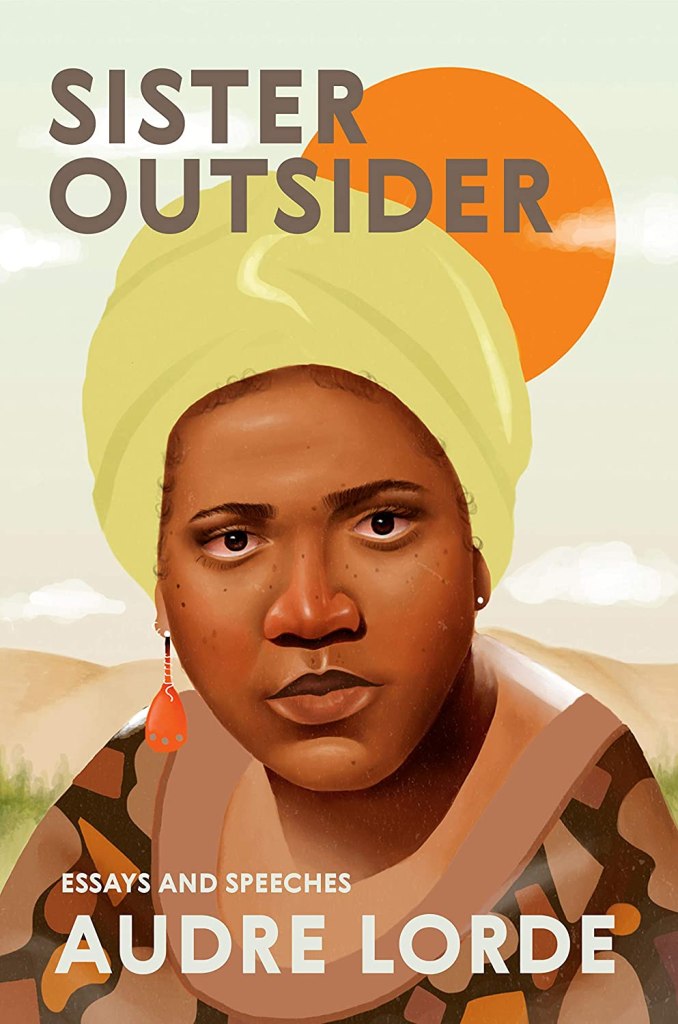
Legacy of Carol P. Christ: Remembering Audre Lorde and “The Uses Of The Erotic”

This was originally posted on March 18, 2013

Moderator’s Note: Carol’s original essay had links to the essay which are no longer active. The essay can be found in Sister Outsider.

I was  given a copy of Audre Lorde’s essay “The Uses of the Erotic” in my first year of teaching at San Jose State by a young white lesbian M.A. student named Terry.  It was 1978.  I was in my early 30s.  This essay came into my life and the lives of my students, friends, and colleagues at “the right time.”  It became a kind of “sacred text” that authorized us to continue to explore the feelings of our bodies and to take them seriously.

The second wave of the women’s movement was about to enter its second decade. We had already been through years of consciousness raising groups.  There we learned to “hear each other to speech” about feelings we had learned to suppress because we had been told they were not acceptable for us as women to have or to express.  Those early days of the women’s movement were one big “coming out” movement.  We were bringing our feelings and ourselves out of the closet.

Continue reading “Legacy of Carol P. Christ: Remembering Audre Lorde and “The Uses Of The Erotic””

Legacy of Carol P. Christ: What Does Mother’s Day Mean in a Patriarchal and Matricidal Culture?

This was originally posted on May 9, 2016

When we seek immortality or spiritual “rebirth,” are we not saying that there is something wrong with the “birth” that was given to us through the body of our mothers? In She Who Changes and in “Reading Plato’s Allegory of the Cave as Matricide and Theacide,” I asserted that our culture is “matricidal” because it is based on the assumption that life in the body in this world “just isn’t good enough.”

What is so wrong with the life that our mothers gave us that we must reject it in the name of a “higher” spiritual life? The answer of course death.

Can we love life without accepting death?

Can we love our mothers if we do not accept a life that ends in death?

Jesus was said to have encouraged his disciples to leave their wives and families in order to follow him.  When he was told that his mother and brothers were outside and waiting to speak to him, he is said to have said:

“Who is my mother, and who are my brothers?” And stretching out his hand toward his disciples, he said, “Here are my mother and my brothers!  For whoever does the will of my Father in heaven is my brother, and sister, and mother. (Matt. 12:48-50)

Continue reading “Legacy of Carol P. Christ: What Does Mother’s Day Mean in a Patriarchal and Matricidal Culture?”

What Does Mother’s Day Mean in a Patriarchal and Matricidal Culture? by Carol P. Christ

Carol Molivos by Andrea Sarris 2When we seek immortality or spiritual “rebirth,” are we not saying that there is something wrong with the “birth” that was given to us through the body of our mothers? In She Who Changes and in “Reading Plato’s Allegory of the Cave as Matricide and Theacide,” I asserted that our culture is “matricidal” because it is based on the assumption that life in the body in this world “just isn’t good enough.”

What is so wrong with the life that our mothers gave us that we must reject it in the name of a “higher” spiritual life? The answer of course death.

Can we love life without accepting death?

Can we love our mothers if we do not accept a life that ends in death? Continue reading “What Does Mother’s Day Mean in a Patriarchal and Matricidal Culture? by Carol P. Christ”