 Women are loving, caring, and clever. Why do men say: “I will not be like that, never?”
In a recent article in Gentlemen’s Quarterly, my favorite comedian, Hannah Gadsby, said:
Hello, the men. My advice on modern masculinity would be to look at all those traits you believe are feminine and interrogate why you are so obsessed with being the opposite. Because this idea that to be a man you have to be the furthest away from being a woman that you possibly can is really weird.
A butch lesbian, Gadsby is not advocating traditional sex role stereotypes. She is questioning them. She continues:
Women are always being encouraged to stir masculine traits into their feminine recipe. We are told to “be bolder!” “Speak up in meetings.” “Exaggerate your skills.” All that Lean In sort of crap. So perhaps it’s time for you, the men, to be more ladylike.
Even as she recognizes that it is becoming OK for women to express so-called “masculine traits,” she understands that so-called masculinity is often based on a lie. It may be fine to “be bolder” (but not when you have nothing to say at the moment) and to “speak up” (but not to the exclusion of others), yet it should not be necessary to “exaggerate your skills” to make yourself look better than other people—and better than you are! No one should not have to be “the best” in order to be accepted or acceptable.
Gadsby feels for the men who are trying to live up to masculine stereotypes:
I can see how it is a tough spot. It is not your fault. You didn’t build this mess. You were born into it, like the rest of us. What I am saying is, I have empathy for you.
And then the comedian’s zinger:
And empathy, by the way, is one of the traits that women are most famous for. You might know it by its other name: “weakness.” But don’t be fooled—empathy is a superpower, and it’s the only one that any human has to offer.
*
Empathy is a superpower, and it’s the only one that any human has to offer.
*
All joking aside, this is a profound statement. Many feminists have been saying for a long time that qualities defined as “female” or “feminine” are in fact human qualities that should be embodied and emulated by all.
*
Gadsby takes this a step further. When she says that empathy is a super power and the only super power available to humans, she is saying that a quality often identified as “female” or “feminine” is in fact the highest value and the most important one for everyone, whether they identify as male, female, or something else, to express. This is a truly radical point of view and perhaps the only one that can save our species and our planet from destruction. Without empathy we and many other forms of life are doomed. And as long as empathy continues to be defined as the opposite of masculine strength, the men who rule the world will continue to turn against the only superpower that can save us.
*
In recent years I have been inspired by egalitarian matriarchal societies. What is most amazing to me about these cultures is not that women have power (though this is amazing) nor even that there is no rape (this too is amazing). What is most amazing to me is that these societies place values they associate with mothers and mothering at the center.
For the Minangkabau of Sumatra, nurturing the weak and the vulnerable is the highest value. Nurturing the weak and the vulnerable is what (good) mothers do. In Minankabau culture, not only women and girls, but also men and boys, are expected to nurture the weak and the vulnerable above all else. For men and boys, there is no shame in this. They are not considered weak or effeminate (a word that could not exist in their culture) for doing so. Rather they take pride in being able to express and embody the values that ensure the continuation of life.
In The Kingdom of Women, Choo WaiHong writes about an appointment she made to speak with an elder man about the egalitarian matriarchal Mosuo culture. She arrived on time, but before he could speak with her, he fed, bathed, and put a set of small twins to bed. For him, nurturing the weak and vulnerable came first. Speaking about his culture could wait, and so could his guest. In fact, he could not have chosen a better way to explain Mosuo values to the Han Chinese woman who waited while he, a respected elder man, cared for two little babies. In his culture, caring for the weak and the vulnerable is important. It is what people do. And it comes first!
*
When will we ever learn? Oh when will we ever learn?

*
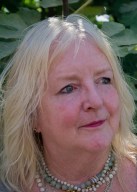
Carol P. Christ is an internationally known feminist and ecofeminist writer, activist, and educator who will soon be moving permanently to Heraklion, Crete. Carol’s recent book written with Judith Plaskow, Goddess and God in the World: Conversations in Embodied Theology, is on Amazon. A Serpentine Path: Mysteries of the Goddess is on sale for $9.99 on Amazon. Carol has been leading Goddess Pilgrimage to Crete for over twenty years: join her in Crete. Carol’s photo by Michael Honneger.
Listen to Carol’s a-mazing interview with Mary Hynes on CBC’s Tapestry recorded in conjunction with her keynote address to the Parliament of World’s Religions.



 Fifteen years ago, I bought my dream home in Molivos, Lesbos, one of the most stunning villages in the world. Over the next two years I renovated a listed Neoclassical house that had been neglected for over thirty years, restoring it to its original beauty. One of my friends who visited exclaimed that it looked like a movie set. Someone else said that the final result was “more Greek than Greek.” I thought this would be my forever home. But, as I have discussed in an earlier blog, I came to feel isolated in a small village.
 One of the projects I am working on these days is an essay on the religion of ancient Crete for a series of books on various aspects of the Minoan site of Gournia.
 When I began researching years ago, I knew the names of my grandparents and what country in Europe their ancestors were from, but not much more. I have now traced most of my ancestors back to the Old Country, some to the 1600s. But there remained four ancestors with unknown places of origin among my sixteen 2x great-grandparents. A week or so ago, I decided to go back to the online resources, focusing on James Inglis, the Scottish seaman, and his Irish wife, Anne Corliss. This time I was more experienced, and I was determined to find the records.
 A few days ago while watching the movie
  Anyone who is following American politics these days knows that the American President and his acolytes have little respect for what the rest of us consider to be the truth—or at least the best approximation of the truth that we can discern. Last week,
  This week’s news from America. Where to begin? When will it end?
 A few nights ago, on the way to dinner, two friends and I passed by a small church near the old fortress in Ierapetra, Crete. The liturgy was broadcast via microphone and a crowd of people gathered outside the church. “Must be some kind of name day,” one of my friends commented, but I could not think of a saint celebrated on August 1.
 I dream that all of us who are suffering burn-out because of national and world politics come together to plant and nurture trees. Scientists say that planting
