
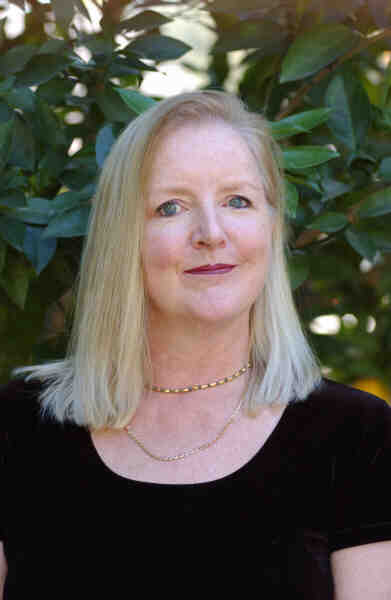
Legacy of Carol P. Christ: Is ‘Having To Have’ One Of The Roots Of Suffering?

Carol P. ChristThis post was originally published on Aug. 6th, 2012

There is a strong thread of fatalism in modern Greek culture that has been a powerfully healing antidote to my American upbringing in the culture of “I think I can, I can.”  When confronted with an obstacle, many Greeks throw up their hands, raise their eyebrows, and say, “What can we do?” This phrase is not an opening toward change, but a closing–an acknowledgment that there are many things in life that are not under our control.

In American culture we are taught that if we work hard enough, we can achieve our goals. This view can bring a light of possibility into fatalistic cultures. The truth, however, lies somewhere in the middle–between fatalism and belief in the power of individual or collective will.

In American culture the belief that we can “have it all” if only we work hard enough is the root of much personal suffering.  If things don’t turn out as we imagined they should have, we often blame ourselves. Continue reading “Legacy of Carol P. Christ: Is ‘Having To Have’ One Of The Roots Of Suffering?”

Legacy of Carol P. Christ: LOVING LIFE*

This post was originally published on June 11th, 2012

My religious views have changed over time, but the spirituality I learned from my grandmothers has remained constant. I have been Protestant, Catholic, a lover of Judaism, an admirer of Christian Science, and a Goddess feminist.  I have always loved life.

I was born in Huntington Hospital just before Christmas in 1945 and brought to my grandmother’s home on Old Ranch Road in Arcadia, California.  Peacocks from the adjacent Los Angeles County Arboretum screeched on the roof. There was another baby in the house, my cousin Dee, born a few months earlier.  My mother and her sister were living with their mother. The war was over, and they were anticipating the return of their husbands from the Pacific Front.  My earliest memory, recovered during healing energy work, is visual and visceral. I am lying crossways in a crib next to the other baby. There is a soft breeze. The other baby is kicking its legs, and I am trying to do the same.  I look up and see three faces looking down at us.  Although the faces are blurry in the vision I see, I feel them as female and loving.  I got off to a good start. Continue reading “Legacy of Carol P. Christ: LOVING LIFE*”

Legacy of Carol P. Christ: A Daughter of the American Revolution and a Daughter of Quaker Slave Owners in Long Island, New York

This post was originally published on June 4th, 2012

I did not ever think that genealogical research would reveal that I am descended from slave owners.

My family’s early American roots are in New York and the upper Midwest—not in the American South. While watching genealogy programs that reveal slave-holding ancestors in the lines of white and black Americans with roots in the South, I have breathed a sigh of relief accompanied by the thought–not me!

I have not expended a great deal of energy researching Searing ancestors who settled in Hempstead, Long Island in the 1640s, because my Uncle Emery had already traced the family line. Bored one afternoon and wondering if my ancestor Samuel Searing had left the Hempstead Quaker community because he fought in the Revolutionary War, I entered the Searing family surname into a general internet search.

I found that my 4x great-grandfather Nathaniel Pearsall–whose daughter Sarah and her husband Samuel Searing are my 3x great-grandparents–is indeed listed for “patriotic service” in the Daughters of the American Revolution database.  As an anti-war activist, I wish there had never been a revolutionary war–we could all have been Canadians!  I would have been pleased to learn that my ancestors were all Quaker pacifists. Still, I must admit that I felt a twinge of pride to be able to trace my ancestry back to our country’s beginnings.

Continuing to follow up links to Searing ancestors, I stumbled upon the wills John and Elizabeth Searing. John was a brother of my 5x great-grandfather, Jonathan Searing.

In the name of God, Amen, April 22, 1746. I, John Searing, of Hempstead, in Queens County, being very sick. My executors are to pay all my debts. I order all my negroes to be sold, except the oldest negro boy; Also my wheat, except enough for family use. I leave to my wife Elizabeth, one bed and furniture and a side saddle, and the use of 1/2 my farm, until my children are brought up…

In the name of God, Amen, November 27, 1760. I,Elizabeth Searing, of Hempstead, of Queens County, being sick. I leave to my son, John Searing, my negro man and a bed and three blankets, etc. To my daughter, Mary Searing, a negro girl, and she is to have clothing and linen of mine so much as my other two daughters have had. …  I leave my granddaughter, Mary Searing, daughter of my son Jacob, a negro girl, and to my daughter Anne long cloak, and the rest of my apparell to my daughters.

If I am a daughter of the American revolution, I am also a daughter of Quaker slave-holders. It is well-known that the Quakers were among the most vociferous abolitionist voices in America.  Who would have thought that Quakers had also owned “negroes.” How did this come about? Continue reading “Legacy of Carol P. Christ: A Daughter of the American Revolution and a Daughter of Quaker Slave Owners in Long Island, New York”

Legacy of Carol P. Christ: Green Solutions To The Greek Economic Crisis: We Are The 99%!

This post was originally published on May 28th, 2012

A green solution to the economic crisis insists that people and the environment can be saved together. We must dare to envision prosperity in conjunction with sustainability, social justice, nonviolence, and participatory democracy.

A rational analysis would make it clear that the Greek people did not “create” the economic crisis. Yet the poor and middle classes are being asked to “pay” for it. There is massive corruption in the public sector in Greece. But this should not blind us to the fact that the Greek people do not bear the major responsibility for creating the crisis. Those responsible include:

Legacy of Carol P. Christ: Home for the Holidays

This post was originally published on Dec. 16th, 2011

Yesterday I was watching an episode of Grey’s Anatomy in which George’s father said to him, “you’re not like us, you’re a surgeon.” “And,” George’s father added, “you don’t like to do the things we like to do.”  It is not easy not being like your family and not liking the things they like.  When my mother was alive, she was the glue that held us together. Since then, my sheer presence in the lives of my father and my brothers and their families is disruptive. No matter that I try not to make waves, I make them all the same. I do keep my mouth shut about politics and religion and feminism. Even so, the last time I was home for the holidays my father asked me to stay in a hotel because having me in the house made him nervous and uncomfortable. To be fair, how would you feel if your daughter was 6 feet tall and you weren’t, she had a PhD and you didn’t, and even if she didn’t open her mouth at all, you knew that she didn’t agree with your political views or your everyday assumption that men make the final decisions on all important matters? Or if you were my brother who does not have a college education and who feels that women and minorities and gays have taken something from him? Or if you were my Mormon brother who is trying to keep his three daughters on the straight and narrow and not on the path chosen by their aunt? On the last Christmas day I spent at my brother’s house, I did not mention any of the obvious things, but it was hard to hide being astonished by the number of presents and the amount of money spent on them, and I simply could not force myself to watch football.   Continue reading “Legacy of Carol P. Christ: Home for the Holidays”

Legacy of Carol P. Christ: Forty Years and Counting: Women and Religion in the Academy

This post was originally published on Oct. 21st, 2011

Carol P. Christ is a founding mother in the study of women and religion, feminist theology, women’s spirituality, and the Goddess movement.  She teaches in the Women’s Spirituality program at CIIS and through Ariadne Institute offers Goddess Pilgrimages to Crete. Her books include She Who Changes and Rebirth of the Goddess and the widely used anthologies Womanspirit Rising and Weaving the Visions.

The receipt of an invitation to the Fortieth Anniversary Celebration of the Women’s Caucus in the American Academy of Religion and the Society for Biblical Literature this week, takes me back to the summer of 1971.  At the first meeting of Women Theologians at Alverno College (which was followed up at Grailville in succeeding years), I proposed that we form a feminist caucus in the field of religion, as had already been done by feminists in several other fields.

Since I was one of the few women at Alverno who had attended the annual meetings in the field of religion, I was delegated to call Harry Buck, then director of the AAR, to ask for space on the program. Harry, who continued to support the work of women in the field through lecture series at Wilson College and the magazine Anima which he founded, offered not only space at the meetings, but a print-out of the names and addresses of all of the members of the AAR who were not obviously male. I invited all of them to come to a feminist meeting at the AAR in Atlanta. It is hard to imagine now, but before 1971, the women who attended the AAR in any given year could probably have been counted on one hand. Continue reading “Legacy of Carol P. Christ: Forty Years and Counting: Women and Religion in the Academy”

Legacy of Carol P. Christ: Is the Prophetic Vision of Social and Ecojustice the Fruit of the Poisonous Tree?

This post was originally published on Aug. 26th, 2011

Carol P. Christ earned her BA from Stanford University and her Ph.D. from Yale University.  She is a founding mother in the study of women and religion, feminist theology, women’s spirituality, and the Goddess movement and work has revolutionized the field of feminism and religion.  She has been active in anti-racist, anti-war, feminist, and anti-nuclear causes for many years.  Since 2001 she has been working with Friends of Green Lesbos to save the wetlands of her home island.  She drafted a massive complaint to the European Commission charging failure to protect Natura wetlands in Lesbos.  In 2010 she ran for office in Lesbos and helped to elect the first Green Party representative to the Regional Council of the North Aegean.  She helped to organize Lesbos Go Green, which is working on recycling in Lesbos.

My hope for the new blog on Feminism and Religion is that it can become a place for real discussion with mutual respect of feminist issues in religion and spirituality.

I agree with Rosemary Radford Ruether who argued in a recent blog “The Biblical Vision of Ecojustice” that the prophets viewed the covenant with Israel and Judah as inclusive of nature. Indeed in my senior thesis at Stanford University on “Nature Imagery in Hosea and Second Isaiah,” in which I worked with the Hebrew texts, I argued that too. I also agree that the dualism Rosemary has so accurately diagnosed as one of the main sources of sexism and other forms of domination comes from the Greeks not the Hebrews. I agree that Carolyn Merchant is right that nature was viewed as a living being in Christian thought up until the modern scientific revolution. I agree with Rosemary that it is a good thing for Christians to use sources within tradition to create an ecojustice ethic. I am happy that there are Christians like Rosemary who are working to transform Christianity.  Finally, I am pleased to admit that I have learned a great deal from her.

Continue reading “Legacy of Carol P. Christ: Is the Prophetic Vision of Social and Ecojustice the Fruit of the Poisonous Tree?”

Legacy of Carol P. Christ: Do White Feminists Have Ancestors?

This post was originally published on Aug. 12th, 2011

Carol P. Christ is a founding mother in the study of women and religion, feminist theology, women’s spirituality, and the Goddess movement.  She teaches in the Women’s Spirituality program at CIIS and through Ariadne Institute offers Goddess Pilgrimages to Crete. Her books include She Who Changes and Rebirth of the Goddess and the widely used anthologies Womanspirit Rising and Weaving the Visions.

Some years ago when I was speaking on ecofeminism, womanist theologian Karen Baker-Fletcher posed a question that went something like this:  What I am missing in your presentation is reference to ancestors.  For black women, this issue is critical.

Baker-Fletcher’s question provoked a process of thinking that continues to this day.  For example, I began to notice that when black women spoke at the American Academy of Religion, they often began by thanking their foremothers Delores Williams and Katie Cannon for beginning the womanist dialogue.  It is far rarer to hear a white woman thank Valerie Saiving, Mary Daly, Rosemary Radford Ruether, or Marija Gimbutas before her talk.

To the contrary, many white women take great pains to distance themselves from feminist foresisters.  I once heard a white woman Biblical scholar tell women students to do work on women in the Bible or other areas of religion without using the word feminist or placing their work in a female or feminist train of thought– if they wanted to get it published.  She was very proud that she had used this method and succeeded.  In other words, she was following in the footsteps of Mary Daly, Phyllis Trible, and Elisabeth Schüssler Fiorenza but acting as if she had invented the study of women and the Bible herself.  The reason for this, she freely admitted, was that male scholars who held power in her field would not respect her work if she used the “f” word. Continue reading “Legacy of Carol P. Christ: Do White Feminists Have Ancestors?”

Legacy of Carol P. Christ: Exciting New Research on Matriarchal Societies

This post was originally published on Aug. 5th, 2011

The following is a guest post written by Carol Christ, Ph.D., a pioneer and founding mother of the Goddess, women’s spirituality, and feminist theology movements, and director of the Ariadne Institute.  She is also the author of multiple books including Rebirth of the Goddess.

Although there are some of us who disagree, the “party line” in the fields of Religious Studies and Archaeology—even among feminists– is that there never were any matriarchies and that claims about peaceful, matrifocal, sedentary, agricultural, Goddess-worshipping societies in Old Europe or elsewhere have been manufactured out of utopian longing.

I myself and most other English-speaking scholars defending Marija Gimbutas’s theories about Old Europe have studiously avoided the word “matriarchy” (speaking rather of “matrifocal, matrilineal, and matrilocal” societies) because the very word “matriarchy” conjures up the image of female-dominated societies where women ruled, waged wars, held men as slaves, and raped and abused men and boys. In fact, this fantasy tells us far more about patriarchy than about it does about matriarchy. Continue reading “Legacy of Carol P. Christ: Exciting New Research on Matriarchal Societies”

Legacy of Carol P. Christ: WOMEN ARTISTS AND RITUALISTS IN THE GREAT CAVES: THE BEGINNING OF THE END OF INDOLENT ASSUMPTIONS

This was originally posted October 21, 2013

In an earlier blog, I suggested that women might have blown red ocher around their hands to leave their marks in prehistoric caves.

At the time I thought this was a rather bold suggestion.

Had I been asked why I thought the images were made by women, I might have said that people have understood caves to be the womb of the Great Mother, the Source of All Life, from time immemorial. I might have added that those who performed rituals in the caves cannot have been performing simple “hunting magic,” but must also have been thanking the Source of Life for making life possible for them and for the great beasts they hunted.  Still I am not certain that I imagined women as the artists in the Paleolithic caves.

handprint peche merle cave
Continue reading “Legacy of Carol P. Christ: WOMEN ARTISTS AND RITUALISTS IN THE GREAT CAVES: THE BEGINNING OF THE END OF INDOLENT ASSUMPTIONS”