

 Maintaining a Catholic identity as a feminist has been a challenge. There have certainly been times where I have walked away from my tradition frustrated by teachings that are oppressive to women and LGBTQ, but I have always come back. Change doesn’t happen from the outside, right? Continue reading “Struggles of a Catholic Feminist Mother by Gina Messina-Dysert”
Tag: community
Remember the Sabbath Day: The Cost of Difference by Linn Marie Tonstad
 I grew up Seventh-day Adventist and was educated at Seventh-day Adventist schools all the way through college. I can tell endless quirky stories about growing up – about the time my parents gave me The Lion, the Witch, and the Wardrobe to read at the age of seven and I was certain, certain, that they had no idea what devilish literature they had given me (all those horrible hags and werewolves), so I promised myself never to tell them because they would feel so bad for having led me astray. (I figured it out when I reread the story at the age of nine.) About my joy in meeting missionaries from the Church of Jesus Christ of Latter-day Saints, or Jehovah’s Witnesses, at the train station on my way to and from school, so that we could proof text against each other. I was always certain that my marked Bible (marked with Sabbath texts, carefully traced with different colored pens, based on a pamphlet I had picked up somewhere) would eventually lead someone to the truth. (Again, I was nine.) As I entered adolescence, I became increasingly worried about the early Adventist dictum that the degree of responsibility you have as a believer is proportional to the degree of light you have been given – after all, I had a lot of light! In fact, I knew the truth.
But no stories like this will tell the truth of my relationship with the church. Yes, I grew up in ways that seem strange to many people: keeping Saturday holy starting Friday at sundown, without TV or movies until about the age of eleven, as a life-long vegetarian (although I became a pescetarian in my twenties), believing that Jesus Christ will return soon, having read the Bible cover to cover by the age of nine (do you see a pattern emerging?), and so on. Having spent the last decade plus outside Adventist institutions, I know much more than I did then about the ways in which my upbringing and beliefs were unusual by mainstream standards. Yet unlike many people who become theologians, and unlike many women who become feminist theologians, I never experienced the church as a particularly repressive site, even though the external forms of my life look very different now. I loved the church, and despite some unfortunate experiences with authority during my high school and college years, the church gave me gifts that I have valued ever since. Continue reading “Remember the Sabbath Day: The Cost of Difference by Linn Marie Tonstad”
My Experience of Community by Ivy Helman
For many feminists, exp erience is crucial. Experience has long been associated with feminist epistemological theories which suggest that reflection on and analysis of one’s experiences offer crucial insight into society. In the history of the women’s movement, this insight and analysis has many times translated into direct action to change the way our society functions.
Experience too has been problematized by various postmodern and postcolonial feminist theorists. They rightly point to the situated-ness of all experiences along class, race, gender, ethnic, religious and other lines. (For more on these ideas, one could read Postcolonialism, Feminism & Religious Discourse edited by Laura E. Donaldson and Kwok Pui-lan.) The context of each and every experience is different. It would be unwise therefore to assume that experiences produce adequate knowledge about societies and how they function. For example, the experience of white middle-class British women living in India during the British occupation is very different from her indigenous contemporary and completely different from lower caste men and women of the same time period. It is important to remember here that patriarchal privilege rears its head and favors some people’s experiences over others, often codifying an experience as “the experience.” When we talk about experience then we should acknowledge that there is no such thing as a generic experience. In fact, some post-modernist feminist thinkers think that situated-ness can color experience so much that our experiences may not even be reliable descriptions of the way society functions. Continue reading “My Experience of Community by Ivy Helman”
God Doesn’t Live Here Anymore: Gay Bars and the Growing Divide Between Sexuality and Spirituality by John Erickson
oes God exist within the LGBTQ community anymore or has the community itself abandoned God for all-night raves, dance clubs, alcohol, and hypersexualized and over commoditized fetishized forms of femininity and masculinity? Oftentimes, I find myself answering yes to the above questions. After surviving hate crime after hate crime and endless batches of newly elected conservative politicians hell bent on ignoring medical and social epidemic plaguing the very country they were elected to serve and protect, why would a community, oftentimes linked to sin itself, believe in a holy entity?
 My good friend and fellow Feminism and Religion Contributor Marie Cartier’s forthcoming book, Baby You Are My Religion: Women, Gay Bars, and Theology Before Stonewall argues
 that American butch-femme bar culture of the mid-20th Century should be interpreted as a sacred space. Specifically, gay bars served as both communal and spiritual gathering spaces where butch-femme women were able to discover and explore not only their sexuality but also their spirituality. An opus of an academic accomplishment based off of the amount of in-depth interviews she conducted, Professor Cartier explores lived religion in an area that has become all too common within the LGBTQ community: the bar
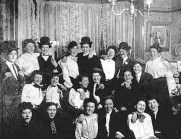
The Palms, the last local and only lesbian bar to be found in city of West Hollywood, CA is closing its doors and I can’t help but wonder where its patrons or parishioners will now go? Continue reading “God Doesn’t Live Here Anymore: Gay Bars and the Growing Divide Between Sexuality and Spirituality by John Erickson”
Thanks for Coming (Out): Sexuality, Sports, and Spirituality by John Erickson
I have to be honest, Jason Collins’ admission that he was a homosexual, albeit brave, upset me. While coming out is an completely unique experience to every individual that does it, Jason Collins’ story was just another example of the rampant sexist and heteropatriarachal world that privileges male bodies and sexualities over women’s similar experiences. While I applaud Jason’s story and it’s timing, the first thing I asked to my colleagues was: Where was the hubbub over Sheryl Swoopes or Martina Navratilova?
Like marking off items on a proverbial checklist, closeted LGBTQ individuals who exist within and outside of the world of professional sports, can recount the numerous things they struggle with in terms of their sexuality. From fearing of the actual coming out process, dressing in their car or at home to avoid the subtle glances and whispers of individuals in the locker room, to wondering what coming out would mean not only for their game but also for their social and, if they choose, spiritual lives, closeted and out LGBTQ individuals within the multi-billion dollar professional sports industry must grapple with that age old question: what does it mean to be gay and open about it?

I have to be honest, Jason Collins’ admission that he is a homosexual, albeit brave, upset me. While I understand that coming out is an completely unique experience to every individual who does it, for me Jason Collins’ story was also an example of the rampant sexist and heteropatriarachal world that privileges male bodies and sexualities over those of women. While I applaud Jason’s story and the timing, the first thing I asked to my colleagues was: where was the same hubbub over Sheryl Swoopes or Martina Navratilova? Continue reading “Thanks for Coming (Out): Sexuality, Sports, and Spirituality by John Erickson”
Sustaining Feminist Spiritualities in the Seeming Absence of Community by Elisabeth Schilling
 The spirituality I cultivated during my teens through evangelistic Pentecostal Christianity was based on possession, hierarchy, and exclusivity, although I would not have said that at the time.
As I gradually moved away from that faith community in my mid-20s, no longer wanting to equate a rewarded closeness to God with being set apart from others, I began finding myself participating in quiet conversations with the readings of Thomas Merton, Elaine Pagels, and with poetry by writers such as Olga Broumas. The words I was drawn to might not have been expressly or consistently religious, but they offered spiritual nourishment in their eroticism, earthiness, and sacred metaphor.
It was also around that time when I decided that feminist theologies were healing in their questions and re-visions of God and concepts of salvation and sin. To understand that being a spiritual and/or religious person could mean being aware of and pursuing my desires and connections to other people instead of being a gatekeeper was redemptive. Continue reading “Sustaining Feminist Spiritualities in the Seeming Absence of Community by Elisabeth Schilling”
Luke 12:51-53: On the Verge of a Paradigm Shift by Elisabeth Schilling
 I remember being quite happy when my values about body, faith, and purpose lined up with those of my parents. With the support of my Protestant evangelistic community as well, I was “bold and fearless,” not caring who might judge me or disagree with me because I was not standing on my own. The anxiety of becoming embarrassed or having my world crashing down because of the ideas I expressed did not exist. My beliefs seemed special and right, and I had constant reaffirmation from family and community that they were.
But now I hold perspectives about spirituality and humanity that I can no longer discuss with ease in front of my family–not without my mother crying and feeling as if she did not know or like the person I had become. This may matter to me more than it might to other people since I have, for over a year now, returned to that home to write my dissertation. I am constantly challenged with the task of creating a space where I can honor my desires, needs, and truths. Like Judith Butler says, if I am a person who exists by doing, when I cannot express/speak/give an account of myself, I cannot fully exist. Family is important, but what gets sacrificed by pretending and silence? It is not only the self, but the chance for deeper, more authentic bonds. Continue reading “Luke 12:51-53: On the Verge of a Paradigm Shift by Elisabeth Schilling”
Living Liminality: Of Thresholds and Dwelling Places by Marcia W. Mount Shoop
 Sometimes I think it happened gradually. Other times it feels like sudden change. Either way I find myself in an in-between space that is my life.
With apologies to Victor Turner and his cultural anthropological appropriation of liminality as a threshold space, I have come to view my liminal living as a more permanent dwelling place these days. Turner’s category of liminality locates subjects in the betwixt and between as they move from one manifestation of identity in community to a new kind of integration or role in community. I am starting to wonder, however, if the thresholds are actually dwelling places for some of us in this world.
I don’t know if that means I am actually more marginal than I am liminal. The margins are margins because they remain on the outskirts and they help define the boundaries. Margins are permanent. Am I marginalized if I live at the edges of the communities and identities I use to occupy, perhaps never to return to the bosom of the center? I hesitate to make such a claim mostly because I still occupy privileged spaces not the least of which are those constructed from how whiteness grants access and authority in this world. Continue reading “Living Liminality: Of Thresholds and Dwelling Places by Marcia W. Mount Shoop”
Peace Begins at Home by Gina Messina-Dysert
 I began my career in the field of social services as a woman’s advocate for rape and domestic violence survivors. The motto for an organization I was employed with early on was “peace begins at home,” a significant point that must be acknowledged. While much attention around women’s involvement in peacebuilding efforts have been focused at the macro level, there has been little consideration of women’s efforts towards peace at the micro level. Certainly, women’s involvement in formal peacebuilding processes at the larger public level is crucial. This being said, we must not undermine the leadership roles that women play in their homes, their families, and their religious and immediate communities, and how those roles can have an incredible impact on greater society.
I would like to start off by defining “peace.” It is a word that we all use quite frequently and often with different meanings. Some would claim that peace equates the cessation of conflict. However, within our world conflict is inevitable; daily life is riddled with internal, interpersonal, intergroup, and international conflict. Thus, when defining peace, we must understand it as being able to deal creatively with inevitable conflict. According to Jean Zaru, “It is the process of working to resolve conflicts in such a way that both sides win, with increased harmony as the outcome of the conflict and its resolution. Peace is based on respect, cooperation, and well being. Peace is the presence of social justice” (Occupied with Non-Violence, p. 81-2).
Zaru’s comments here are important in that she acknowledges a clear relationship between peace and justice. In the words of Pope Paul VI, “if you want peace, work for justice.” Because peace is not only the absence of war, but also the absence of poverty and disease, the access to clean water, the freedom from slavery; peace is the affirmation of the full humanity of every person. Peace is salaam, peace is shalom, peace is the well being of all. Thus, there are many elements that come together in the word peace. It is not simply government initiatives, it is not a patchwork solution to the conflicts of the world, nor is it submission or silent acceptance, rather we must understand peace as justice. Continue reading “Peace Begins at Home by Gina Messina-Dysert”
Home for the Holidays By Carol P. Christ

Yesterday I was watching an episode of Grey’s Anatomy in which George’s father said to him, “you’re not like us, you’re a surgeon.” “And,” George’s father added, “you don’t like to do the things we like to do.” It is not easy not being like your family and not liking the things they like. When my mother was alive, she was the glue that held us together. Since then, my sheer presence in the lives of my father and my brothers and their families is disruptive. No matter that I try not to make waves, I make them all the same. I do keep my mouth shut about politics and religion and feminism. Even so, the last time I was home for the holidays my father asked me to stay in a hotel because having me in the house made him nervous and uncomfortable. To be fair, how would you feel if your daughter was 6 feet tall and you weren’t, she had a PhD and you didn’t, and even if she didn’t open her mouth at all, you knew that she didn’t agree with your political views or your everyday assumption that men make the final decisions on all important matters? Or if you were my brother who does not have a college education and who feels that women and minorities and gays have taken something from him? Or if you were my Mormon brother who is trying to keep his three daughters on the straight and narrow and not on the path chosen by their aunt? On the last Christmas day I spent at my brother’s house, I did not mention any of the obvious things, but it was hard to hide being astonished by the number of presents and the amount of money spent on them, and I simply could not force myself to watch football. Continue reading “Home for the Holidays By Carol P. Christ”
 Feminism and Religion