THE TWO AND THE ONE: CAN WE EMBRACE AND CELEBRATE SINGLENESS AS MUCH AS MARRIAGE? by Carol P. Christ

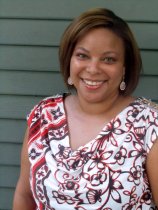
carol p. christ 2002 colorLike many other readers of this blog, I have followed the progress of the Prop 8 and DOMA cases to the Supreme Court and waited with bated breath during the month of June to see how the cases would be decided. 

On June 26th I rejoiced in decisions that brought the United States several steps closer to affirming the full equality of all human beings.  I am happy that lesbian and gay couples can now get married in California, the state of my birth, the state where I still vote.  As one commentator remarked, “This story has a happy ending—it leads to marriage.”  I am also pleased that lesbian and gay couples will not be excluded from “marriage benefits” offered to heterosexual couples, simply on the basis of their sexual preference.

Still, the gay marriage victories raise other questions.  Much of the rhetoric surrounding the push for marriage equality assumed that “marriage” is or should be “the norm” for all people.  Those arguing for the right of gay people to marry often seemed to be saying: “We are just like everyone else.”

This assumption leaves out a whole lot of people—among them large numbers of single women.  Continue reading “THE TWO AND THE ONE: CAN WE EMBRACE AND CELEBRATE SINGLENESS AS MUCH AS MARRIAGE? by Carol P. Christ”

To Blog or Not to Blog? Is That Even a Question..? by amina wadud

Amina Wadud 2 I am Muslim, by choice, practice and vocationI just want to introduce myself to this blogging forum Feminism and Religion. I will join and then try to keep some kind of pace, so before I jump right in on this that or the other personal and or political topic of interest or inspiration, let me locate myself in blog-relative terms.

The first time I ever participated in a public forum blog was also related to women and religion, but with the word “spirituality” in its title.  For me, there is no divide: to discuss religion I must discuss feminism, and to discuss feminism, I must discuss spirituality.  You will see how these are interwoven, contested and re-woven as the time goes by for me here: blog-wise.

I am Muslim, by choice, practice and vocation. Meaning, I accepted Islam as my way of life, after a loving relationship as a daughter of a Methodist Minister. I was not yet 21.  Now I am 60. The years in between have allowed me to both intra-face within my religion of choice but also to inter-face with religions worldwide and across a wide spectrum of commitments by the followers. Currently, I live in India (about which you will undoubtedly hear a great deal).  Continue reading “To Blog or Not to Blog? Is That Even a Question..? by amina wadud”

Adventures in Churchgoing by Elise M. Edwards

Elise EdwardsI am often greeted by warm smiles and handshakes–and sometimes even hugs–from churchgoers around me.  But I wonder if the friendly people would be so welcoming if they knew that I identify as feminist.

It’s hard being a feminist and visiting a new church.  I’ve recently moved to Texas from California and I’m looking for a church to attend.  There are many things I love about church: corporate worship, talks with people of faith, gatherings where friendships are built, and opportunities to serve and to learn. I also love to sing, and my not-ready-for-primetime voice would love to join a choir with and contribute to other people’s worship experience.

In my past, I’ve been a member (or regular attender) of churches where I felt welcomed and affirmed. Yet, I always feel defensive when I seek out new places to worship.  I question whether a church will be affirming to women and girls as whole selves – as embodied, thinking, feeling beings.  I mentally prepare myself to hear male imagery and language for God and I pray themes of male headship vs. female servanthood are not expressed.  I feel like an investigator seeking out clues to determine our compatibility.  It’s no wonder that I’ve recently heard several people compare visiting churches to dating.

Continue reading “Adventures in Churchgoing by Elise M. Edwards”

The Cooptation of Relational Theology: Another Example of the Erasure of Women’s Contributions to Theology by Dirk von der Horst


DirkThe meaning of relational theology has changed, and not for the better.

Over the last couple of years, I started to notice “relational theology” crop up in what I considered unlikely contexts.  I had previously associated the term primarily with the feminist and womanist work of Carter Heyward, Catherine Keller, Rita Nakashima Brock, Katie Geneva Canon, Karen Baker-Fletcher, Kelly Brown Douglas, and Sharon Welch, as well as the gay/feminist work of Gary David Comstock.  In each of these thinkers, the pursuit of relationality as divinity was always linked to a profound wrestling with suffering and oppression.  Furthermore, a clear diagnosis of individualism, transcendence, and other forms of disconnection as manifestations of patriarchal/hierarchal forms of subjectivity was central to the rationale for doing relational theology.  As I experienced it in the 1990s, relational theology was simply a dimension of feminist theology.  Forging through the searing pain of oppression to the roots of problems in order to propose radical solutions to real social evil, not general ruminations on divine being, was the first step. Continue reading “The Cooptation of Relational Theology: Another Example of the Erasure of Women’s Contributions to Theology by Dirk von der Horst”

Thanks for Coming (Out): Sexuality, Sports, and Spirituality by John Erickson

I have to be honest, Jason Collins’ admission that he was a homosexual, albeit brave, upset me. While coming out is an completely unique experience to every individual that does it, Jason Collins’ story was just another example of the rampant sexist and heteropatriarachal world that privileges male bodies and sexualities over women’s similar experiences. While I applaud Jason’s story and it’s timing, the first thing I asked to my colleagues was: Where was the hubbub over Sheryl Swoopes or Martina Navratilova?

John Erickson, sports, coming out. Like marking off items on a proverbial checklist, closeted LGBTQ individuals who exist within and outside of the world of professional sports, can recount the numerous things they struggle with in terms of their sexuality.  From fearing of the actual coming out process, dressing in their car or at home to avoid the subtle glances and whispers of individuals in the locker room, to wondering what coming out would mean not only for their game but also for their social and, if they choose, spiritual lives, closeted and out LGBTQ individuals within the multi-billion dollar professional sports industry must grapple with that age old question: what does it mean to be gay and open about it?

The Locker Room

I have to be honest, Jason Collins’ admission that he is a homosexual, albeit brave, upset me.  While I understand that coming out is an completely unique experience to every individual who does it, for me Jason Collins’ story was also an example of the rampant sexist and heteropatriarachal world that privileges male bodies and sexualities over those of women.  While I applaud Jason’s story and the timing, the first thing I asked to my colleagues was: where was the same hubbub over Sheryl Swoopes or Martina Navratilova? Continue reading “Thanks for Coming (Out): Sexuality, Sports, and Spirituality by John Erickson”

Feminism and Football By Marcia W. Mount Shoop

Marcia headshot“How did race and privilege affect the NCAA investigation of the football program at University of North Carolina?”

This was the question a student posed to me recently when I gave a Skype lecture to a Sports Ethics class at the University of Washington’s Center for Leadership in Athletics

I am going to take a wild guess (and I may be wrong), and assume that most readers of the FAR blog don’t know much about the NCAA investigation of the UNC football program.   I have outed myself on this blog before—I am more than just a feminist theologian; I am also a football coach’s wife.  Lots of people wonder how I manage to pull that off and still look at myself in the mirror.  That’s a complicated question.  I am finding that the challenges presented by our experience at UNC are creating more and more space for the feminist and the coach’s wife to find a common purpose.  Which brings us back to the question at hand—race and privilege and how it played into the football investigation at UNC.

You may want to investigate the many details of this investigation, but I would like to invite this feminist community to see what you think about this question of privilege in particular.   I will provide just a few factual statements for you all.  You tell me if you can think of ways that race and privilege may have been at work to the detriment of certain groups in this situation.  Continue reading “Feminism and Football By Marcia W. Mount Shoop”

I Dream of Pope Francis by Gina Messina-Dysert

Gina Messina-Dysert profileIt was just last week that I received an email from Pope Francis.  He wrote me having seen my interview with Tavis Smiley and said he sympathized with my appeal for a Church that serves the needs of the people.  Pope Francis requested that I come to the Vatican to meet with him to discuss the papacy and his efforts to redirect the Church’s attention.  Of course, I immediately accepted and began to create my agenda for our meeting: women’s ordination, same-sex marriage, reproductive justice, and…my alarm went off.  It was just a dream. Sigh…

Totally disappointed at the realization of its ridiculousness, I wondered why Pope Francis had invaded my dreams.  Could it have been prophetic as my good friend and colleague (jokingly) suggested?  Or perhaps I’m narcissistic enough to fantasize that I have such wisdom to share.   Either way, no other pope has ever occupied my thoughts in such a way. Continue reading “I Dream of Pope Francis by Gina Messina-Dysert”

Orientations: Body, Space, Authority by Linn Marie Tonstad

Linn Marie TonstadIn her book Queer Phenomenology, Sara Ahmed investigates how we orient ourselves in space with respect to tables – the tables around which we sit, at which we eat with friends and families of choice and birth, and at which we write. She describes moving into a new place and arranging the furniture. “After the kitchen, the room I hope to inhabit is always the study. Or the place that I have decided is the place where I will write. There, that will be my desk. Or it could just be the writing table. It is here that I will gather my thoughts. It is here that I will write, and even write about writing. … Making a place feel like home, or becoming at home in a space, is for me about being at my table. I think fondly of Virginia Woolf’s A Room of One’s Own. How important it is, especially for women, to claim that space, to take up that space through what one does with one’s body. And so when I am at my table, I am also claiming that space, I am becoming a writer by taking up that space.” (11) Ahmed goes on to discuss how certain possibilities are opened up, and others foreclosed, by the way we orient ourselves (or find ourselves oriented) to others and to objects. She describes the bodily postures that result from orienting oneself to the writing table – the way one might hunch over one’s computer, or find oneself with ink-stained fingers.

In a very different context, the queer theologian Marcella Althaus-Reid describes a scene from her childhood in Argentina. She kneels in front of a priest for confession. But instead of kneeling to the side, aslant, as she ‘ought’ to have done, being a girl, she kneels directly in front of the priest, as if she were a boy. Kneeling here too is a form of orientation, a form of direction, a bodily habit of becoming. “Kneeling is troublesome and it has a theological referent in the church’s also troubled waters of sexuality and power. A whole symbolic sexual order is obviously manifested in kneelings as positions of subordination and sites of possible homo- and hetero- seductions, because these are theologically distributed around the axis of the priesthood’s male genitalia. The priest’s penis carries the sacred connotations of the phallus as a transcendental signifier of the theological discourses to everyday Christianity, and kneeling is a liturgical positing designed to centralise and highlight this.” (The Queer God, 11) To kneel in the right (gendered) position in relation to the priest is also to kneel in the right relation to God. Continue reading “Orientations: Body, Space, Authority by Linn Marie Tonstad”

Response to “The Islamic Solution to Stop Domestic Violence” by Samar Esapzai, Shireen Ahmed, Vanessa D. Rivera, Ayesha Asghar, and Hyshyama Hamin

0 0 This article is in response to a post by Qasim Rashid of the Muslim Writers Guild of America titled, “The Islamic Solution to Stop Domestic Violence” published in the Huffington Post‘s Religion Blog on March 5th, 2012.

Although this post came to our attention a year after it was written, as young Muslim women who have worked with and/or written about gender-based violence issues that have  personally affected some of us, we deemed it fit to respond. Also, the points we will discuss here are not only limited to the particular post written by Rashid, but rather address similar arguments that have been made by other writers as well on this issue.

0_20_3It is a concern to us that Rashid uses the Quran verse 4:34* and proposes that it contains the “Islamic solution” to domestic violence. He states that according to the perspective of an American social scientist Dr. James Q. Wilson, known for his controversial works on the criminal justice system, men are more prone to anger and aggression and less capable of self-restraint than women. This, we assume, the author took from Wilson’s essay, “The Future of Blame” in which he cites what he calls “the claim” of research by neuropsychiatrist Dr. Louann Brizendine.  Interestingly, Wilson is also a rational choice theorist on the causation of crime and violence; he argues that individuals make clear, rational decisions after evaluating all possibilities and do that which benefits them the most. Continue reading “Response to “The Islamic Solution to Stop Domestic Violence” by Samar Esapzai, Shireen Ahmed, Vanessa D. Rivera, Ayesha Asghar, and Hyshyama Hamin”

When Feminists Disagree by Linn Marie Tonstad

Linn Marie TonstadA while back I gave a talk on feminist trinitarian theology to an audience of mostly progressive academics, including feminist and womanist scholars of religion. In the course of analyzing what I called the ‘trinitarian imaginary’ in Christianity and its often-patriarchal and masculinist forms, I suggested that transforming that imaginary might require recognizing the hypothetical character of theological statements until the eschaton, a theme that has been developed in depth by a German theologian named Wolfhart Pannenberg. Now, Pannenberg is decidedly neither a feminist nor a progressive theologian. To name just one example: in his three-volume Systematic Theology, his few explicit references to feminist or female theologians include a brief mention of Mary Daly (volume 1, p. 262) in connection with a critique of feminist theologians for projecting (!) masculinity into God in their readings of divine fatherhood, and a critique of Valerie Saiving and Susan Nelson Dunfee’s positions on the traditional Christian doctrine of sin as pride (volume 2, p. 243). So when I mentioned Pannenberg as a resource in my talk, one of the feminist scholars in the audience audibly gasped and flinched – it became clear in the Q&A that she had significant concerns about whether I could count as a feminist at all. After all, to mine someone like Pannenberg for constructive feminist theological work might imply an endorsement of his other positions, or might entail taking over aspects of his system that would taint my own project in anti-feminist directions – all legitimate concerns.  Continue reading “When Feminists Disagree by Linn Marie Tonstad”