Feminism – the small and the large of it by Xochitl Alvizo

Feminism’s critical principle is the affirmation and promotion of the full humanity of women; an assertion that must be made in light of a world that diminishes women’s dignity and autonomy thereby authorizing their subjugation. Sexism is the word we use to name the attitudes, prejudices, and actions that work to diminish women’s dignity and autonomy for their subjugation. Patriarchy is the resultant ossified system of those attitudes, prejudices, and actions as they become the norm. 

Continue reading “Feminism – the small and the large of it by Xochitl Alvizo”

NOT POSITIVE MASCULINITY, BUT FULL HUMANITY by Esther Nelson

The following New York Times article titled “We Can Do Better than ‘Positive Masculinity’” by Ruth Whippman was published on October 9, 2024.  Whippman is also the author of the book, REIMAGINING BOYHOOD IN THE AGE OF IMPOSSIBLE MASCULINITIES. Whippman’s New York Times article grabbed my attention.

Decades ago while taking undergraduate courses in the discipline that was then called Women’s Studies (now known as Gender, Sexuality, and Women’s Studies), most of the authors I remember reading insisted that both masculinity and femininity (human ways of being in the world) were cultural constructs, not something innate in humans we refer to as women and men. Throughout the world, societies have shown a lot of variety in ways that women and men express themselves and are expected to behave.

Continue reading “NOT POSITIVE MASCULINITY, BUT FULL HUMANITY by Esther Nelson”

The Pain and Struggle of Gender by Michele Bodle

In the April 2024 issue of Christianity Today, Fellipe Do Vale wrote, “Gender on Earth as in Heaven: Will Our Gender be Removed or Renewed in the Resurrection?”

            The entire issue was dedicated to a conversation between egalitarian and complementarian beliefs regarding gender, which I am not here to argue. However, I will wholeheartedly and fully engage with a quote in the article where Do Vale states the following.

                        There is a long and impressive lineage in Christian history and
contemporary theology that says the best way to envision the
redemption of our gender is to picture its removal….
They say that gender was an attribute given to us only
because God knew humanity would sin. It was meant
to sustain us only until the restoration of creation. Therefore, 
attributes like gender, race, and disability, which they believe
cause the most pain and struggle in this life, will not remain
in the resurrection. 
(Do Vale, “Gender on Earth as in Heaven,” Christianity Today (Aril 2024), p. 24-25.)

Continue reading “The Pain and Struggle of Gender by Michele Bodle”

From the Archives: Genderqueering by John Erickson

Moderator’s note: Today’s blogpost was originally posted March 24, 2015. You can visit the original post here to see the comments.

This post is a response to a recent blog entry titled “Who is Gender Queer?” on this site from Carol Christ. It was posted yesterday. I want to thank my friend, advocate, and upcoming scholar Martha Ovadia for reasons only she knows!  Stay brave, speak up, be heard!

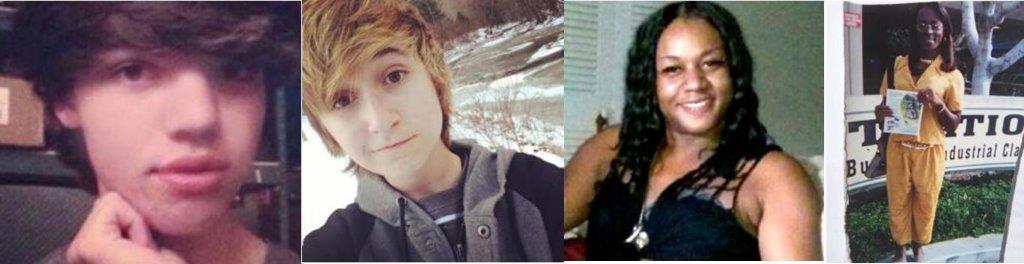
Leelah Alcorn, Ash Haffner, Aniya Knee Parker, Yaz’min Shancez

It is terrifying to know that something is wrong but not be able to speak truth to power.

Continue reading “From the Archives: Genderqueering by John Erickson”

Deb Haaland, the Secretary of the Interior We Need by Anjeanette LeBoeuf

Wet Plate Collodion Image of the Congresswoman Haaland Taken by Shane Balkowitsch in Bismarck, North Dakota on June 23rd, 2019.

This past week brought an announcement from the 46th President Elect’s office on the nomination for the Secretary of Interior position, House of Representative Debra Haaland of New Mexico. This nomination has solidified President-Elect Biden and Vice President-Elect Harris’ promise to be a more inclusive, progressive, and diverse cabinet. This appointment is revolutionary, outstanding, and diverse. If this nomination is accepted, Deb Haaland will become the first Native American and first Native American woman to hold this position.

Continue reading “Deb Haaland, the Secretary of the Interior We Need by Anjeanette LeBoeuf”

Monotheism and the Shema: Lessons on Oneness and Unity by Ivy Helman

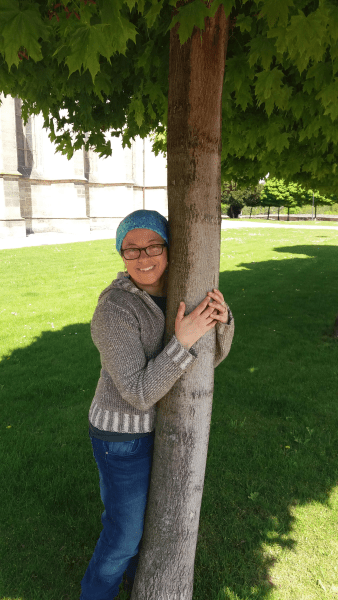
ivy tree huggingIn my last blog post, I explained what we lost when the Israelites became monotheists.  That post looked at the move to monotheism from a more historical, feminist perspective.  In this post, I want to understand monotheism from a more modern, feminist lens.  Using the Shema as a starting point for modern Jewish monotheistic thinking, my question is: how do we honor the deity based on who we understand that deity to be?  In my opinion, Jewish monotheism requires we honor G-d by moving away from one-sided gendered depictions of the deity and think about how we act in light of the interconnectedness of life.

Judaism highlights the Shema as the description of the divine.  It reads, “Hear, O Israel! The L-rd is Our G-d, The L-rd is One!,” (Deut. 6:4).  The key aspect of this verse is twofold. First, we have a relationship with the deity hence the description of the deity as “our,” and, second, this deity is one. 

Oneness used to imply that no other deities count, and perhaps also that no other deities literally exist.  For example, if one were to read the Torah, one would understand the deity differently.  On the one hand, the deity is one of many possible deities one could worship. On the other, it is quite clear that no matter what the deity is called, there is one specific deity that chose to help the Israelites.  In the Torah, the divine is always referred to as he, using only masculine pronouns for the deity. In addition, he is often called king, lord, and master. G-d is depicted as powerful, wrathful, jealous, and even scary.   Continue reading “Monotheism and the Shema: Lessons on Oneness and Unity by Ivy Helman”

Surviving My Recovery by Esther Nelson

For the past fourteen months, I’ve been going from doctor to doctor trying to figure out what ails me.  Specialists I’ve seen included wonderfully competent people immersed in their individual disciplines of nephrology, cardiology, rheumatology, and neurology.  At long last, the neurologist diagnosed my condition (accurately, I believe), and I’m slated to have surgery in July.

I’m overjoyed to finally have a diagnosis, with a positive prognosis no less, offered to me.  My everyday life has become more and more constricted over this past year.  I can’t walk far without pain.  I can’t stay in one position for long without pain.  I can’t practice yoga without pain.  I can’t do those everyday chores—grocery shopping, vacuuming, laundry, scrubbing the bathroom, and washing dishes—without pain.  Pain wakes me throughout the night as I attempt to sleep.

I do have concerns about how well I’ll tolerate the upcoming surgical procedure, but am even more concerned about my recovery period.  For six weeks after the procedure:  No lifting.  No bending.  No twisting.  No exercise except for frequent, short walks.  How will I ever manage?

Continue reading “Surviving My Recovery by Esther Nelson”

The Lady Be With You – A Closer Look at Liturgical Idolatry by Tallessyn Zawn Grenfell-Lee

Even though I realized at least 17 years ago that it makes no theological sense to limit our symbols of the Divine to male symbols – Lord, God, Father – it took several years for this idea to embed itself into my subconscious. Over time, male language moved from ‘unnoticed’ to ‘noticed’ to ‘distracting’ to, eventually, ‘oppressively violent when used exclusively, without female images to balance out millennia of the idolatry of maleness.’

One of my favorite ways to dislodge this subconscious, internalized patriarchy has involved rewriting favorite old hymns. I usually try to incorporate a combination of images, to represent the incarnate divinity of all genders and all Creation. But let’s be honest: female terms for the Divine remain startling in many religious and secular, cultural contexts. In my own Methodist tradition, even though progressive Methodists sign up on paper to the idea that “God” (there we go again with the male terms) is bigger than any symbol or gender, I’ve as yet only ever been to one Christian church that used balanced gender images of the Divine, and that was a queer welcoming Methodist ministry with intentionally inclusive theology and liturgy.

I think that church saved my life. Some days, I also think it ruined my life. It showed us all what Methodism can be; and then, its time ended, and we alums drifted into the diaspora to try to take the hope and healing we experienced there into our own journeys. Some of us remain within Methodism and continue to work for the vision of welcome, of the kin-dom, that we sought together there. Personally, I love being Methodist. Grace, the journey, grace, the quadrilateral, grace.

Continue reading “The Lady Be With You – A Closer Look at Liturgical Idolatry by Tallessyn Zawn Grenfell-Lee”

Gendered Only In Expression by Chris Ash

“I want you to see this new piece I wrote for our newsletter,” said Sister Ann.

We were safe inside the dining room of the Episcopal convent where she lived and I was an extended guest, and yet she spoke in hushed tones that suggested she realized the controversial nature of what she was about to say.

“This whole piece – it’s about the idea that being ‘born again’ clearly indicates the concept of God as mother.” She laid out her argument about wombs and motherhood and the feminine divine. It was a fairly essentialist argument (being the mid-nineties), but it was the first time I’d heard any modern Christian reference God as anything other than father, son, male. Before finding the Episcopal cathedral where I regularly attended services, I’d had two general experiences of the divine: the evangelical, conservative, patriarchal God of my father’s church, and the gender-creative spirit found in practices that were fairly alternative for my small, South Carolina town. Continue reading “Gendered Only In Expression by Chris Ash”

(Not Yet) Elder Reflections by Chris Ash

Four years ago, as I went to touch up my roots with a shade of red I’d been dying my hair since I was 18, I noticed that what had started as a few random strands of gray amidst my natural reddish brown had become streaks of brilliant silver. I began dying my hair red as a style choice, long before I’d ever even thought of going gray. I loved the way my natural hair reddened in the summers, with copper highlights flashing under the beach sunsets. There was never an intention to hide gray or look younger, but there was a time in my thirties when the first few strands of gray seemed to make my darker roots look muddy, like they were dirty instead of graying.

But brilliant streaks of silver? This, I could do. I switched from my usual permanent henna dye to a temporary red to keep my roots touched up while the henna’d hair grew out, and waited. Three years later, all the permanently red hair had grown out, and I was ready to have fun. I went to the stylist, had him bleach out the parts I’d been dying red, and had him color it all with a wild ombre of colors that would look good with silver. My hair was a darkened nebula, silver roots reaching down into four different shades of purples of blues. After each new dye – a brilliant nebula, each time fading over a few months into a soft mix of gray-blues and silver. Even at the end of the fade-out, people still ask me if I just had my hair colored. Every week, the color seems a new shade.

Currently, I’m at the end of a fade out. Honestly, I probably would have colored it a few weeks ago if I weren’t so busy, but at this point my hair is mostly gray with some slight bluish highlights.

And twice in the last week – TWICE! – I’ve been offered the senior discount by well-meaning cashiers.

At 42. Continue reading “(Not Yet) Elder Reflections by Chris Ash”