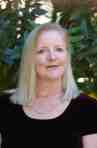
Legacy of Carol P. Christ: Connection to Ancestors in Earth-based Theology

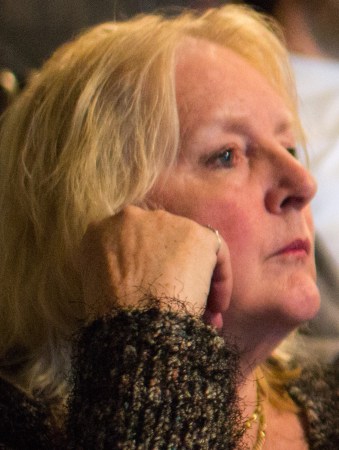
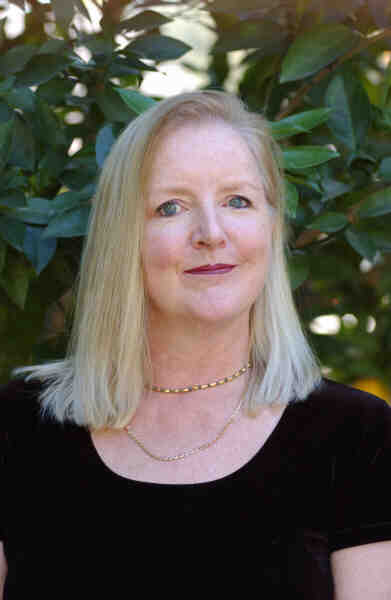
carol p. christ 2002 color

This post was originally published on Jan. 14th, 2013

“I am Carol Patrice Christ, daughter of Jane Claire Bergman, daughter of Lena Marie Searing, daughter of Dora Sofia Bahlke, daughter of Mary Hundt who came to Michigan from Mecklenburg, Germany in 1854.  I come from a long line of women, known and unknown, stretching back to Africa.”

Like many Americans, my ancestral history was lost and fragmented due to emigration, religious and ethnic intermarriage, and movement within the United States.  Though one of my grandmothers spoke proudly of her Irish Catholic heritage and one of my grandfathers acknowledged his Swedish ancestry, I was raised to think of myself simply as “American,” “Christian” and “middle class.”  Ethnic and religious differences were erased, and few stories were told.

Over the past two years, I have begun to discover details of my ancestral journey, which began in Africa, continued in the clan of Tara, and was marked by the Indo-European invasions.  In more recent times, my roots are in France, Holland, England, Germany, Ireland, Scotland, and Sweden.  In the United States, my family has lived in tenements in New York City and Brooklyn, in poverty in Kansas City, and on farms in Long Island, Connecticut, upstate New York, Michigan, and Pennsylvania.  My parents and grandparents settled in northern and southern California during the 1930s.  I have lived in southern and northern California, Italy, Connecticut, New York, Boston, and now Greece.

Learning details about family journeys has created a shift in my sense of who I am.  Continue reading “Legacy of Carol P. Christ: Connection to Ancestors in Earth-based Theology”

The Field of Belonging, by Molly Remer

May we be resilient
in the face of conflict and change.
May we lean in,
reach out,
root down,
and deepen into
the practices that nurture us
and sustain us.
May we cultivate wise discernment.
May we persist in reclaiming our power
and our attention.
May we embody our prayers.
May we dance bravely
on the bones of the coercive systems
that try to drag us down.
May we lift our heads
to meet the eyes of life.
May we persist in seeing,
in being,
in lifting our resilient and stubborn joys
up to soar.

I know we are weary, overwhelmed by how much damage can be done by sweeps of pen and distant deciding, callous disregard seeming to seep into all the edges and change how the world feels to live in. We may feel frozen with indecision, unsure of what to do or how to help or what to say. So much asks for our attention and our time, asks us to look and to not turn away. We wonder what there is to celebrate in the face of so much anger and so much need. It is hard to feel so small and human, hard to keep hoping, to trust in our own inherent magic and that goodness and beauty are still at work amid the pain. 

Continue reading “The Field of Belonging, by Molly Remer”

Legacy of Carol P. Christ: Bird Watching and Geology in the Body of Goddess

The notion of the earth as the body of Goddess has taken on deeper meaning for me in recent years.  I have felt connected to nature all of my life.  Yet often, though not always, I have related to nature in general rather than in specific ways. Some years ago, after reading Hartshorne’s essay “Do Birds Love Singing?” I stopped for the first time in the wetlands of Kalloni, Lesbos, to see the flamingoes that live in the salt pans there.

Flamingo's-Kalloni3-Saltpan
Continue reading “Legacy of Carol P. Christ: Bird Watching and Geology in the Body of Goddess”

Legacy of Carol P. Christ: THE CARELESS SPIRIT OF ANNIE CORLISS: TRUMPING DESPAIR IN THE NEW WORLD

This was originally posted on April 2, 2012 and updated on December 30, 2016

Annie Corliss was my great-great-grandmother. The Corliss name, also spelled Corlis, Corless, Corlies, Corlers, and Carlis, is derived from “careless” meaning someone who is “carefree” or “happy-go-lucky.”

Annie Corliss was the daughter of James and Mary Corliss, both born in Ireland. Her parents may have been tenant farmers, but given that their surname could refer to someone who doesn’t settle or own property, they may have been Irish Travellers– itinerant craft persons and traders, sometimes called tinkers because they mended cooking pots and farm implements.  “Irish Travellers are a traditionally nomadic people of ethnic Irish origin, who maintain a separate language and set of traditions. … Irish Travellers have their roots in a Celtic (and possibly pre Celtic) nomadic population in Ireland.”

Continue reading “Legacy of Carol P. Christ: THE CARELESS SPIRIT OF ANNIE CORLISS: TRUMPING DESPAIR IN THE NEW WORLD”

Legacy of Carol P. Christ: Why a Goddess Pilgrimage?

This was originally posted on October 1, 2012

What is a Goddess Pilgrimage and why are so many US, Canadian, and Australian women making pilgrimages to ancient holy places in Europe and Asia?  The simple answer is that women are seeking to connect themselves to sources of female spiritual power that they do not find at home.

Traditionally pilgrims leave home in order to journey to a place associated with spiritual power.  “Leaving home” means leaving familiar physical spaces, interrupting the routines of work and daily life, and leaving friends and family behind.  For the pilgrim, “home” is a place that has provided both comfort and a degree of discomfort that provokes the desire to embark on a journey.  The space of pilgrimage is a “liminal” or threshold space in which the supports systems of ordinary life are suspended, as Victor Turner said.  A pilgrim chooses to leave the familiar behind in order to open herself to the unfamiliar—in hopes that she will return with new insight into the meaning of her life. 

Continue reading “Legacy of Carol P. Christ: Why a Goddess Pilgrimage?”

Making Room for Reverence by Kelly Applegate-Nichols

While the Goddess spirituality movement runs alongside the women’s and feminist spirituality movements, I am certain the Goddess herself looks on with wonder and pride at Her creations. I am sure that it pleases Her to see women so devoted to self-sovereignty, and the fierce determination to get out from under the lash of patriarchy, to stand as women together, united in our passion for a better world.

While I know in my heart that we are continually held in the mind of the Goddess, I am called to wonder, how often is She in ours?

Though we make great strides together in our common goal of freedom and peace, some of us seem to be less at peace than ever before; there seems to be an undercurrent of loneliness, of disconnection. Lately, I’ve been thinking, it is at least possible that the thing that keeps us up at night is less about the state of the world, and more about the sometimes tenuous connection with our Mother. We may be so focused on self-empowerment that we have forgotten that there is another power, a “higher power” if you will. And She wants to commune with us.

Continue reading “Making Room for Reverence by Kelly Applegate-Nichols”

Listening to Our Landscapes, by Molly Remer

Today the hawk is back, tail feathers lit gold and black by a bright and welcome sun. It stays only a moment before tilting out of the tree and continuing on its way, but this moment is enough to spark a sense of joy and wonder in my chest, the awake kind of glee that fuels and feeds me, that inspires and holds me. This feels like the Year of the Hawk to me, of clear focus and intentional commitment. I watch it glide away between the trees and take a deep breath of release and freedom. I re-center myself into my body and reconnect to the sacred What Is. I am open to clarity. I am open to trust. I am present with this day’s unfolding. 

Continue reading “Listening to Our Landscapes, by Molly Remer”

Legacy of Carol P. Christ: Solstice Comes But Once A Year, Now It’s Here!

This was originally posted on December 17, 2012

Actually it comes twice, once in midsummer, the longest day of the year, and once in midwinter, the longest night.  Winter Solstice is also known as the first day of winter.

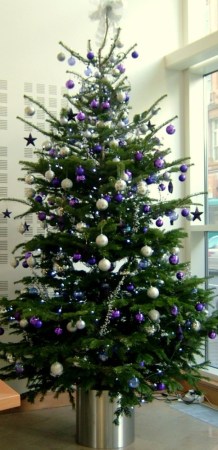
ChristmasTrees20060001

For those of us attuned to the cycles of Mother Earth, Winter Solstice is a time to celebrate the dark and the transformations that come in the dark. Many of the customs associated with Christmas and Hannukah, including candles, Yule logs, and trees decorated with lights were originally associated with Winter Solstice.  The extra pounds put on during winter feasting were insulation against the cold winter nights.

Those who fear that many of the customs of the Christmas season might be pagan are right.  As we learn again to honor our place within the cycles of birth, death, and regeneration, we can return these customs to their roots in the circle of life.

Continue reading “Legacy of Carol P. Christ: Solstice Comes But Once A Year, Now It’s Here!”

Embracing the Dark Goddess – Empowering Paradigm Shifts, Part 1 by Judith Shaw

I always approach the Dark Goddesses with trepidation, preferring to focus on the bright, life affirming aspects of the Goddess. Yet now I find that the difficult break-downs and violent conditions of these days are calling me to explore the terrifying aspects of the ones called “Dark Goddesses.” 

But who are the Dark Goddesses and why are they called dark? That question is one of controversy within the Goddess community. Carol Christ has written that the Dark Goddess only exists as a projection of patriarchal values onto the Goddess, turning the Goddess into a force of war and terror, in particular the War Goddesses found in various cultures. Christ views war as an abnormal desire for the Goddess. Whereas others view the Dark Goddess as a part of the one Great Goddess, who encompasses all. 

A painting I did in 2013 inspired by Kali and in response to the destruction caused by oil drilling. “Gaia Wields Her Sword of Justice”
Continue reading “Embracing the Dark Goddess – Empowering Paradigm Shifts, Part 1 by Judith Shaw”

Is A Balanced World Possible? by Judith Shaw

Are cruelty, violence and greed written into the human DNA?  Are we destined as a species to continually and for eternity create our world in a hierarchical manner where the privileged few receive almost all of the goods and services while the masses live in slavery of one form or another? 

Continue reading “Is A Balanced World Possible? by Judith Shaw”