FRANCESCA CACCINI (1587-1646): THE FIRST WOMAN TO COMPOSE AN OPERA by Maria Dintino

Moderator’s Note: We are pleased to announce that we are forming a co-operation with The Nasty Women Writers Project, a site dedicated to highlighting and amplifying the voices and visions of powerful women. The site was founded by sisters Theresa and Maria Dintino. To quote Theresa, “by doing this work we are expanding our own writer’s web for nourishment and support.” This was originally posted on their site on January 19, 2024. You can see more of their posts here. 

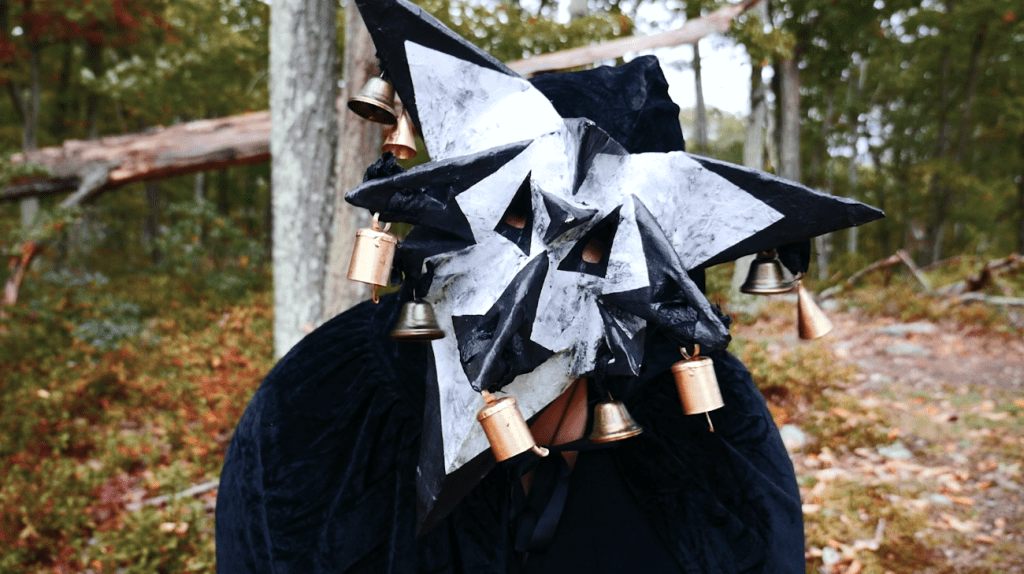
The featured image above is from the 2018 performance of Caccini’s La Liberazioine at the Morgan Library & Museum’s Gilder Lehrman Hall in New York City. Photo credit goes to Vincent Tullo of the New York Times.

I’ve always been an insomniac and of late I’ve become a regular listener of the app Calm’s sleep stories. One night I listened to an enchanting story called Songbird, written by Eurydice Da Silva and narrated by May Charters. Songbird is about Francesca Caccini, who is said to be the first woman to compose an opera, a musical genius and wonder. The next morning, I set out to learn more about her.

Continue reading “FRANCESCA CACCINI (1587-1646): THE FIRST WOMAN TO COMPOSE AN OPERA by Maria Dintino”

Time to Heal the Ancestral Wounds From the Burning Times by Marilyn Nyborg

My work has been in the areas of social justice and the empowerment of women. Until somewhere in 1990, I saw a series of films from women in Canada on the Early Modern European Witchcraft trials which included “The Burning Times”. (Still available on You Tube.)  The film talked about three centuries of Witch burnings. The narration and graphics really shocked me and awakened an interest.  Intuitively I recognized the way in which women have embedded the limitations and pain of that era from centuries ago.  I now know it to be called ancestral wounding. 

Not to say the abuse of women began there.  It didn’t.  But the intensity of three centuries of extreme violence on women have impacted us and cultures through time: sowing the limitations and lack of respect for women into cultures globally.

Continue reading “Time to Heal the Ancestral Wounds From the Burning Times by Marilyn Nyborg”

Human Being or Human Doing? by Mary Gelfand

As a cis white woman in her mid-70s, with a family history of arthritis, I am sometimes confronted by various challenging questions that I prefer not to explore. Who am I if I can’t take care of my basic physical needs? Do I have value if I can’t do my fair share of the household tasks? Who am I if I can’t contribute to my communities? Who am I if I can’t ‘do’? Can I learn to just ‘be’?

These questions swirling around in my head are indicative of the fact that, despite my best efforts, I am still shedding the ubiquitous patriarchal conditioning that tells me I have no value or worth unless I can do—something. Traditionally that something was bearing and raising children, cooking and cleaning house, making and mending clothing, growing food. I have long felt that I must ‘do’ in order to earn my right to inhabit this planet.  Patriarchy tells me I am only valued to the extent I am productive. As my body ages, being productive becomes harder. Many women struggle with these questions daily, especially older women like myself. And no doubt some men as well.

Continue reading “Human Being or Human Doing? by Mary Gelfand”

From the Archives: Writing: Changing the World and Ourselves. By Ivy Helman

This was originally posted on October 12, 2014

20140903_180423

I still remember the first time I read Mary Daly’s Gyn/Ecology. It awoke something within me. Her use of language, the power of her writing and the ease with which she created new words taught me so much about the world around me and about the way the language, and subsequently its use in writing, shapes lives, choices, abilities and destinies. She also taught me about myself.

I was hooked, but not just on Mary Daly. Shortly after I finished her book, I moved onto other feminists writing about religion like Katie Cannon, Judith Plaskow, Alice Walker, Carol Christ, Rita Gross, Gloria Anzaldua, Audre Lorde, Adrienne Rich, Margaret Farley and Starhawk to name just a few. All of them, in fact every feminist I’ve ever read, has shown me the way in which words have power and how words speak truth to power. Ever since, I’ve wanted to be the kind of writer whose words carry a power that not only affects people but also inspires a more just, more equal, more compassionate and more humane world. In other words, I wanted to be a writer activist.

Continue reading “From the Archives: Writing: Changing the World and Ourselves. By Ivy Helman”

I Don’t Want Jesus by Katherine Rose Wort

Pietá – Anónimo

Well, you may ask, who said I should?

My grandparents, mother, father, sisters, aunts, uncles, cousins, nieces, nephews, godparents, a good many teachers, childhood friends, a former therapist, myriad internet strangers who felt compelled to try to divert the flames approaching my immortal soul, an astrologer I met once, innumerable people encountered on public transportation and sidewalks, all of my exes’ parents, and, of course, the Roman Catholic Church — an institution of such enormous weight as to have crushed frames far sturdier than my own.

Continue reading “I Don’t Want Jesus by Katherine Rose Wort”

Herstory Profiles: Love, Devotion, and Ecstasy in the life of Indian Poet Mirabai by Anjeanette LeBoeuf

Mira was born in Northwest India in 1498 CE. She is considered a 16th Century Hindu Mystic, Poet, and Wandering Devotee of Krishna. Her relevance and importance is cemented in the moniker given to her of Bai. Bai, is a honorific ending which can also mean elder sister.  Mirabai is quite known throughout India and even across religious traditions. She is a celebrated Bhakti Saint whose devotion to the god Krishna is now lauded and praised.

Mira was born into a Rathore Rajput Royal Family (in modern day Rajasthan). It is said that from the very young age of 5, Mira expressed her devotion to Krishna. Her upper caste status did allow Mira to have access to education and religious practice. But her status also came with forced responsibilities. Mira was forced into a marriage to the crown prince of Mewar and would become a widow five years later. Her father and father-in-law would also later die during the ongoing struggles with Babur, the first Mughal Emperor. As she was still considered part of the Mewari royal family, her remaining in-laws tried to assassinate her on multiple occasions. Some of the attempts included sending her a vial of poison disguised as nectar and a basket of flowers which contained poisonous snakes.

Continue reading “Herstory Profiles: Love, Devotion, and Ecstasy in the life of Indian Poet Mirabai by Anjeanette LeBoeuf”

Ariadne and Me – Stumbling Toward the Divine by Arianne MacBean

The Sacred Myrtle Tree with its protective fence at Paliani Monastery

I went to Crete because I longed for some kind of communion with Ariadne. Each time I gathered in ritual with the women on my trip, I hoped She would speak to me, or that I would feel something and know that She was in me, or I within Her. At Paliani, I had these same wishes as I walked toward the over-1000-year-old sacred myrtle tree. Set back in the corner of the quiet convent, I was struck by the contrast between the tree’s black bark and surrounding black fence set against the hopeful flickering of silver ex-votos that filled each branch. I walked around the back of the tree on a slight upper landing and searched for a branch within reach. Finding a spot where I could rest my forearm, albeit awkwardly, I leaned in and waited for Her.

Continue reading “Ariadne and Me – Stumbling Toward the Divine by Arianne MacBean”

The Courage to Go Your Own Way by Caryn MacGrandle

My eleven-year-old daughter is regularly called a lesbian in the conservative Southern town that we live.  Not because she has identified her gender, but because she does not dress the same as all of the other girls or wear any makeup.  She wears linen baggy pants with casual t-shirts.  And it is not as if the other girls are dressed more formally than her, but there is a ‘prescribed’ casual look that involves Lululemon and expensive sports casual clothing bought at stores like Dick’s Sporting Goods.

My daughter doodles a skeleton on her hand, and the girl next to her calls her ‘emo’ akin to pariah in the culture.  The boy on the other side says, ‘why don’t you just go kiss a girl already.  Faggot.’      

My heart breaks when I hear her tell me these things.

‘Keep carving your own way.  Fly,’ I silently entreat her.

Continue reading “The Courage to Go Your Own Way by Caryn MacGrandle”

RACHEL KADISH:  TRANSCENDENCE AND TEXT, part 2 by Theresa C. Dintino

THE SYMBOL OF THE GENIZAH

Being a non-Jew, the first word I had to look up while reading The Weight of Ink was  genizah—a hiding place or the act of hiding sacred texts until they can receive proper burial in the earth. In Jewish tradition this is a required honoring of the written word, especially if it is writing about God. It can also mean depository or treasure; something hidden away in time with hope for more welcome in the future that finds it.

Genizah was the perfect word for me to have etched into my mind with regard to The Weight of Ink as it set the stage and opened a space in my heart for a novel which concerns itself with the power of writing and words through time. The story is centered around human lives engaged in passionate intellectual pursuits, the love of books and learning, and imaginations set afire by the academic.

Continue reading “RACHEL KADISH:  TRANSCENDENCE AND TEXT, part 2 by Theresa C. Dintino”

Genuine Inclusivity Means Rejecting “Comparative Suffering” by Dr. Hadia Mubarak

Moderator’s Note: Part 1 was posted yesterday. You can read it here.

Rejecting the notion of “comparative suffering” is critical for those who are committed to the work of social justice, human rights, and antiracism. There is no Guinness world record for “human suffering” for which groups or individuals need to vie to outrank one another. The human capacity to empathize with one people’s suffering does not diminish our capacity to empathize with another group’s suffering, even when those respective groups are at war with one another.

On March 26, I began my talk on a women’s panel titled, “Global Women Speak,” for Mount Saint Mary University with this reminder. Before I could speak about the humanitarian challenges facing Palestinian women in Gaza today, I felt compelled to make this argument due to my experience six days earlier at another women’s interfaith panel. In this previous panel, a co-panelist rudely cut me off four times within a span of one minute when I began to address Palestinian suffering, although she had already addressed Israel’s current challenges in response to a question that we were all asked. For several days following this jarring experience, I kept wondering, what felt so threatening to this co-panelist about the stories of Palestinian suffering that she felt compelled to shut it down?

Continue reading “Genuine Inclusivity Means Rejecting “Comparative Suffering” by Dr. Hadia Mubarak”