The Beast at Our Door: Fenrir Wolf and ICE by Janet Maika’i Rudolph

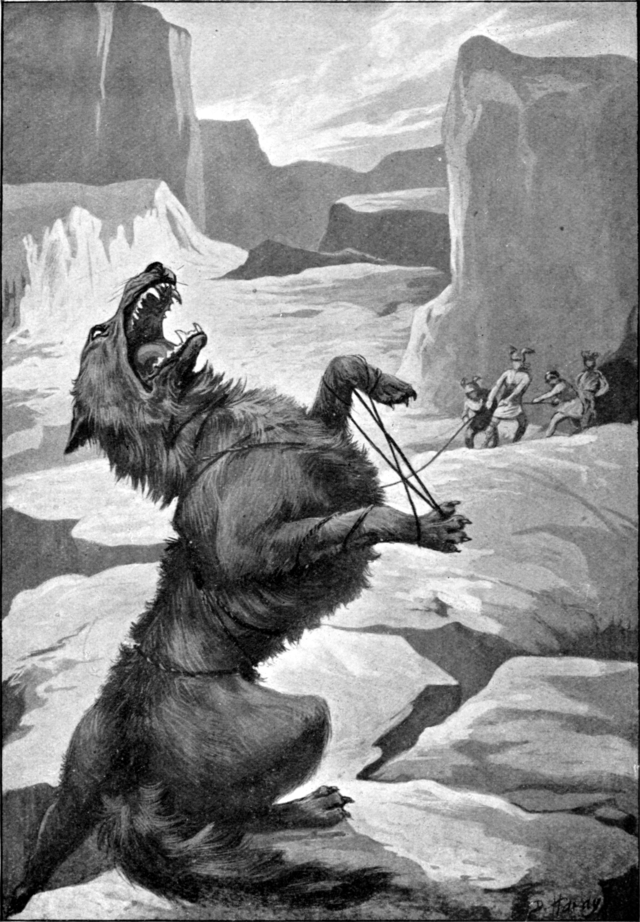
Binding of the norse mythological wolf, Fenrir. From Guerber, H. A. (Hélène Adeline) (1909). Myths of the Norsemen from the Eddas and Sagas. London : Harrap. This illustration is on page 92. Digitized by the Internet Archive Wikimedia Commons

When I was a shamanic trainee, our group spent a lot of time and focus on the “beast within” This concept has had many expressions in different circumstances – the shadow side (Jung), the dark side (Star Wars), letting loose the “dogs of war” (William Shakespeare), reptilian instincts (psychology). 

Mythology has many stories about this phenomenon. In our group, we studied the stories as a way to learn what we must do in our own lives to tame the beast so we had this energy available to use the energy without letting the crueler destructive aspects of the beast run rampant. Here are two of the stories as we discussed them.

Fenrir Wolf

Fenrir Wolf is a deity from the Norse tradition who was known and feared as a great monster. Tyr was the only God in Asgard brave enough to tend to Fenrir. For a long time, Tyr fed and cared for him. Eventually, though, Fenrir grew too large to handle and began running throughout the land called Midgard, killing both gods and people. Odin called a council to discuss how Fenrir could be slain. 

Continue reading “The Beast at Our Door: Fenrir Wolf and ICE by Janet Maika’i Rudolph”

Reconsidering the Venus Myth by Lisa SG

Venus.  The Roman Goddess of the third-party situation.  Lady who wouldn’t stay faithful.  Hoochie who couldn’t, or wouldn’t, keep her coochie home.  Or is this viewpoint on the actions of Venus maligned?  (See Ancient-Origins:  Venus: Eroticized Goddess of Love, Fertility, Agriculture… And Infidelity? by Wu Mingren.)

Venus is often conflated with her Greek counterpart, Aphrodite.  Their myths intertwine in such a fashion that the two figures many times seem to be one; we will honor the ancient commingling in this article. 

Venus’ myth starts with the castration of her father by her brother.  Saturn, the Lord of Time and Karma, usurped his father Caelus (Uranus) (See World History Encyclopedia:  The Mutilation of Uranus by Saturn (Cronus) by Giorgio Vasari).  When Saturn used his sacred scythe to castrate his father, some of the seed of Uranus fell upon the sea and Venus was born from the sea foam (See The Internet Archive:  Theogony by Hesiod).  She rose whole and pure from the ocean and fell immediately under her brother’s care as reigning king of the Gods (See Le Gallerie Degli Uffizi:  Birth of Venus by Sandro Botticelli).

Continue reading “Reconsidering the Venus Myth by Lisa SG”

On the changing role of the Goddess

Goddess Prominence & Nature Participation through time

Today I reflect on the presence or absence of the goddess in religion and society, and how we view humanity and participate in nature as a result. 

This post is inspired by “The Myth of the Goddess. Evolution of an Image” by Anne Baring and Jules Cashford, and especially by its final chapter “The Sacred Marriage of Goddess and God: the Reunion of Nature and Spirit.” This dance of integration of apparent opposites is essential to my work.

Continue reading “On the changing role of the Goddess”

To Stand in the Presence of the Ancients! – Enheduanna, Part 1 by Janet Maika’i Rudolph

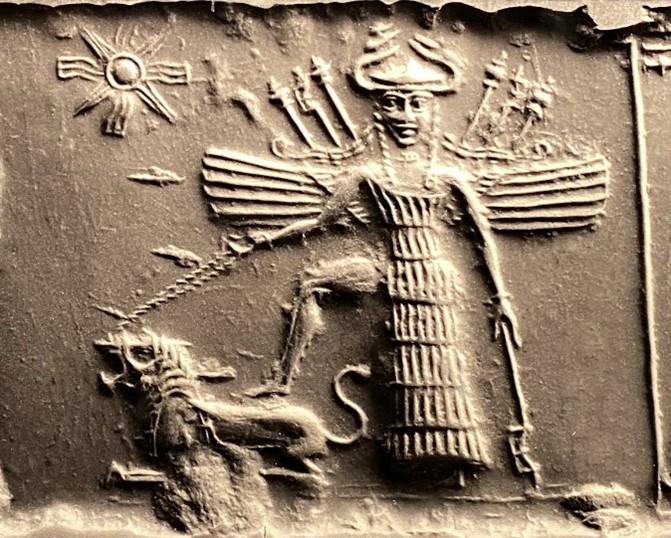
Ishtar controlling a lion ca 2334-2154 BCE

To be in the presence of antiquities is powerful. They carry an energy which is palpable.  I found this to be true at the recent exhibit at the Morgan Library in Manhattan that ran from October 14, 2022 through February 19, 2023. 

Enheduanna is a fascinating woman who lived in the lands of Mesopotamia circa the 23rd century BCE. She was a priestess who was also a writer and chronicler of her times. She named herself in her writings making her the first known author of any written works in history. She was so influential that for centuries after her death, scribes learned their craft in scribal schools by reading and copying out her work. Scholars have referred to her as the Sumerian Shakespeare[1]

Her main temple was in Ur, the very city that hundreds of years later gave rise to the biblical priestess Sarah and her husband, Abraham. We can only image how much they had been influenced by her.

Continue reading “To Stand in the Presence of the Ancients! – Enheduanna, Part 1 by Janet Maika’i Rudolph”

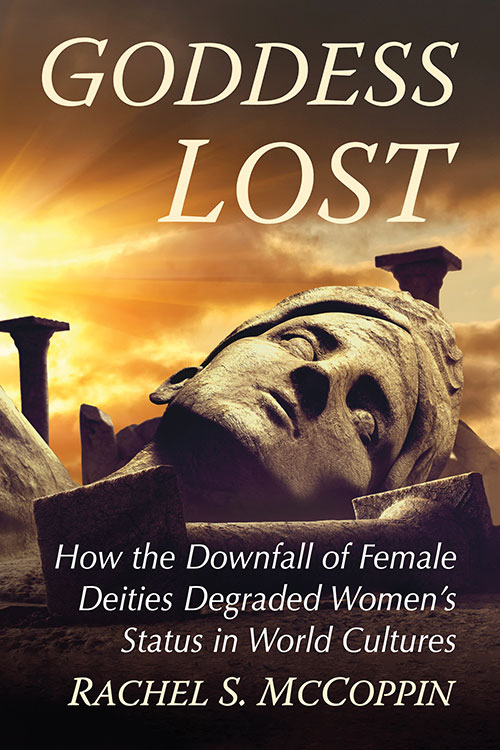
Goddess Lost: How the Downfall of Female Deities Degraded Women’s Status in World Cultures by Rachel McCoppin, Ph.D

In this blog post, I would like to take the opportunity to promote my new book, entitled:  Goddess Lost: How the Downfall of Female Deities Degraded Women’s Status in World Cultures. This book makes the assertion that women must be educated about the history of goddess worship around the world in order to adopt a comprehensive spirituality that fits what it means to be a woman.

Continue reading “Goddess Lost: How the Downfall of Female Deities Degraded Women’s Status in World Cultures by Rachel McCoppin, Ph.D”

Freedom and Speech by Sara Frykenberg

Feminist theories and theo/alogies are often concerned with voice, naming and re-membering. Many feminists do this work, again and again, because of persistent silence and silencing, invisibility, erasure of stories, desires, religions and ways of being, because of missing histories, and a dominating culture’s inability and unwillingness to hear those they marginalize. We “hear each other into speech,” to counteract and recreate, to find power in ourselves and with those whom we share common cause.

We hear each other into ….speech.

Speech is treated as a sacred thing; and certainly, I hold the stories and voices of those with whom I’ve shared parts of my own feminist journey very sacred. I find the ability ‘to voice’ sacred. But I am also aware that as a citizen of the United States, “speech” or more specifically, “freedom of speech,” is sacralized as a part of my national mythology.

It is an implicit myth: all one needs to do is utter the word “speech” in the United States to conjure images of protest, civil rights, the free press, revolution, etc. There are many heroes in this mythology, most of whom “spoke truth to power,” rebuffing domination for the “common good.” The ‘free speaker,’ is often cast as the subjugated “everyman” (sic) whose autonomy and purpose drive society towards greater freedom. “He” and “his” subjugation, real or “alternative fact,” are then made to serve the larger myth of the American Dream. There is a major problem here: “the American Dream” is about freedom and independence for the white, Western male. So is it any wonder, then, that the myths surrounding “freedom of speech,” are so easily turned around to villianize those who might challenge this hegemonic power? Continue reading “Freedom and Speech by Sara Frykenberg”

Making America What Again? Reflections for the 4th of July by Sara Frykenberg

I find myself asking (again), when the religious right, evangelicals, and Christian fundamentalists hear Trump say, “Make America Great Again,” do they really hear him saying, “Make America Christian Again?” How can the really hear him saying that in light of what this man has actually said and actually done? The answer: because of the same mythical purity that erases the violence, slaughter, and atrocity attached to this “Christian nation’s” founding.

Sara FrykenbergMy mother sometimes likes to watch the movie “Independence Day,” on the 4th of July—you know, the one where Will Smith, the gutsy and heroic Marine pilot, Jeff Goldblum, scientist, and Bill Pulman, president, save the Earth from extraterrestrial invasion? It’s an action film loaded with implicit myth and exceptionalism, extolling “mankind’s” common humanness in the face of annihilating, “alien” difference. The heroes ultimately unify the globe with fly-by-the-seat-of-your-pants “American” ingenuity, luck, and bravery. Continue reading “Making America What Again? Reflections for the 4th of July by Sara Frykenberg”

The Great Dragon, Níðhöggr by Deanne Quarrie

Deanne Quarrie, D.Min.I am a student of the Northern European/Old Icelandic worldview known as Seidr. What I find particularly fascinating in my studies are not the deities but rather the creatures living on the World Tree, along with the Primordial Giants who predated the gods. One such creature is Níðhöggr, the “Derision Striker.” Níðhöggr is a great dragon who lives at the base of Yggdrasil, the World Tree. She gnaws on the roots of the tree, stimulating new growth. Her home stretches from icy Niflheim, near what is called the “Roaring Kettle”, the sacred well of all the rivers of Niflheim, all the way to Dead Man’s Shore in Helheim where she devours the piled corpses.
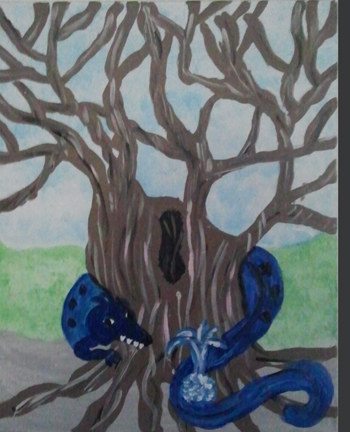
NíðhöggrNíðhöggr embodies the principle of rot, which is that all things must decay to make room for those things that are new. It is Níðhöggr’s job to clean up the mess! She is involved in acts of undoing. She reminds us of the impermanence of life and that eventually, all that is must become undone. It is important to know this so that we can be prepared for unexpected or difficult changes in our lives.

Níðhöggr is there to devour nasty things in one’s self, both physical and emotional. She is there to take away anything that no longer serves us, as long as we are willing to give it to her. She also is there to help anyone working to clean up the environment, especially from our own pollution.

Many fear Nidhogg because of the job she must do but without this part of the life cycle there would be no cycle at all. We make every effort to hide things that are unpleasant. We flush our human waste into our water supply instead of simply giving back to the Earth where we can restore it and use it as nourishment for new life. Menstrual blood is hidden away as if somehow shameful. We hide all that is ugly or that which makes us uncomfortable. And so it is too, with creatures and characters in mythology. Somehow in our dualistic world, the lines between good and bad, negative and positive are clearly drawn. So often those things we suppress, hide and call negative are actually, what save our lives. They are the things in our basic natural spirit that propel us forward into becoming better human beings.

Níðhöggr also serves us as a moral agent, reminding us that our own cruelty, especially harmful acts that undermine another’s sense of self. Bullying behavior is a good example. She reminds us that our actions always have consequences to the energy of the whole, not just our own lives.

Her work is much like that of the vulture, a bird so ugly it is beautiful. I have always thought of vultures as the great recyclers, returning what is lifeless and no longer useful back to the Earth to make ready for new growth.

She is truly all about roots, and keeping them clean. As that, she reminds us that real strength is found in one’s roots.

In her story, at the end of days, Níðhöggr chews through a root and upends the World Tree. Clearly if this were the root upon which all else depended, the mighty tree would fall. Perhaps this would represent our own failure to clean up after ourselves, both in our own lives as well as here in this place we call home, the Earth.

Deanne Quarrie. D. Min. is a Priestess of the Goddess. She is the author of five books. She is the founder of the Apple Branch where she teaches courses in Feminist Dianic Witchcraft, Northern European Witchcraft and Druidic Shamanism. She mentors those who wish to serve others in their communities. She is also an Adjunct Professor at Ocean Seminary College and is the founder of Global Goddess, a worldwide organization open to all women who honor some form of the divine feminine.

Aine and the Giant Leap by Deanne Quarrie

Deanne Quarrie, D.Min.For our full moon rites coming up on the first of July we will be honoring Aine, Goddess of Love, Light, and Fertility who is also Queen of the Faeries. Aine’s name means “Bright” and She is typically honored at the Summer Solstice when the sun is at its peak of power.  The next full moon falls just after the Summer Solstice. The Solstice is associated with abundance, beauty and bounty.  It is not necessarily about the harvest season, as that is yet to come.  However, everywhere we look we can see the abundance of the Mother and so it is when we first acknowledge, with joy, what is before us.

In my Tradition, the Summer Solstice falls within the Oak Moon, the Moon in which we “court the lightning bolt.”  What that means to us is that with our roots planted firmly in the ground, as does the Oak tree, now is the time to take all of our plans and put them into action.  “Go for it” is what we are saying to ourselves and to the world. Continue reading “Aine and the Giant Leap by Deanne Quarrie”

Scholars of Mythology by Barbara Ardinger 

Barbara ArdingerHere’s how my mind leaps around. I was mooning about and trying to figure out what I wanted to write for this blog when I picked up one of the books in the stack at the other end of the couch. I bought The Mythology of Eden by Arthur George and Elena George because I’d read the thoughtful review by Judith Laura, a Goddess scholar I know and respect.

In their introduction, the Georges present a paragraph by biblical scholar Millar Burrows that explains that myth is:

a symbolic, approximate expression of truth which the human mind cannot perceive sharply and completely, but can only glimpse vaguely, and therefore cannot adequately or accurately express. … It implies not falsehood, but truth; not primitive, naïve misunderstanding, but insight more profound than scientific description and logical analysis can ever achieve. The language of myth in this sense is consciously inadequate, being simply the nearest we can come to a formulation of what we can see very darkly. … The procedure is quite legitimate if [we] understand what is being done (p. xii). (Burrows’ book is An Outline of Biblical Theology, published in 1946.)

Mind leap: Wow, I said to myself, does this describe the revisionist fairy tales I write? I try to see through that dark glass more clearly and recast old ideas in new ways. (I hope this doesn’t sound too pretentious. I don’t mean it to.)

Mind leap: And, I further said to myself, we scholars who write for Feminism and Religion often write about myth, though we don’t always acknowledge that our religious stories are indeed myths. It’s like the old joke—“If I believe it, it’s religion. If you (or they) believe it, it’s myth.” Even though we sometimes call our myths the inerrant word of this god or that goddess, the stories in all of our holy books are our instructive myths. Read Burrows’ definition again. Continue reading “Scholars of Mythology by Barbara Ardinger “