“Inheriting Our Mother’s Gardens”: Trans/lating, Trans/planting and Trans/forming Life by Sara Frykenberg

Sara FrykenbergThis Friday, March 7, 2014, the Women’s Caucus (WC) of the American Academy of Religion, Western Region will be hosting its annual “Professional Development Panel and Workshop” in Los Angeles, CA.  During the workshop panelists and attendees will consider what ‘gardens’ we have grown in, who our ‘mothers’ are and how this impacts what we bring to the table or what ‘gifts’ we bring to the table when dialoging with and across differences.  Our title and praxis at this event is also meant to honor our feminist mothers.  Specifically I would like to recognize and honor Letty Russel, Katie Geneva Cannon, Kwok Pui Lan and Ada Maria Isasi-Diaz.  Among many other accomplishments, these women edited the 1988 volume entitled: Inheriting Our Mothers’ Gardens: Feminist Theology in Third World Perspective.  This book helps to give voice to women marginalized within feminist theological discourses and is the inspiration for our panel’s title this year. 

Preparing for this panel, I reflected that many of those who contribute to this blog have written about their mothers (biological or non-biological) and mothering.  (Most recently I found myself inspired by Marie Cartier’s meditation on aging, health, her mother and religion.)  I realized that I have said very little about my own mom; my mom, who I am so like, who I look like, and who is both my mother and my friend.  I have definitely ‘inherited her garden,’ so to speak: flowers, herbs, weeds, rocks and all.  So, momma, this blog is for you.

Continue reading ““Inheriting Our Mother’s Gardens”: Trans/lating, Trans/planting and Trans/forming Life by Sara Frykenberg”

Thanksgiving and Service by Sara Frykenberg

Sara FrykenbergGrowing up in an evangelical Christian church, I was taught that human beings should serve one another and put others before themselves.  These two different teachings, paired with patriarchal misogyny, have sometimes been very problematic for me.  I tend(ed) to give too much.  Too many demands with which I complied were self-negating (which after all, helped me to make other people more important than myself).  It took me a long time to learn how to appropriately prioritize my own needs, to stop mistaking self-esteem for the”‘sin of pride,” and how to say no when I needed to… Actually, I am still learning some of these lessons.

Conversely, my ritualized service to the church was sometimes confusing, awkward or embarrassing.  I clearly remember having the opportunity to serve as something like an usher during Thanksgiving at our family’s church as a child.  This involved wearing a pilgrim costume, which for me meant finding a Puritan style costume in the church’s closet that fit my overweight childhood frame.  This was not an easy task and left me feeling ashamed.  Later as an adolescent, my youth group asked us to wash one another’s feet as Jesus did for his disciples.  Now, don’t misunderstand me here— I do believe that this ritual has the potential to be very powerful and meaningful for those involved.  However, my teenage self could not identify with the symbolic gesture beyond realizing that:

1)    I thought touching other people’s feet was gross, as was having my dirty feet touched and,
2)    I knew I ‘should’ get something out of the ritual but did not, so I felt spiritually guilty or inadequate.

Overall, I often associated Christian service with guilt, inadequacy, my role as a daughter or woman or my sacrificial duty. Continue reading “Thanksgiving and Service by Sara Frykenberg”

Surviving and Thriving: For My Defender by Sara Frykenberg

Sara FrykenbergLast year many of my actions, choices and emotions could have been characterized as a part of my ongoing efforts towards what I recognize as survival: I was often ‘trying to make it through,’ live ‘despite,’ exist ‘even though,’ grapple with violence or choose in such a way that I could continue to live in the midst of chaos.

Survival is an extremely important skill, practiced by many people for many different reasons.  And before I continue here, I would like to say that in all of my struggles last year, I always had the basic necessities required to live my life.  Many people do not; and for many, survival is an everyday practice that may or may not be achievable, requiring access to necessities that may or may not be accessible.  No one tried to kill me last year.  I had access to food.  I did not lose my home or livelihood; though I felt these things threatened.  I am privileged to live where and how I do, with many resources available to me.  These resources helped me to make it though, where other people survive with far, far less.  I choose to share my own feelings of survival because I want to decry the self-dehumanizing shame that tells me I am bad or wrong for feeling my own experience.  I identify my survival in an attempt to also, thrive. Continue reading “Surviving and Thriving: For My Defender by Sara Frykenberg”

What I’m Wearing to the Pool and What it Means, by Sara Frykenberg

Sara FrykenbergRecently a FAR colleague sent us writers an article entitled, “Toward a New Understanding of Modesty,” and asked if any of us would like to comment on it.  I dove at the chance, pun intended.  Not only did the article address the politics of swimwear (a kind of clothing I spent nearly a third of my life wearing everyday, swimming competitively for eight years), it also discussed the swimsuit designs of Jessica Rey – a former Power Ranger, the white-suited one to be specific.

The article’s author, Katelyn Beaty, explains that Rey believes, “that the now-ubiquitous bikini hurts women” because it encourages men to see women as objects to be used.  Beaty states, “Rey has a mission: to get as many women as possible in one-piece swimsuits.”  This mission immediately perked my attention.  As a Power Ranger, Alyssa  (Rey) is all too familiar with the utility of a shining, stretchy body suit.  Armored head to toe in white, pink and gold lycra and spandex, sporting a skirt over her leggings,[1] Alyssa defeats many monsters in the Power Ranger universe.

Sourced from: http://www.1up.com/do/blogEntry?bId=8982878
Source

But fantasy aside, the utilitarian nature of swimwear is often overlooked in deference to “sexiness” and fashion.  Bikinis are featured in most fashion magazines as the standard for bathing beauty, as is the ‘ability’ (or supposed ‘right kind of body’) to wear a bikini, aka the elusive “bikini body.”

Continue reading “What I’m Wearing to the Pool and What it Means, by Sara Frykenberg”

Cleaning My “House” by Sara Frykenberg

Sara FrykenbergPrompted by a dear friend of mine during the new moon, last month I set an intention to “clean my house.”  This intention does, to a degree, involve the actual “house,” aka, apartment in which I live.  Great—fantastic even, and no problem at all!  I actually love to clean, particularly cleaning out closets, garages, cupboard or really, any space where junk can be hidden away, brought into the open, sorted and organized.  I’m really not joking.  I tell people this, and they laugh and say, “oh, I should have you come clean at my house.”  Seriously—do.  I am still waiting for several invitations.

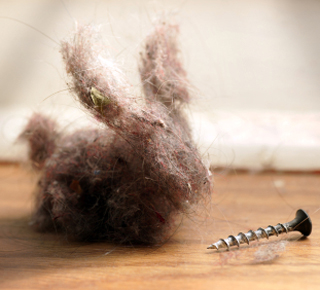
Dust Bunny- sourced from http://www.rhl.org/blog/blog/dorm/dust-bunnies-and-more-keeping-a-clean-dorm-room/2909/

But meditatively speaking and in dreams, one’s “house,” is often one’s self and one’s physical body in particular.  This work has been a bit more challenging to me.  As I shared in my January post, I have been working this year to “create a healthier relationship to food in at least one way,” which also involves creating a healthier relationship with my body altogether, physical, spiritual, mental and emotional.

One reason I began to practice yoga and meditation was so that I could learn to better care for my body.  Feminism teaches me to reclaim embodiment and value physical bodies more, and yoga teaches me to incorporate what I learn in a highly physical way.  In yoga, I also found a safer place to access what I consider sacred and divine by approaching it primarily in my body while my mind and emotions unlearned an abusive relationship to God.  I have even searched my “house” once before through active meditation and visualization.  It was extremely powerful.  I fixed broken locks.  I gave people back items I didn’t even know I had been storing for them.  I also realized that I was not ready to open some doors. The process was fun and very rewarding, involving almost two hours of seated meditation.

Yet, I have also struggled to maintain this practice.  I felt very disconnected from myself before the new moon last month and hadn’t wanted to meditate.  I wanted a vacation from embodiment and myself.  Embodiment, after all, often demands that we actually hear what our bodies are trying to tell us.  Honestly, I don’t always want to listen.  When I have too much work to do, I don’t want to know that I am tired.  When I am anxious, I would rather feel in control.  I knew, however, cognitively, that “cleaning my house,” would be good for me so I made myself set the intention.  I pushed myself to carve out moments in passing during the day to focus my mind and tell me what I wanted to do.  I then proceeded to have four powerful dreams in the week following this intention-setting, all related to my “house.”  In the final dream, I spoke to me, literally.  I faced myself and said very assertively, “You need to work with what you have.” Continue reading “Cleaning My “House” by Sara Frykenberg”

What’s Your Super Power? (And Who’s Allowed to Have It?) by Sara Frykenberg

Sara FrykenbergI recently went to see Zack Snyder’s Man of Steel.  I saw it two times actually.  Readers familiar with my posts about cosplay and video gaming will not be surprised to learn that I am also a fan of comic book heroes and heroines; and Superman was my childhood favorite.

I was both attracted to and wanted to be like Superman, specifically, Christopher

Christopher Reeves as "Superman."
Christopher Reeves as “Superman.”

Reeves’ Superman.  One of my strongest childhood desires was also to fly like a bird.  I remember jumping off the end of my parent’s bed over and over again, convinced that if I flapped hard enough and kept on trying that I could fly.  The older I got, the more I realized that I also did not want to be “rescued” by Superman.  Rescue from the difficulties in my life was an unattainable fantasy.  So, I desperately wanted to be Superman.  Though I knew this too was impossible, perhaps I had only to try. Continue reading “What’s Your Super Power? (And Who’s Allowed to Have It?) by Sara Frykenberg”

Unblocking Abundance: A Ritual by Sara Frykenberg

Sara Frykenberg

Rather than release the sadness, heartache and struggle we put into the bowl out into the world, we meditated …to transform what we could of this energy, re-membering the parts of ourselves that had helped to create these blocks and are responsible for transforming them.  We took the transformed energy back into ourselves.

As I have written about many times before, I believe that contemporary Western society operates within a largely abusive paradigm.  I often think of oppression in terms of an abusive cycle.  Theologians like Cater Heyward and Rita Nakashima Brock describe the impact of the theologies that generate such abusiveness, noting how we become smaller to ourselves and smaller to one another.  We do not believe that we are enough, nor are the people or the planet around us ‘enough’ to fill the vacuous alienation that substitutes itself for real relational need in an abusive context.  Judith Shaw wrote eloquently about the environmental impact of conflating need with greed in her Friday post, “Can We Honor Inanna and Her Gifts?”

Shaw writes, “At first glance we appear to be abundant with things, energy, experiences.  But in our mad desire for more and more and always more we neglect the balance of the very earth who provides us with all.”  Many people, particularly in industrialized nations, have been taught to fill the need for a sense of abundance, connection and ‘enough-ness’ with more stuff: more things, more money, more food, more land, etc.  And yet, ironically, this quest for ‘more’ can also prevent us from experiencing the very abundance we seek.  We can create blocks to abundance by trying to fill the vacuum instead of our actual needs: and difficultly, abusive patterns and cycles can prevent us from seeing the difference between the two.  Continue reading “Unblocking Abundance: A Ritual by Sara Frykenberg”

Cosplay and Choice by Sara Frykenberg

Sara FrykenbergCosplay is often a deliberate, interpretive and self-chosen performance of gender and power.  Like drag performers, cosplayers put on a show of the characters they represent; and in my experience, they often do so within diverse, supportive and principally, inclusive communities. 

This week my husband sent me a great blog post he found about cosplay and one woman’s determination that she would no longer tolerate being demeaned, objectified or trivialized because of what she chooses to wear.  Blogger Megan Marie’s post, entitled “What would you do if you weren’t afraid,” inspires me.  She points out and refuses the trappings of rape culture: victim blaming, assumed male control over female sexuality and shame; and claims her right to be who she is.  I, as fellow (what is the female equivalent for fellow???) cosplayer, was also moved by her defense of this creative art.  I have been cosplaying a long time, but I have been too afraid to speak much about this or to directly protest the rejection of these fantasy images within some feminist communities.  So to answer Megan Marie’s question* in her own words, “What would you do if you weren’t afraid? My answer.  I’d write this blog.”

Coplay = costume + play!  It is the recreation of popular characters from video games, comic books, anime, scifi series, fantasy literature or the like.  Cosplayers do this for the fun of it, the craft involved, to express one’s fandom and sometimes, professionally, usually within an arena where fans can enjoy one another’s recreations.  The attempt to embody these characters involves a great deal of work and artistic expression.  Many conventions, like Fanime Con in San Jose, CA, host panels in which fans can learn cosplay skills, such as armor construction, wig making and costume design.  I have cosplayed the following characters: Sailor Star Healer, Eudial and Sailor Iron Mouse from the anime Sailor Moon, Misa

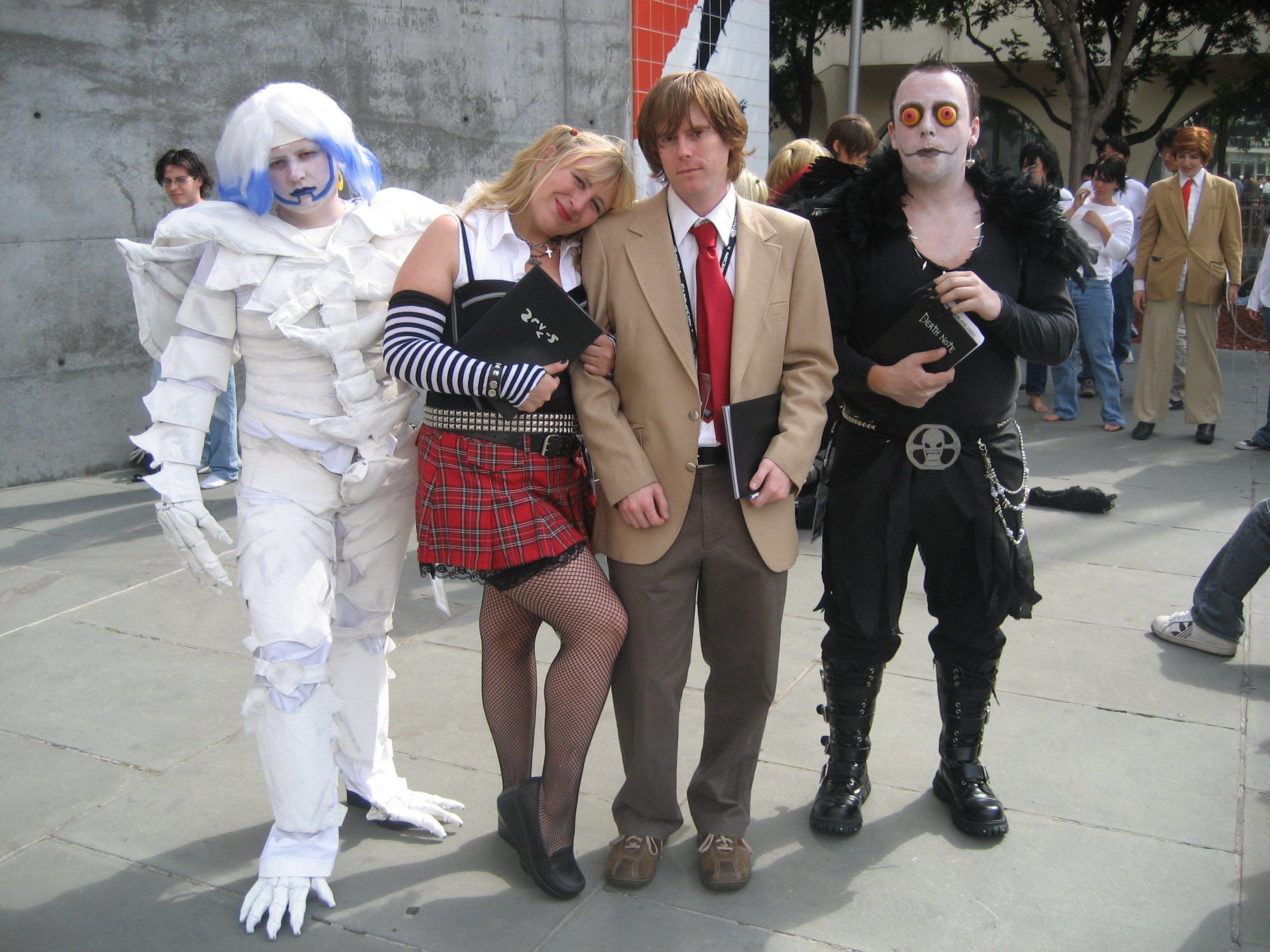
Death Note Cosplay: Misa and Light are in the center, flanked by their respective "Shinigami," or the death gods they are working with
Death Note Cosplay: Misa and Light are in the center, flanked by their respective “Shinigami,” or the death gods they are working with

from the manga Death Note, the Sorceress from He-man, a Star Fleet officer from Star Trek: The Original Series, and most recently, a giant “Angel,” Sachiel from Neon Genesis Evangelion.

Sachiel from Neon Genesis Evangelion: I am trying on my almost finished costume here!

I am currently planning a to make a Metroid out of an umbrella and to cosplay Nyan-kitty at the May conference that my husband (who will be playing Tac-nyan), my sister and many of my friends attend.

So, why the feminist-anxiety?  Continue reading “Cosplay and Choice by Sara Frykenberg”

Patterns for the New Year by Sara Frykenberg

Sara FrykenbergLife last year continually pushed me to figure out how I should care for those close to me while also caring for myself.  I have been pushed to see the difference between myself and other people: their choices and my own.  This is perhaps, the most difficult challenge I faced in the first year of the Age of Aquarius… and life has been an unrelenting teacher. 

Happy 2013!  Or a statement more accurate to my feelings: Happy end of 2012!  Last year around this time, I wrote a post entitled: Celebrating the Beginning of the Aquarian Age.  The push to evolve was and is very exciting to me.  This shifting astrological paradigm challenges us to break away from those habits and patterns that no longer serve us.  But excited as I am, I have to admit that the first year of the Age of Aquarius really kicked my butt.

Did last year feel exceptionally difficult for anyone else out there?  I really felt like I couldn’t catch a break for the entirety of 2012.  This is not to say that my year was simply filled with loss and grief, though I am dealing with loss and a great deal of grief.  But some really great things happened last year too, which I celebrated, but also found extremely difficult to manage.  Many of my roles and relationships radically changed in ways that were more difficult than I expected or wanted.  Riding the Aquarian tides, I felt tossed about and was often confused.  I kept telling myself: just hang on.  Just hang on, because you are not alone riding these cosmic waves.  Hang on, because you will learn how to swim in these new waters.

Therefore, in honor of the New Year, I would like to take this opportunity to evaluate and strategize for my how.

I am not usually one for making new years’ resolutions.  The cultural rhetoric surrounding resolutions either presupposes failure or relates success to the amount of money you spend to achieve a goal.  Yet today I find myself considering how I approached last years’ challenges, successfully and unsuccessfully.  I have concluded that I need to create more life giving patterns and habits in 2013.  Many things I am doing now, my coping mechanisms and my defenses, can no longer meet my needs.  So, I guess I am making resolutions.  I, however, prefer to say that I am actively hope-ing to evolve my praxis of living. ;) Thus, I set the following intentions for 2013: Continue reading “Patterns for the New Year by Sara Frykenberg”

SPECIAL AAR SERIES Part 2: Gamer-Player/ Gamer-Avatar: The Potential of a Video-Gaming Body by Sara Frykenberg with introduction and response by Mary Hunt

Sara Frykenberg Mary HuntIntroduction:

This is one of four papers presented in Chicago at the Annual Meeting of the American Academy of Religion, November 17, 2012, in a session entitled  “Feminism, Religion and Social Media: Expanding Borders in the Twenty-First Century,” organized by Gina Messina-Dysert and chaired by Rosemary Radford Ruether with Mary E. Hunt as the respondent. What follows is the general response followed by, after each of the contributions, Hunt’s appreciative analysis. The first paper was posted here on Feminism and Religion, and the other two papers are posted here and here on the Feminism in Religion Forum

General Remarks by Mary Hunt:

The stated purpose of the panel is to discuss “how digital projects are remapping the feminist theological terrain and creating opportunities for a wide range of voices to participate in ongoing and new conversations related to feminist issues in religion.” These writers have done that and more. Continue reading “SPECIAL AAR SERIES Part 2: Gamer-Player/ Gamer-Avatar: The Potential of a Video-Gaming Body by Sara Frykenberg with introduction and response by Mary Hunt”