Reflecting on two years of blogging and engaging in dialogue within a global community reveals how powerful a platform social media can be. Small gatherings in living rooms, classrooms and coffee shops have grown into global conversations. Borders are being expanded and new frontiers are being built as the feminist revolution in religion continues to grow and evolve. Continue reading “The New Feminist Revolution in Religion by Gina Messina-Dysert”
I think classroom discussions can be a good forum for modeling the kinds of discussions students might have in their families, peer groups, faith communities, and political contexts. But sometimes I really wish I wasn’t the one responsible for leading the discussion.
I started a new position this year as a lecturer in Christian Ethics. This semester, the high moments of my week are my two 75-minute sessions of an Introduction to Christian Ethics class. I have less than 20 students and they are smart, kind, engaging, talkative, and respectful. They also come to class prepared and eager to participate in discussion. I love it. I count myself as blessed for having the opportunity to teach them. But there have been several days when I haven’t wanted to go to work and face them. Continue reading “A Reflection on Leading Discussions about Difficult Ethical Issues by Elise M. Edwards”
They feel like incomplete thoughts. Oneday I finally realized the reason why I, for a very long time, was unable to connect with poetry or appreciate it. When I would read a poem I would feel as if the expression was incomplete; poetry felt abstract in a way that did not make sense to me. Even if I would initially have a positive response to a poem and would think, “Ah, that was poetic!” in the same instance I would also judge it to be pretentious, trying to communicate more than what the words could actually mean or rightly convey. And this was precisely the reason why I struggled to appreciate poetry in the first place, I had learned to value only that which communicates clearly, cogently, and ‘logically’. I had been well trained for academic writing, and got stuck there! Eventually, a class I took with Kwok Pui Lan helped me break out of such a narrow way of thinking and valuing, but it was not an easy task. Continue reading “Poetic Stumbles by Xochitl Alvizo”
We live in a very small and connected world that at the same time is a very large and disparate one. Sometimes I am overwhelmed by all the news available of the things that occur all over the world, to which I have such quick and easy access online. It makes everything feel so close and connected. At the same time, I also experience a huge disconnect between my very particular and local context and that of others around the globe; women whose reality and life experience I know little about. Even as news about them flash before my eyes, it’s not possible to reduce them to those brief flashes of information or claim to know something substantive about them. In reality, how much am I even able to say about the woman who lives across the street from me, much less women who I only know about online? And yet, my feminism compels me to call them my sisters.
The prolonged debate around feminist subjectivity and religious participation continues to evoke much compelling discussion in academia, political arenas, and public space. There have been a number of academic studies around the intersection of gender, religion, and migration, specifically on how gender and immigration assimilation is constructed and managed within western religious systems.
I am currently researching the trajectories of immigrant assimilation and conversion, and how gender relations and religious identities are managed within these processes to further develop my proposal for doctoral study. I find this area of research fascinating as it’s so diverse and pertinent to the progression of gender equity amongst religious participants. Continue reading “Liberations of Immigrant Women in Western Religious Conversion by Andreea Nica”
In this post I interview Lyz Liddell, Director of Campus Organizing at the Secular Student Alliance. I first got in contact with Lyz about the idea of building a Humanist Center at my school, Claremont Lincoln University. She was very helpful and inspiring. I then had the pleasure of meeting her face-to-face when I gave a presentation on “Atheism and Interfaith” at the Secular Student Alliance’s Annual Conference in Las Vegas. So once again, I give you an interview with a strong female non-believer:
Lyz Liddell of the SSA
Can you give us a little background to how you became interested in secular activism and how you became the Director of Campus Organizing for the Secular Student Alliance?
I first became interested in secular activism via our Executive Director August Brunsman, close to ten years ago. The editor of our newsletter had recently acquired some fame (that was Hemant Mehta, with the fame from his experience of selling his soul on eBay) and was no longer able to commit to the regular editorial schedule; I was asked to step up, and since I had some editing experience, I took it on. Up until that point, I had been a “layman,” if you will – secular for sure, but not really an activist. Through several years of editing that newsletter, I learned what secular student groups were doing, and what was happening in the secular movement at large. The more I encountered, the more enthusiastic about it I was. I started going to conferences to get more information and news for the newsletter, and got more involved with the organization’s staff and volunteers and affiliates. When the campus organizer position opened up in late 2008, I stepped up into that position, and we’ve grown it from there (2 full time staff and some volunteers, a board of mostly college students) to the professional organization we are today (9 full time staff, 4 part-timers, a professionalized board and dozens of dedicated volunteers; we’ve grown from ~100 affiliates in 2008 to over 400 today).
My first thought after reading Gina Messina-Dysert’s post, “Feminism vs. Humanism: Continuing to claim a feminist identity” was, “Guess she missed that whole #SolidarityIsForWhiteWomen trend on Twitter last week.” Until I saw Gina’s bio signaling the end of the post, I thought she was building the foundation for a witty piece of satire. The feminism she wrote about was so ideal compared to humanism that I thought she was using irony to address feminism’s imperfections. She wrote that “humanism does not value diversity and difference,” which implied that feminism does, always or at least consistently. Humanism “reinforces western, privileged … values,” but feminism doesn’t? As in doesn’t ever? Is that what she meant to say?
This tragedy involves all sorts of issues with which readers of this blog are concerned: power, structural injustice, job insecurity, underemployment, unions, healthcare, and Catholic values (the last of these since Margaret worked at a Catholic institution), to name a few.
With the new school year in full swing, I thought this post from almost two years ago would be an appropriate reflection, encouragement, and outward support to those returning to school or nearing the completion of their degree. Remember – do not give up – the sweat, sacrifices, and struggles are worth it in the end AND You are not alone. Remember the strength and courage it took to return to school or take that next step to pursue your educational goals will become the tool to help you persevere and reach that finish line!!
Going back to school at 30-something to complete a B.A. in a completely different field (from accounting to Religious Studies and Theology) was an interesting endeavor. After many years of legal and business writing as well as crunching numbers, learning how to write academically, including formatting citations and using new technology was quite an undertaking that has proven to be rewarding. All the searchable databases in the library no longer included card catalogues and microfiche. This was amazing! No more correction ribbon and electric typewriters (am I showing my age yet?!) Going to college in 1985 is different then going back to college in 2006. Continue reading “Enduring the Trials of Graduate School: From Conception to Labor Pains and Birth (Revisited) By Michele Stopera Freyhauf”
I never gave much credence to religion but through my mother, I met G-d, and through her I understood that I’m not a feminist because of the books I’ve read but rather because of the woman I call mom.
The first question I always get asked when I’m in feminist spaces is: “What inspired you to become a feminist?” Although I could go into the various histories revolving around men’s involvement in the early stages of the women’s movement to the similarities between the LGBTQ and women’s movements, my simple answer has always relied on one person: my mother.
I’ll be the first to admit (as well as many other people who will join me in the same chorus) that my mother deserves Sainthood for having put up with all the shenanigans I have, and still continue to, put her through. From running away from our local Catholic church the moment she dropped me off at Sunday School, to swearing like a sailor on leave at a very early age in front of Father Schmidt (who still fondly remembers me and the list I brought in with me to the confessional booth). Continue reading “Truths My Mother Taught Me by John Erickson”


 This week I will be attending the American Academy of Religion/Society of Biblical Literature (AAR/SBL) Conference in Baltimore Maryland. In celebration of the second anniversary of Feminism and Religion and the continued efforts of feminists in the field within the digital world, Xochitl Alvizo and I will lead a roundtable discussion on the intersection of feminism, religion, and technology – or what I refer to as the new feminist revolution in religion.




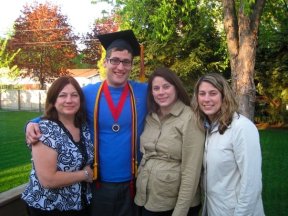 The first question I always get asked when I’m in feminist spaces is: “What inspired you to become a feminist?” Although I could go into the various histories revolving around men’s involvement in the early stages of the women’s movement to the similarities between the LGBTQ and women’s movements, my simple answer has always relied on one person: my mother.
 Feminism and Religion