“Learning entails more than the gathering of information. Learning changes the learner. Like dwarf pines whose form develop with winter’s design, the learner is shaped by what he learns.”
I struggled with what to write about for my May post. Would I write about the ridiculous notion which has countless Americans buying into the idea that COVID19 is a hoax? I could write about how it is fool hearty for us to even consider lifting stay at home orders when the number of infected patients are still rising daily. The list goes on due to the rising pressures, frustrations, and anxieties that are surrounding each one of us.
Yet what I really want to talk about is a shining example of the goodness and compassion of humanity. During times of utter sadness, fear, and the unknown, we need to keep talking about things that warm our hearts, remind us there is beauty and happiness in life. So, for the next few monthly posts of mine, I am going to be highlighting specific communities, organizations, and peoples that are doing extraordinary things during these uncertain and challenging times. The first community that I want to talk about is the Sikh Community.
Imagine that you are a young mother of three from Syria, and that after fleeing your home with your husband and family, you arrived in Lesbos and have been waiting for months to have your asylum papers processed. You don’t know when that will happen, it could take more than a year, you have been told. You are staying in a tent with other families because the containers are full. You have no privacy. When it is cold you are cold, and when it rains you get wet. You try to keep your family clean and healthy, but there are not enough toilets and showers for everyone. In addition, you are afraid to leave the tent at night because some of the men without families drink too much and harass you and the other women.
You have heard that a strange new disease is killing people all over the world. It has a name but you cannot remember it. You don’t know what the symptoms are, and you don’t know what to do to protect yourself and your family. What you do know is that the camp is on lockdown, which means that no one can leave. This is especially hard on the men, including your husband. They have been used to feeling at least a little bit free when they walked outside the camp. Now they feel like they are in prison. They get angry easily, and this makes life harder for you and the other women.Continue reading “Safe Hands in the Moria Refugee Camp in Lesbos: A Starfish Project”
We are experiencing much grief and fear in this moment. Many of our loved ones have become ill, or passed on. We struggle with theodicy questions; why would God allow such devastation to occur? However, instead of asking why, as our eyes are being opened to the realities of our world, this is a moment that calls for deep reflection.
This Easter was a challenging time for many of us. I could never have imagined that my daughter Sarah and I would end up spending the holiday at home alone — or that we would have hot dogs and tater tots for Easter dinner(I let Sarah pick – I should have seen that coming!). Although we were physically separated from family, we connected in other ways. I am grateful for the many suggestions on opportunities to remain engaged with each other even though we are not sharing the same physical space.
Easter is a celebration of Resurrection; it is a time of new beginnings and I can’t think of a more relevant theme for this moment. We’ve been told to stay home, to rethink the ways we live our daily lives, and to do so knowing that our individual actions have life and death consequences.We’ve found that much of what we thought we couldn’t live without is actually insignificant and that our choices do matter beyond our own purview.
Feminist spirituality is often disparaged in academic feminist and progressive communities. Many of the strongest critics are Marxists, but there is a general agreement that religion is the opiate of the people, a false belief system that diverts energy from the difficult work of creating justice in this world. This view is rooted in the habit of thought known as classical dualism in which spirit and nature, spirit and body, and this world and the next are viewed as antithetical. From this, it would seem to follow, feminist spirituality focuses attention on an imagined spiritual world as opposed to the material world in which real people live and interact with each other. Nothing could be farther from the truth.
Feminist spirituality is rooted in a strong critique of classical dualism, which sets mind above body, spirit above nature, and male above female. Feminist Goddess spirituality asserts that the female body has been especially disparaged in traditional theologies rooted in classical dualism. This can be seen in the image of the naked Eve as the source of evil, sin, and temptation. In contrast, Goddess spirituality is inspired by images of the female body of the Goddess as a symbol of the Source of Life. Goddess spirituality understands nature (or the world) to be the body of the Goddess and affirms this world as our true home. This world is understood to be an interconnected web of life shared by humans and other than human beings. Continue reading “I Am a Progressive because of Not in spite of My Feminist Spirituality by Carol P. Christ”
“When life hands you lemons, sometimes you have to make applesauce.”
I’ve been thinking a lot about something my grandmother would always tell me: “When life hands you lemons, sometimes you have to make applesauce.” I know, it sounds crazy, but life right now appears to be more on the crazy than the sane side.
We’re all in a state of uncertainty right now. The news is scary. Twitter is scary. Heck, even TikTok is losing parts of its humor. Everywhere we seem to turn, it’s more information about COVID-19, new cases, new lockdowns, and new things that we shouldn’t do for the foreseeable future. Continue reading “When Life Hands You Lemons… by John Erickson”
In a recent blog on Feminism and Religion,“Insights on Sisterhood,” Eirini Delaki opened a dialogue about problems that arise in women’s circles. According to her, many of us are reacting against the poisonous pedagogy of control which is all too familiar in patriarchal families and patriarchal cultural, religious, and economic institutions. Desiring to be free of hierarchical structures that inhibit our growth and happiness, we often react against all structures.
We imagine that groups without structure will provide a space where we can learn and grow together. We begin with a vision of sisterhood in which everyone’s voice will be heard. In practice, however, groups without structure usually end up being dominated by those with the loudest voices and the biggest egos. The quieter and less sure members of the group find themselves dominated again. When the vision of sisterhood is not realized, the group is likely to dissolve. Continue reading “Women’s Circles Need Well-Established Structures to Ensure that Everyone’s Voice Is Heard by Carol P. Christ”
As the results from America’s Super Tuesday election primaries came in, I found myself feeling disoriented. I could not focus on any task and found myself obsessively reading the news and checking my Facebook timeline. Many of my friends who had supported Elizabeth Warren were embracing Biden as the next best hope to defeat Donald Trump. Sometime on Thursday, I came across Starhawk’s Facebook post on the grief and disappointment so many of us were feeling following the latest primary results.
In the post, Starhawk spoke of her disappointment that Bernie and Elizabeth did not do better and that Biden did so well. She spoke first of her grief that Elizabeth’s campaign never took hold. No doubt she, like me and many of you, had heard feminist friends express the fear that a woman could not win, saying that as much as they wanted to vote for her, they probably would not. Starhawk said that we simply do not have enough archetypes of female power to enable people to imagine a woman as President. Continue reading “Grief, Disappointment, and the Big Comforting White Guy Who Can Make It All Right by Carol P. Christ”
“And a rich old white man shall lead them.” Is this saying found in the Bible or any other collection of sacred texts that those committed to social justice admire? If not, then why are liberal pundits (and even some of my friends) rushing to declare Michael Bloomberg to be the candidate—and perhaps the only candidate—who can save America from Donald Trump?
When the Democratic Party changed its rules to allow Michael Bloomberg onto the stage after “following its rules” to exclude Kirsten Gillebrand, Kamala Harris, Corey Booker, and Julian Castro, I was appalled. I agree with Bernie Sanders and Elizabeth Warren that it is imperative to get big money out of politics. I supported the small step in that direction enshrined in the debate rules requiring significant numbers of small donors. The decision to rescind this rule in order to place Bloomberg on the debate stage made my blood boil: it confirmed what I already knew—that the Democratic party is not fully committed to cutting its ties to big money.



 I struggled with what to write about for my May post. Would I write about the ridiculous notion which has countless Americans buying into the idea that COVID19 is a hoax? I could write about how it is fool hearty for us to even consider lifting stay at home orders when the number of infected patients are still rising daily. The list goes on due to the rising pressures, frustrations, and anxieties that are surrounding each one of us.
 I am an annoying feminist. I annoy pretty much everyone about it, because I’m never NOT applying a feminist lens to every aspect of life: science (looking at you,
 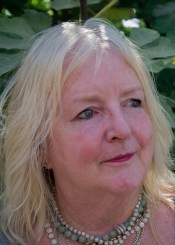 Imagine that you are a young mother of three from Syria, and that after fleeing your home with your husband and family, you arrived in Lesbos and have been waiting for months to have your asylum papers processed. You don’t know when that will happen, it could take more than a year, you have been told. You are staying in a tent with other families because the containers are full. You have no privacy. When it is cold you are cold, and when it rains you get wet. You try to keep your family clean and healthy, but there are not enough toilets and showers for everyone. In addition, you are afraid to leave the tent at night because some of the men without families drink too much and harass you and the other women.
  This Easter was a challenging time for many of us. I could never have imagined that my daughter Sarah and I would end up spending the holiday at home alone — or that we would have hot dogs and tater tots for Easter dinner
 Feminist spirituality is often disparaged in academic feminist and progressive communities. Many of the strongest critics are Marxists, but there is a general agreement that religion is the opiate of the people, a false belief system that diverts energy from the difficult work of creating justice in this world. This view is rooted in the habit of thought known as classical dualism in which spirit and nature, spirit and body, and this world and the next are viewed as antithetical. From this, it would seem to follow, feminist spirituality focuses attention on an imagined spiritual world as opposed to the material world in which real people live and interact with each other. Nothing could be farther from the truth.
 I’ve been thinking a lot about something my grandmother would always tell me: “When life hands you lemons, sometimes you have to make applesauce.” I know, it sounds crazy, but life right now appears to be more on the crazy than the sane side.
 In a recent blog on Feminism and Religion,
 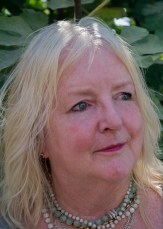 As the results from America’s Super Tuesday election primaries came in, I found myself feeling disoriented. I could not focus on any task and found myself obsessively reading the news and checking my Facebook timeline. Many of my friends who had supported Elizabeth Warren were embracing Biden as the next best hope to defeat Donald Trump. Sometime on Thursday, I came across Starhawk’s
  “And a rich old white man shall lead them.” Is this saying found in the Bible or any other collection of sacred texts that those committed to social justice admire? If not, then why are liberal pundits (and even some of my friends) rushing to declare Michael Bloomberg to be the candidate—and perhaps the only candidate—who can save America from Donald Trump?
