What Will the Faith Response to Zika Be? by Katey Zeh

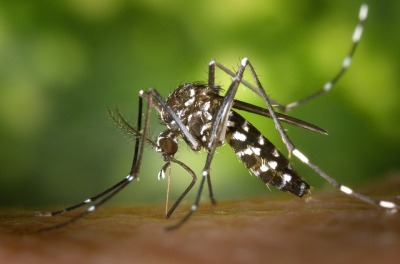
tiger-mosquito-49141_640

In the face of the Zika epidemic the World Health Organization (WHO) has issued new recommendations for individuals at risk of contracting the virus either through mosquito bites or through sexual contact with an infected person. If someone has traveled to an area where Zika is present, the WHO recommends abstinence or consistent condom use for at least eight weeks or up to six months if a partner shows symptoms. (Only 20% of people infected with the virus are symptomatic.) But for women of childbearing age living in areas affected by the virus, the WHO urges them to speak with their health providers about possibly delaying pregnancy, presumably indefinitely. The Zika virus has been linked to devastating birth defects including microcephaly.

After issuing the revised guidelines Nyka Alexander, spokesperson for the WHO, clarified that the purpose of them was not to discourage all at-risk couples from conceiving, but rather to ensure that they consider the Zika virus and its potential impacts on the timing of pregnancy. “Whether and when to become pregnant should be a personal choice made on the basis of information and access to affordable, quality health services,” said Alexander.

For pregnancy to be a personal choice, women and men must have access to the tools, information, and resources they need to prevent, delay, or plan it. Worldwide more than 220 million women want to avoid pregnancy but have an unmet need for reliable, safe contraceptive methods. The Zika virus has brought significant attention to what has been a public health crisis and an ethical tragedy for decades: that despite modern medical advances 85 million women experience unintended pregnancies each year. Continue reading “What Will the Faith Response to Zika Be? by Katey Zeh”
Toxic Masculinity: “Masculinity Must Be Killed” by Carol P. Christ

Carol Molivos by Andrea Sarris 2A few days ago I watched the movie An Unfinished Life starring Morgan Freeman, Robert Redford, and Jennifer Lopez. Though it was recommended as a sensitive psychological drama, and though on the surface level it criticizes (male) violence against women and animals, on a deeper level, it confirms the association of masculinity with violence, suggesting that violence is the way men resolve their problems with each other.

At the beginning of the film, Robert Redford, who lives on a ranch in Montana, picks up his rifle with the intention of shooting a bear who mauled his friend Morgan Freeman. This act of violence is stopped by local authorities who arrive to capture the bear. However, the bear is not removed to a more remote area, but rather is given to a local make-shift zoo where it is kept in a small cage. At the end of the movie, Redford frees the bear after Freeman realizes that it should not be punished for injuring him. The bear is last seen crossing a mountain ridge in the distance.

Redford is grieving the death of his only son who died in an automobile accident while his son’s wife (played by Jennifer Lopez) was driving. After being beaten by her current boyfriend, Jennifer Lopez escapes with her daughter and ends up on Redford’s doorstep, announcing that her daughter is Redford’s granddaughter.  Redford, who believes Lopez is responsible for his son’s death, grudgingly allows them to stay.

When Lopez’s boyfriend tracks her down in Montana, Redford drives him out of town, threatening to kill him with his rifle. When the boyfriend comes back, Redford shoots out the tires of his car, smashes the car’s windows with his rifle, and beats the boyfriend bloody before putting him on a bus out of town.

The movie asks us to condemn the boyfriend’s violence against Lopez and Redford’s desire to kill the bear, but it also asks us to condone and even to celebrate Redford’s violent acts against the boyfriend. After all, in this case, justice is done. Right?  Continue reading “Toxic Masculinity: “Masculinity Must Be Killed” by Carol P. Christ”

Khutba “A Call to Radical and Angry Women of Faith” by Vanessa Rivera de la Fuente

Sacred+Circle+home+page+image+oneI am grateful to the Interfaith Group of Feminist Theologians and Women of Faith for remembering my spiritual affiliation and giving me the opportunity to lead this service in this fully of blessings month of Ramadan and share with you a reflection in the form of a sermon or khutba. Perhaps you know that in orthodox Islam, tradition, without any theological basis, still forbids women to speak or lead rituals. So, this is a joyful occasion for me and I want to start with my usual invocation:

I thank God for this day. I praise Allah for the paths I had to walk that led me to its light and the present day. I ask the protection of the Divine that lives in the essence of everything. and I invite my female ancestors to walk with me in this journey.

A Call to Radical and Angry Women of Faith

My dear sisters, I want to invite you this evening to reflect on what it means to be a radical woman of faith, in a context of extreme upsurge of violence against women and minoritized groups we live in. What does mean being a radical woman? As we know, radical women are feared even by their activist and feminists peers. For the mainstream of society, a radical woman is a little crazy, a little witch, a little ugly, and especially, a very angry woman.

Well, they are right about anger. To be radical is to be as outraged enough to, fearlessly and tirelessly, claim and work for the total end of all kinds of oppression. You heard it right, the total end of all kinds of oppression. For women of faith, like us, who believe in social justice as the prior duty and principle of living in the creation, the current status of abuse, violence and exploitation to which a part of humankind is subjected must provoke us to rage, anger and outrage.

Aren`t you upset? Because I am. Religious patriarchy has historically exercised and endorsed, until today, violence against women and those group defined as “minority.” This religious patriarchy, composed for priests, imams, lamas and rabbis legitimize multiple forms of exclusion of women, sexism, control of our bodies, misogyny and rape culture.

This week we mourn the death of about 50 of our Latino siblings in Orlando. We have to add to this list the hate crimes against queer people in Veracruz, México, as well the slaughtering of women in thousands of gendercides that have become the standard cover of newspapers every day, and the violence against lesbians and trans women, crimes that fail to capture the visibility and solidarity of a homophobic and androcentric society.

Without denying the misogyny and homophobia existing in my community, I want to say that the specific religion of those criminals doesn´t matter, you know why? The pernicious influence of religious patriarchy extends beyond the limits of our assemblies. People blame misogyny and LGTBQphobia on religions as if this is something external to their lives. But each day, at the school, workplace and media our society reproduces all that hetero-sexist, colonial, racist, elitist violence. Heterosexuality as a political regime, validated by hegemonic religious narratives, present in all belief systems, is a source of violence and a form of terrorism itself. Continue reading “Khutba “A Call to Radical and Angry Women of Faith” by Vanessa Rivera de la Fuente”

Religion and the #StateofWomen by Gina Messina

Pledge PhotoThe White House Summit on Women was held this week on Tuesday, June 14, 2016 and it was a great privilege to be among those invited to participate in this inaugural event.  There was an incredible line up of speakers and so much was shared. It proved to be an overwhelming day – in a very good way.  Topics addressed included violence against women, economic empowerment, and education.  In addition to the main event, there were breakout sessions on a myriad of topics presented by the most preeminent authorities in their fields.  I walked away from the day with a sense of urgency to find news ways to engage gender issues and social policy.  However, I also wondered how to bring religion into the dialogue and give greater attention to its impact on women’s issues in the US. Continue reading “Religion and the #StateofWomen by Gina Messina”
Remember by John Erickson

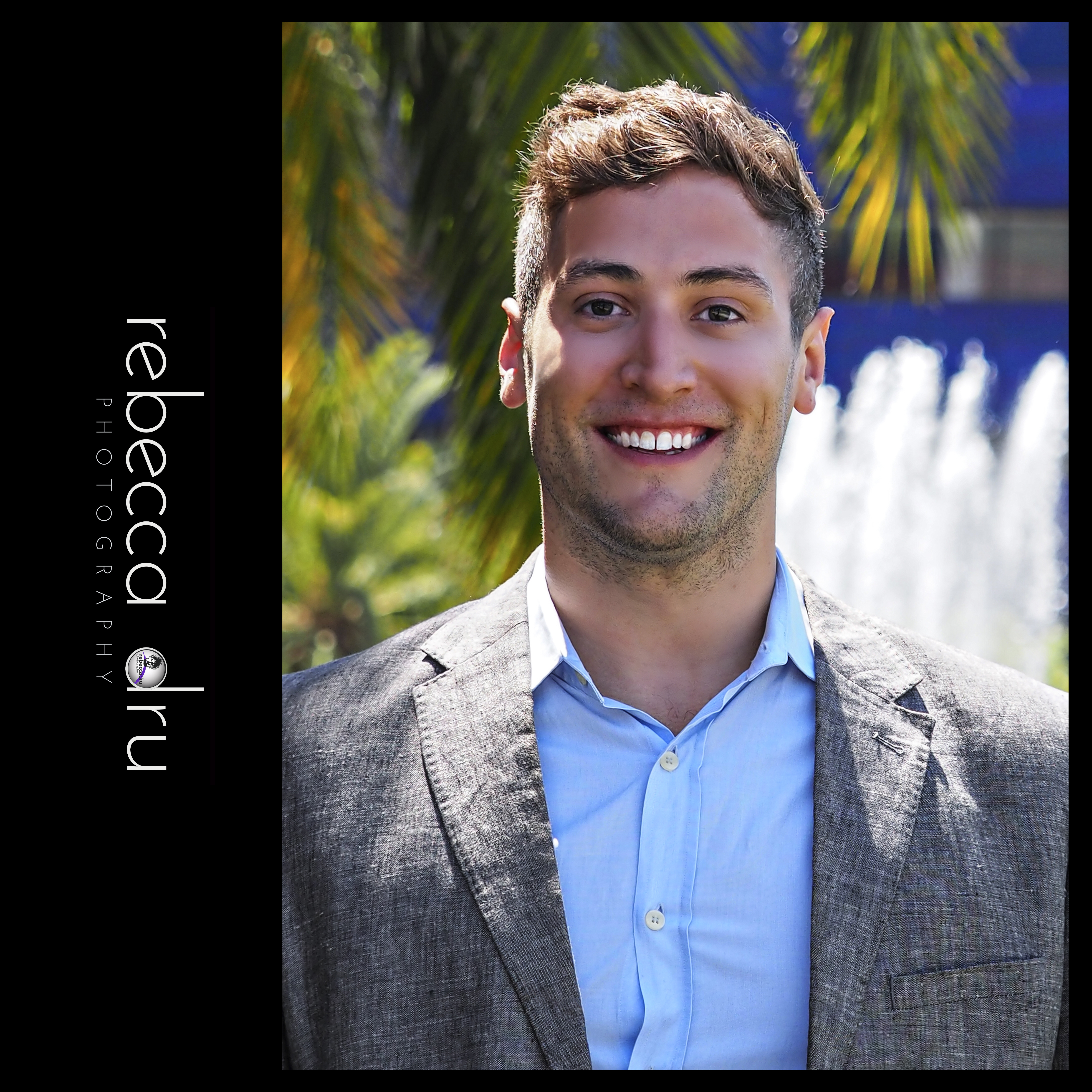
Remember the loss, because we’re going to need it for the tomorrows to come and for those that need our protection the most: the next generation. Remember, we are Orlando; now, tomorrow, and always.

WEHO CA (June 7, 2015)©2015 Rebecca Dru Photography All Rights Reserved http://www.rebeccadru.com

I want to tell you a short story about the small town of Ripon, WI. On May 19, the local newspaper, The Ripon Commonwealth, which has served as the town’s paper since 1864, published a story regarding the political right’s uproar concerning President Barack Obama’s executive order that all public schools must allow transgender individuals to use the bathroom which matches that of their gender identity. Angry and upset, the paper’s education reporter wrote an article expressing his clear disdain for the President and also expressing a clear lack of empathy, understanding and sheer bigotry towards the transgender community.

Growing up in Ripon, I always read the paper when it came out on Wednesday evenings. Those of you who grew up in a small town can attest to the luxury of seeing friends, family members, and even the smallest ongoings in one’s town in print for the entire town to see and talk about. However, one thing I never saw in the paper was the clear hate I read in Mr. Becker’s article (the author of said piece). Enraged, I immediately asked myself: what can I do? Having connections back in Wisconsin, I immediately turned to friends who owned businesses, a friend who is the Director of a vocal and important group in the town, and community organizations and friends to begin to write letters. Continue reading “Remember by John Erickson”

Goddess Politics and the Cauldron of Memory by Kavita Maya

KavitaMaya‘Someone needs to gather the stories, to keep the cauldron,’ said the late Goddess feminist artist Lydia Ruyle during one of the last times we spoke, at the 2014 Glastonbury Goddess Conference. I had hinted at my concerns around conducting doctoral research in the presence of ongoing conflict within the Glastonbury Goddess community (especially when my broadly-stated site of interest is ‘politics’), and in reply she had stressed the need to ‘hold space’ for the different voices and perspectives in the UK Goddess movement, and that conflict would be inevitable. ‘There needs to be a weaver,’ she said.
The following day I recorded an interview with Lydia and some of her friends at Café Galatea on the High Street, which she had been keen to ensure since the previous summer—with poignant foresight, given her death in March 2016. I’m not sure if she was expecting that I should fully take on the role of this ‘weaver’—there are more stories than one PhD thesis can claim to encompass—but the theme is present in my writing. Her words lead me to reflect on the weaving together of politics with memory and storytelling, and on the need to honour the plural histories of the British Goddess movement. Continue reading “Goddess Politics and the Cauldron of Memory by Kavita Maya”

(((Israel))) by Ivy Helman

me hugging treeThe BBC just ran a story about white supremacist and neo-Nazi groups targeting Jews by signaling each other to their presence on various social media sites through the use of (((this symbol))).  Of course, this is all based on the assumption that a “typically” Jewish last name signifies the bearer is also Jewish.  Through a Google app (since removed) that could recognize patterns such as ((())), these Jewish people began to receive anti-Semitic comments.  There has been a general outcry of disgust among Jews and other minority groups as to the problematic targeting of Jews in this fashion.

The same cannot be said about the BDS movement and people’s willingness to call it out for what it is.  This to me is hypocritical!  According to its website, the BDS movement, or Boycott, Divestment and Sanctions, seeks to end what it understands to be the colonialism, apartheid and oppression of Palestinians in Israel through various financial, commercial and international means.  It accuses Israel of human rights violations, genocide, ethnic cleansing and other war crimes as well as illegal occupation (of the Palestinian lands, not just the occupied territories). Continue reading “(((Israel))) by Ivy Helman”

What Traci West Taught Me about Dominant and Excluded Voices by Elise M. Edwards

Elise EdwardsIn my previous post, I mentioned a book I am writing about how theological and ethical considerations in architectural design can define good architecture.  In that post and in ones to follow, I am acknowledging the feminists and womanists and mujeristas who have influenced me while also opening up the dialogue to the feminists in this community who continue to inspire and guide me to do my best work.

But today, instead of talking about creativity or architecture, I want to discuss how I arrived at the conviction that community decisions about how we ought to live—whether those are decisions about laws, institutional policies, religious practices or architectural buildings—need to include the voices of the diverse people they directly and indirectly influence. Continue reading “What Traci West Taught Me about Dominant and Excluded Voices by Elise M. Edwards”

Reflections on Researching the Goddess Movement in Britain by Kavita Maya

KavitaMayaI’ve been asked by both academics and Pagans what inspired me to pursue doctoral research on the British Goddess movement: of the many ways that people first click with feminist politics, a story entwined with a ‘spiritual’ impulse might seem unusual, given the slow-to-change secular assumptions of mainstream feminism.
When I reflect on my history, two threads at the core of my early feminist identity leap out: one, the value of thinking and asking questions; the other, ‘feminist spirituality’, which for me describes a profound emotional, intellectual and creative investment in the struggle for a fairer, more inclusive world. Two early ‘click’ moments: as a child, asking persistent questions about the sexist gender roles modeled by those around me (and being told “You’ll understand when you’re older,” which I now recall with a grim irony), and—perhaps unusually—coming across the concepts of patriarchy, feminism and the Goddess by way of 1990s teen fiction about witches. Continue reading “Reflections on Researching the Goddess Movement in Britain by Kavita Maya”

Sisterhood is . . . (Well) Complicated by Carol P. Christ

When I wasCarol Molivos by Andrea Sarris 2 a girl, the women in the neighborhood looked out for each other, and my mother had a wide circle of women friends. My grandmother lived nearby, and she and my mother spoke on the telephone nearly every day. My mother and I had a close relationship cemented by caring together for my baby brother.

In graduate school when I was one of a few women in a male-dominated field in a hostile environment, I discovered that “sisterhood is powerful” when I joined a group of women who came together to share experiences and change our lives. Having grown up in a community in which women supported each other, I found it relatively easy to support and seek support from women in a feminist environment.

At the same time, my newfound feminist identity deepened a rift that had opened in my relationship with my mother when I decided to go to graduate school. Continue reading “Sisterhood is . . . (Well) Complicated by Carol P. Christ”