No Honor for A Career of Hate by amina wadud

amina 2014 - croppedA recent decision by Brandeis University (founded in 1948 as a nonsectarian Jewish community-sponsored, coeducational institution) to take back its offer to give Ayaan Hirsi Ali an honorary doctorate hit the media with the usual storm over such a controversial figure.

Most of the resistance to her, as a public figure, comes because of her own categorical statements against Islam. Not only does she choose to be an atheist, but she lambasts those who do not make her same choice. Her sweeping statements are meant to galvanize support against the Islam she has suffered from both as a child in a conservative family and as colleague of a brutally murdered film maker. She lost her bid for refugee status in Holland for lying about her past and was taken lovingly into the arms of certain institutions (like the conservative think tank, American Enterprise Institute  and tea party politicians, like Pamela Gellar). All manner of official trickery was put in her favor such that she enjoys something millions of her country men and women from Somalia would probably never hope to see: US citizenship and institutional support. Continue reading “No Honor for A Career of Hate by amina wadud”

I Believe Anita! by Marie Cartier

Marie CartierDuring the past week I attended a Los Angeles premiere of a new documentary Anita: Speaking Truth to Power (Dir: Freida Lee Mock USA, 2013). The screening was sold out and I had great seats saved for me– sitting with a friend who works at Samuel Goldwyn, the distributor of this fine film.

In 1991, Anita Hill provided testimony she hoped would serve to dissemble the nomination of Clarence Thomas as a Supreme Court justice. Although the vote would end up being close (52-48) Hill’s testimony did not serve to dissuade the decision — Clarence Thomas’ nomination was confirmed and he was appointed to a life term on the Supreme Court four days after Hill’s testimony concluded. Here is an outline of the debate. Continue reading “I Believe Anita! by Marie Cartier”

Asking Sacred Questions by Carolyn Lee Boyd

carolyn portrait
If you could travel over space and time to an ancient holy oracle, a manifestation of the voice of Goddess, what questions would you ask? Imagine you are there, at the gateway to where the oracle sits, and consider which questions are closest to your heart, near your soul, the ones you have been trying to answer your whole life. Humanity has a long history of ostracizing, marginalizing, prosecuting, and sometimes executing those who question, especially those who question established authority and doctrine. However, you need have no fear at this place of the oracle where questioning is celebrated. Here you are at home because you are a feminist.

Feminists have long known the power of questioning to liberate, to enliven and enrich, to enact positive change, to expose injustice: “Should not women live free from violence? Have the nourishment, shelter, and health care they need? Vote? Hold property? Have their labor fairly compensated? What would a world in which all women are respected and celebrated as individuals with infinite dignity and worth be like, and how do we bring it about?” Continue reading “Asking Sacred Questions by Carolyn Lee Boyd”

In Memoriam – God Hates Fags

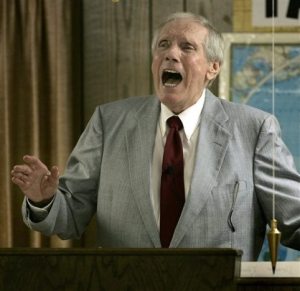
Phelps didn’t just live a life filled with hate but he also embodied the very reasoning why so many communities cannot cross that proverbial bridge to work together to see past their differences and maybe never will. In the case of Phelps, sticks and stones may break our bones, but words really do hurt.

Fred Phelps, an American PasFred Phelpstor who headed the Westboro Baptist Church in Topeka, Kansas died at the age of 84 on March 19, 2014.  While some individuals leave behind legacies of their good deeds and loving memories, the only thing Phelps left behind was a family and church founded on the principle of hate.

A frequent eyesore at various events ranging from military funerals and gay pride gatherings to mainstream events that captured the attention of our pop-culture obsessed society, Fred Phelps and his clan believed it was their sacred duty to warn others of God’s anger over the growing acceptance of not only modernity in general but also issues like gay rights and abortion.  From slogans and signs such as ‘God Hates Fags’ to ‘Thank God for IEDs (Improvised Explosive Devices), Phelps has caused many controversies both during his lifetime and after his death.

Continue reading “In Memoriam – God Hates Fags”

Abortion–the topic that won’t go away–or even morph by Esther Nelson

Esther NelsonRecently, I got involved in a conversation about abortion.  It happened on Facebook when a relative posted that her heart hurts when she considers her “sweet baby girl” and how the law (Roe v. Wade, 1973) in the United States gave her the choice as to “whether [or not] I would have her killed.”  She’s sincere.  Many of her friends “liked” her post and, with few exceptions, commented in agreement.  I was one of the exceptions.

March celebrates Women’s History Month–a month to remember the accomplishments of our foremothers, noting their work helping to secure for us (their progeny) certain rights, most notably the right to vote (Elizabeth Cady Stanton, 1815-1902) and reproductive rights (Margaret Sanger, 1879-1966).  Support for abortion nowadays almost always falls under the rubric of “women’s reproductive rights.”  So when we hear, “It’s my body and I’ll decide what I’ll do with my own body,” the speaker is giving voice to what many consider to be a fundamental right–the right to be autonomous and exercise free agency over one’s own person. Continue reading “Abortion–the topic that won’t go away–or even morph by Esther Nelson”

The Politics of Miztvot by Ivy Helman

headshotRecently, Ben of Ben’s Tallit Shop commented on an older post of mine on this website entitled: “How Literal is Too Literal? My Experience with Tallit Katan.   He wrote, “In my opinion, it makes sense to first try the mitzvah of tzitzit in private for a month or two to ensure you are undertaking it for the right reasons.  Making a political statement is not a valid reason (though some people, I imagine, would argue otherwise).  Mitzvahs and politics don’t mix.”

First of all, this comment is both sexist and patronizing!  A man would never suggest to another man to do what he suggested I do and “try the mitzvah… in private… to ensure you are undertaking it for the right reasons.”  I’d dismiss it entirely if I was that kind of person, but I’m not.  Sexism and patronizing aside (as if one could do that really), I would like to engage with his thoughts on the mixing of politics and mitzvot because I think that can lead to great reflection and insight for Jewish feminists.

Not all mitzvot have an inherently political nature, but many do.  In fact, one could even argue something as seemingly apolitical as lighting Shabbat candles could be political.  Lighting candles ushers in Shabbat peace for one’s household and ideally for one’s community even if that peace is only for one day a week.  Since this is at odds with the world’s political environment of fighting, war and violence, it could be interpreted as a political act.  After all, won’t every day in the redeemed world be Shabbat? Continue reading “The Politics of Miztvot by Ivy Helman”

Painting and Ordaining the Holy Woman Icon by Angela Yarber

angelaThis month on the Spring Equinox I celebrate ten years of ordination. And for the first time in over fourteen years I am not employed as a minister at a local church. While I miss preaching and occasionally long for liturgy, I have never been more happy, and I find company and solace in the myriad holy women that fill my life. They have become my beloved community. They hold me accountable to my calling. They celebrate the birth of my child, dry my tears, laugh with me heartily, and remind me to dance for justice even when it’s difficult.

Most of them are real flesh and blood women—my wife, friends, family, colleagues, even the Feminism and Religion virtual community. Many are also the  Holy Woman Icons with a folk feminist twist that I feature each month: Virginia Woolf , the Shulamite, Mary Daly, Baby Suggs, Pachamama and Gaia, Frida Kahlo, Salome, Guadalupe and Mary, Fatima, Sojourner Truth, Saraswati, Jarena Lee, Isadora Duncan, Miriam, Lilith, Georgia O’Keeffe, Guanyin, Dorothy Day, Sappho, Jephthah’s daughter, Anna Julia Cooper.

So, as winter turns to spring and I enter the next decade of ordained life now outside the church’s walls, I find myself clinging to Walt Whitman’s admonition: “From this hour forward I ordain myself loos’d of limits and imaginary lines.” As I think about this great cloud of witnesses surrounding me—my beloved Holy Women—I recall the ways in which we are all called to be prophets for justice.

Many have claimed that artists are our contemporary prophets, those who rage against the status quo, and call us to actions of justice that create beauty in the lives of all humanity, even all creation. So I turn to a great artist whose music has set free countless women and queer folk in search of new symbols, new language, new stories that are deep and wide enough to contain our subverted and searching spiritualities. The great womanist prophet, Tracy Chapman, sings these words in her song, New Beginnings: Continue reading “Painting and Ordaining the Holy Woman Icon by Angela Yarber”

Gaia by Jassy Watson

JassyWe have come to a point in the history of our civilisation where our relationship to nature seems to be more of one of destruction than of nurturance and respect. Humankind has steadily distanced itself from nature, our homes are filled with dead things, plastics, metals and chemicals. Everything around us is synthetic and manufactured in factories. Some people live their lives never touching nature – the soil, the plants, the grass. I have even met people who have a deep fear of being in nature.  This distancing from nature is a reflection of distancing from our Divine Earth mother, not just as the outside world, but also as the energy of the archetypal Earth Mother within our own psyche.

Many cultures and traditions herald a Great mother, Mother Earth or Mother Nature but our connection to her, especially recently in the Western world, has been severed. In the Greek mysteries, Gaia or Gaea, the Divine Mother, was one of the primal elements who first emerged from cosmic chaos at the dawn of creation.  All the later Pantheon of Gods and Goddesses are said to have descended from her initial union with Ouranos (the sky) and Pontos (the sea). Her geneology and her presence in Greek myth is full of complexities, conflicts and contrasts. Her worship in Ancient Greece did in fact decline, for her role was supplanted by the Gods of Olympus. Some scholars such as Harris and Platzner (Greek Mythology: Images & Insights, 2011), maintain that the decline in her worship and the demonizing and slaying of the snake or serpent – one of Gaia’s primordial symbols and a symbol of archetypal feminine energy, represents the death of the sacred feminine brought about by the insidious reign of a patriarchal pantheon of male gods.

Gaia is not only a figure in Greek myth however. In the 1960s, James Lovelock (2000) formulated the Gaia hypothesis. Lovelock states that all life, and all living things on this planet, are part of a single, all-encompassing global self-regulating system (he avoided the word consciousness) which he named Gaia. It is this global system of interconnection that makes our planet capable of supporting life. Further, he believes, if you live in balance with Mother Nature, health and healing are yours; violate Her laws and tip the balance, you pay the price in suffering and disease. Thus Gaia does not only represent the Ancient Greek Mother Earth and the physical planet, she also represents the forces of nature: laws and intelligences that function on every level of the cosmos. She is the very fabric of existence. Glenys Livingstone says it beautifully:  “She is the eternal pulse, in which each one of us flows. Gaia is Earth, is Universe, is Ultimate Mystery, is you, is me – She is multivalent.” (from her Essay ‘Gaia as a Cosmic Name‘, 2014)

I recently taught two workshops for women ‘Painting Gaia – Exploring our Connection to the Earth’  based in my belief that disconnection and distancing from nature is an issue that needs attention. We need more than ever, at this time in history to re-connect deeply with the earth and with the feminine –  regardless of faith of tradition.  This re-connection that will aid in deep ways in the healing of the planet and of the self. If we are not connected, how can we care about the plight of the planet and all sentient beings? And if we are not caring, how can we take action to make a difference?

I am dedicated to taking action, raising awareness and making a difference in the ways that I know how. The intention for these workshops is to connect to Gaia through the process of visioning, painting and inquiry. Our Gaias were birthed from the cosmos and as we brought her into being we deepened our connection to Her, within and without. We also strengthened our commitment to healing the earth in a capacity that is manageable. Some, including myself, expressed feelings of being overwhelmed by all the atrocities we are flooded with on the news and in social media forums.  In this context, our goal was to become more mindful of our actions and choices. The workshop also called us to a deep, primal remembering of Her eternal presence, from the cosmos to the core.

It was apparent in our discussions is that Gaia represents paradox – life/death, chaos/order, creation/destruction, beauty/ugliness, peace/fury. Connecting deeply with Gaia is ultimately about living in paradox; we must accept both life and death to truly know her nature. Marion Woodman (Dancing in the Flames, 1996) states that “paradox is the core of wisdom and the core of the goddess”. The balance of both must be held.

In Greek art Gaia was often represented “tamed,” presented as a beautiful voluptuous woman, half risen from the Earth as can be seen here:

img_gaia
Gaia rising from the earth, Athenian Red-figure Kylix, 5th c BCE – image from http://www.theoi.com

Following are two of my recent paintings of Gaia in all her elemental power.  I hope you feel and appreciate the difference!
Continue reading “Gaia by Jassy Watson”

Persephone by Barbara Ardinger

Here we are, creeping up on the vernal equinox (March 21), which astronomers and weathermen on TV tell us is the start of spring. I see Imbolc (as described by Deanne Quarrie) as the true beginning of spring, however. It’s when we see the first little crocuses popping up through the snow…..oh, yeah…..well, maybe not this year, when more than half the U.S. is buried under mountains of snow. Let’s just agree that in ordinary years crocuses pop up and bloom and trees start showing us their tiny green leaves in February. The equinox is really the turning point of spring, the hinge of time when the rising energy tips over into falling energy that is flowing toward summertime, which will arrive at Beltane (May 1 or 2).

Persephone
Demeter and Persephone

We’re probably all familiar with the story of Persephone, who under her childhood name, Kore, was out picking flowers in the meadow one day when her Uncle Hades roared up out of the earth in his mighty chariot and kidnapped her. This led her mother, Demeter, the grain goddess, to search for her and finally go on strike and let the world turn back into winter. This went on until Aunt Hecate told Demeter where her daughter was. When Persephone, now queen of the underworld, came back up with her mother—voilà! It was springtime. That’s how the vegetation myth goes. Continue reading “Persephone by Barbara Ardinger”

Making Our Way – Updating the Guide for Women in Religion by Kecia Ali

dissertation, Advising, feminism and religion

Mary E. Hunt, Monique Moultrie, and I are updating the Guide for Women in Religion. The original version was edited by Mary with an impressive cast of contributors and first published ten years ago. Organized with entries from “A” (AAR) to “Z” (Zeitgeist), it was the successor to the 1992 Guide to the Perplexing, which billed itself as a “survival manual” and was team-written by a group that includes several now-legendary figures in the field, then junior folks trying to find their way in the sometimes hostile, often bewildering landscape of academic religious studies, particularly at the AAR and SBL.

With each iteration of the Guide, some important things have changed. (Others have not, but that’s another blog.)

One thing that has changed for the better:  There are now plenty of women in senior positions, women who have attained the rank of full professor (and retired as emerita), or direct major organizations, who are recognized as leaders in their scholarly fields. Women’s studies in religion has gained prominence as a serious subfield, and gender as a crucial category (or factor, or variable, or consideration, or analytic lens) appears in a great deal of scholarship and not a few job ads. Continue reading “Making Our Way – Updating the Guide for Women in Religion by Kecia Ali”