Taoism is an ancient Chinese philosophy and spiritual tradition that offers a unique perspective on life, existence, and human experience. Where many religious practices aim to transcend and sometimes even punish the body, Taoism cultivates a deep connection with our physical self in ongoing relationship with nature around us.
This resonates with my own experience, in which I see the body as starting point and place of return for everything we do in life. Leaving the body in order to meet spirit or the divine has never made any sense to me.
In this article I’ll highlight a few elements of Taoism as an embodied philosophy, specifically zooming in on principles and practices that promote holistic wellbeing and inner peace.
When you hear the word ‘soul’, what is your first association?
Soul is a complex and much-debated word, that often brings up strong feelings. Without going into religious or philosophical discourse, it is often associated with the breath, and with that mysterious spark of life force that animates the body. I discussed soul in a previous post Untangling the Triad of Life Force, Spirit and Soul. Today I write about soul as a fluid concept, an essence that can get dispersed and also retrieved, and propose a light self-retrieval through dance as remedy that you can do by yourself.
In Part 1 of this series on labelling, I highlighted the difference between naming and labelling, and the search for a personal label as ‘participation ticket’ for life.
In Part 2 on professional and spiritual identity, I looked at what we can learn from the autoethnographic practice of disclosing various selves in research situations. I also discussed the effects of Christianity on the suppression of pagan traditions in northwestern Europe, and nature-based spirituality as part of our generic spiritual DNA.
Today I share a few final reflections including what groups celebrate their differences with ‘prides and games’, and which ones remain invisible? What are the effects of woke ideology on fear of expression and loss of voices, and an invitation for embodied presence as one characteristic of our shared humanity.
This post continues from Part 1, where I situated this essay as a reflection on Xochitl Alvizo’s article Human, Just Human. There, I questioned the difference between the power of naming versus the pressure to label. I then described my search for a personal identifier as ‘participation ticket’ to life. This feels important nowadays to join the conversation and not be dismissed by default. However, I wondered whether looking for things that set us apart emphasises otherness rather than shared humanity.
Today, I question what can we learn from autoethnography about the many selves we bring to different professional situations and how they might hide more than they reveal. I also describe the challenges of naming nature-based practices in a geographical area where 2000 years of Christianity forced our pagan traditions underground.
On February 28, 2022, I unknowingly drove into a deep snowbank, shortly after finding myself in a strangely unfamiliar landscape. Suspecting a TIA, my primary care physician urged me to go to an emergency room for a possible CAT scan. There, a lesion in my right parietal lobe was quickly discovered.
Dreams are a confluence of lifefragments, swelling and dissolving in waves, perpetually on the verge of meanings. What in Physics is called ‘potential energy,’ I refer to as ‘potential meaning,’ the maximum of which is dreaming.
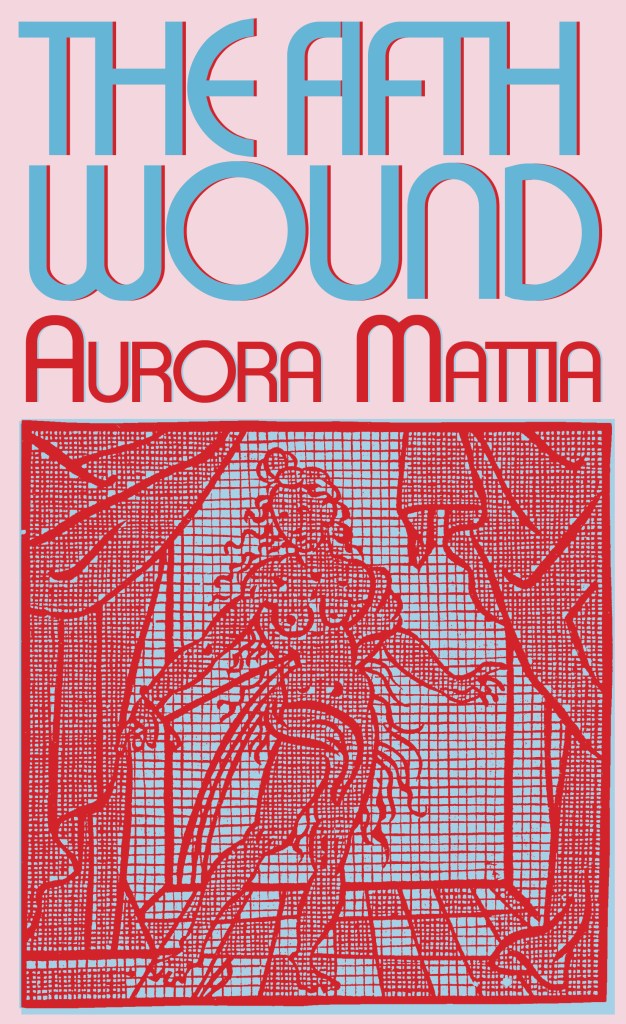
The Fifth Wound, pg 34
There is so much to like about this book even as it is painful to witness Mattia’s journey. It is also confusing at times which might be by design because life, itself, is so confusing. The prepublication material describes this book as a love story between Aurora and Ezekiel. Both Ezekiel and Aurora begin by describing themselves as “fairies.” Ezekiel remains so, Aurora transitions. She calls herself a tgirl or a transgirl.
Mattia leads a life that refuses to be boxed into any “norm.” The vulnerable wounds that she collects as she navigates this challenging path are both internal and external. Ezekiel and Aurora know and love each other both before and after Mattia’s gender confirmation surgery. It takes some work to understand the hardships of those who don’t fit into societies’ norms; these are norms that too often float through our consciousness often without our even being aware. I believe that wrestling with such issues expands our humanity and for this (but not this alone), The Fifth Wound is an important book.
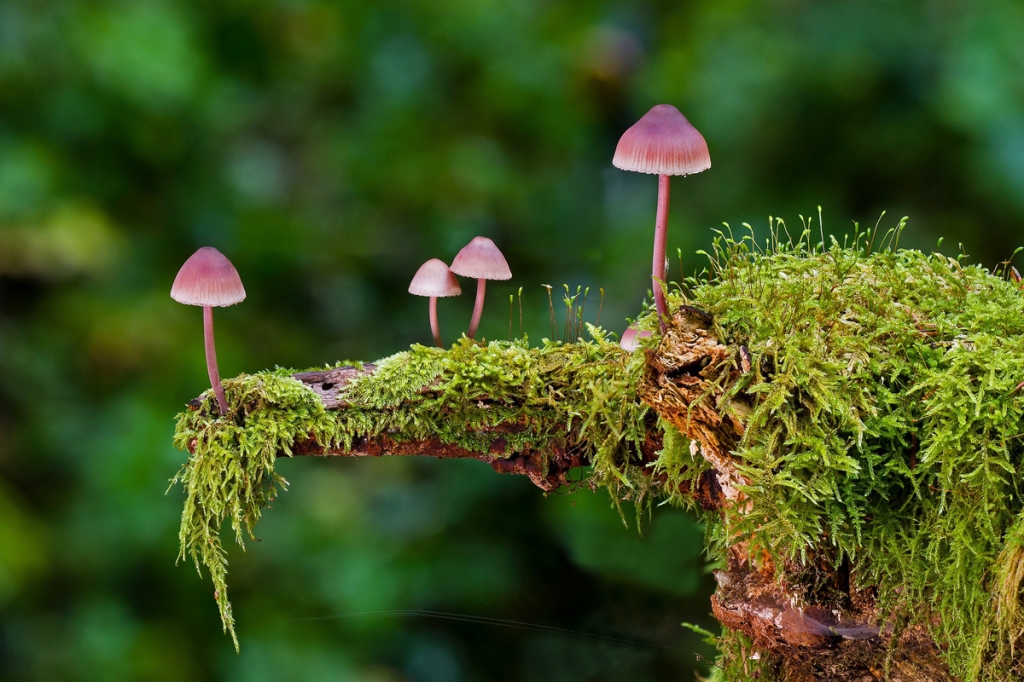
Something happened to me while listening to a song yesterday Mycelia by Yaima Music about the Mycelium Network: the largest living organism in the world underneath our feet, connected by synapses, communicating and assisting life. I found that feeling.
The one where you know you are on Path.
Laney Goodman who just passed, I remembered her singing and drumming. I remembered being at ALisa Starkweather’s Daughter of the Earth events, meeting the hundreds of Priestesses that ALisa has brought together and trained over the years. Being in awe. Wishing I was a person who could do that.
I remembered that I Am.
“Starting to Hear the Earth Standing to Heal the Earth”
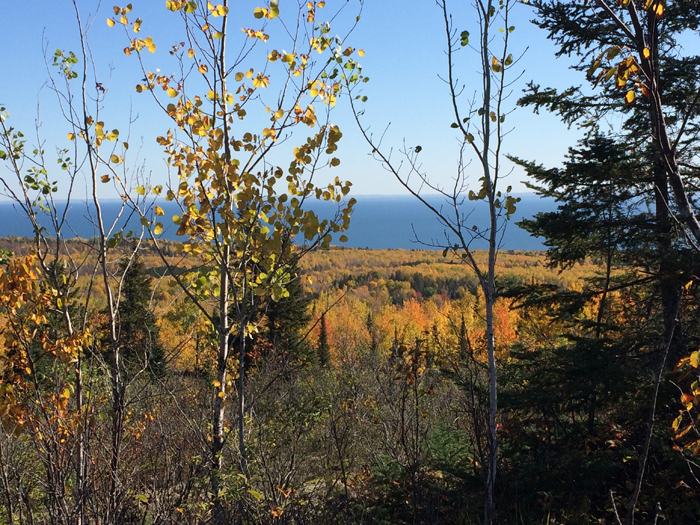
The leaves have finally begun to turn. I’ve been longing for the trees to reveal their true beauty in all their colorful array, and am glad for this beginning. Soon the woods will be filled with the golden, amber, scarlet, and orange glow of the maples, aspen, birch, and oaks of the northern forest.
Hawk Ridge
It is the time of year I would take my Women and Spirituality students to a sacred spot on a ridge high above Lake Superior to explore their spiritual connections with the earth. They would share a particular way they felt a connection to the natural world – often a lake, or a place from their childhood, a tree they loved to climb, their dog, or a stone they carried. We would circle the large pine and invoke Starhawk’s “Open-Eyed Grounding” practice.[i] They would read and comment on their favorite passages from the readings – selections from Susan Griffin’s Woman and Nature and Carol Christ’s “Rethinking Theology and Nature.”[ii] Then they would disperse across the ridge for their solo encounters with nature, before gathering together again, each returning with something they had discovered during that time. Then we would talk about the changing colors of the leaves surrounding us and talk about how these were the true colors of the leaves, finally emerging now that the chlorophyll that had disguised them in green was beginning to wane. Taking our cue from the leaves, we would talk about authenticity – about their coming into their own true colors. For that is the work of spiritual growth and transformation — to emerge as our own true selves. Yet, how often our unique and precious beings are taught to mask our true color, blend in — be “green” like everyone else. What a vivid and beautiful world when we come into our own and share our unique gifts and being with the world.