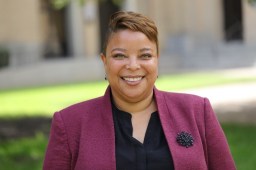
Friends, it has been a few months since I’ve posted in this community. I’m amazed at how much our world has changed since then. Here in the northern hemisphere, spring came and went. It felt like a tide of turmoil rolled in, leaving debris all along the shore and now we are trying to clean it up while keeping our eyes on the sea for more dangerous waves that are coming.
The issues we now face began before March, but for many of us, that was when the COVID-19 pandemic began to alter our patterns of daily existence. In-person instruction at my university and most schools was suspended and spring semester courses shifted online. In March and April, we quarantined, self-isolated, and sheltered in place. While a gradual re-opening of businesses and services has occurred in the months since then, I don’t know anyone who has resumed daily life as it was before. The virus continues to spread and the death toll rises.
“Learning entails more than the gathering of information. Learning changes the learner. Like dwarf pines whose form develop with winter’s design, the learner is shaped by what he learns.”
All along, I’ve believed that Malicroix had something important to offer English-speaking readers: an embrace of solitude, a profound connection with nature, a bold exploration of dream-states. And right now it seems to resonate with our current moment of introspection and reassessment of priorities.
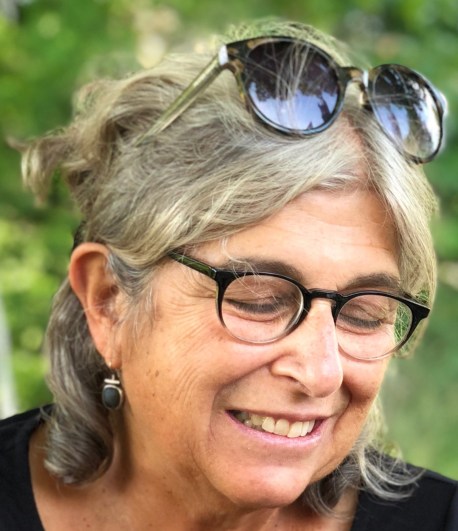
Very early in Henri Bosco’s 1948 novel Malicroix, a young man, Martial de Mégremut, living placidly amid fruitful orchards in a tame Provençal village, receives a letter informing him he has inherited “some marshland, a few livestock, a ramshackle house” from a reclusive great-uncle, Cornélius de Malicroix. Against his family’s strenuous objections–with alarm they speak of “marshes, mosquitoes, miasmas”–Mégremut resolves to travel alone to the remote Camargue to claim his “wild” Malicroix inheritance. The house is on an island, and to reach it Mégremut must cross a rough river, at night, in a frail wooden boat piloted by a taciturn old man who meets him at dusk in the middle of a vast plain.
So begins a deeply internal quest narrative, an initiatory journey that forces Mégremut to come to terms with himself and with the elements–earth, water, wind, and fire–that are ever-present, sometimes terrifyingly so, on the island. For once he arrives, he learns that he must remain there alone for a full three months if he wishes to obtain the inheritance. Torn about whether to stay or leave, he finds that the decision to stay is made of its “own accord,” unconsciously.
As usual, I’m writing my post a couple weeks before you’ll be able to read it. I bet we’re all wondering in mid-December if 2020 is really gonna happen. Will we still be living in a civilization? Will there still be wild animals (outside of zoos)? Will trees and other plants still be growing? Well, my friends, if we all woke up last Wednesday and opened our eyes and it’s all still here……hooray!
Way back in 1998 I wrote a book called Goddess Meditations. It was the first-ever book devoted to guided meditations centered only on goddesses. No gods. No empty minds or asanas. Goddesses, some well known, others obscure, from many pantheons. One chapter in the book is “Chakra Goddesses,” in which I assigned a goddess to each of the seven major chakras. The goddess of the throat chakra—which rules clear communication, self-expression, and creativity—is Sarasvati. Here (with comments that pop out of my mind and into my fingers as I type) is part of what I wrote about communication.
Isabella Ides’ White Monkey Chronicles is my lectio divina, the wisdom, humor, and wonder of her story savored daily. (For an overview, see BJ Austin’s review.) Although the titular white monkey is at the heart of the chronicles, and his charge, foundling/avatar Conrad Eppler, is a boy, I have never encountered a more vivid evocation of goddess—multi-dimensional, earthy, transcendent, fierce, compassionate. No one knows Godma better than the Sisters of the Joyous Mysteries, an order of rogue nuns, the focus of this interview with the author.
Give us a thumbnail sketch of the three remaining members of the order, Sister Mary Subordinary, Sister Merry Berry, and Mother Mary Extraordinary.
Mother Mary Extraordinary is ancient, icy white, her soul as scuffed as an old shoe. Extraordinary’s veil hides long white hair that reaches to her ankles. Sister Merry Berry is youthful, dark as an espresso truffle, her hair a disarray of dreadlocks. She ditches her veil, crochets a Rastafarian beret, and adopts a pair of florescent orange running shoes. Nun on the run. The orderly Sister Mary Subordinary is almost without physical detail. She is selfless, a giver, a maker of bread and soup. She is porous. Sometimes her soul escapes her. Mary Subordinary has visitations; the monkey god, for one, slips in. Subordinary herself can enter other minds, although she tries not to snoop.
Have you encountered rogue nuns in your own life?
Author with Sr. Mary Agnus, Blessed Sacrament School
I spent my first-communion year at a Catholic school in Hollywood, on Sunset Boulevard. One day on the playground, Sister Mary Agnus asked if I wanted to see the bones of a saint. Yes, I did! She reached into her deep pocket and fetched out a small gold case with red velvet lining and a glass portal. Forget Mary Poppins. I was enthralled. Yet in my secret life, I did not believe in her god. I was a seven-year-old redactor, appalled by the vision of an ocean of children drowning as the ark of animals sails on.
Then years of public school in the suburbs drained the world of mystery. I jumped at the chance to enroll in an all-girls Catholic high school. My notions about nuns changed irrevocably the day I wore a faux zebra coat over my school uniform. Sister Mary Malua asked to try it on. Her Sister friends giggled like girls. And with a shock, I was made aware that they were girls. Like me. These young Sisters, fresh off the boat. Irish – they spoke Gaelic when ruffled — upper-class girls, smart, some of them brilliant, but not very pretty, and not necessarily traditionally gendered.
And none of them as rogue as my creations. Indignant on their behalf, I stepped into the role of fairy Godmother to the Sister Cinderellas — working for no pay, made to obey their priest confessors, denied agency, denied priesthood, doomed to be brides of an indifferent god. Waving my writer’s wand, I de-colonized their minds, redressed them, and sent them invitations to a spiritual ball, the likes of which they had never known.
Toni Morrison said that she wrote the novels she wanted to read. I wrote the world I wanted for my beloveds.
Their mysterious foundling, Conrad Eppler, is home-schooled by the sisters who have widely and wildly varied approaches to his education. Give us a brief description of their curricula.
Author costumed as Shakespeare’s Helena with Sr. Mary Joseph, Louisville High School
Paraphrasing Marx, from each according to her gifts. Sister Subordinary, mindful of Conrad’s origins, reads to him from the Ramayana, stories of the monkey god, Lord Hanuman, and the story of Guha, her idea of a perfect devotee. Guha’s practice is to faithfully kick the statue of Shiva that the Brahman priests have brought to his forest. She passes to Conrad the spiritual gifts of discernment and doubt.
Merry Berry gives Conrad the childhood that she never had. This is one of the fascinations of motherhood and mentorhood, how the child/student changes the teacher. Motherhood is actually one of the deep themes of the Chronicles, that and redemption. How we transform and are transformed by what we create, what we give birth to in the world.
Mothering a child, a planet, a poem, a prayer, a god.
Mother Mary Extraordinary teaches Conrad astral travel. She is a visionary, come to grief over dead and dying dreams. She is cranky, reluctant to crank up further investments in the material world that betrayed her. Her most potent gift comes late in the novel. She is the difficult parent. The dark side of the moon.
The sisters have a highly original approach to prayer, which lands them in mortal trouble with the Great Church. Tell us a little about the flowering of the heretical practices.
The Great Church cast out its rebel brides for ordaining sister priests. Unbound, all holy mayhem broke loose at the convent. New sacraments were invented, Sisters married each other, created scrumptious communion breads, and each sister wrote a personal mass, worshiping the gods as she imagined them. Then disaster. The prayer eaters came and licked the pages of the prayer books clean. When a Sister’s prayer book went blank, death soon followed. And then there were three. Mary Extraordinary. Mary Subordinary. Merry Berry.
When the sky-blue baby deity is delivered to the convent, the three survivors crack open one of the old prayer books to enter his name in the litany of infants. Theirs is a radical hospitality. All gods are welcome. Well. Almost. This hospitality doesn’t quite extend to those gods who deny that they have mothers, or that claim one-and-only status, or label their progeny the only begotten. In the Sisters’ theology every child is a coming, and a godsend.
We’ll close with an excerpt from one of the sisters’ prayers:
Litany of the Infants
The infants come
on fresh beds of hay
on sterile hospital sheets
down dark Calcutta streets
on the back seats of taxi-cabs
on the beds of Mack trucks
they come
in woodshed and chateau
in barn and bordello
on the snow belt
and bible belt
on the green veldt
and parched plains of Africa
they huddle
in refugee camps
in quarantined villages
they set sail in Moses-baskets
afloat on the Nile
launched
from Bodrum
from the shores of Vietnam
from the banks of the Rio Grande
let them come
with halo hair
and soft eyes shining
Divine Mother, Sweet Protectoress
shelter each foundling
in the house of your infinite kindness
in the womb of your joyous mystery
Holy of Holies, Mary Mother of God
teach us thy trade.
Isabella Ides was born under the Hollywood sign and attended a Catholic School on Sunset Boulevard. Her father ran search lights for movie openings. Thus she was bent towards stage lights and spirit lights from the get go. A poet and playwright, she considers her debut novel, White Monkey Chronicles, the mother lode. Everything leads to it. And away.
Elizabeth Cunningham is best known as the author of The Maeve Chronicles, a series of award winning novels featuring a feisty Celtic Magdalen. Her novels The Wild Mother and The Return of the Goddess have both been released in 25th anniversary editions. She is also the author of Murder at the Rummage Sale. The sequel, All the Perils of this Night, will be published in 2020. Tell Me the Story Again, her fourth collection of poems, is now in print. An interfaith minister, Cunningham is in private practice as a counselor. She is also a fellow emeritus of Black Earth Institute.
At the end of Anita Diamant’s novel, THE RED TENT, Dinah—the same young woman who is only briefly mentioned in the biblical account (Genesis 34)—dies after a long and full life. The biblical text tells us that Dinah “went out to visit the women of the region” and that “Schechem son of Hamor the Hivite, prince of the region, saw her…seized her and lay with her by force” (vss. 1-2). The passage is often titled “The Rape of Dinah.”
In Diamant’s version of the story, Dinah and King Hamor’s son engage in consensual sex. In keeping with the biblical account, the king then attempts to negotiate a bride price with Jacob (Dinah’s father), but Jacob and his sons are reluctant to agree to the marriage. They demand soon thereafter that all the men in Hamor’s kingdom undergo circumcision as a bride price. On the third day after surgery, the sons steal into the city and kill the men.
After just a mere mention of Dinah’s “rape” in Genesis 34, she disappears from the story. In THE RED TENT, Diamant not only gives Dinah a powerful voice, she also weaves a wonderful tale of mothers, daughters, heartache, betrayal, loss, love, and joy. Dinah gives birth to her lover’s son in Egypt, develops a strong bond and working relationship with the midwife, Meryt, and eventually falls in love with Benia, a master carpenter.
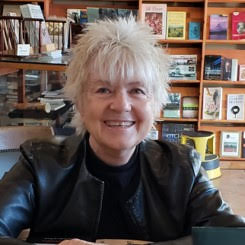
I binge-read White Monkey Chronicles The Complete Trilogy. The first time. It’s like Douglas Adams, Kurt Vonnegut, J.K. Rowling and Gloria Steinem got drunk one night and decided to write a book.A second, slower read was even sweeter.
The first paragraph of the Prologue tipped me headfirst and wide-eyed into this mind-bending, myth-busting, topsy-turvy tale. Its innocuous, traditional “Once Upon” opening was immediately blown up by the explosive words “infant deity abandoned,”, “famous bachelor Jew,”, and “A-list Hindu”. Wait. Whaaat? The stage was set for a rebellious, revolutionary saga destined to be voted “Most Popular” at a fundamentalist book burning!
A white monkey (part-time Plush toy, full-time guardian of an off-the-record baby boy deity) sets the book’s roller coaster ride in motion on a snowy night in Humbolt County, USA. There, at the withered and weathered Sisters of Immaculate Conceptions convent, we meet the three remaining Sister-resisters of The Great Church’s preening patriarchy. (Lets just say the clergy is strictly for the birds — in dress and demeanor.) Getting a whiff of the unauthorized deity’s arrival, a conclave of Cardinals swoop in to confirm (and possibly kidnap) the threatening newborn from the kind, caring, and radical hands of the rogue nuns. Not so fast. Continue reading “White Monkey Chronicles: Myth-busting in Eden BOOK REVIEW by BJ Austin”
In 2015 Kira Schlesinger wrote piece for Ministry Matters about how her own pro-choice stance on abortion had become more complicated the more she explored the issue of abortion. The article was widely read and shared, as well as hotly debated by many. You can read this article and the many comments here. Out of the response to this article grew Schlesinger’s Pro-Choice and Christian: Reconciling Faith, Politics, and Justice.
The book does a great job of walking the fine line of being both academically engaging and an easy enough read to engage a book or Bible study group as well. Schlesinger uses the first couple of chapters to dig into the history of abortion, listing recorded examples of the process as early as 1300 BCE. From there she briefly walks the reader through the roughly 100 years (Comstock Act in 1873 until Roe v. Wade in 1973) during which abortion was illegal in the United States. Finally, she wraps up this beginning historical section with details about the generations after Roe v. Wade up to our current reality.
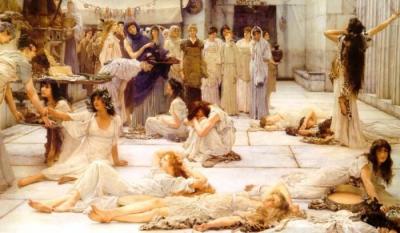
The Women of Amphissa, 1887, by Lawrence Alma-Tadema
Since I began writing for FAR in July 2012, I have written about Mary Magdalen, or excerpted a passage from one of my novels, near or on her July 22 Feast Day. For why I made the controversial choice to depict her as a prostitute, see last year’s post. The below excerpt is from The Passion of Mary Magdalen. I made this selection in remembrance of all the refugees in the world today. In this passage, Judith, a Jewish widow whose family was driven from the land by tax collectors, returns to the place where Maeve (my fictional Celtic Magdalen) and her friends have recently founded a Temple to Isis on the outskirts of Magdala. Maeve has just invited Judith to join them. (Edited for brevity.)
She stared at me, her eyes full of anger and longing.
“I will not be a slave and a whore where I was once a wife, the one who made the challah bread, who said the Sabbath prayers over it. This was our place, my husband’s and mine. We brought the best we had to the temple, the finest oil and wine, the unblemished kid—”
“Goats? You kept goats? You know how to make cheese?”
She sat quietly for a moment before she answered. “How can I live here with you?” she wondered. “I don’t understand.”
Even though I’ve traveled and lived throughout much of the world, I’ve never thought of any one place or geographic location as home. I have always felt a little envious of people who claim to have a strong, visceral connection to a particular house, garden, village, landscape, or city in a specific, geographic area.
We often use the word home to indicate a space where we feel accepted, safe, nurtured, loved, and at peace. Although I’ve never sunk deep roots anywhere I’ve lived—or even visited—I feel most grounded when standing on a sandy beach anywhere in the world, overlooking an expansive view of the ocean. Perhaps the cowboys in American folklore and legend felt “home, home on the range where the deer and the antelope play,” but I don’t. I am much more at ease with home, home on the beach where the wind swirls the water and sand.
I often hear the beach calling me. Sometimes I listen and allow myself to fall under her spell and into her fluid embrace.


 Friends, it has been a few months since I’ve posted in this community. I’m amazed at how much our world has changed since then. Here in the northern hemisphere, spring came and went. It felt like a tide of turmoil rolled in, leaving debris all along the shore and now we are trying to clean it up while keeping our eyes on the sea for more dangerous waves that are coming.
 Very early in Henri Bosco’s 1948 novel Malicroix, a young man, Martial de Mégremut, living placidly amid fruitful orchards in a tame Provençal village, receives a letter informing him he has inherited “some marshland, a few livestock, a ramshackle house” from a reclusive great-uncle, Cornélius de Malicroix. Against his family’s strenuous objections–with alarm they speak of “marshes, mosquitoes, miasmas”–Mégremut resolves to travel alone to the remote Camargue to claim his “wild” Malicroix inheritance. The house is on an island, and to reach it Mégremut must cross a rough river, at night, in a frail wooden boat piloted by a taciturn old man who meets him at dusk in the middle of a vast plain.


 I binge-read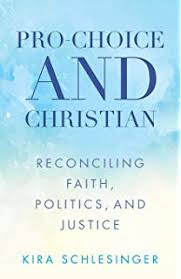
 Feminism and Religion