The Sisters In Our Midst by Natalie Weaver

Natalie Weaver

On September 28, 2013, Ursuline College hosted a symposium entitled The Impact of Vatican II on Women Religious in the United States.  The symposium featured five speakers.  Sister Karen Kennelly, CJS. gave the keynote address entitled “Women Religious in the U.S.: From the Vatican Council to the Present.”  Four other speakers gave breakout talks.  Sr. Mary Frances Taymans, SND, spoke on education.  Sr. Kathleen Feely, SND, spoke on social services.  Sr. Patricia Talone, RSM, spoke on health care, and Sr. Loretta Harriman, MM, spoke on foreign missions.  The symposium began with a Friday evening event featuring a lecture called “Progress and Promise: Local Conversations,” which surveyed the history of women’s religious communities in Northeast Ohio (FAR blogger Michele Stopera Freyhauf worked on this project with our team as well!).  In addition to the talks, the Northeast Ohio component of the national Women & Spirit exhibit (now retired), which was produced by the Leadership Council of Women Religious and which toured throughout the country from 2009-2012, was on display.

Having been a collaborator in the organization and management of the symposium, I had several months to reflect on the intentions, purpose, and hoped-for outcomes of the event.  As our conference committee reflected on an appropriate theme for a conference commemorating the 50th year anniversary of the Second Vatican Council, we wanted to focus on women religious, a group often conspicuously overlooked and generally under-represented in Vatican II anniversary conferences. Continue reading “The Sisters In Our Midst by Natalie Weaver”

No More Of This in Academe! by Grace Yia-Hei Kao

Last week, social media was ablaze over a September 18 Pittsburg Post-Gazette column entitled “Death of An Adjunct” by Daniel Kovalik that had the following teaser: “Margaret Mary Vojtko, an adjunct professor of French for 25 years, died underpaid and underappreciated at age 83.”  Inside Higher Ed reports that the column went viral as “adjuncts across the country reported seeing something tragically familiar in her story.”  The Chronicle of Higher Education likewise covered the story with this tagline: “An Adjunct’s Death Becomes a Rallying Cry for Many In Academe.”

This tragedy involves all sorts of issues with which readers of this blog are concerned: power, structural injustice, job insecurity, underemployment, unions, healthcare, and Catholic values (the last of these since Margaret worked at a Catholic institution), to name a few.

Continue reading “No More Of This in Academe! by Grace Yia-Hei Kao”

Truths My Mother Taught Me by John Erickson

I never gave much credence to religion but through my mother, I met G-d, and through her I understood that I’m not a feminist because of the books I’ve read but rather because of the woman I call mom.

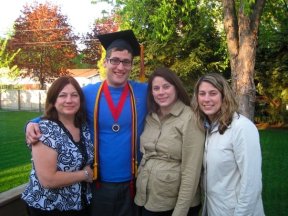
Graduation PhotoThe first question I always get asked when I’m in feminist spaces is: “What inspired you to become a feminist?”  Although I could go into the various histories revolving around men’s involvement in the early stages of the women’s movement to the similarities between the LGBTQ and women’s movements, my simple answer has always relied on one person: my mother.


I’ll be the first to admit (as well as many other people who will join me in the same chorus) that my mother deserves Sainthood for having put up with all the shenanigans I have, and still continue to, put her through. From running away from our local Catholic church the moment she dropped me off at Sunday School, to swearing like a sailor on leave at a very early age in front of Father Schmidt (who still fondly remembers me and the list I brought in with me to the confessional booth). Continue reading “Truths My Mother Taught Me by John Erickson”

Beyond Hemlines: What a Pope Can Teach Us About Modesty by Deborah Farmer Kris

DeborahPhotoPope Francis’ obvious decency appeals to me as a human.  His discourse and homilies appeal to me as a Christian.

But his humble actions appeal to me as a Mormon woman who is weary of witnessing, over and over, how we culturally misuse the term “modesty” and reduce it to base rules governing the attire of (primarily) teenage girls.

Pope Francis gives me hope for the future of our modesty discourse because in five months, he has somehow managed to make humility and  modesty cool again.

First, let’s look at modesty as discussed in the Catholic Catechism:

  • Modesty protects the intimate center of the person. It guides how one looks at others (author note: not how others look at you) and behaves toward them in conformity with the dignity of persons and their solidarity. Modesty inspires a way of life which makes it possible to resist the allurements of fashion and the pressures of prevailing ideologies. Teaching modesty to children and adolescents means awakening in them respect for the human person. Continue reading “Beyond Hemlines: What a Pope Can Teach Us About Modesty by Deborah Farmer Kris”

The Institutional Silencing of Women by Natalie Weaver

Natalie Weaver

On July 26, 2013, I had the opportunity to hear Rev. Helmut Schüller speak at the City Club of Cleveland’s Friday Forum.  He spoke to a convened audience of around 150 people, in addition to the much greater broadcast audience, and he responded to questions that ranged from wholly supportive, to sincerely questioning, to highly critical.  I myself sat with a group of vowed religious women from Pittsburgh who seemed enthusiastic about Rev. Schüller’s Austrian Priests’ Initiative, while behind me sat a table of obvious, vocal critics.

Rev. Schüller’s initiative, now represented by over 400 priests, began in 2006 as an effort to mobilize priests to lead the way for change in the Catholic Church in at least four crucial areas: women’s ordination; married priesthood; same-sex marriages; and lay participatory voting in the election of their bishops.  Of course, Catholics have been having these conversations long before the Priests’ Initiative.  What makes Father Schüller’s work different is that it is an “insider job.”  He argued that the laity have done their part, and now it is time for the clergy to speak, even at some personal and professional risk to themselves. Continue reading “The Institutional Silencing of Women by Natalie Weaver”

Who is the Church? by Linn Marie Tonstad

Linn Marie TonstadThe headlines blared, “Who am I to judge?” News outlet after news outlet led with the pope’s conciliatory stance toward gays, expressed during an interview aboard the pope-plane as he returned from Brazil. Among the several headers from Fox News (I encourage not clicking!), we find discussions of the pope’s “reaching out” to gays and even one that combines this development with his “urging” of a “greater role” for women. The New York Times story introduced the pope’s comments as follows: “For generations, homosexuality has largely been a taboo topic for the Vatican, ignored altogether or treated as ‘an intrinsic moral evil,’ in the words of the previous pope.” Ignoring the astonishing comment that this has been the case “for generations,” as though homosexuality has historically been the kind of issue for the church it has become in the wake of radical queer movements – see Mark Jordan’s several books on this for the most helpful treatments – the story went on to say that the pope’s comments “resonated throughout the church.” Although the NYT article did a better job than some contextualizing and nuancing the pope’s comments, they were still termed “revolutionary” in an assessment better suited to an opinion page than to a news report. Better-informed commentators, such as James Martin, offered a measured response. Martin said that although the pope’s remarks didn’t really signal a significant change in policy, “in the church, style often proves substantial,” implying that the “pastoral” tone might have effects in the implementation of policy. More significantly, Martin praised the pope’s adherence to Jesus’ injunction not to judge as an instance, first and foremost, of the pope’s commitment to mercy as the hallmark of his pontificate.

My Facebook feed, predictably, lit up with links to and discussions of these comments. While most were thrilled, a few posts noted that, even if Pope Francis is in fact (which is not proven) walking back Benedict XVI’s language of “intrinsically disordered,” the church’s policy has not and will not change in any significant way. What was missing in all but a few instances was attention to the pope’s comments in the same interview on women, and the deep theological problems with the assumptions contained in those comments. And while I, as a queer theologian, would never wish to downplay the struggles of LGBTQI people in the Roman Catholic church, there are rather more women than queers in that church (as elsewhere!). What’s more, it is arguable that it is the sexism and heterosexism of what Marcella Althaus-Reid memorably termed “T-Theology” that underlies condemnation of homosexuality in Roman Catholic theology. Continue reading “Who is the Church? by Linn Marie Tonstad”

5 Interesting Facts about Women and Religion by Kile Jones

Kile Jones, atheistPart of my research is focused on how the social sciences relate to “religion” and religious studies.  More specifically, I spend time examining the sociology of religion.  I look at stats, demographics, and polls.  I look at rates of attendance, frequency of prayer, levels of “religiosity,” apostates (or the less religiously-loaded term “exiters”), and political outlooks.  I also look at how bias this area of study is in favor of religion.  One facet of this work that has always interested me, is the differences in “gender” and “sex” as they relate to religious beliefs and observances.  Accepting the fact that there are spectrums of sex, gender, and identity, and the presence of difficult philosophical questions surrounding self-identification and the limits of labels, some really interesting facts and statistics crop up time and time again.  In what follows I will lay out a couple of these interesting facts, along with some thoughts on them: Continue reading “5 Interesting Facts about Women and Religion by Kile Jones”

To Have and to Hold: Gay Marriage and the Religion Question

If a conservative religious traditions can’t give their mothers or sisters full equality, how can we expect them to give a GLBT individual the time of day?

John Erickson, sports, coming out.Outrage.  Anger.  Fear.  Hatred.  These are just a few of the words that flashed across my Twitter feed as I woke up on that fateful Wednesday, June 26 morning when the Supreme Court of the United States ruled that the Defense of Marriage Act (or DOMA) was unconstitutional and that supporters of Proposition 8, the hotly contested voter initiative in California that banned same-sex marriage, had no standing.   People were mad.  However, it wasn’t just the typical kind of mad that is associated with hatred, it was a type gay_marriage_81102178_620x350of mad that was met with impossible anguish because what I was reading and feeling was a result of one thing: there was nothing more they could do.

What does all this mean?  Questions from friends and family were filling up my inbox and although I wanted to take a moment to just hit “Reply All,” and input the words: Equality, I had to hold back and start to examine the notion that although equality may now be firmly on the proverbial table, there is still a lot of work to be done, specifically for gay marriage and those wanting to marrying inside the traditional church spaces they grew up in and not just the ones that have come out as open and affirming in recent years towards LGBT individuals. Continue reading “To Have and to Hold: Gay Marriage and the Religion Question”

I Dream of Pope Francis by Gina Messina-Dysert

Gina Messina-Dysert profileIt was just last week that I received an email from Pope Francis.  He wrote me having seen my interview with Tavis Smiley and said he sympathized with my appeal for a Church that serves the needs of the people.  Pope Francis requested that I come to the Vatican to meet with him to discuss the papacy and his efforts to redirect the Church’s attention.  Of course, I immediately accepted and began to create my agenda for our meeting: women’s ordination, same-sex marriage, reproductive justice, and…my alarm went off.  It was just a dream. Sigh…

Totally disappointed at the realization of its ridiculousness, I wondered why Pope Francis had invaded my dreams.  Could it have been prophetic as my good friend and colleague (jokingly) suggested?  Or perhaps I’m narcissistic enough to fantasize that I have such wisdom to share.   Either way, no other pope has ever occupied my thoughts in such a way. Continue reading “I Dream of Pope Francis by Gina Messina-Dysert”

Hate Mail and the Privilege of Having a Voice by Gina Messina-Dysert

Gina Messina-Dysert profileThis past week I was honored to have the opportunity to talk with Tavis Smiley on PBS about the resignation of the Pope and the future of the Catholic Church.  Although some have argued that the pope stepping down means little if anything for Catholics, I think this acknowledgment that tradition can change is at least a step in the right direction.  While an end to sexism in the Church is still far off, in the spirit of a feminist ethic of risk, I think we must recognize this step and continue on in the struggle.

What a privilege it was and is to have a platform to share these thoughts.  As a feminist progressive Catholic I have repeatedly received friendly and not so friendly warnings about sharing my beliefs.  In an age characterized as “the New Inquisition,” the Vatican has worked hard to keep individuals like myself from challenging Church teaching.  Any mention of reproductive justice or women’s ordination can quickly lead to one’s livelihood being threatened and the very real possibility of excommunication – just ask Fr. Roy Bourgeois.  That said, we each still have the responsibility to retain our power, refuse to be silent, and use our voices to encourage and create change.    Continue reading “Hate Mail and the Privilege of Having a Voice by Gina Messina-Dysert”