Can I get an “Amen” up in here? by Laura Montoya 

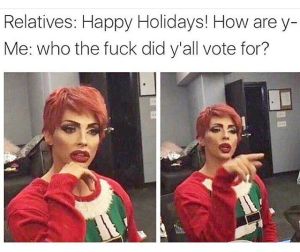
I am a great evangelist. I used to evangelize in Pentecostal settings until I was 22. Then, I left my church to evangelize about feminist issues to every woman that crossed my path. Rhetoric is a gift I received when I was a kid and that I inherited from my grandpa and my dad. But during the COVID lockdowns, it was hard to socialize, and my evangelization skills turned toward making my friends and family join the privileged fan base of Ru Paul’s Drag Race. One by one, I convinced my sister, cousins, neighbors, and best friends to watch the reality show, and they did with astonishing devotion. Every week, two or three of us gather in someone’s living room wearing masks to watch episode after episode after episode. Our debates about the queens in the show could last all night long. Who had the best performance? Did you like their lip-synching? “That elimination was so fair/unfair!” 

Continue reading “Can I get an “Amen” up in here? by Laura Montoya “

From the Archives: The Story of Juneteenth by Kelly Brown Douglas

This was originally posted June 18, 2013

Tomorrow is a special day for me. It is Juneteenth.  On June 19, 1865, news finally reached Galveston, Texas that slavery had been abolished. This was of course two and a half years after Lincoln issued the Emancipation Proclamation. While the actual impact of the emancipation for the enslaved remains a source of historical discussion if not debate, the fact of the matter  is that the proclamation of emancipation and the reality of freedom for black women and men did not necessarily coincide. To be sure, for a variety of reasons, the Emancipation Proclamation did not have an immediate impact on the daily lives of enslaved women, men and children.  While the “official” historical records marks   January 1, 1863 as a day of emancipation, the historical record for the descendants of enslaved men and women marks June 19, 1865 as the day of freedom. For, it was on this day that the last slaves were free

.

Continue reading “From the Archives: The Story of Juneteenth by Kelly Brown Douglas”

From the Archives: Genderqueering by John Erickson

Moderator’s note: Today’s blogpost was originally posted March 24, 2015. You can visit the original post here to see the comments.

This post is a response to a recent blog entry titled “Who is Gender Queer?” on this site from Carol Christ. It was posted yesterday. I want to thank my friend, advocate, and upcoming scholar Martha Ovadia for reasons only she knows!  Stay brave, speak up, be heard!

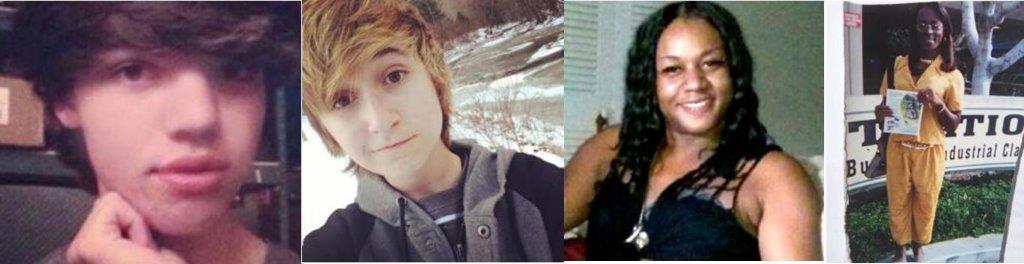
Leelah Alcorn, Ash Haffner, Aniya Knee Parker, Yaz’min Shancez

It is terrifying to know that something is wrong but not be able to speak truth to power.

Continue reading “From the Archives: Genderqueering by John Erickson”

Carol P. Christ’s Legacy: Does Belief Matter?

Moderator’s Note: Carol Christ died from cancer in July, 2021. Her work continues through her non-profit foundation, the Ariadne Institute for the Study of Myth and Ritual and the Goddess Pilgrimage to Crete. This blog was originally posted December 10, 2012. You can read it long with its original comments here.

In recent days I have been pondering the fact that some people and some feminists seem to see the issues of religious faith and belonging to be rooted in birth, family, and community, while for others the question of belonging to a religious community hinges on belief and judgments about the power exerted by religious institutions.  What accounts for this difference in the way we view religious belonging?

Recently I watched The Secret History of Sex, Choice and Catholics, a film featuring Roman Catholic feminists and ethicists who dissent from the Roman Catholic hierarchy’s views on contraception, abortion, and homosexuality.  At the beginning of the film those interviewed state almost univocally that for them being Catholic stems from having been born Catholic. These Catholic dissidents continue as Catholics, even though they disagree with major portions of Roman Catholic teaching.  It may have been because they were not asked, but most of them did not name reasons of belief for remaining Catholic.

Continue reading “Carol P. Christ’s Legacy: Does Belief Matter?”

Earth Is Our Community by Carolyn Lee Boyd

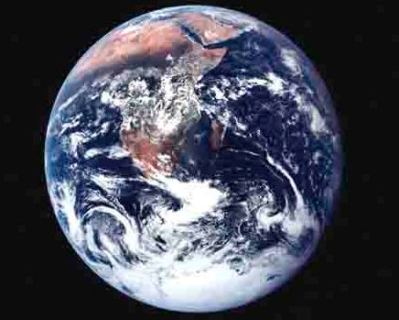
Earth from space, NASA

“The beauty of the planet from 100,000 miles should be a goal for all of us, to help in our struggle to make it as it appears to be.” Astronaut Michael Collins said these words reflecting on seeing the Earth from space. To me, he is expressing the truth that the Earth is our community that we share with all other beings on the planet, our home base. But what does this really mean in its most profound perspective?

Over the years, I have heard people express over and over how they desire “community,” whether that means a neighborhood café or an ongoing circle to share our deepest lives over decades, or any of many other expressions. The emotional and physical impact of isolation and divisiveness over the past months of the pandemic has shown how essential “community” is to our well being, and how we need to think of it as more than just a sense of being part of a group. True community provides us with a sense of belonging and relationship, of being part of a vibrant, interdependent web, of assuming everyone will act in the best interests of all. 

Continue reading “Earth Is Our Community by Carolyn Lee Boyd”

From the Archives:“Vaginas are Everywhere!”: The Power of the Female Reproductive System by John Erickson

Moderator’s note: This marvelous FAR site has been running for 10 years and has had more than 3,600 posts in that time. There are so many treasures that have been posted in this decade that they tend to get lost in the archives. We are beginning this column so that we can all revisit some of these gems. Today’s blogpost was originally posted June 19, 2012. You can visit it to see the original comments here.

I have a beautiful picture of vagina hanging on my wall.  However, for the longest time it was in the back of my closet, with a plastic bag covering it.  I wasn’t ashamed of it but my ex-boyfriend, like most gay men, refused to have it on the wall where he could see it.  He is now long gone; the vagina is now out and proud.

I bid on the picture one fall during a showing of the Vagina Monologues at Claremont School of Theology.  One of my best friends was in the show and I had always loved its powerful message.  I walked out of the theatre, waiting for my friend, and there it was: the picture of the vagina.  I found myself caught up in its beauty.  Its gaze had mesmerized me.  The outlying layers of red, the contours of its shape, they all began to mold into a figure before my eyes.  While I have never thought of myself as a religious person, I realized that at that moment I was no longer looking the old photo but rather I was staring at the outline of the Virgin Mary.  At that moment, I realized that I had to have the picture.

Continue reading “From the Archives:“Vaginas are Everywhere!”: The Power of the Female Reproductive System by John Erickson”

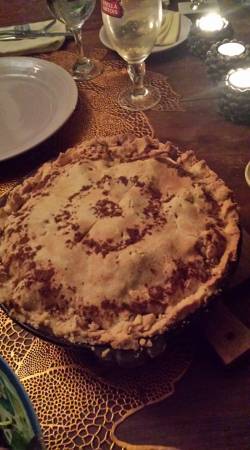
From the Archives: And the Pies! Ongoing Grateful Thanks for Tradition by Marie Cartier

Moderator’s note: This marvelous FAR site has been running for 10 years and has had more than 3,500 posts in that time. There are so many treasures that have been posted in this decade that they tend to get lost in the archives. We are beginning this column so that we can all revisit some of these gems. Today’s blogpost was originally posted November 24, 2018. You can visit it here to see the original comments.

In November 2017 I wrote about pie baking. 

And in November 2015 I also wrote about pie baking.

Photo by Lisa Hartouni

Continue reading “From the Archives: And the Pies! Ongoing Grateful Thanks for Tradition by Marie Cartier”

Avian Friendship by Sara Wright

The other night I had a dream about a strange green hooded figure that was guarding a green gate underground. She wasn’t  human; she had a hooked bird’s beak (like many of Marija Gimbutas’s goddess figures). Something about the strange face reminded me of an American Indian. This creature was not friendly but she was not hostile either. Just really intent upon making it clear that you did not pass through the gate without her permission. The word Root kept reverberating out loud in this place… Root Woman? Strange that she was also a bird.  Anyway, thinking about bird women prompted the following poem and brief reflection on my relationship with one kind of bird…

Continue reading “Avian Friendship by Sara Wright”

Moving towards the Dark… “Elder”berry Musings…by Sara Wright

“I wake up under a tropical dome that has been with us most of August. The thick air feels like it is smothering me, and with emphysema that may not be my imagination. I can no longer walk or hike in this weather. Migraines and other peculiar headaches come and go – dizziness too – the former probably due to changes in pressure; As yet I have no diagnosis for the latter. I am feeling old because I am getting old. I move into my 77th year trying to adjust to increasing physical limitations.”

On the first harvest moon that occurs in August, (according to ancient teaching by Northern Indigenous peoples) I harvested elderberries under a burning sun, sloshing through mud, thorny bushes and cattails to reach the clusters of ruby beads that would soon become a tincture that I knew would help me resist colds flu and perhaps also the Covid variants. The world health organization in Europe is presently researching elderberry because studies have indicated that it apparently block viruses from entering cells (it does with H1N1 virus), but I have been using this remedy for years and know that it mitigates the effects of colds and prevents flu, at least for me. While removing the berries from their tree – like stems my fingers were stained the most beautiful purple, reminding me of a story I had written when I turned 70 about becoming an old woman… In this tale, I imagined that an Elderberry woman came to guide me into the future.

Continue reading “Moving towards the Dark… “Elder”berry Musings…by Sara Wright”

Why Life Balance is a Feminist Issue by Mary Sharratt

The move to Portugal all but forced me to heal my relationship with time and productivity, to create a life that was sustainable and nurturing.

Hanging out in Obidos, the closest town to my village. Photo by Erika Mailman.

One year ago, I published my essay, The Grace of Letting Things End, about my bittersweet experience of leaving England in the wake of Brexit for a new life in Portugal.

One year later, my life in Portugal still feels radically new.

Time passes differently in Portugal. I set my intention, from the outset, to embrace this move as an opportunity to slow down and live a more authentic life.

My day-to-day life has irrevocably changed.

I’ve gone from being a livery yard customer in England, with all the drama and conflict this sometimes entailed, to becoming an independent small holder with two horses on my property to care for all by myself. Practically, this has translated into a lot more work, but also a lot more peace.

The ponies decided to help with the lawn mowing

I’ve also been devoting considerable time and energy into learning Portuguese. My husband and I have been taking classes once or twice a week for nearly a year now and are making slow but steady progress.

But the most deep-seated change has been to my whole relationship to work and life. In the UK, I led a very productivity-centered life, existing from deadline to deadline with barely any time to breathe in between. I often felt too busy and wrapped up in my projects to meet friends for lunch.

For years I have struggled to heal my dysfunctional relationship with time management, embracing lifehack after lifehack. I’ve all but abandoned social media. I’ve done my utmost to milk every single hour of the day in order to become more productive. This pattern led to disillusionment and epic burn out, something more and more women are facing, particularly those who balance the demands of their careers with childcare and other care-taking duties.

Even writers and artists can fall down the hole of the Cult of Productivity, taking the creative process, which is at its essence slow and organic, and trying to force it into an industrial process with regular, reliable yields that are judged on how well they can be monetized. Even the refuge of spirituality can be compromised if it’s just another task on a never-ending to-do list.

Thus, despite my official intention to slow down, I found myself trying doggedly to replicate my old hectic, tunnel-vision working schedule in Portugal only to discover that it just didn’t work here. I hit a brick wall. Because I couldn’t sustain the same level of busyness AND care for two horses AND learn a challenging new language AND keep my initial intention of slowing down and enjoying the life I moved here to experience.

Something had to give. The move to Portugal all but forced me to heal my relationship with time and productivity, to create a life that was sustainable and nurturing. No lifehack could help me anymore, because I’d already given up television. I don’t even watch Netflix.

We hear a lot about the Slow Living Movement, but actually slowing down involves so much more than decluttering your closet or posting pictures of photogenic hipsters in hammocks on Instagram.

Moving to Portugal forced me to slow down. Because life is slow here. It’s no accident that the Slow Food Movement had its birth in Italy, another slow country in southern Europe. Food is also big in Portugal. In fact, I like to joke that LUNCH is the national religion. No matter how busy or important you think you are, the whole world stops for lunch. Shops close. People pour out of offices and go to restaurants for beautiful, affordable meals. Proper, cooked meals, mind you. Not a sandwich or salad to be inhaled at speed. To say you are too busy to meet your friends for lunch in Portugal would be sacrilege. Even in the height of the pandemic when all the restaurants were closed, people went home for lunch and ate with their families.

Converting my visiting writer friend Erika Mailman to the religion of LUNCH!

Any culture that prioritizes good food also prioritizes human relationships. My social life here is unlike anything I’ve experienced anywhere in the world. I’ve met wonderful Portuguese people, such as our local Priestess, Luiza Frazao, as well as new friends from the U.S., the U.K., Canada, Columbia, the Netherlands, Israel, Russia, Germany, Spain, Poland, Hong Kong, and Belgium. My husband and I have made so many friends in our village. We can walk to each other’s houses and invite each other for dinner or go on long walks together. The other foreigners who move to Portugal have made the conscious decision to make time for friendship, not just shove it into a twenty minute “let’s meet for coffee” slot. I haven’t had this much fun since I was a student.

Other things are slow here, too. The post office can be painfully slow. My New Yorker subscription has gone AWOL and I’ve resigned myself to reading the digital version. Plumbers and technicians come when they come. Just when you think they’ve forsaken you, they manifest at your door. But then again neighbors I’ve never met before also show up unexpectedly with gifts of apples for the horses. One day an old man pulled his tractor up in front of our house and presented me with two sapling banana trees. 

What I’ve discovered is if I give up any notion of trying to control the clock or manage time, it becomes more expansive. When I’m with my horses or laughing with friends, time disappears and I’m living in an eternal now. The same is true when I’m deep in my writing flow or trying to speak my best Portuguese to thank my neighbor for the banana trees. In a rich and authentic life, there is time for everything.

Life Balance is a feminist issue, because too many women have been brainwashed by the Cult of Productivity for far too long and this has kept too many of us chained to a patriarchal machine that eats us up and spits us out when we’re too broken to go on doing anymore. Let’s rebel and meet our sisters for lunch!

Chilling with friends on a beautiful June evening

Further reading and listening:

Do Nothing by Celeste Headlee: how to work, live a value-driven life, and also have time for friends and hobbies.

Sacred Time by Christine Valters Paintner: how contemplative practice can heal our relationship with time. Highly recommended!

Mary Sharratt is on a mission to write women back into history. Her acclaimed novel Illuminations, drawn from the dramatic life of Hildegard von Bingen, is published by Mariner. Her new novel Revelationsabout the mystical pilgrim Margery Kempe and her friendship with Julian of Norwich, is now available wherever books and ebooks are sold. Visit her website.