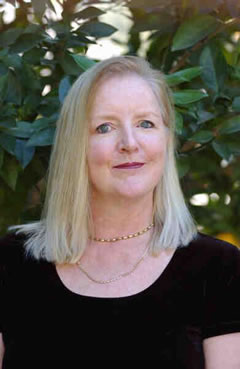
We Are Music by Natalie Weaver

Natalie Weaver editedWhen I was about eight years old, I dreamed one night that I stood inside the workings of an immense instrument, so big it filled the sky. It was crafted of wood and gold, and although there was no obvious source of light, it was brightly illuminated. I could have confused it for the inner workings of a clock except that I could hear the sweet music it produced resonating throughout its cavernous hollows. It was curious to me that there seemed to be no atmosphere there either to breathe or to carry sound. Within it, I did not perceive any movement. And, there was no actual melody that it produced, which could be sung or repeated. There was only an enveloping harmonic thrumming. The sound was multiplicative and voluminous although not piercing. I understood it in the dream to be cosmic, structural, primordial, and generative. When I awoke, I had the feeling that I had seen something divine. It was not heaven. It was not God. It was more like the instrument of the universe, or the universal instrument, created as a first work among creation

It was puzzling to me that I had such a dream because I was not then a musician. I felt that I understood its meaning, but I was surprised by its discontinuity with things in my normal frame of reference. My mother played piano, but she had no music theory in her background. She surely did not have any training in musical cosmologies, such as those produced in antiquity by the philosophers and theologians. I occasionally mentioned the dream over the years when context seemed to warrant it, but, more or less, I filed it away. Continue reading “We Are Music by Natalie Weaver”

Old and Gay – Dying Alone and Rae’s Friends by Marie Cartier

MarieCartierforKCETa-thumb-300x448-72405A dear friend of mine is dying. Yes, the saying might be true—we all die alone. But we all are not necessarily lonely when we die. How can we die happy…with our self-respect intact?

We are all alone, born alone, die alone …I do not say lonely — at least, not all the time — but essentially, and finally, alone. This is what makes your self-respect so important, and I don’t see how you can respect yourself if you must look in the hearts and minds of others for your happiness. —Hunter S. Thompson

Many of the women that I interviewed in my book Baby, You Are my Religion: Women, Gay Bars, and Theology Before Stonewall lived a closeted gay life. Their respect for their gay self had to be hidden in order to survive. It was how they respected the gay inner self—it is how they protected that self’s very survival.

Many of them, as many of us do, had friends that affirmed their inner identity even as it was hidden to a majority of the outside world. As they grew older, their friends (as many of our friends will do) died. That meant that the friends they had in the gay bars died holding the secret of their gay lives. Many of these women grew up into adulthood without the benefit of a community. For them “gay pride,” “coming out,” and even the word “lesbian” were not words they would ever use in their common conversation. Continue reading “Old and Gay – Dying Alone and Rae’s Friends by Marie Cartier”

BOOK REVIEW: Amy Wright Glenn’s Birth, Breath, & Death by Natalie Weaver

Natalie WeaverAmy Wright Glenn’s Birth, Breath, & Death: Meditations on Motherhood, Chaplaincy, and Life as a Doula is a mid-life memoir of the author’s personal encounters and professional insights drawn from her work in the spaces of birth and death.  Glenn gleans from her formative experiences as a daughter and sister, her trained experiences as a teacher and doula, and her wisdom experiences as a mother, chaplain, and friend.  In an accessible voice, Glenn reflects compassionately on her early life in a Mormon family.  She considers critically the nature of religious worldviews that are doctrinally dualistic and apocalyptic.  Glenn further describes the therapeutic and illuminating value she found in the scholarly study of religions as an anthropological phenomenon.  Glenn explores how religious discourse both expresses human joy and grief and also aids us in our encounters with life and death.  Glenn intertwines her academic study with personal narrative and achieves a professionally-informed and experientially-based “thinking out loud” about the bookends of human life.   Her writing is tender, and her vision is thought-provoking.
Continue reading “BOOK REVIEW: Amy Wright Glenn’s Birth, Breath, & Death by Natalie Weaver”

Watching “Noah” Brought Me Closer to Humanity by Andreea Nica

Andreea Nica, pentecostalismAs a child, I enjoyed the story of Noah’s Ark. I would often imagine pairs of animals running for safety in Noah’s architecturally majestic haven. Practical questions didn’t enter my mind during this blissful period of naivety. I ignored the part where God expressed regret in creating humanity, or when Noah gets drunk and lies bare naked for his children to cover his shame. My bible study teacher would explain to us that the point of the story was that Noah, a holy man, trusted God and carried out his will.

Disclaimer: I understand that the film is not meant to be an exact representation of the story in the bible, but loosely based around it. Also, if you plan on watching the film, read at your discretion.

In the film, Noah’s character is played by leading actor Russell Crowe, who appears strong, confident, and zealous in his trust in God – all necessary qualities to fulfill God’s demand of killing off the rest of humanity because of their wickedness. Later in the film, Noah realizes that he and his family are also wicked leading to his revelation, ahem, God’s revelation, that humanity must cease with Noah’s family. This doesn’t pan out too well with his children and wife. It was also bad news for Emma Watson, the orphan girl Noah’s family saves and raises as their own, who after accepting that she is barren is miraculously healed and gives birth to two girls. Noah decides that the female infants must die according to God’s will to end humanity. Continue reading “Watching “Noah” Brought Me Closer to Humanity by Andreea Nica”

Terry Pratchett’s Discworld, Feminist Theology, and Finitude by Linn Tonstad

Linn Marie TonstadIn David Kelsey’s theological anthropology, Eccentric Existence, he emphasizes that finitude renders creation vulnerable, but he still insists on the goodness of what he terms the “quotidian proximate contexts” in which human life is lived: our ordinary, everyday lives. Terry Pratchett’s Discworld novels bring together a multitude of characters – ethnically, religiously, and otherwise diverse – in the chaotic yet lively city of Ankh-Morpork (a fictionalized London). The Discworld offers what I see as a theology of everyday flourishing that fits with both Kelsey’s analysis of finitude and with significant feminist theological claims.

The books focus on the men and not-men (women, werewolves, vampires, trolls, a six-foot tall dwarf named Carrot, and a Nobby Nobbs) who populate the city and bring it to life. The characters of Pratchett’s city offer a vivid imaginative rendering of the vulnerabilities and possibilities of life in everyday finite contexts that bring together diverse creatures in the service of the goal of common flourishing. Although all theologies outline a social imaginary, whether implicitly or explicitly, the dry and technical character of much theological reflection can make it difficult for the reader to imagine what life would be or could be like given the proposals advanced by a particular author. Pratchett is a consummate observer of the everyday, and his world brings to life what a theology of the everyday would look like. Continue reading “Terry Pratchett’s Discworld, Feminist Theology, and Finitude by Linn Tonstad”

Evangelical Missionaries Preach Death in Uganda by Andreea Nica

Andreea Nica, pentecostalismA former evangelical Christian friend of mine sent me information on the intriguing documentary God Loves Uganda. The newly released documentary addresses how the American evangelical movement has prompted a political and social shockwave in the country of Uganda. While missionaries are typically associated with delivering aid and improving the conditions of third world countries, the spreading of Christian values and ideals has inflicted suffering upon ethnic communities through evangelical indoctrination.

The intent of the film is to raise awareness of the political and social brutality that the evangelical missionaries are instigating; specifically through their teaching that homosexuality is a sin and should be dealt with accordingly. In Uganda this means death. Given the rise of globalization, transnational religious actors have been more enabled to engender other nations with their respective religious beliefs, often with minimal regard for the cultural and political landscape of the nation they wish to transform. Continue reading “Evangelical Missionaries Preach Death in Uganda by Andreea Nica”

What is the Nature of the Hope that Can Trump Despair in the New Year? by Carol P. Christ

carol-christ“All hope abandon, ye who enter here.” These words posted on the gates of hell in Dante’s Inferno have an eerie resonance in our time. 

Marie Cartier recently posted a blog on children and hunger with facts so devastating I could not finish reading it. Earlier in the month Jassy Watson wrote about her deep feelings of grief on hearing Luisah Teish’s “Prayer for Disappearing Species.” Grief, despair, and sadness about the injustices in our world can be overwhelming.

A friend of mine has recently fallen into a deep depression. When I try to talk her out of it, she repeats that they are threatening to cut down the last remaining old growth forest in her home state of Oregon and that she can no longer eat fish because radioactivity released in the Fukishima nuclear plant disaster is reaching the seacoast of Oregon.

When I tell my friend she should not dwell only on these things and that she must remember that the world is still a beautiful place, she responds, “I do not want to give up my feelings. I know I must find a way to acknowledge my sadness and make a place for joy, but I don’t know how to do it.”

I have been in the grip of deep grief about the planet myself, not once but many times. But this happens less frequently than it used to.  When I think about the differences between how I once felt and how I feel now, I think the difference is that I have come to terms with and accepted the likelihood that “the world as we know it” is “going to hell in a handbasket”—as I put it.

I believe that the most likely conclusion of the choices human beings are making on planet earth today is massive environmental destruction leading to great suffering and probable extinction for human and many other species on planet earth. This is what I believe, but I also remind myself that I cannot know for sure. The earth and its species including human beings may have resources of resistance and survival, transformation and adaptation,that I do not know about and cannot imagine.

When I began to accept that the world I know and love (where spring follows winter, where birds sing, and where there is hope that injustice can be rectified) may not exist in the very near future, I had an astonishing insight. The death of the world I know and love will not mean the death of our planet or the end of the evolution of the universe.

Thinking about the disappearance of species and the death of human beings from starvation often feels too much to bear. None of this should be happening. Still, it can be strangely comforting to remind myself that the world I love is not the only possible world. There have been other worlds on this very planet—the time when the first cells were formed, the time of the dinosaurs, and many others. Evolution will continue on planet earth for several billion more years, and when our sun burns out, other suns will most likely still be shining in the universe.

This insight was followed by another. The reason for hope is not the conviction that we will be able to save the world we love. The reason for hope—and the reason to keep trying to save our world—is the deep knowing that it is right to try. Even if we cannot save the world we love for all time, we can savor the gift of life, and we can continue to try to create a world in which the gift of life is shared widely today and tomorrow.

I have written many times that we must learn to love a life that ends in death. I was speaking about accepting that each one of us will surely die. I do not fear death. Overcoming this fear has opened me to a greater and more clear-sighted love for life.

Can we learn to love life while accepting that the world we love may be dying? Can we continue to work to improve the conditions of life for individuals and species knowing that the world as we love it may not survive? Do we have any other choice?

For me the hope that can trump despair in our time begins in gratitude for a life that has been given to us, a life that has come down to us through the generations, and through billions of years of the evolutionary process on our planet.

Let us bless the Source of Life.

Let us bless the Source of Life, and the cycles of birth, death, and regeneration.

Let us turn back from despair.

Let us embrace the gift of life and share it with as many others as possible in the new year.

Carol P. Christ  learned to be grateful for the gift of life in Crete on the Goddess Pilgrimage to Crete she leads through Ariadne Institute.  It is not too early to sign up for the spring or fall pilgrimages for 2014.  Carol can be heard on a WATER Teleconference.  Carol’s books include She Who Changes and Rebirth of the Goddess and the widely-used anthologies Womanspirit Rising and Weaving the Visions. She wishes you great joy in the new year.

Seeing Death and Resurrection by Linn Marie Tonstad

Linn Marie TonstadYesterday, I visited the Capuchin catacombs in Palermo, Sicily. In a grotto about a mile or so from the center of the modern city are found the preserved remains of about 2,000 people who paid the monks to preserve their bodies after death, dress them in their finest clothing, and put them on display. Each of them is placed in its own niche along the wall, held up by iron bands, and has a tag around its neck with its name and date of death. The bodies are not displayed in random order: they are sorted (to some extent) by sex, profession, and familial status. In one large recess, a number of children’s skeletons are on display, many of them in heartbreakingly tiny coffins. In another corridor, friar after friar hangs in his robes, some with cords around their necks signifying their adherence to a Franciscan order. Almost indistinguishable from the cords are the braids still hanging from the heads of some of the women’s bodies. Some families are arranged together; in another corridor doctors and lawyers are segregated and in yet another female virgins are gathered together. The oldest body I saw dated from 1599 – high on a wall hangs the body of a monk whose name was almost illegible but who hailed from the Umbrian hill town of Gubbio.

Some of the skeletons presented death’s heads; others had skin dried to a leathery tightness over remaining bony protuberances. Some of their outfits are well preserved; others have disintegrated under the relentless assault of the years. The practice became illegal around 1880, but until then, people chose – or perhaps their relatives chose for them – to be preserved in this seemingly macabre manner. Continue reading “Seeing Death and Resurrection by Linn Marie Tonstad”

An Epic Woman: A Feminist Eulogy by Molly

editMollyNov 083There were some things about my grandmother that I didn’t find out until after she died. For example, in 1974, she co-organized a “Women’s Exchange”  in Fresno, California with the theme: Stop the World…We Want to Get On. How much I would have liked to talk to her about that! While I didn’t know about the fair, I do know that she was successful with her vision of getting on this brightly spinning world. My grandma was a woman who was hiking in the Channel Islands one month before receiving a diagnosis of aggressive pancreatic cancer. She was incredible.

After reading Grace Yia-Hei Kao’s recent post about giving a eulogy at her grandmother’s funeral, my thoughts turned to my grandmother’s memorial services this past spring. What, if any, are the components of a feminist eulogy? Grace wonders. In reading this, I reflected on the components of the services I prepared and participated in for my grandmother and I believe they fit the bill. In a pleasingly feminist move in itself, I was asked by my extended family to serve as the priestess at my grandmother’s “committal” service (in which her ashes were interred in the above-ground burial chamber that received my grandfather’s body in 1989).

It was deeply important to me to have multiple voices represented during the small, family-only, service and I enlisted all the grandchildren present, as well as her step-grandchildren, in an adapted responsive reading based on Walt Whitman’s “Song of the Open Road”. I chose it precisely because it spoke to the irrepressible, adventuresome spirit of my grandmother. It was a lot of pressure to be responsible for the family ceremony for the interment of her ashes. I wanted it to be perfect. I wanted it to be what she deserved. I wanted it to “speak” to every person there. I wanted it to be worthy of her. I hope it was enoughContinue reading “An Epic Woman: A Feminist Eulogy by Molly”

A Feminist Eulogy? By Grace Yia-Hei Kao

My grandmother, my last living grandparent, recently died. She was 84 years old. Because I’ve just come back from Taiwan where I participated in all of her funerary rites and delivered a eulogy therein, I’ve been thinking a lot about memorializing the dead.  Is there such a thing as a “feminist”  or feminist Christian way to remember the dead? What, if any, are the components of a feminist eulogy?

Continue reading “A Feminist Eulogy? By Grace Yia-Hei Kao”