Trigger warning: rape, sexual assault, domestic abuse, graphic sexual content
In Part 1 of this story, I introduced a discussion of Johan Galtung’s theory of cultural violence as it relates to my experience as a young woman in an abusive relationship. To recap:
Cultural violence is: “…any aspect of a culture that can be used to legitimize violence in its direct or structural form. Symbolic violence built into a culture does not kill or maim like direct violence or the violence built into the structure. However, it is used to legitimize either or both.”[1]
Cultural violence against women is: Normalization and promotion of pornography, prostitution, degradation, and sexual objectification of females in media, predominantly male language in civic, business, and religious institutions, gender roles and stereotypes, misogynist humor, gaslighting, minimizing or denying any of these forms of violence.
Part 1 ended right before my ex convinced me to leave MIT and move with him to Minnesota. I had been trying my best to please him by sculpting my appearance to match his preferences, believing that it was my job as a female partner to try to satisfy my male partner sexually.
Trigger warning: child sexual abuse, domestic abuse
I was so thoroughly brainwashed that my voice changed without me realizing it. My appearance changed so much that close family members did not recognize me. Multiple therapists told me that I had undergone such sustained brainwashing and abuse that I was like a POW or a sex trafficking victim. Here is my story.
I will never forget the first time I came across the famous quote, “Feminism is the radical notion that women are people.” Reading that phrase rocked me back on my heels as few things have done. Suddenly, with that simple summary, so much of my experience, so much of life, so much of the world made perfect sense. Clarity struck, bringing both pain and relief: in my society, females are not considered human.
In some regards, life on Earth seems to depend on some basic inequalities. For example, differences in size, height, strength, speed and endurance advantages some and disadvantages others. Depending on another for survival is another type of inequality. Being able to adapt to change increases one’s likelihood of survival as well.
In this regard, inequality is natural, a normal part of existence. In fact, the exploitation of such inequalities supports and perpetuates life on this planet. Darwin said as much. Evolutionary theory does as well. At one point, we, homo sapiens, replaced our Neanderthal cousins. Lions kill and eat gazelles. Some iguanas in the Galapagos Islands were able to become great underwater swimmers in order to reach edibles; those who couldn’t died.Continue reading “On the ‘Naturalness’ of Inequality by Ivy Helman”
Aasiya Zubair Hassan was an architect and business woman of Pakistani origin, resident in the United States, motivated to contribute to the end of cultural stereotypes about Muslims and to a better coexistence in post-9-11 American society. For this reason, together with her husband Muzzamil Hassan, she decided to found Bridges TV in 2004, a satellite channel to connect the life of Muslim communities with American society.
The couple had been married for 9 years and had two children. But the reality between Aasiya and Muzzamil was not exactly that of an ideal marriage, as of those in novels and TV series. Aasiya Zubair lived between her career, community activism, the TV channel and the spiral of domestic violence. On February 12, 2009 her body was found beheaded in New York State, after his own husband informed the police where to find it.
Prosecutors argued that Hassan was abusing his wife and planned to attack her in a Bridges TV hallway. He was arrested in 2009 after he entered a police station in the city of Buffalo, in the state of New York, and told officers that his wife was dead. Muzzamil was found guilty and sentenced on February 7, 2011 to 25 years to life in prison.
In February 2010, and while Hassan was waiting to be sentenced, American Muslim women began the Purple Hijab Day, that since 2011 has become international, commemorated in Canada, England and Libya. It is a day of remembrance and support for victims of domestic violence and femicide, but it is more than that: it is a struggle to eradicate violence against women in Muslim communities and to challenge the patriarchal religious narratives that support it.
The date is commemorated each year between the 12th and the 16th of the month with different activities such as prevention talks, vigils, community education days, and cyberactivism through social networks such as Facebook or Twitter. It is a tradition to wear the hijab or Islamic headscarf in purple, but it is also possible to wear any purple garment.
Prevention of domestic violence is just as important as denouncing misogynistic narratives that enable it, because as Amina Wadud says:“To define religion is to have power in it.” One of the most widespread and disastrous stereotypes that exists about Islam is that which holds that religion legitimizes violence against women and authorizes husbands to punish their wives and dispose of the lives of the women in their households.
While these prejudices are held by voices outside of Islam and part of the narrative of Islamophobia, it is no less true that there are some currents within Islam that encourage men to punish their wives and for many Muslim men these interpretations are believed to be an almost un-appealable form of justification for the abuses they commit against women.
Memory is important when it comes to counting women. Not only because our presence has been historically invisible, but also because language that erases our lives still exists. Every act of violence that has a woman as a target is treated as an isolated event and the victim as anonymous. “A woman was found dead” is the recurring headlines in the news of the world. The reality is that we women do not appear dead, we are murdered. And, although society treats us as serialized and replaceable elements, our unique subjectivity is summed up in our names. Speaking our names is to make visible our struggles, hopes, and pains.
“Aasiya Zubair, a career woman, community’s value and mother was murdered by Muzzamil Hassan” and almost 10 years later there is still outrage and sadness because every day somewhere in the world, another Aaziya adds her name to the list.
The International Purple Hijab Day is an initiative started by Muslim women, but it does not belong only to them. It belongs to all women and everyone who is in the side of women rights. It is a day of activism and memory, an opportunity to find new ways to end gender violence in a context of its acceleration and increase in all parts of the world, because no civilization has the exclusive privilege of misogyny.
Vanessa Rivera de la Fuente is a specialist in training and community outreach in Gender, Communication and Interculturality. She’s also a learning and social projects designer and a qualitative researcher; an awarded activist for women’s rights who too does independent scholarship in Religion, Gender and Social Discourses. Nomadic writer. A woman with stories and geographies, lover of books, cats and spicy Chai.
How do you start to put the pieces together? For me, it was imperative to keep a space to express emotions without self-censorship or self-prejudice, to identify exactly what was hurting me. It was not the What, but the How. A split is always sad, but part of life. I could have been the “ungrateful” partner.
What aches …
Well, just to mention some, it was not the obstacles of a relationship between two people used to singleness, with different cultural backgrounds and family styles, but the neglecting, insults, and public belittling, leading to my progressive invisibility and objectification in the daily life. It was not his one night stand a few years ago with an Islamic feminist I know. Every adult has a sexual past, that is not a problem, but discovering that past was quite current (thanks Whatssap) is the problem. Someone decided I was not smart enough to understand it, so triangulation and lies were employed, with the consequent mind games, an emotional roller coaster that included gaslighting and violation of trust.
When I was in my twenties and in therapy I had a recurrent dream in whicha strange man was chasing me and caught up with me and started to strangle me and I could not scream. I was asked to act this dream out by my therapist, who told me that this time I would scream. I could not. She got up and came over and put her hands around my neck and started to squeeze. I still could not scream.
Two decades later I had a dream in which I was a baby and suffocating in my crib. I asked my current therapist if she thought someone had tried to suffocate me when I was an infant. Her answer was simple: “There is no need to think about this happening when you were an infant. You have been silenced all your life.” Continue reading ““We Say the Silence Has Been Broken” by Carol P. Christ”
Kintsugi is a Japanese art technique that consists of repairing broken porcelain or pottery with resin varnish dusted or mixed with gold, silver or platinum powder. It is the art of fixing what has been broken with a precious metal that gives a greater value than that which the piece originally had. Kintsugi makes objects become a testimony of a particular journey.
In September 2015, in Cape Town, my fiance and I went to have lunch and listen to a concert at the Waterfront. Walking through the artisan market, we were struck by a stand where simple mugs of clay and pottery were displayed. Each one of them had been made by a woman survivor of some type of violence or trauma, which put her name and the imprint of her hands. Mugs had no handle, the way to take it was to put your hands in the hands of the woman. So, she connected with you and became part of your daily journey. Moved by the deep transcendence of the initiative, we got a pair. Mine was made by Heather, 54 years old. Continue reading “Kintsugi for the Soul – Part I – by Vanessa Rivera de la Fuente”
One in three women worldwide experience Domestic Abuse at some point in their lives; I am one of them. There are many terms to describe what we experience: Gender Based Violence (GBV); Domestic Violence (DV); Wife Battering; Violence Against Women and Girls (VAWG); I’ve opted to use the term Domestic Abuse because it covers many of the behaviours women, and men, experience. Firstly, domestic describes the running of the home, or family relations, and is synonymous with private; private or intimate relationships are the grounds for this abuse.
I use ‘abuse’ instead of violence because it covers physical violence, sexual abuse, financial abuse, emotional and psychological abuse, power and controlling behaviour, isolation, and spiritual abuse. Some victims experience some of these behaviours, many experience all of them. Women and men experience abuse differently. For one thing, men are more likely to murder their partners than women are, and women generally have full responsibility for the care of children. With that in mind, my focus in this piece will be on women. Continue reading “Reclaiming Yourself From Domestic Abuse by Kitty Nolan”
Personal faith often has a huge impact on the lives of survivors of violence. This impact, unfortunately, as can be seen in the other posts as well as in the comments on those posts, is not always a positive one. In her book, Redeeming Memories: A Theology of Healing and Transformation, Flora A. Keshgegian envisions communities of faith as communities of remembrance. A community of remembrance does not ignore or suppress the negative experiences of its members but strives to enable us to embrace personal identity, form our faith, and to nurture hope in order to heal and transform after such experiences.
One question that my dissertation set out to answer was how we might begin the difficult work of moving our communities of faith in this direction. Sadly, the biggest difficulty seems to be the lack of awareness, or the downright denial, that domestic violence is an issue for the average faith community. So many congregation members assume that if their pastor is not talking about an issue then it must not be a problem in their particular community.
In my last post here on Feminism and Religion I unpacked the three primary understandings of atonement theology as well as some of the feminist critiques of those understandings. In this post I’d like to focus a bit more on how the relationship between power and violence influences how Christian women view the atonement.
In her book, On Violence, Hannah Arendt puts forth a new analysis of the relationship between power and violence. Arendt’s analysis, though primarily focused around concepts of the potential for worldwide destruction and war following major global occurrences such as the Second World War and the struggles for civil and women’s rights within the United States context, supplies an interesting framework with which to consider this relationship as it relates to domestic violence. Continue reading “A Middle: Understanding the Relationship between Violence and Power by Katie M. Deaver”


 In some regards, life on Earth seems to depend on some basic inequalities. For example, differences in size, height, strength, speed and endurance advantages some and disadvantages others. Depending on another for survival is another type of inequality. Being able to adapt to change increases one’s likelihood of survival as well.


 We treat the physical assault and the silencing after as two separate things, but they are the same, both bent on annihilation.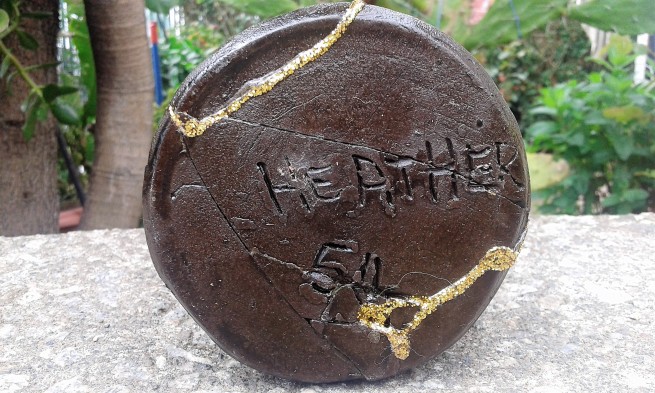
 One in three women worldwide experience Domestic Abuse at some point in their lives; I am one of them. There are many terms to describe what we experience: Gender Based Violence (GBV); Domestic Violence (DV); Wife Battering; Violence Against Women and Girls (VAWG); I’ve opted to use the term Domestic Abuse because it covers many of the behaviours women, and men, experience. Firstly, domestic describes the running of the home, or family relations, and is synonymous with private; private or intimate relationships are the grounds for this abuse.
 In
In  Feminism and Religion