Woman and Nature: Our Bodies Are Ourselves by Carol P. Christ

This earth is my sister; I love her daily grace, her silent daring, and how loved I am how we admire the strength in each other, all that we have suffered, all that we have lost, all that we know. We are stunned by this beauty, and I do not forget: what she is to me, what I am to her.


These words are from Susan Griffin’s Woman and Nature which I often recommend as one of my favorite books. Over the years I have read this passage and others from Woman and Nature aloud with my students, and we have always been moved, most  of us to tears. More recently these words have become the center of the “Morning Blessing” on the Goddess Pilgrimage to Crete.

In the epigraph to the book Griffin writes,

These words are written for those of us whose language is not heard, whose words have been stolen or erased, those robbed of language, who are called voiceless or mute, even the earthworms, even the shellfish and the sponges, for those of us who speak our own language . . .

Continue reading “Woman and Nature: Our Bodies Are Ourselves by Carol P. Christ”

Mulling over Movies: Moana, Pt. 1 by Elise M. Edwards

elise-edwardsI love going to outdoor movie screenings.  Sitting outdoors on a summer evening with good company brings me joy.  Last week, I went to an screening of Moana, the Disney movie about a teenager who goes on a quest through the Pacific Ocean with the demi-god Maui.  Moana goes on this journey to help her people.  The movie came out last year, but I didn’t see it.  I have to admit that I wasn’t even interested in it until Simone Biles performed a dance to one of Moana’s songs on Dancing with the Stars. It was then that I realized that the movie has an empowering message.  I asked my friend Natalie, who is also a feminist religion scholar, about Moana.  She has three young daughters, so I trusted her to be more current than I am.  Her enthusiastic response sold me, as did her remark, “There’s not even a love story in it!”

Ah, Disney princesses and their love stories!  I’m old enough that I didn’t grow up with the Disney culture that children in the past few decades have, but I haven’t been immune to the Disney princess phenomenon.  I childhood pre-dated DVDs and digital downloads, but I still knew and cherished the Disney characterizations of Snow White, Cinderella, and Sleeping Beauty. These young women were kind and virtuous and beautiful (according to Eurocentric standards), but their stories culminate with marriage to a charming prince.  It’s also problematic that so often, the villains in these movies were older women—wicked stepmothers or evil witches—who were motivated by jealousy and hate.

Continue reading “Mulling over Movies: Moana, Pt. 1 by Elise M. Edwards”

Shapeshifting Goddesses by Judith Shaw

judith shaw photo

Magic, divine intervention, shapeshifting – what do these things offer the modern mind, concerned with time clocks, definitive proofs and skeptical disbelief? Yet to the ancients, shapeshifting was a well known tale, found in stories and mythologies across the world.

Continue reading “Shapeshifting Goddesses by Judith Shaw”

The Tree of Life and the Forest of Friendship: Circle Dance to Restore our Hope by Laura Shannon

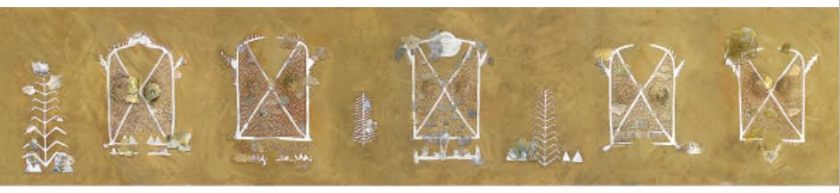
Tree and Goddess motifs on the ‘Wall of the Foremothers’ (Ahninnenwand), Bodensee, Germany, 4th Millenium BCE

Yes, times are tough. But a better understanding of our interconnectedness can help us move beyond the cynicism, frustration, and despair we may be feeling in the modern world. A closer look at trees, and at women’s traditional circle dances, can offer valuable lessons about friendship, community, and the interconnectedness of all life.

The sacred Tree is found in virtually all cultures, often identified with the life-giving figure of the Goddess. Both motifs appear abundantly in archaeological finds dating back to the early Neolithic era. Dance archaeologist Yosef Garfinkel affirms that humans have been dancing in circles since then and probably for far longer.

The Tree of Life is central to the women’s traditional circle dances of the Balkans and the Near East, which I have been researching for over thirty years.  The pattern of the Tree of Life is encoded in the steps of dances, many dance songs refer to women as sacred or magical trees, people often dance around or under sacred trees, and Tree and Goddess motifs are featured on the textiles worn while dancing.  Furthermore, each dancer resembles a tree, with her ‘trunk’ upright and centred, arms symmetrically extended like branches, and hands joined so that we support each other in the circle.   Continue reading “The Tree of Life and the Forest of Friendship: Circle Dance to Restore our Hope by Laura Shannon”

A Return to Light by Judith Shaw

judith shaw photoSpring is here in the northern hemisphere and with it the return of light in the yearly round of seasons. Today is Earth Day. Flowers bloom, new seedlings emerge and birdsong fills the air. As the cold and dark of winter gives way once again to warmth and light, cultures across the world celebrate fertility and the rebirth of life and light.

Continue reading “A Return to Light by Judith Shaw”

Honoring the Earth in our Rituals of Well-Being by Elisabeth Schilling

plantsMuch of our lives lack the rich culture of ritual that I think would help us repair the relationships we have with our own bodies and with the earth. The Rg Veda is one of the oldest collection of hymns from India. In them, I find a playful and introspective expression of desires and fears that, at first, did not seem to me to hold much wisdom for a modern contemplative. But lately, I have been noticing how the speakers communicate to or about the earth, and how their lives seem centered around trying to take a part in creation. Mostly, these hymns are stories and supplications for rain, cows, victory in battle, and a long life. But there is a deep understanding of the power and divinity in the universe that is the very earth-based wisdom that our humanity-in- crisis needs. If the Qur’an is God calling for humanity to be grateful, the Rg Veda is a model of a humanity that could be nothing else.

I love one incantation, for instance, found in the tenth mandala, that seems to be from a compounding physician, praying to the healing herbs that might make her client well again. I imagine her alone, in a greenhouse pharmacy, on a damp late afternoon, fingering stems and leaves before crushing them with her mortar and pestle to make a bespoke tincture that holds a cure. She knows the plants intimately, and works as if she is on holy ground: Continue reading “Honoring the Earth in our Rituals of Well-Being by Elisabeth Schilling”

Kissing the Earth by Molly Remer

 “Let the beauty we love 
Be what we do
There are hundreds of ways to kneel and kiss the Earth.”

–Rumi

Introductory note: At the end of 2016, my parents purchased a piece of land about one mile from where I already live (they live one mile further away than that). In addition to woodland and meadow, this land has two springs, three creeks, a cave, and ¼ mile of river access. While I have been deeply connected to the land of my birth, the Missouri Ozarks, for a long time, and have written about that connection in multiple past posts for FAR, this new-to-us land has offered a new opportunity: the chance to get to know another section of land “from scratch,” deeply, wildly and well, and to become wise stewards of it for the time in which it is in our care. It is also the first time I have been able to so closely and intimately observe the origin source of a body of water. Previously not giving it much thought, I now have the daily privilege of observing the source of the flow as I watch water emerge directly from the ground. First, there is simply none and then, suddenly, a deep blue pool constantly bubbling as water rises to the surface and flows away on its long, long journey to the sea. This essay is a series of three vignettes as I spend this year immersing myself in relationship with this land.

We walk along the nearly vertical hillside hanging onto small trees for support. Finally, though we almost miss it, we spy the opening to the cave nestled behind several mossy stones. The sun is still on the rise above the tree line and the rays filter through the trees so one ray is pointing directly at the cave entrance. We crawl inside, bumping our heads and scraping our backs as we wiggle into this womb in the earth. Once inside, the chamber enlarges so we can stand up. Unlike other caves we have experienced in this area, the only human signs we find are a single bottle cap, a glass bottle, and two sets of initials carved into a rock. In the dark silence we hear the sound of water dripping steadily. I make my way further into the cave, acutely aware that this is living cave and being careful not to step on the fresh, wet, cervix-shaped beginnings of new stalagmites on the floor. At the back of the cave, I find her. A Madonna-like stone column, glistening with water. In the silence of the cave, I quietly sing Ancient Mother to her, as tears well in my own eyes.

I am of this earth
for this earth
and by this earth.

We skirt carefully along the bank of the creek, making our way to the largest spring. Over three million gallons of water a day flow effortlessly from this small, deep pool nestled quietly in the middle of the woods. I am stunned by the magnitude of this flow as I stand there with my husband, my head resting on his shoulder, hawks wheeling overhead, redbud trees in full bloom. It has never seemed more clear to me how very “small” we are, but a blink of an eye to this spring and its countless years and countless gallons of water, not caring whether it is witnessed in its work or not, but simply, continually, creating and producing. I try to explain this feeling aloud, but words fail me. It is a humbling sensation, not a depressing one. The actual emergence of the water at this origin point of the river is nearly invisible, the continuous gentle, small popping of bubbles on its surface, the only sign that something significant is happening here that distinguishes this body of water from a pond or pool. Yet, those never-ending bubbles rapidly expand to a wide, swift-moving creek, which joins the river and another smaller spring-fed creek to continue to make their way southward across the state. We smell something sharp and see a dead armadillo by the roots of a giant sycamore. We hear a shrill cry and look up to see two bald eagles riding the currents of air high above us. We are so small. So many thousands of years of water have passed, but we are here right now.

Unfathomable eons
Glacier time
I am just a blink of an eye
But I can sit, and watch, and wonder.

We scramble along the uneven terrain on the rocky and wooded hillside, slipping, laughing, and looking. I am exhilarated by the simple thrill of exploring the world right here in front of me. We find tiny flowers. I kneel by the roots of fallen trees. We stop to admire moss on stones. We find gigantic black snake napping in the sun. A complete turtle shell. A shed antler. Each moment feels like a new opportunity to “kiss the earth.” I sing Reclaiming’s song-version of the Rumi quote over and over and as I kneel in each spot to see what it has to show me, in each, I kiss my fingers and press them to the earth. I see all the kissing going on around me…the sun filtering through branches, the fiddlehead ferns kneeling to kiss the earth, the roots wound through rocks, the trillium and bloodroot blooms pushing up between leaves, the water seeping out of the ground and flowing down the hill, the dogwood blossoms opening to the sun, the moss covering stones, the fallen trees stretched along the slope.

“And that is just the point…how the world, moist and beautiful, calls to each of us to make a new and serious response. That’s the big question, the one the world throws at you every morning. ‘Here you are, alive. Would you like to make a comment?’” 

–Mary Oliver

We emerge from our walk to find morels growing alongside the path (morels are wild, edible mushrooms found for about two weeks in Missouri each spring and considered a delicacy by many). The afternoon suddenly becomes even more rewarding and we stoop and peer through fallen oak, sycamore, and elm leaves looking for the telltale conical form of these forest treats. We quickly discover that we must tune in and “listen” for the mushrooms, so to speak, or we’ll walk right by them, none the wiser. The moment I start thinking about anything else, I stop finding any. Once I settle into my body and the moment and really look at the world again, there another morel will be.

 “I think this is how we’re supposed to be in the world … present and in awe.”

–Anne Lamott, Bird by Bird: Some Instructions on Writing and Life

Molly has been “gathering the women” to circle, sing, celebrate, and share since 2008. She plans and facilitates women’s circles, seasonal retreats and rituals, mother-daughter circles, family ceremonies, and red tent circles in rural Missouri and teaches online courses in Red Tent facilitation and Practical Priestessing. She is a priestess who holds MSW, M.Div, and D.Min degrees and finished her dissertation about contemporary priestessing in the U.S. Molly and her husband Mark co-create Story Goddesses, original goddess sculptures, ceremony kits, and jewelry at Brigid’s Grove. Molly is the author of Womanrunes, Earthprayer, and The Red Tent Resource Kit and she writes about thealogy, nature, practical priestessing, and the goddess at Brigid’s Grove

The Coming of Spring: Reflections on Pesach and Judaism by Ivy Helman

meandminiIt is, I think, quite common knowledge that most Jewish holidays relate to the seasonal cycles of the Earth.  Sukkot celebrates the fall harvest.  Chanukah sheds light on the winter darkness.  Tu B’Shevat marks the end of the dry season and so begin the prayers for rain in Israel.  For Purim, we throw off our winter doldrums and let off a little steam to settle our cabin fever.  Pesach is no exception: welcome spring: birth, renewal and even creation.  The leaves return to the trees, baby animals are born, flowers bloom, warmer weather arrives and somehow the possibilities of the coming summer are endless.

In fact, the associations between Pesach and spring are many.  Arthur Waskow in Seasons of Our Joy explains the origins of the connections (pages 133-139).  There were probably two different seasonal celebrations – one of shepherds and one of farmers – that came together around the time of the Babylonian exile into one festival which we can see in Exodus 12 – 13: Pesach.  Farmers in preparation for the harvest of spring wheat cleared out the old crumbs and fermentations of the last year to make room for the new.  Shepherds celebrated the arrival of baby sheep and their flock’s fertility in general by slaughtering a sheep, putting its blood on their tents and dancing around a fire.   Continue reading “The Coming of Spring: Reflections on Pesach and Judaism by Ivy Helman”

Darkness and Light by Judith Shaw

judith shaw photo“Deep in their roots, all flowers keep the light.” – Theodore Roethke

“Returning violence for violence multiplies violence,
adding deeper darkness to a night already devoid of stars.
Darkness cannot drive out darkness; only light can do that.
Hate cannot drive out hate; only love can do that.”
– Martin Luther King, Jr.

Continue reading “Darkness and Light by Judith Shaw”

Renewing Our Spirits in the Wilderness of Our World by Carolyn Lee Boyd

carolynlboydIn my garden blooming with native wildflowers, in nearby rivers and woods, across the New England landscape, the Earth is healing Herself.  Two centuries ago, New England’s forests had been cleared for farms; myriad species of  animals, birds, fish, and plants had disappeared; the network of waterways had been dammed to make power for mills.

Now trees are reclaiming land abandoned by 19th century farmers seeking better soil westward and today’s environmentalists are reintroducing native flora and fauna and hauling away obsolete dams. As a result, species not seen for generations are thriving, most of New England is again heavily forested, and whole ecosystems are reviving. Creation is once more beginning to remake the landscape into a place of wholeness, life, and connection. Continue reading “Renewing Our Spirits in the Wilderness of Our World by Carolyn Lee Boyd”