Living Out the Tension: Spirituality, Self-Care, & Activism in Action by Chris Ash

“Great art is not a matter of presenting one side or another,
but presenting a picture so full of the contradictions, tragedies, [and] insights of the period
that the impact is at once disturbing and satisfying.” – Pauli Murray

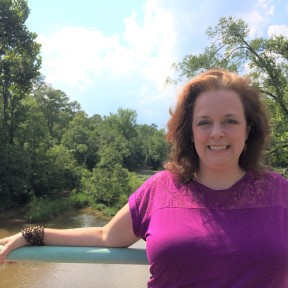
 Christy CroftMy spirituality is inherently creative. Deep in the creative process, I open more fully to awareness of what is flowing around and in and through me. When I can get there – to that place of fully giving myself over to Spirit as a channel, vessel, and embodiment – creation itself becomes an act of prayer, of devotion, of intense ecstatic ritual to honor, grieve with, or celebrate the Ground of Being behind all expression. I craft, dig, carve, build, dance, drum, and sing. Mostly, my art involves words – spoken and written – to create moments, spark feelings, paint pictures, or shape ideas. Words carry tremendous meaning, unconsciously as well as when we use them consciously, with intention.
My spirituality is inherently personal. While I’m a mystical thinker prone to the kind of abstraction that finds beauty in universal connections and layers of thought and cosmos, the questions that always draw me back into Self are these: How does this grow me? What am I learning that helps me be a better person for myself, my family, my community? How does this enhance my well-being, bring me contentment, or give me tools or strength to expand beyond the trauma, grief, and sadness of paying attention – really paying attention – to the world around me? Does this fill me with more to spill out into the world? More love, more beauty, more passion and fight and solidarity?

Canvassing against NC's Amendment One in 2011
Canvassing against North Carolina’s Amendment One in 2011

My spirituality is also inherently political. Continue reading “Living Out the Tension: Spirituality, Self-Care, & Activism in Action by Chris Ash”

thea Gaia née Dorothy Ivy Wacker: Feminist Foremother and a Great “Ponderer” by Glenys Peacock

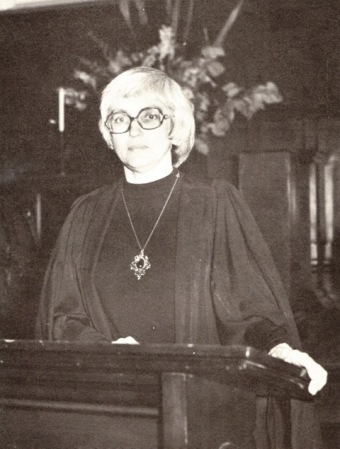
Rev. Dorothy Waker (thea Gaia)
Rev. Dorothy Wacker (thea Gaia)

On 15th May, 2016 thea Gaia left this earth which was her home for 85 years. thea was born
Dorothy Ivy Wacker in Gatton, Australia on 9th February, 1931, the eldest of four children.
Her family were descendants of German immigrants who came to Australia in the 1860s.
In primary school, Dorothy was a bright student, winning a bursary enabling her to continue
her studies at high school which she completed in 1947. She then studied primary teaching
at Queensland Teachers’ College and from 1950-52 she worked at School for the Deaf,
Dutton Park, Brisbane.

Dorothy joined South Brisbane Congregational Church and became President of Queensland
Congregational Youth Fellowship. At age 22, she decided to take theological training to
become a Congregational minister. Dorothy studied for Bachelor of Arts and Bachelor of Divinity at the University of Queensland. In 1959, she was awarded a Certificate of Ordination by the Queensland Congregational Union. Dorothy was ordained on 17th April, 1959 at Broadway, Woolloongabba, the first woman ordained as a Minister of Religion in Queensland. Over the next 10 years she was minister for Belmont, Broadway and Chermside Congregational Churches. Continue reading “thea Gaia née Dorothy Ivy Wacker: Feminist Foremother and a Great “Ponderer” by Glenys Peacock”

Epona – Goddess of the Land by Deanne Quarrie

celtic-horseDeanne QuarrieThis week I bought a pendant that caught my attention.  It is Celtic knot work of horses, meant to represent Epona.  This triggered my interest in Epona and off I went to learn more.
Epona is a goddess from Gaul.  Sadly, any information about her from those early days of worship are lost to us. This is the case of the most ancient deities from that region and time in history. It is thought that she was picked up in Gaul by the conscripted soldiers of the Roman Army who saw a depiction of her upon her horse and they adopted her. Since this army rode across the land on horseback, she was the perfect deity to pay homage to and so, she traveled with them. She soon made it to Rome and is one of only a few deities, not originally Roman, to be worshiped in the Roman Empire. Continue reading “Epona – Goddess of the Land by Deanne Quarrie”

A Servant of God or a Lover of Life? by Carol P. Christ

Carol Molivos by Andrea Sarris 2Thus through an enormous network of mythological narrative, every aspect of culture is cloaked in the relationship of ruler and ruled, creator and created. . . . [Sumerian] legend endows the Sumerian ruler-gods with creative power; their subjects are recreated as servants. . . . [This new narrative was] deployed with the purpose of conditioning the mind anew.(20, italics added)
This provocative statement is found in a chapter titled “The First Major Sexual Rupture” in a collation of the writings titled Liberating Life: The Women’s Revolution by imprisoned Kurdish leader Abdullah Ocalan (pronounced Oh-cha-lan). According to Ocalan, who clearly had been reading authors like James Mellaart, Marija Gimbutas, and Heidi Goettner-Abendroth, the values of the societies that preceded Sumer in the Near East were entirely different. Continue reading “A Servant of God or a Lover of Life? by Carol P. Christ”

Olwen, Welsh Flower and Sun Goddess by Judith Shaw

Judith Shaw photoOlwen (pronounced OHL-wen ), Welsh Flower and Sun Goddess is most probably an ancient Goddess whose original stories and power have been lost to us. Her name means “Golden Wheel,” making Her the opposite of the powerful Sky Goddess, Arianrhod who was known as “Silver Wheel.”  Wherever Olwen walked four white trefoil clover flowers sprung up with each step, thus earning Her the nickname “Lady of the White Tracks.” She was known as the “White Lady of the Day” or “Flower-bringing Golden Wheel of Summer.”

Continue reading “Olwen, Welsh Flower and Sun Goddess by Judith Shaw”

The Tension of Opposites: Love, Chaos, & the Wild Vortex by Chris Ash

“Perhaps it shouldn’t be surprising that a high tolerance for ambiguity, ambivalence, and a tendency to think in opposites are characteristics researchers have found common among creative people in many different fields. But professional creators… come to understand that in order to be creative, they need to give themselves to sensations of ‘knowing but not knowing,’ inadequacy, uncertainty, awkwardness, awe, joy, horror, being out of control, and appreciating the nonlinear, metamorphosing features of reality and their own thought processes — the many faces of creative chaos.”

– John Briggs and F. David Peat, Seven Life Lessons of Chaos

Christy CroftAs someone whose interfaith, nature-based spirituality regularly draws inspiration from science, I experienced my recent read of the book Seven Life Lessons of Chaos as both an affirmation and a challenge. Throughout the book, one theme emerged over and over, each time in a different context: the creative impulse – that which generates nature and space, planets and stars, love and rage – emerges from within the tension of opposites.

Creation doesn’t burst forth from one opposite overtaking another, but rather as the direct outcome of the unending push-pull swirl of outward and inward, boldness and fear, light and dark. Living in creative authenticity regularly leaves me stewing in a mix of often-contradictory feelings, and while it’s easy for me to revel in my confidence when I’m feeling bold or in my wordy wit when I’m feeling brilliant, it’s far more difficult for me to sit with wonder in times when I feel rejected, unlovable, unaccomplished, insecure, or ugly. My inner dialogue frequently finds me alternating between the opposites that pull at my heart, mind, and way of being in the world.

Really, this is where many of us often find ourselves – be smart but not too intelligent, be beautiful but not vain, be sexy but not sexual. Madonna-whore, virgin-slut – choose a side, but know that once you do you will be judged. We are asked to choose between equally restrictive and caricatured forms that have been pre-fabricated for us by years of cultural control and legal oppression – forms that emphasize who we are in relationship to others, to men, and to our religious laws, rather than honoring who we are to ourselves, to our gods, and in our chaotic brilliance. Continue reading “The Tension of Opposites: Love, Chaos, & the Wild Vortex by Chris Ash”

Facing the Moon Alone by Molly Remer

February 2016 030

“When all is said and done I think every Witch should, at some time, face the moon alone, feet planted on the ground, with only his or her voice chanting in the starry night.”

–Laurie Cabot, Power of the Witch

I will never forget the first time I heard someone recite the Charge of the Goddess from memory. Bare-breasted, she strode around the fire in sacred circle at a large goddess festival in Kansas, delivering the words with power, grace, and confident resonance. I thought: I will do that someday.

In February of this year, we took a family trip to Dauphin Island. While there, the afternoon of the full moon, I February 2016 148
decided that the time had come. I was going to memorize the Charge of the Goddess. First, I thought I would only memorize it a piece at a time. It seemed “too big” to do in a single sitting. I had it printed out on a piece of paper that rapidly became damp with the salty sea air. I drew a labyrinth in the sand with my toes, set one of my goddess sculptures at its entrance, and drew a Womanrunes card.

One stanza at a time, slowly I began to repeat the poem* aloud:

hear ye, the words of the star goddess
the dust of whose feet are the hosts of heaven..
.

Over and over, I said the words, letting them twine around my tongue and in the air, experimenting with cadence and rhythm. After I could reliably repeat one section, I’d move to the next, letting it build in my memory until I could put the two together confidently and then moving to the next.

I am the beauty of the green earth
the white moon amongst the stars..

I stared into the waves, listening to them rise and fall along with my words. My three older children dug in the sand. February 2016 073
My husband fished. My toddler toddled around and then came to sit on my lap and nursed to sleep for nap time:

before my face
beloved of all…

I whispered into his damp hair. I felt in an altered state of consciousness. The words began to wind their way through me, becoming a part of me, embedded in me. I danced with them as I have never danced with another piece of writing. I felt them merging with me. I sang them aloud. I stated them fast and slow and I built, adding the next line and then the next…

for behold, all acts of love and pleasure
all my rituals.

I turned over hard thealogical questions as the words spun their magic through the air. What does it really mean that “all your learning and seeking shall avail you not, lest your know the mystery.” Do I really feel the goddess within? Do I find her within myself or is she only outside and if she is only outside, does she really exist at all? Tears came to my eyes: do I even like myself?

Two hours passed. My baby awoke and returned to digging in the sand. My husband packed up his fishing gear. The sky began to darken and spit rain. I stood and danced the words into the sand with my feet.

let your divine innermost self
be enfolded
in the rapture
of the infinite

I felt rapturous. I felt triumphant. I had done it. Faster and faster my feet stamped the sand as I called the words into the waves. I spun in circles with my toddler chanting and laughing and offering my devotion before the sea, beneath the moon.

the mystery of the waters
the desire in human hearts…

February 2016 179

*I used Shekhinah Mountainwater’s adaptation of the Charge, originally by Doreen Valiente, as included in the book Ariadne’s ThreadMolly 180

Molly has been “gathering the women” to circle, sing, celebrate, and share since 2008. She plans and facilitates women’s circles, seasonal retreats and rituals, mother-daughter circles, family ceremonies, and red tent circles in rural Missouri and teaches online courses in Red Tent facilitation and Practical Priestessing. She is a priestess who holds MSW and M.Div degrees and recently finished her dissertation about contemporary priestessing in the U.S. Molly and her husband Mark co-create original goddess sculptures, ceremony kits, and jewelry at Brigid’s Grove. Molly is the author of Womanrunes, Earthprayer, and The Red Tent Resource Kit. She writes about thealogy, nature, practical priestessing, and the goddess at her Woodspriestess blog. 

What Does Mother’s Day Mean in a Patriarchal and Matricidal Culture? by Carol P. Christ

Carol Molivos by Andrea Sarris 2When we seek immortality or spiritual “rebirth,” are we not saying that there is something wrong with the “birth” that was given to us through the body of our mothers? In She Who Changes and in “Reading Plato’s Allegory of the Cave as Matricide and Theacide,” I asserted that our culture is “matricidal” because it is based on the assumption that life in the body in this world “just isn’t good enough.”

What is so wrong with the life that our mothers gave us that we must reject it in the name of a “higher” spiritual life? The answer of course death.

Can we love life without accepting death?

Can we love our mothers if we do not accept a life that ends in death? Continue reading “What Does Mother’s Day Mean in a Patriarchal and Matricidal Culture? by Carol P. Christ”

Dance of Persephone: The Trata of Megara by Laura Shannon 

Laura Shannon square cropIn a previous post on FAR I explored Greek Easter customs which interweave Christian and pre-Christian beliefs.  Today I would like to take a closer look at one of these customs, the women’s ritual dance known as Tráta, ceremonially performed on ‘Bright Tuesday,’ the Tuesday after Easter. Versions of Tráta survive in the towns of Mégara and Elefsina just west of Athens, on the island of Salamína directly across from them, and in the surrounding area as far as Thebes.

Elefsina, of course, is Eleusis, where for over 2,000 years the Eleusinian Mysteries enacted the story of Demeter and her daughter Persephone’s descent to the Underworld. Choral dance was a central part of the ceremonies at Eleusis – as at other sacred sites including Delphi, Knossos, Athens, and Vravrona – and the ‘Well of the Beautiful Dances’ can still be seen at the archaeological site. It is a a visible reminder of the circle dancing which was a part of the initiatory experience, bringing cosmic order – symbolised by the circle – into the human world. This is still one of the functions of the Tráta as performed today.

Eleusis
Eleusis
Eleusis – ‘Well of the Beautiful Dances’

Continue reading “Dance of Persephone: The Trata of Megara by Laura Shannon “

Our Enchanted Bosque by Judith Shaw

judith Shaw photoI live in New Mexico’s largest city, Albuquerque. As a Goddess Worshiper, one of the things I love about New Mexico is the easy access I, a city dweller, have to so much natural beauty. I feel Her beauty and power in the widely varied landscapes of New Mexico.

Continue reading “Our Enchanted Bosque by Judith Shaw”