From the Archives: The Tree of Life and the Forest of Friendship: Circle Dance to Restore our Hope by Laura Shannon

This was originally posted on May 6, 2017

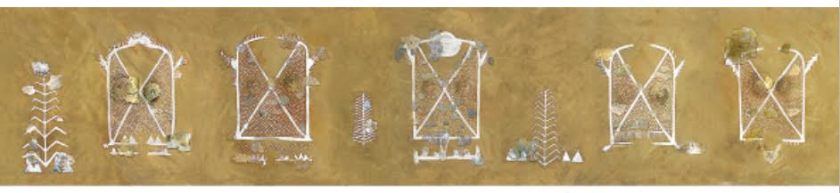
Tree and Goddess motifs on the ‘Wall of the Foremothers’ (Ahninnenwand), Bodensee, Germany, 4th Millenium BCE

Yes, times are tough. But a better understanding of our interconnectedness can help us move beyond the cynicism, frustration, and despair we may be feeling in the modern world. A closer look at trees, and at women’s traditional circle dances, can offer valuable lessons about friendship, community, and the interconnectedness of all life.

Continue reading “From the Archives: The Tree of Life and the Forest of Friendship: Circle Dance to Restore our Hope by Laura Shannon”

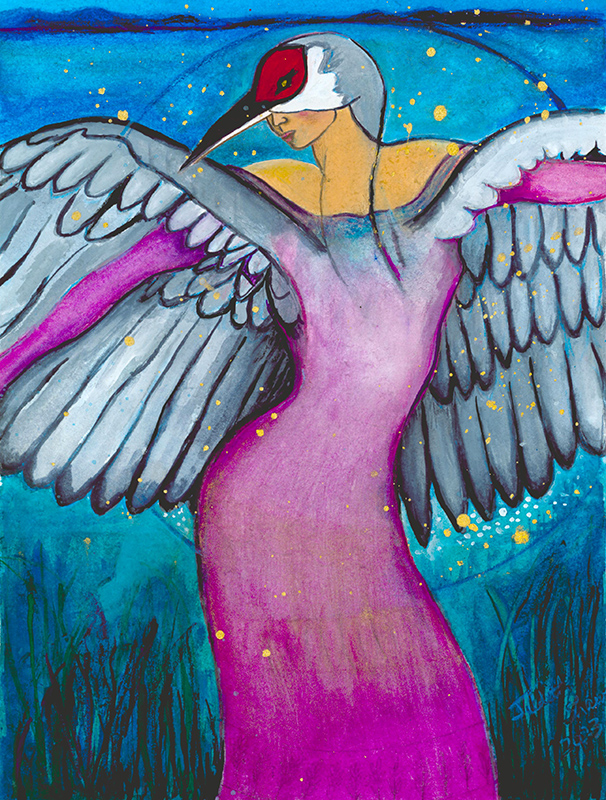
Aviana, 20th Century Crane Goddess by Judith Shaw

People think that goddesses only came into being long, long ago. People think goddesses are only found in ancient mythology. But people are wrong.  I know because I am Aviana, the Wetlands Crane Goddess who helped create the Bosque del Apache Wildlife Reserve of New Mexico. I first manifest on Earth as an Otherworldly force in the early 1900s. It was the migrating birds and waterfowl, in particular sandhill cranes, who called me into being.  

You see before Euro-Americans arrived in the land of the American Southwest, the Rio Grande was a mighty river which flooded every year bringing life and renewal to the land. These wetlands were a favorite wintering habitat of the Sandhill Cranes. They left their summer nesting grounds of Alaska, Canada and the northern United States and headed south for the winter.  Every year in November hundreds of thousand of cranes arrived in New Mexico. Here they fed on grasses and small animals throughout the short winter days. 

Continue reading “Aviana, 20th Century Crane Goddess by Judith Shaw”

Spiritual Practices for Summer Flourishing by Molly Remer

The spiritual life need not be
divorced from the physical.
It is with our hands that we make magic
It is with our breaths that we offer prayers. 
It is with our eyes that we see beauty. 
It is with our hearts that we know love. 
It is with our ears 
that we hear birdsong and ballads.
It is with these bodies 
that we reach out to touch the holy 
every day.

This morning, I watched the baby woodpeckers. Still nestled safe within their tree they stab wildly at their brave parents who cautiously poke snacks into the trunk and then dive away again, narrowly evading the enthusiasm of their progeny. I peek at the baby phoebes too, heads nearly full-feathered, no more room for a parent in the nest against the wall of our house. They peer back at me, black eyes solemn, while the hummingbirds dodge and weave and battle it out between branches. I hear the thin and persistent cry of a broad-winged hawk from somewhere in the oaks just outside my vision. Summer is settling into the woods, though spring seems just barely to have arrived. The woods are becoming heavy and green and closing to exploration as the bugs and brambles stake their claim and exact their blood prices for entry. The blackberries are in bloom, wild and riotous, their white flowers open gratefully to both rain and sun. The wild raspberries have already begun to set their fruits, hard knobs of green clustered hopefully on each cane. The mulberries were brave enough to try again after frost crisped their efforts to black, now re-leafed, small green flowers and starts of berries once more emerge to hang with delicate promise next to their ruined brethren. As I finish writing my poem and offer my prayers, I look up to see a bald eagle making great wide circles above the house. The sky is clear and blue and the air is sweet and fresh and full of promise. I sit, as I do, in this cocoon of green, my heart wide, my mind soothed, and my soul replenished by the magic of place and all it manages to hold and teach each day. 

Continue reading “Spiritual Practices for Summer Flourishing by Molly Remer”

Coming Home:  The Goddess Rises…(part 1) by Sara Wright

The beginning of spring flies in on wings and croaks at my feet.

In four days, the landscape transformed from a dirty white shroud into a palette of heavenly browns. The goddess is manifesting on the first flights of the geese and ducks to open ponds, finally freed from ice. Crocus, emerging sage green bloodroot spikes, trillium, bloodroot, the arrival of phoebes, white throated sparrows, turkey convocations, the mating of the wood frogs, and the tiny amphibians we call spring peepers sing up the night.

 Yet spring in the speed lane is deeply concerning. Temperatures skyrocketed instantly from mid 30’s to 80’s. Although the rivers and streams are still running there is no overflowing water. A few nights ago, we had the first round of light spring showers; then temperatures cooled down and now it is cold again. Many threatened wood frogs, salamanders, red efts, and toads were forced to migrate to ditches and vernal pools, their only breeding places, without warm rain; how this will affect these most vulnerable species remains to be seen. At present the earth is still moist but this drying trend is especially troubling since it has been consistent for several years. I am keenly aware of why the ancient pre -Christian goddess was first celebrated in the spring as the Rising Waters because adequate rain/flooding is the Source of all Life.

Continue reading “Coming Home:  The Goddess Rises…(part 1) by Sara Wright”

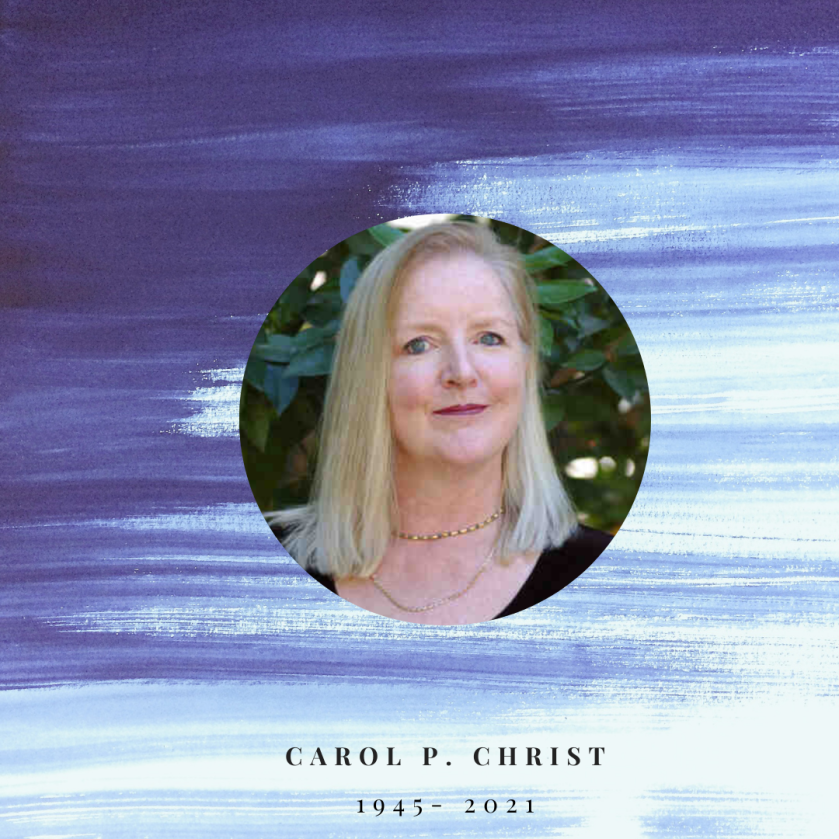
Legacy of Carol P. Christ: WANGARI MUTA MAATHAI AND SACRED MOUNT KENYA

This was originally posted on September 23, 2013

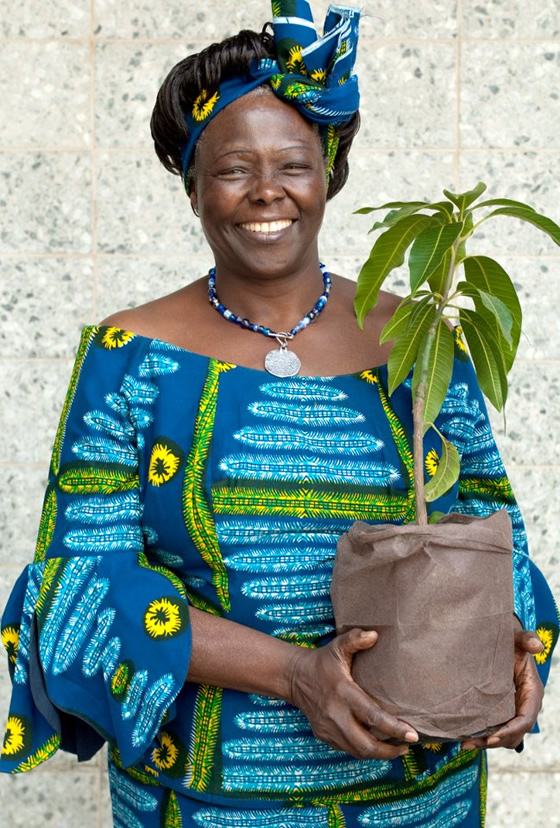
September 25, 2013 is the second anniversary of the death of environmental, peace, justice, and democracy advocate and Nobel Peace Prize recipient Wangari Muta Maathai.

Wangari Muta was born in 1940 in a round hut in rural tribal Kenya.  Wangari’s tribe considered the fig tree to be holy, and she was taught that one is never to cut a fig tree down or to use its branches for firewood.  Wangari spent many happy childhood hours in the shade of a fig tree that grew by a nearby stream.  Fig trees play an important role in the ecological system of the Rift Valley of Kenya.  Their roots penetrate the hard rock surface of the mountains to find underground water, thus opening channels where the water flows upward to fill streams and rivers.

Continue reading “Legacy of Carol P. Christ: WANGARI MUTA MAATHAI AND SACRED MOUNT KENYA”

Common Ground: Part Two:  On Enclosure, the Commons, and Awe by Beth Bartlett

Can we rise to ourselves and see what is in the nature of the soul to see – that we exist on this common ground together?” – Susan Griffin

The ideology, discussed in Part One, that land that is not being cultivated, mined, lumbered, or otherwise used to create goods and capital is ‘waste” continues its devastating effects to this day in mountaintop removal, destruction of old growth forests, fracking and drilling and mining of once pristine lands, plowing the plains into dust and spreading herbicides and pesticides over the land. Devastate – from the Latin devastare, meaning to “lay waste, ravage, make desolate.” Devastate – to de-vast – is to destroy the vastness. And so has the vastness of lands around the world been plundered, laid waste, so as not to “waste” it.

Continue reading “Common Ground: Part Two:  On Enclosure, the Commons, and Awe by Beth Bartlett”

Common Ground: Part One:  On Enclosure, the Commons, and Awe by Beth Bartlett

I spent the first half of my academic career studying and teaching the history of Western political philosophy – the works of Plato, Aristotle, Augustine, Aquinas, Hobbes, Locke, and Rousseau to name a few.  It gave me the best possible grounding in understanding the foundations of patriarchy.  In more recent years, I have used these works to explain the Western paradigm of thought to my ecofeminism students so they could better understand how women, colonized others, and the earth have been defined and dominated based on these assumptions.

Continue reading “Common Ground: Part One:  On Enclosure, the Commons, and Awe by Beth Bartlett”

Feeding the Birds by Sara Wright

In most cultures white is the color of death. No wonder brides wear white.

When I finally stepped into my life at 39, I entered a mythic world. I married myself to the serpent of life, a creature who is now wrapping itself (both male and female) around the earth four times and squeezing the life out of Her, according to Mythologist Martin Shaw (see Emergence magazine). The serpent, once life bringer for feminists now courts death.

I will always remember Marion Woodman, a Jungian analyst (and personal friend), who stated that every symbol carries both light and dark, and one side of the symbol will always shift into the other… She was speaking metaphorically but my mythic education and life experience as a naturalist have taught me/and continue to teach me that symbols like the serpent that were once holy beings are also living beings that were worshipped by Pre-Christian cultures, and then demonized by Christianity, recovered, and reverenced by feminists. Until now. Today the dark side of serpent has risen again and is swallowing us whole.

Continue reading “Feeding the Birds by Sara Wright”

Life Still Shaped by the Witch Hunts? by Eline Kieft

In this article I reframe my understanding of feminism through the lens of Mona Chollet’s In Defence of Witches, and reflect on how my psyche as a woman today is still deeply influenced by the effects of the witch hunts in mediaeval times. 

Continue reading “Life Still Shaped by the Witch Hunts? by Eline Kieft”

Legacy of Carol P. Christ: Maternal Gift Economy: Webinar Gifts

This was originally posted December 7, 2020

In the 1960s and 1970s, American-born Genevieve Vaughan was living in Rome with her husband, philosopher Ferruccio Rossi-Landi, and their three daughters. When Rossi-Landi, using Marxist models, began to write about language as a form of “exchange,” Vaughan was inspired to articulate her alternative theory based on the idea that language was developed and is learned through the gifts of the mother to the child. From that beginning, Vaughn developed an alternative theory of culture based on what she calls the “gift economy.”

Continue reading “Legacy of Carol P. Christ: Maternal Gift Economy: Webinar Gifts”