Second Class Rape Victims: Rape Hierarchy and Gender Conflict

Deconstructing masculinity isn’t the key to solving social, sexual, and domestic violence across the world but it is a step worth taking when attempting to engage men in affecting change to stop these violent actions since men, statistically are the perpetrators of such crimes that both cause such outcry as well as perpetual silence.

johnThe most disturbing part of the 2006 documentary Deliver Us from Evil isn’t the fact that Father Oliver O’Grady is rewarded by the Catholic Church with a new congregation in Ireland after his short stint in prison for the rape of dozens of children in the 1970s, but rather the hierarchy of gendered victimization which is often created throughout the various rape cases that are both reported and unreported throughout history.

I am often troubled by the ways in which rape cases are discussed and deconstructed via mediums such as blogs, online communities, social media networks, the news, and popular culture.  No series of events troubled me more than the Jerry Sandusky trial, but more importantly, the ways in which the young boys and adult men who were subjected to Sandusky’s abuse quickly overshadowed the other rape cases that are reported on a daily basis, specifically those involving young girls and women. Continue reading “Second Class Rape Victims: Rape Hierarchy and Gender Conflict”

And Thus God made a Covenant with Hagar in the Wilderness by Michele Stopera Freyhauf

Freyhauf, Feminism, Religion, Durham, Old Testament, Blogger, BibleWe are familiar with the covenant God made with Abraham and Moses, but are you aware that God also made a covenant with Hagar?

In the wilderness Hagar encounters a deity at the well named Beer-lahai-roi (Genesis 16). Water and wells are important because they symbolize fertility and life. Wells for women are common places where they met their future spouses. Because wanderers in the desert need water to survive, water itself becomes a symbolic of life-giving or life.

In the seemingly barren dessert, the fertile Hagar finds out that she is pregnant and going to be the mother of many children. Hagar is promised progeny in a motherless state.  According to Pamela Tamarkin Reis, this is called the “after-me” descendants, which guarantees Hagar that her children will live for “immeasurable generations;” a pattern that fits within the scope of this promise. This same promise of progeny is also given to Eve in Genesis 3:20, providing and interesting parallelism between Eve and Hagar.

It is worth pointing out the irony exists in this promise.  Sarai uses Hagar to “build her up.” According to Nahum Sarna, to be built up in terms of the number of children that you have, implies that you are mother to a dynasty.  In this pericope, however, it is Hagar, not Sarai that is built up through this divine promise.

This patterns of promise exists within the birth narrative through the annunciation of Ishmael and the promise of progeny.  It is through this narrative that Hagar enters into a covenantal relationship with the deity.  According to J. H. Jarrell, birth narratives have six common elements that establish this relationship:  mother’s status, protest, offer, son’s future forecast, Yahweh naming, and acceptance of the contract. Hagar’s story contain these elements:

  1. Mother’s Status:  Hagar is without child because she is a virgin (16:1).
  2. Protest:  Hagar flees from her mistress (16:8).
  3. Offer:  Return to your mistress and submit to her authority (16:9).
  4. Son’s Future Forecast:  He will live at the east of all his brothers (16:12).
  5. Yahweh Naming:  You will bear a son Ishmael because the Lord has given heed to your affliction (16:11).
  6. Acceptance of the Contract:  She called the name of the Lord (16:13).

Continue reading “And Thus God made a Covenant with Hagar in the Wilderness by Michele Stopera Freyhauf”

Touching Roots: An Incredible Lightness Of Being by Carol P. Christ

carol p. christ 2002 colorA few days ago, a German-speaking friend spoke with an Eiloff relative of mine who lives in St. Nikolaus, Saarland.  My relative remembered hearing the story that Heinrich Eiloff, my 2x great-grandfather, emigrated to the United States in the mid-1800s.  Since we connected, I am experiencing an incredible lightness of being.

This is the first time my two years of genealogical research have led to a “Kunta Kinte” moment, a connection with a relative in “the old country.”  I have been unable to trace most of my ancestors back to the places of their birth. 

My relative in St. Nikolaus was perplexed by a call from Greece from a woman claiming to represent his American relative. But when she explained that I only want to find my roots and perhaps visit relatives in St. Nikolaus, he said, “that would be very nice.”  He promised to speak with other living relatives and said we should call in a month or two and he would tell us what he found.

According to my research, my 2x great-grandfather Heinrich Eiloff was born in 1820 in St. Nikolas, Saarland, in Prussia (now in Germany).

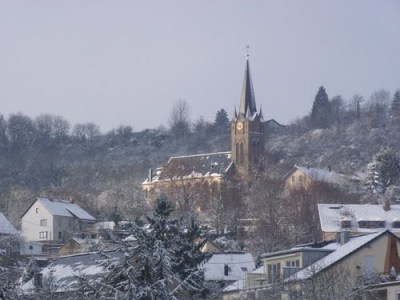
st nikolaus saarland

Continue reading “Touching Roots: An Incredible Lightness Of Being by Carol P. Christ”

Does Belief Matter? by Carol P. Christ

carol p. christ 2002 colorIn recent days I have been pondering the fact that some people and some feminists seem to see the issues of religious faith and belonging to be rooted in birth, family, and community, while for others the question of belonging to a religious community hinges on belief and judgments about the power exerted by religious institutions.  What accounts for this difference in the way we view religious belonging?

Recently I watched The Secret History of Sex, Choice and Catholics, a film featuring Roman Catholic feminists and ethicists who dissent from the Roman Catholic hierarchy’s views on contraception, abortion, and homosexuality.  At the beginning of the film those interviewed state almost univocally that for them being Catholic stems from having been born Catholic. These Catholic dissidents continue as Catholics, even though they disagree with major portions of Roman Catholic teaching.  It may have been because they were not asked, but most of them did not name reasons of belief for remaining Catholic.

Thus the viewer did not learn the theological reasons these progressive Catholics stay in the church.  I wondered: Do they believe that salvation occurs only through Jesus as the Christ? Do they believe in original sin? How do they feel about the God of Exodus and the prophets who achieves his will through violence or the Christian doctrine of hell?  I also wanted to know how they justify being part of an institution that, as June Courage stated on these blog pages, is responsible for the deaths of women and children through its contraception and abortion policies just as surely as if it were bombing their homes in an unjust war. Continue reading “Does Belief Matter? by Carol P. Christ”

Please Excuse Me for Having a Penis: Taking a Back Seat to Privilege and Power by John Erickson

Male feminists must be aware that we not only engage in an ongoing struggle against sexual and gender inequality, but more importantly an ongoing fight with ourselves.

I have often struggled with that little voice, call it my conscience if you will, that speaks to me during times of distress.  Although I consider myself a proud feminist, I still struggle with aspects of what I call, internalized misogyny, or more aptly defined as a male born characteristic trait that imparts the idea that men are not only dominant but also more powerful than the other 50% of the species.

For many reasons, I believe religion is one of the main culprits of this growing evil, one that we all witnessed throughout this last election cycle.  However, instead of placing blame solely on religion and images of the male Godhead we have to begin deconstructing the sociological consequences these subconscious social, sexual, religious, and gendered norms have on men but more importantly men who identify as feminists. Continue reading “Please Excuse Me for Having a Penis: Taking a Back Seat to Privilege and Power by John Erickson”

The Dignified Life of Magdalene Rose: A Pro-Life Story? by Michele Stopera Freyhauf

As I enter this world, I know that I am so very blessed. My life will be one of worth.  As hard as people fought to see me take my first breath, they will fight for my life to be one of dignity and worth.  I am protected in a world that is pro-life – or so I thought.

My mother was raped, but the law did not recognize this violent act as rape because she became pregnant with me.  The law only recognizes legitimate rape as one that does not result in pregnancy.  I entered the world amidst controversy.  I was named Magdalene Rose. Magdalene because of the shroud of controversy that surrounded her – the false accusations of prostitution, the stigma that history assigned to her, and the hope of those who have tried to reclaim her as the first witness to the resurrection, a faithful disciple, and devoted minister.  Rose was chosen for the flower that can bloom even in the face of adversity; one that can push through the snow to reach the sun and spread its petals.

My mother is a single mom  She does the best she can – trying to keep us clothed and fed.  She works so much and I stay many nights with my grandmother or a neighbor.  She seems so tired, so worried, but yet always has a smile to share with me.  I am her blessing, a miracle born out of darkness.

We go to church every Sunday, but strangely, no one will sit by us.  We have to sit in the back.  I wonder why.  Certainly our clothes are a little worn – we rely on hand-me-downs and the thrift shop.  My mother dresses me in the finest dresses she can find, I feel so special. In God’s house, we are shunned.  People refuse to shake our hand even during the sign of peace.  This is the place where we should be welcomed.  This is where they proclaim the Gospel and teachings of Jesus.  Yet, the only sign of Jesus that seems to exist in this community is symbolized on the cross.

Continue reading “The Dignified Life of Magdalene Rose: A Pro-Life Story? by Michele Stopera Freyhauf”

“I do, I do, I do believe in gay marriage” by Marie Cartier

I do believe in gay marriage. I mean fairies, I mean gay marriage. I’m a lesbian. I’m approaching my legal fourth year anniversary on October 29, 2012 with my wife. I’m voting for Obama for many reasons, and one of the strongest for me is that he is the only president who has “come out” in support of gay marriage.

An acquaintance recently said to me, “I don’t believe in gay marriage.” There is not a counter narrative to this in my vocabulary. I cannot say “I don’t believe in heterosexual marriage.” I can say I don’t support it—but even that is not true because my taxes do support a system which privileges partnering legally over not partnering. The metanarrative of religious discourse privileges belief statements. So when someone says “I don’t believe in gay marriage”—they are encasing my life in the world of theology where we cast our lot with belief or non-belief.  I’m Catholic—I believe in the Virgin Mary. I believe in the canon of saints. I don’t believe in Hell, however, or Purgatory. I’m not sure of my belief system regarding Heaven. As a New Age practitioner– among these practices are Wicca, yoga, martial arts, Western inspired meditation practice, psychic readings, etcetera– I feel empowered to question the belief systems of the Church, and even more so as a feminist. Continue reading ““I do, I do, I do believe in gay marriage” by Marie Cartier”

No-Gift Birthday Parties by Grace Yia-Hei Kao

Continue reading “No-Gift Birthday Parties by Grace Yia-Hei Kao”

Lucy Burns, A Look at a Catholic American Suffragette by Michele Stopera Freyhauf

As we approach the election period infused with controversy, saturated by television commercials, as well as endless advertisements on the radio, Internet, and yes, even Facebook, we must remember the sacrifices made by our foremothers during the suffrage movement, which gave women the right to vote.  While all elections are important, this one has targeted issues involving women in a way that could negatively impact our rights – to the point of rewinding the clock on progress made in women’s equality during the last 40+ years.  This election needs the voice of all informed voters.  However,  it is imperative for all women to make their voices heard this year by casting a vote.  To turn a blind eye to these issues diminishes the sacrifices our foremothers made for us. To not cast a vote takes away your voice, makes you a silent bystander – something that was tried by the government and patriarchal system during the suffrage movement.

To illustrate this, I would like to highlight Lucy Burns and the Night of Terror endured at the Occoquan Workhouse by her and many of her friends.   Of all Suffragettes, Lucy Burns spent more time in jail then any other protesters.  Born 1879 in Brooklyn, Lucy was raised in the Roman Catholic tradition by a father who believed that his sons and daughters should be educated equally.  Burns gradated from Vassar College in 1902, then attended Yale Graduate School studying linguistics.  She eventually went to Oxford University in England to resume her studies.  It was at Oxford that she became involved with activism and the suffrage movement. Continue reading “Lucy Burns, A Look at a Catholic American Suffragette by Michele Stopera Freyhauf”

8 Simple Rules for Being a Queer Godfather by John Erickson

Becoming a Godfather was more than just a reentry into the Catholic traditions I had long given up but rather a journey back in time that would grant me the ability to rewrite the wrongs I felt as a kid growing up in a tradition I not only didn’t understand but also didn’t feel like I belonged in.

I often wondered why I wasn’t asked to be the Godfather of my niece and nephew.  It made perfect sense to me that I would be the best person to guide and provide spiritual care for either of them as I was the only member, in both my family and my brother-in-law’s, getting a PhD in Religion.  I didn’t think there would be much to it.  I would go, hold my nephew, and watch a priest pour water over his head, and then go and enjoy some very sugary cake in my sister’s backyard.

On August 18th, 2012 my wish came true and I became the Godfather to my sister’s second child, Drew.   I had always believed that there was nothing to being a Godfather.  That it was a title in name only and a tradition that many individuals bestowed upon members of their family as ritualistic habit rather than a sacred institution of spiritual care and upbringing.  Boy, was I wrong. Continue reading “8 Simple Rules for Being a Queer Godfather by John Erickson”