A Short History of Maligned Women by Mary Sharratt


Women who stand out and dare to seize their power have been maligned throughout history. Even today many people are uncomfortable about the very idea of a powerful woman. Witness how Hillary Clinton was demonized in the 2016 presidential campaign. What other U.S. presidential candidate has been called “nasty” by their opponent or had their opponent literally looming over them during a live televised debate? Even women who would never dream of running for political office face every day misogyny and threats of violence for daring to speak out on the internet. It doesn’t matter what the woman has to say—the fact that she has spoken out at all has made her a target.  

I certainly encountered the “such a nasty woman” phenomenon while researching Alma Schindler Mahler, the protagonist of my new novel Ecstasy. Born in Vienna in 1879, Alma Maria Schindler was an accomplished pianist and aspiring composer who gave up her own music as a condition for her marriage to the great composer, Gustav Mahler. Later, after a marital crisis, she returned to composing and published three collections of her songs. She was married to—or had affairs with—some of the greatest creative geniuses of her time, including Gustav Klimt, Walter Gropius, Oskar Kokoschka, and Franz Werfel. She was also a pioneer in the field we now call artistic management and her networking skills benefited the men she loved. But one would hardly know about her talents and gifts to read the biographies written about her.

Continue reading “A Short History of Maligned Women by Mary Sharratt”

Implausible, Impossible Hope by Natalie Weaver

With the single exception of a weak moment in my oldest son’s kindergarten year, during which time the grade school manipulated parents into fundraising schemes by dangling socially advantageous perks (such as a reward trip to a water park) for only those children whose parents participated at a high level in the initiatives, I have never subscribed to any magazines.  Nevertheless, I continue to believe, on some core level, that Ed McMahon is even now driving down the street toward me in the white Publisher’s Clearing House van with a check for one million dollars.  The fact that Ed is long deceased seems to have no bearing on my conviction that the great Miracle, complete with balloons and a camera crew, is blazing toward me and just around the corner.  I never play the lottery, and I actually managed to go to Las Vegas once without gambling a single dollar, yet I feel almost daily that some Jackpot Jeep Bonanza Giveaway has my name all over it.

Continue reading “Implausible, Impossible Hope by Natalie Weaver”

Four Worlds Poem by Sara Wright

They came from

Life giving Waters,

emerging from a Lake

at the Beginning of time.

Avanyu –

Serpent,

Spirit of the River

pecked into stone

or painted

on canyon walls

embodies their story.


The Tewa settled above

the Great River Banks.

Roaring water flowed

through tributaries

mountain gorges.

The People gave thanks.

  Water meant Life.

Each village was the center

of the Tewa’s First world.


Bound together by

Women who tended

holy household shrines,

prayed for rain,

created fires,

gathered seed,

ground food,

grew babies,

dug clay to shape

earthen pots.

This was the Second world

of the Tewa.

Continue reading “Four Worlds Poem by Sara Wright”

Beyond Human Rights by Esther Nelson

For way too long, the only meaning I found in my life happened when peering through one specific, religious prism. Then I discovered what’s called the academic study of religion.  Observing the many ways people find meaning through their own experiences with God (or their “ultimate concern”) shattered the tightly-sealed insulation around my worldview.  Those things that comprise religion (stories, concepts of the holy, ritual, symbols, social structures), coupled with our individual experiences create a powerful reality affecting us individually and communally.

Some of my students identify as agnostic or atheist. They’re happy to have shed (or never put on) garments they perceive as obstacles.  Rarely do they realize that religious “truths,” because they are taken to heart by people and implemented into the social fabric, shape the world they inhabit. When we discuss the ways religion affects women within society, they are far more likely to think about women’s lived realities in terms of human rights, not religious identity.  Religion is seen as something superfluous (at best) or an impediment towards progress (at worst).

Continue reading “Beyond Human Rights by Esther Nelson”

My Grandmother is a Gangster… a Spiritual Gangster by Valentina Khan

My grandmother is a gangster… a spiritual gangster

I recently attended a funeral for a relative-in-law. The grassy patch at the cemetery was filled with many familiar faces as well as unfamiliar. My side of the family was asked to come. My father, mother and even teeny tiny little 4 foot 9 grandmother showed up. I emphasize her height because it has nothing to do with her stature… and this is where my story begins.

My grandmother aka “Mama Shamsey” is from my maternal side. She grew up in Tehran, Iran. She was a young bride to a handsome intellectual who was French educated but a deeply spiritual and passionately religious Iranian Shia Muslim. He truly believed people should never discuss politics or religion. He knew how to be open and compassionate with people of differing opinions than his. They married, had 5 children, my mother was the eldest. When she was just entering her tender teenage years, many of her peers were flocking to Europe to be educated in Germany or France. She however had the dream of going to school in America, so in the 70’s this family of 7 made the great migration over to America.

Continue reading “My Grandmother is a Gangster… a Spiritual Gangster by Valentina Khan”

Spiritual Ideas, Existential and Eastern, in Jonathan Livingston Seagull by Elisabeth Schilling

Peaceful Solitude

After my year of teaching high school students, I found a kinship with them in their frustrations, longing, apathy, hopelessness, and hope. Fortunately, we studied together Jean Paul Sartre, whom I want to get to know more intimately, but we, the teens and myself, could take the spiritual answer to our questions about the meaning of life (is there one? What is it?): The meaning of life is to give it meaning.

I am not sure about their generation, but adolescence for me, in mine, was about discovering, not necessarily creating. Of course, now I think it is a little of both.

Sometimes I wonder if there is also a lesson. Being an academic, perhaps I love learning and teaching. I demonstrate my love as Jonathan Livingston Seagull does, by offering to others, perhaps a specific community of others, those who have chosen or must be in a state of learning (easily found in institutions of high school and college), the truths I have gathered (59). Of course ‘truth’ is a word that tastes a bit tannic, for it needs to be rolled around by the tongue a bit to be cleansed; perhaps to mitigate its toxic potential, we can never consume it undigested, but must gestate it and transform it within our warm bodies, just at the cliff, before we allow it to permeate our organs in a chemical structure that serves us.

Continue reading “Spiritual Ideas, Existential and Eastern, in Jonathan Livingston Seagull by Elisabeth Schilling”

The Three Mothers: Feminine Elements and the Early Kabbalah by Jill Hammer

For over ten years, I’ve been teaching a work of early Jewish mysticism known as Sefer Yetzirah, or the Book of Creation.  There are widely differing opinions on the book’s origin and dating, but many scholars date it to the sixth century.  Its core concept can be described simply: the Divine used the Hebrew letters as metaphysical channels to create the different aspects of reality: the directions, the elements, the planets, the months of the year, and so forth.  Each letter is a channel by which God creates a unique form or entity, and meditating on the letters provides us with a connection to divine creative power. In its discussion of the letters, Sefer Yetzirah shows a strong connection to feminine imagery, and thus helps the later kabbalah develop its own link to the feminine.

Sefer Yetzirah shows influences from Aristotle to Gnosticism, and is often viewed as a work of Jewish philosophy.  However, it is also a work of meditation, giving the reader instruction on how to focus and connect to the divine. Scholars such as Richard Hayman and Marla Segol have noted that the book’s structure and content connect it to magical literature: for example, the book has a deep concern with “sealing” the space of the world: letters of the Divine Name are used to seal the six directions of the universe.  In a similar way, ceremonial magicians of the ancient world used sealing ritual, including the incantation bowls that were buried in the corners of a home to keep out evil forces.  The book, like much ceremonial magic of the region, also discusses the elements.  However, Sefer Yetzirah has a three-element system rather than a four or five-element system.  The three formative elements are air, water, and fire.

Continue reading “The Three Mothers: Feminine Elements and the Early Kabbalah by Jill Hammer”

A Question about “Egalitarian Matriarchy” in West Sumatra by Carol P. Christ

Following up on my recent blogs on the roles of women in the Neolithic revolution and on “egalitarian matriarchy,” I have been re-reading Peggy Reeves Sanday’s ground-breaking book, Women at the Center, about the survival of the “adat matriarchaat” (the principles of matriarchy) among the more than four million Minangkabau people of Indonesia.

According to Sanday, the customs of the matriarchaat (the Dutch word has been adopted by the Minangkabau people)—including matrilineal descent, matrilocal marriage, and ownership of the land by the mother clan—have survived accommodation with Islam. This is in no small part due to the fact that one of the principle values of the matriachaat is to conjugate (to come together) rather than to dominate. Rather than viewing Islam as an opposing force, the Minangkabau emphasize the aspects of Islam–such as love and compassion for the weak–that are compatible with their traditional worldview. Through this clever maneuver, the Minangkabau manage to practice Islam while maintaining their traditional egalitarian matriarchy. Continue reading “A Question about “Egalitarian Matriarchy” in West Sumatra by Carol P. Christ”

Celtic Myth, Moon Blood, and the White Beauty Standard by Marisa Goudy

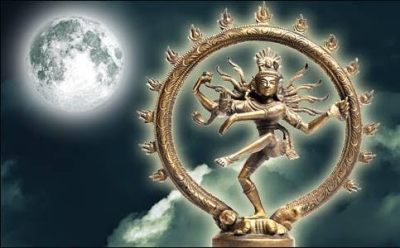
My woman’s body is entering the dark time of the moon, even with blinding white snow lashing the windows, even with a full moon tracing its way far above thick clouds. My mood is black and soon I’ll be flowing red, and the snow will just drive on white, white, white.

In The White Goddess, Robert Graves tells us: “…the New Moon is the white goddess of birth and growth; the Full Moon, the red goddess of love and battle; the Old Moon, the black goddess of death and divination.”

The Celt in me feels cradled by this imagery, even if, as Judith Shaw and Carol P. Christ have pointed out elsewhere on this site, the idea of maid, mother, and crone is a modern invention, not gift from the past. I agree with Christ:  “My suggestion is that we give up the idea that the details of contemporary Goddess Spirituality are rooted in and authorized by tradition. We can instead acknowledge that though we are inspired by the past, we are the ones who are creating contemporary Goddess Spirituality.”

Continue reading “Celtic Myth, Moon Blood, and the White Beauty Standard by Marisa Goudy”

My Heroine’s Journey: Writing Women Back in History by Mary Sharratt

Alma Maria Schindler

We have been lost to each other for so long. My name means nothing to you. My memory is dust.             

This is not your fault or mine. The chain connecting mother to daughter was broken and the word passed into the keeping of men, who had no way of knowing. That is why I became a footnote, my story a brief detour between the well-known history of my father and the celebrated chronicle of my brother.

Anita Diamant, The Red Tent

I am an expat author. My home is everywhere and nowhere. A wanderer, I have lived in many different places, from Minnesota, my birthplace, with its rustling marshes haunted by the cries of redwing blackbirds, to Bavaria with its dark forests and dazzling meadows and pure streams where otter still live, to my present home in the haunted moorlands of Pendle Witch country in Lancashire, England. My entire adult life has been a literal journey of finding myself in the great world.

For as long as I remember, I longed to be a writer. As a novelist I am on a mission to write women back into history. To tell the neglected, unwritten stories of women like my pioneering foremothers who emigrated from Bohemia (now the Czech Republic) in the 1860s to break the prairie soil of southern Minnesota.

To a large extent, women have been written out of history. Their lives and deeds have become lost to us. To uncover their buried truths, we must act as detectives, studying the sparse clues that have been handed down to us. We must learn to read between the lines and fill in the blanks. My heroine’s journey, in other words, is about reclaiming the lost heroines of history. My quest is to give voice to ancestral memory of that lost motherline.

Continue reading “My Heroine’s Journey: Writing Women Back in History by Mary Sharratt”