From the Archives: The Queen, the Memory-Keeper (Women in the Book of Daniel, part 1) by Liz Cooledge Jenkins

Note: This is the first in a two-part series reflecting on women in the biblical book of Daniel. This was originally posted on May 20, 2023

I recently had the chance to take a deep dive into the biblical book of Daniel. I think it’s the first time I’ve read the whole book of Daniel since I’ve started intentionally attending to the questions of feminist biblical interpretation: Where are women present? Where are women absent? What are they doing or not doing—perhaps prohibited from doing? How does this passage move its readers toward—or away from—gender equity and women’s empowerment? How does it speak to—or deny—women’s full humanity?

            The absence of women in most of the book of Daniel feels glaringly obvious to me.[1] The main characters include the Hebrew exile Daniel, Daniel’s three (male) friends, King Nebuchadnezzar, King Belshazzar, and King Darius. The angels look like men. The divinely appointed eschatological authority figure is described as being like a “son of man.” The particularly oppressive king who desecrates the temple, abolishes the ritual sacrifices, and sets up an “abomination that causes desolation”[2] is definitely male.

Where are the women?

Continue reading “From the Archives: The Queen, the Memory-Keeper (Women in the Book of Daniel, part 1) by Liz Cooledge Jenkins”

Let’s Have The Talk – What Does “The Birds and The Bees” Actually Mean: By Zoe Carlin

Recently, I have thought about a common idiom that has been used to refer to sexual reproduction, the birds and the bees. I became curious why animals that appear in most gardens were used as an example to explain where babies come from, until I did some research. It turns out that since the birds lay eggs, that is their representation of the female body and the bees represent the sperm due to pollination. It is a very subtle, overlooked message that can be disguised as being more age-appropriate to young children. However, I decided to dig a bit deeper. Ed Finegan, a USC professor of linguistics and law, has stated that this phrase has existed a lot longer than one might think. There is evidence of it being used in a somewhat sexual context going back to at least two authors, Samuel Coleridge Taylor (1825) and an entry from John Evelyn’s The Evelyn Diary (1644). 

In Work Without Hope, Samuel Coleridge Taylor quotes, “All nature seems at work . . . The bees are stirring, birds are on the wing . . . and I the while, the sole unbusy thing, not honey make, nor pair, nor build, nor sing.” This separation of the birds and bees is indicating the loneliness and sadness of missing out on a potential romantic connection. When going even further back in time to 1644, it was noticed in the Evelyn Diary that there was an entry discussing the interior design of St. Peter’s in Rome: “That stupendous canopy of Corinthian brasse; it consists of 4 wreath’d columns, incircl’d with vines, on which hang little putti [cherubs], birds and bees.” This description is illustrating that there is a possible sensual or sexual meaning of the architecture in St. Peters.

Continue reading “Let’s Have The Talk – What Does “The Birds and The Bees” Actually Mean: By Zoe Carlin”

Healing Soul Loss Through Movement

We tend to imagine soul loss as something rare and dramatic, or reserved for those with deep trauma. But in shamanic paradigms across cultures, soul loss is a normal part of being human. The concept refers to moments when a vital piece of our essence disconnects, often as a survival mechanism. In psychology this is called dissociation. This can happen through shock, illness, relational rupture or subtle decisions we make to fit in, stay safe or succeed. A piece of us leaves in order to preserve the rest.

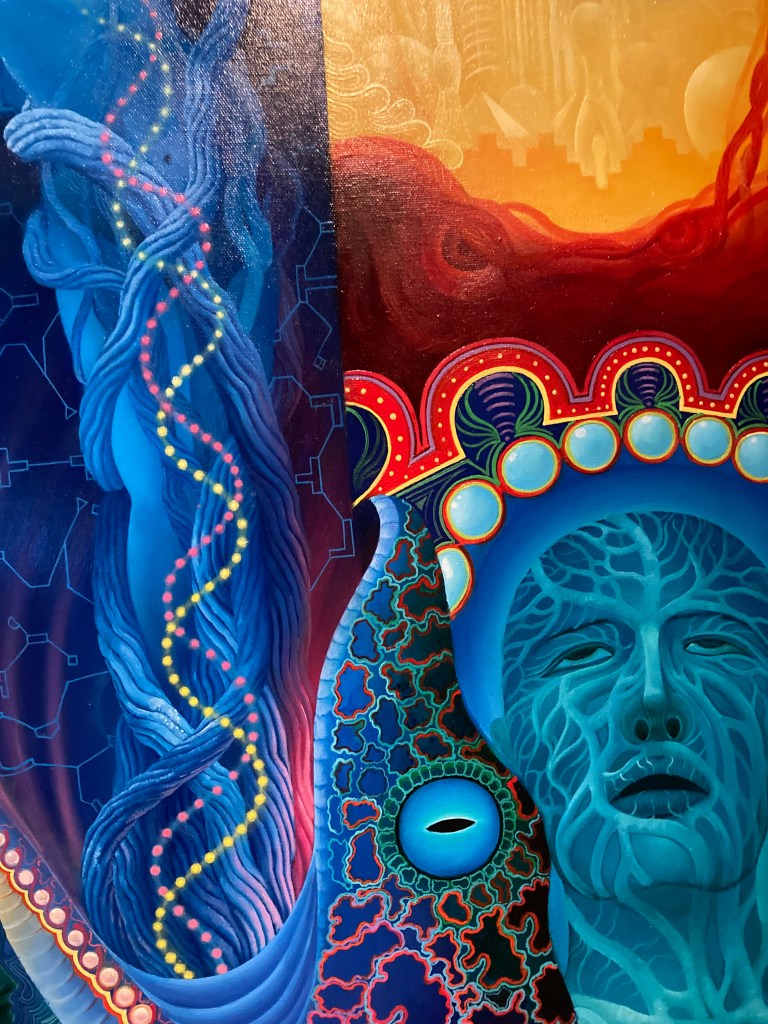
[Image credits: Detail from Anderson Debernardi’s painting “Iniciacion Shamanica”, seen at Exhibition Visions Chamaniques. Arts de l’Ayahuasca en Amazonie Péruvienne, ‎⁨Musée du Quai Branly, 2024. Photo by Eline Kieft.]

Continue reading “Healing Soul Loss Through Movement”

Miriam Is For the Girls by Zoe Carlin

The Book of Exodus is a well-known scripture, and it is one that many Jews, Christians, and even people who are non-religious are very familiar with. Growing up, our family continued to tell this story year after year during Passover. It was one of many classic Torah readings shown to us in our temple. So, one of the key figures in this story is Miriam, Moses’ older sister. Most remember that she helped her mother deliver Moses in secret at the Nile River when he was an infant due to the Pharaoh setting an order to kill every Hebrew son because of concerns of the population growing too much (Exodus 11:5-6). She also assisted in leading the Israelites across the Red Sea when Moses opened it up for the Hebrews to cross (Exodus 14:21-22). An article titled “Miriam: Midrash and Aggadah” shares a deeper analysis of the roles that Miriam upheld as a sister, a daughter, and a woman during this time. It has also informed my understanding of Miriam’s story.

Continue reading “Miriam Is For the Girls by Zoe Carlin”

Dancing the Stories That Heal

After a near-death experience in 2019, I found myself immersed in myth and movement—sitting with Clarissa Pinkola Estés, dancing archetypes through Movement Medicine, and weaving stories like the Handless Maiden and the Red Shoes into my everyday life. This post shares some of the journey of how myths became embodied allies and an invitation for you too, to remember what lives in your bones.

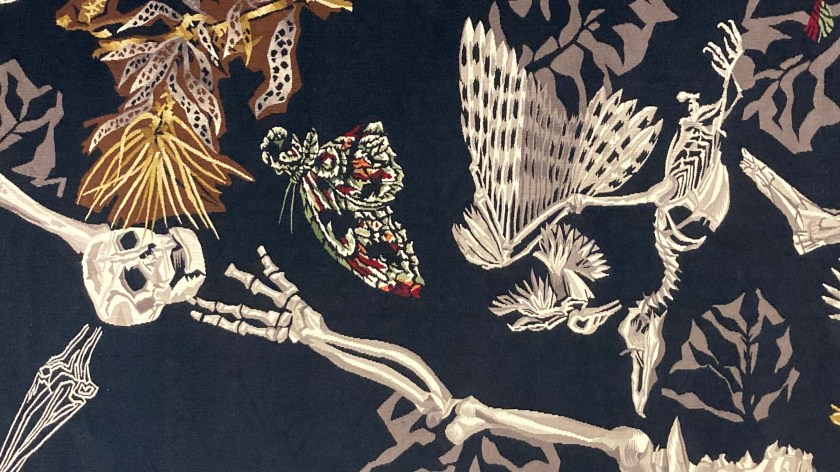
Tapestry: Le Grand Charniers (1959) by Jean Lurçat, Musée Jean-Lurçat, Angers, photographed in 2024. Image © Eline Kieft.
Continue reading “Dancing the Stories That Heal”

Do You Hear Seal-Woman Calling?

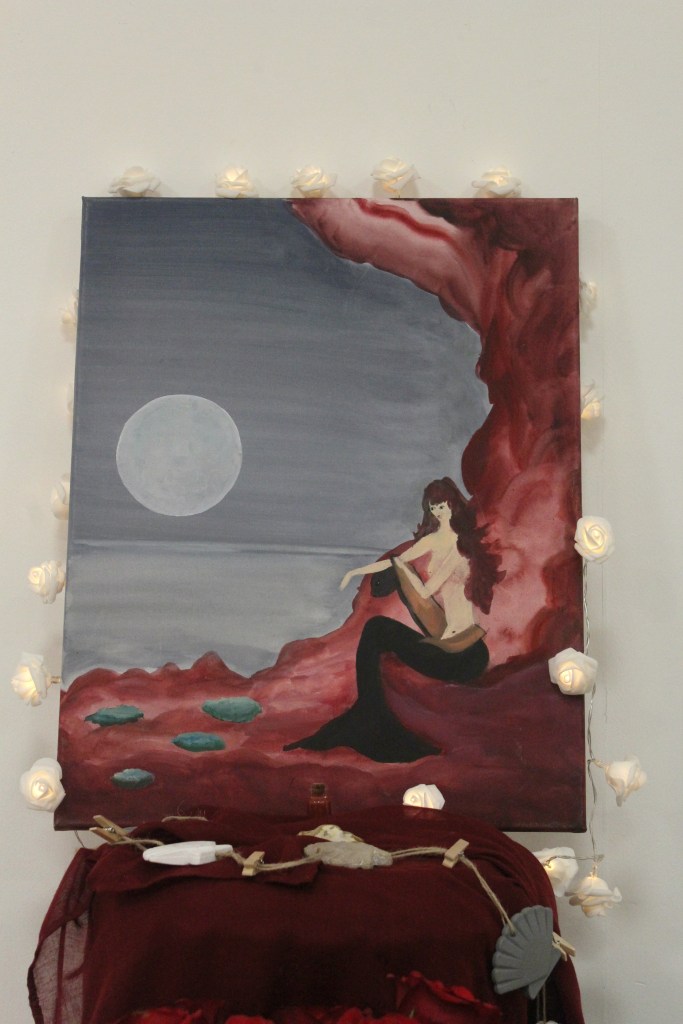
It was beautiful to read Carol P. Christ recent ‘from the archives’ post “Mermaid, Goddess Of The Sea,” especially because I’m in the middle of organising my first live Story-Dance workshop since several years, to move through one of my favourite stories of the Selkie-Seal Woman!

Stories of seal-women drift across the sea from the windswept coasts of Scotland to the icy shores of the Arctic. In the Scottish and Irish Highlands, Seal-women are known as selkies—shapeshifters who live as seals in the ocean, and who, when they shed their skins, walk as women on land. These selkie women dance beneath the moonlight, their laughter echoing across the waves as they rejoin their sisters in joyful reunion with the earth.

Continue reading “Do You Hear Seal-Woman Calling?”

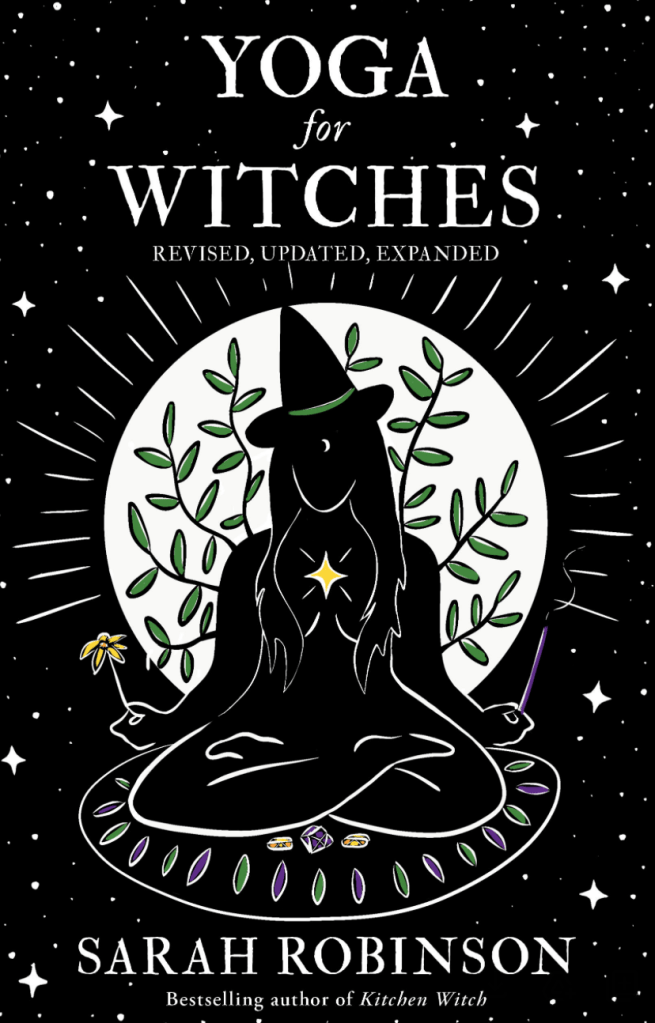
Yoga for Witches: Should You Try This at Home?

In this post, I review Yoga for Witches by Sarah Robinson, a practical book that weaves together two ancient practices with surprising similarities, yoga from the East, and witchcraft as practiced in Northwestern Europe.

I start with what I loved, and how Robinson describes the similarities and differences between those two traditions. That weaves into some personal and deeper reflections on the theoretical background and yoga sequences. At the end you’ll find a specific recommendation so you’ll know if this is the book for you!

Continue reading “Yoga for Witches: Should You Try This at Home?”

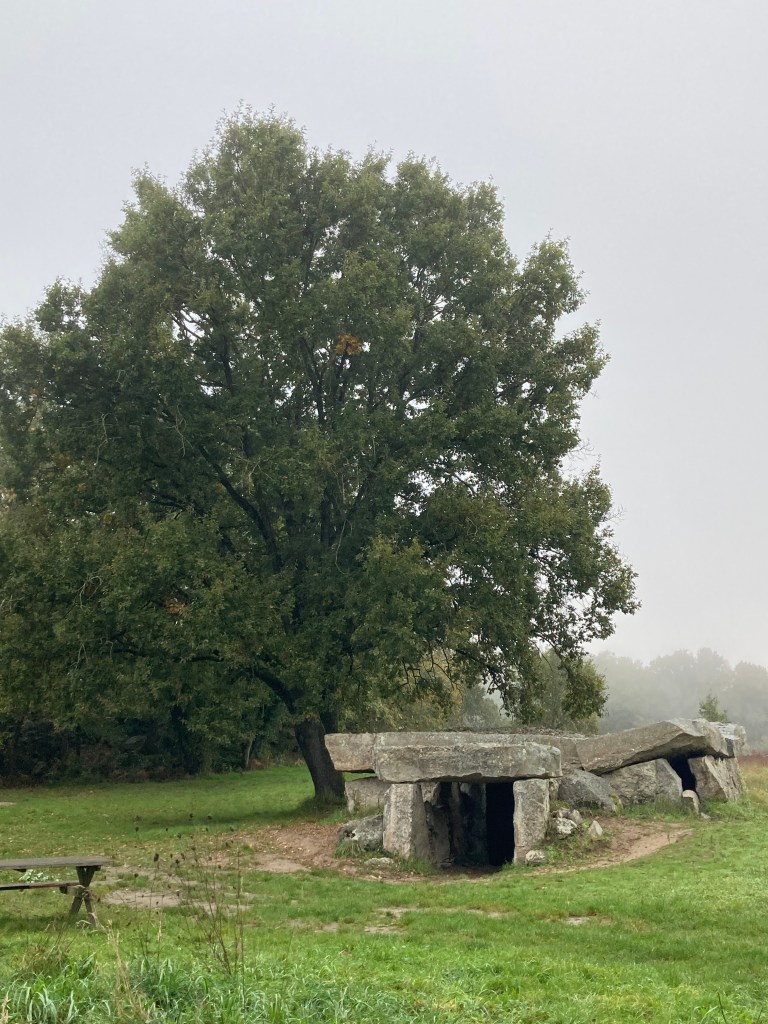
Overnight at a Neolithic Dolmen: A Womb Healing Ceremony by Eline Kieft

In preparation for my hysterectomy, I decided to spend a night in a dolmen at Samhain last year, to seek guidance and healing. I chose Dolmen de Bajouilière in Saint-Rémy-la-Varenne, in Northern France, a site I had discovered by chance the previous year on my local explorations.

This well-preserved structure, with its spacious square divided into two rooms, felt inviting and safe for an overnight ritual. Though I am accustomed to spending nights in neolithic monuments, mostly in the UK, I felt some hesitation, partly due to my intermediate French and unfamiliarity with the local spirits.

Nevertheless, I recognized this resistance as part of the ego’s fear of the unknown, and I gave myself permission to retreat if needed. If I would feel too vulnerable, it wouldn’t serve my body and spirit ahead of the surgery. Please join me on my overnight Samhain Ceremony full of deep imagery and transformation as I shed my womb three times… 

Continue reading “Overnight at a Neolithic Dolmen: A Womb Healing Ceremony by Eline Kieft”

Archives from the FAR Founders: Grounding My Love by Xochitl Alvizo

This was originally posted June 6, 2019

I love living in a second-story apartment. Having a view of Los Angeles, of the palm trees, the expansive sky, the distant mountains, and the city lights of downtown, makes life feel bigger, more full of possibilities. In the struggle of transitioning my life back to L.A., the view from my second floor apartment helps make me feel ok in the world. I’m in love with Los Angeles – the land, its topography, its sky, its desertness – and even its traffic. Beside the fact of sometimes being made to arrive late somewhere, I don’t mind being in our famed L.A. gridlocks – I don’t mind being in the slow moving flow of cars. I kind of enjoy being among the thousands of other folks sharing the collective experience of trying to get someplace. Traffic becomes for me a leisurely time when I get to do nothing else but enjoy the city.

Continue reading “Archives from the FAR Founders: Grounding My Love by Xochitl Alvizo”

Why Celebrating the 9th Anniversary of the Goddess Feminist Activist Spirituality Movement? (Part 2) by Helen Hye-Sook Hwang

As I noted in Part 1, this year marks the 9th anniversary of the first volume of She Rises trilogy, a collective writing project, which was first published in 2015 by Mago Books. Entitled Why Goddess Feminism, Activism and Spirituality?, the 93 contributors trumpeted the onset of the Goddess Feminist Activist Spirituality. It was followed by the second volume​, How… Goddess Feminism, Activism, and Spirituality?, with 96 contributors, in the following year, and the third one, What… Goddess Feminism, Activism, and Spirituality?, in 2019.​ The 9th anniversary of the first volume provided a new momentum for all contributors of the trilogy to come together as a virtual group, which we named “She Rises…” This group allows the authors of all three volumes to gather together for the first time, while inviting newcomers from outside the She Rises trilogy.

Continue reading “Why Celebrating the 9th Anniversary of the Goddess Feminist Activist Spirituality Movement? (Part 2) by Helen Hye-Sook Hwang”