From the Archives: Writing: Changing the World and Ourselves. By Ivy Helman

This was originally posted on October 12, 2014
20140903_180423

I still remember the first time I read Mary Daly’s Gyn/Ecology. It awoke something within me. Her use of language, the power of her writing and the ease with which she created new words taught me so much about the world around me and about the way the language, and subsequently its use in writing, shapes lives, choices, abilities and destinies. She also taught me about myself.

I was hooked, but not just on Mary Daly. Shortly after I finished her book, I moved onto other feminists writing about religion like Katie Cannon, Judith Plaskow, Alice Walker, Carol Christ, Rita Gross, Gloria Anzaldua, Audre Lorde, Adrienne Rich, Margaret Farley and Starhawk to name just a few. All of them, in fact every feminist I’ve ever read, has shown me the way in which words have power and how words speak truth to power. Ever since, I’ve wanted to be the kind of writer whose words carry a power that not only affects people but also inspires a more just, more equal, more compassionate and more humane world. In other words, I wanted to be a writer activist.

Continue reading “From the Archives: Writing: Changing the World and Ourselves. By Ivy Helman”
Mothers and Dragon-ing by Sara Frykenberg

But what if there was a space for the danger of dragon-ing? What if society expected it, welcomed it, and made room for our, women’s, subsequent growth? It might still be hard and risky, as is all growth and change. But as I believe Barnhill is trying to suggest, it might also be less traumatic, less splitting, and give us so much more space to be.

Knowing that I like dragons and feminism, a friend of mine recently recommended the book, When Women Were Dragons (2022) by Kelly Barnhill. I have been reading it (okay listening to it on audiobook, but that counts right?) all week. The premise of the book is that women dragon, as an act, and can do so by choice or spontaneously; and in the “Mass Dragon-ing of 1955” over 600,000 women flew away from American homes, “wives and mothers all” (Barnhill, 2022). But despite the destruction, eaten husbands and bosses, and destroyed homes that dragons leave in their wake, society, the government, and individual families do everything they can to forget it happened. The history is repressed. Individual memory is policed and repressed. The dragon-ing goes on.

 Beginning this book the week before Mother’s Day, I found the recommendation timely, or even fateful, because with every chapter and hour that I listen, I find myself thinking of my mother. And I wonder if or when she would have dragon-ed if given the chance.

Continue reading “Mothers and Dragon-ing by Sara Frykenberg”

Miriam Speaks by Janet Maika’i Rudolph

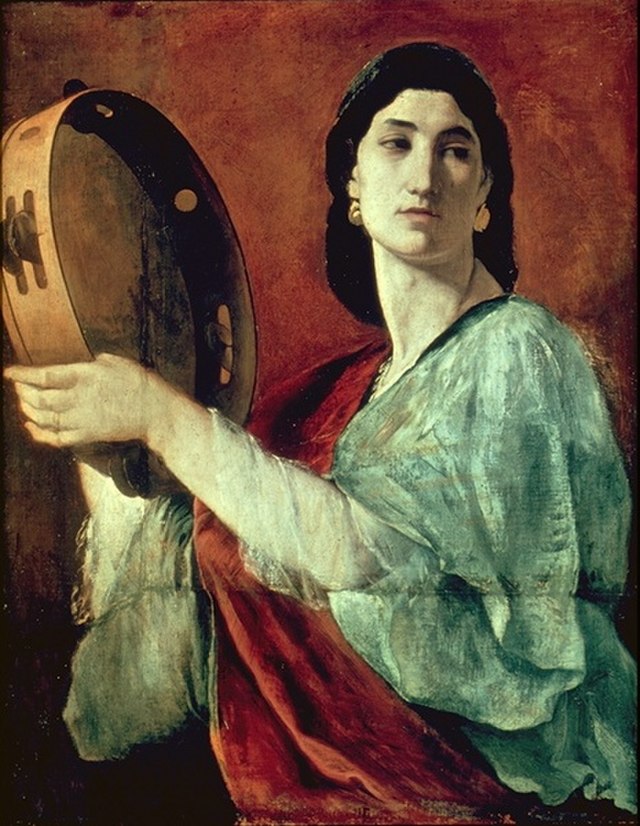
Wikimedia Commons: Anselm Feuerbach

Intro:  I have been working on a project inspired by Charlene Spretnak and her book Lost Goddesses of Early Greece. I am writing biblical stories through the eyes and words of the women. The scribes who wrote down the tales of the bible, wrote mostly from men’s point of view. And they had their own which was to destroy evidence of the Goddesses. I tell Noah’s story through Naamah, his wife. Abram and Sarai’s journey to Egypt through the eyes of Sarah. Exodus in Miriam’s voice. In my telling, Miriam went to Midian with Moses and, while there, experienced the Burning Bush and worked with Moses’ wife Zipporah to protect knowledge of the Goddesses. Below is an abridged version of this section of Miriam’s tale.  

I look around at your world today. You, yes you, are my descendants. My beloveds. I mourn for what you’ve lost. No, I am angry, how could things have gotten this bad? I dare you, I dare any of you to challenge my work. We did everything we could. It should not have taken this long to find our clues. But then I see the job the scribes did. It was better and more thorough than even we, who saw so much, could have imagined. I look around at this precious earth we bequeathed to you and see how damaged it is.

Continue reading “Miriam Speaks by Janet Maika’i Rudolph”

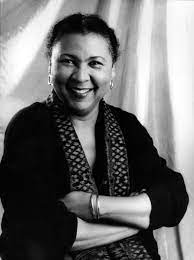
Embodying bell hooks’ theological vision by Liz Cooledge Jenkins

I was recently asked: Who is a theologian you admire? Since I’ve been deeply steeped in the Christian tradition, plenty of Christian theologians could come to mind—Christian theologians, that is, in the sense of humans educated in the Christian theological academy with the theology PhDs to prove it.

 But when I think of theology, these days, I find myself thinking more broadly. Like Kat Armas, who wrote Abuelita Faith as a way of reflecting on and honoring the theological contributions of marginalized women, rather than men who sit in the seats of academic power—and like Sarah Bessey, who writes that theology, at its best, is a field where “everyone gets to play”[1]—I am skeptical of the assumptions Christians often make about who is or isn’t a theologian. And so, when I thought of theologians I look to for wisdom, I thought outside the box. I thought of writer and activist bell hooks.

Continue reading “Embodying bell hooks’ theological vision by Liz Cooledge Jenkins”

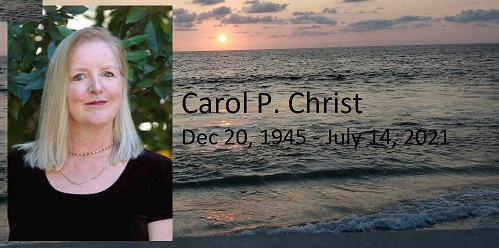
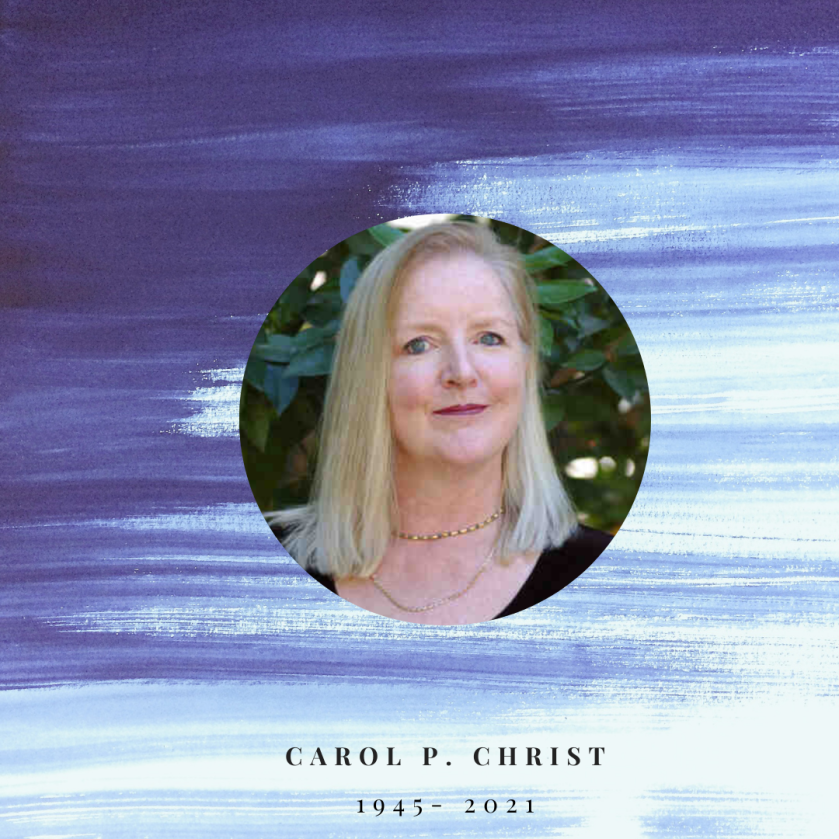
Legacy of Carol P. Christ: Body, Nature, Ancestors

This was originally posted on January 23, 2012

Some years ago, womanist theologian Karen Baker–Fletcher asked about ancestors following a lecture I gave on the body and nature.  I have since come to realize that ancestors are a missing link between the two:  we cannot speak adequately of embodiment and interdependence in the web of life without recognizing the ancestors whose lives made ours possible.  Our mothers quite literally gave us our bodies.  All of our ancestors gave us their genes.  Care and callousness with origins going back longer than conscious memory was imprinted on the psyches of our parents and grandparents and transmitted to us.  All of our ancestors give us connections to place.  While many black people in America can recite oral histories that begin with slavery in the United States, I come from a family where stories of origin for the most part were not valued or told.  Both of my father’s parents lost their fathers when they were very young, and my father, who was raised Catholic at a time when Catholics were discriminated against, preferred to think of our family as “American now.”  Like the hero of the film Lost in America, most members of my family dreamed of “melting right into that pot.” In the process we lost stories we need to help us to understand ourselves and the complex realities that “becoming American” involved.

Continue reading “Legacy of Carol P. Christ: Body, Nature, Ancestors”

Rereading Adrienne Rich’s “Compulsory Heterosexuality and Lesbian Existence” by Xochitl Alvizo 

I recently reread the essay titled “Compulsory Heterosexuality and Lesbian Existence,” by late poet and essayist Adrienne Rich, with my students this semester. Published in the summer of 1980, on the heels of the Women’s Liberation Movement, I found that the essay still maintains its relevance and challenges us to remember that feminism is a political movement that itself must be continually interrogated.  

The essay (which you can read here, with a foreword from Rich published 23 years after the original) has four sections which are titled only with the roman numbers I-IV. I labeled these sections for my students to try and capture the focus of each: I. Compulsory Heterosexuality – The Groundwork; II. Male Power and the Inequality of the Sexes; III. Lesbian Existence as Political Identity; and IV. Woman-Identification as Source of Power and Energy.  

Continue reading “Rereading Adrienne Rich’s “Compulsory Heterosexuality and Lesbian Existence” by Xochitl Alvizo “

Legacy of Carol P. Christ: The Feast Day of St. Brigid

This was originally posted on Jan 30, 2012

May we remember Brigid on her day in the fullness of her connection to bountiful and life-giving earth by setting a bowl of milk on an altar or special place in the garden on her holy day.  Who knows, a snake just might come to drink from it.

The Christian Feast Day of St. Brigid of Kildare, one of the two patron saints of Ireland, is held on February 1, the pre-Christian holiday known as Imbolc.  It is well known that St. Brigid has the same name as a pre-Christian Goddess of Ireland, variously known as Brighid (pronounced “Breed”), Brigid, Brigit, Bride, or Bridie.  The name Brigid is from the Celtic “Brig” meaning “High One” or “Exalted One.”  Brigid like other Irish Goddesses was originally associated with a Mountain Mother, protectress of the people who lived within sight of her and of the flocks nurtured on her slopes.

Imbolc marked the day that cows and ewes give birth and begin to produce milk.  It was also said to be the day when hibernating snakes (like groundhogs) first come out of their holes.  In northern countries, Imbloc signals the beginning of the ending of winter.  The days have begun to lengthen perceptibly after the winter solstice when the sun stands still and it seems that winter will never end.  At Imbloc spring is not yet in full blossom.  But if hibernating snakes come out of their holes, it is a sure sign that the processes of transformation will continue and warmer days will not be far off.  As Marija Gimbutas says, “The awakening of the snakes meant the awakening of all of nature, the beginning of the life of the new year.”  

Continue reading “Legacy of Carol P. Christ: The Feast Day of St. Brigid”

Legacy of Carol P. Christ: THE “G” WORD

This was originally posted on December 10, 2011

Recently, I saw the following line in a promotion for a book to which I contributed: “This volume includes voices from Christianity, Judaism, goddess religion, the Black church, and indigenous religions.” The editors of this book are to be strongly commended for expanding the dialogue in feminism and religion beyond the confines of the Christian hegemony in which it is still all too often framed.  Nonetheless, I felt hurt and offended.  I immediately wrote to the editors asking how they would feel if a book were promoted using the words:  “This volume includes voices from Goddess religion and god traditions such as judaism and christianity.”

Continue reading “Legacy of Carol P. Christ: THE “G” WORD”

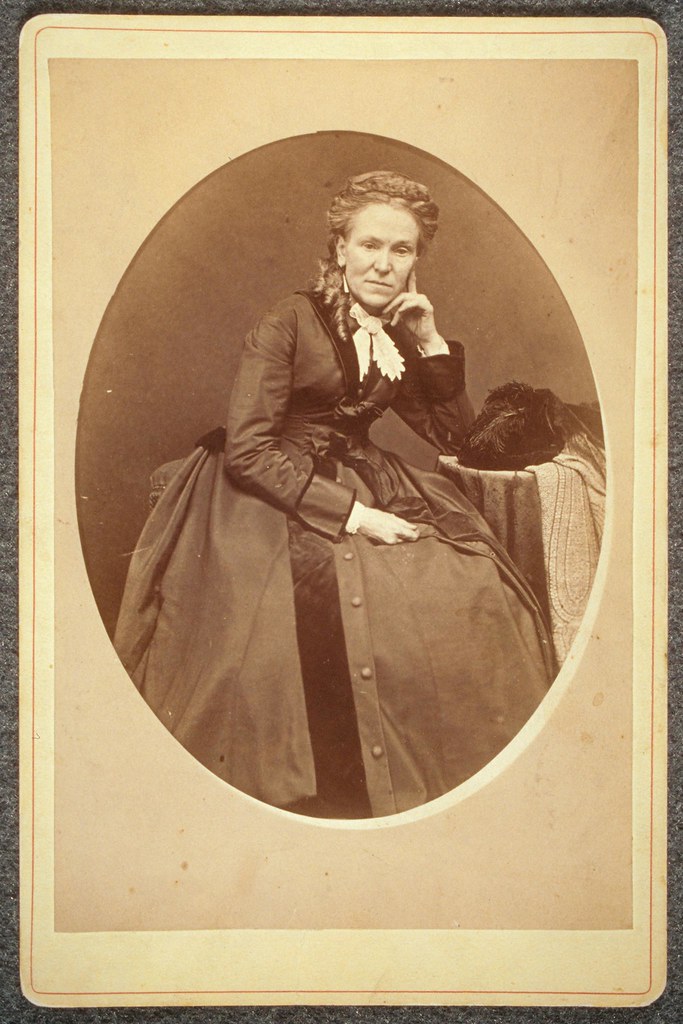
Patriarchy as Primer of Cruelty by Janet Maika’i Rudolph

Matilda Joslyn Gage

This was a hard post to write. When I write about my personal trauma, it is not only healing for me but adds to the canon of stories of other women that help all of us navigate trauma. That makes it easier. When writing about the trauma of women in a whole culture, I feel a sense of helplessness, especially here in the United States. We are all experiencing a group trauma and it is digging in deep.

January 5, 2024, will live in the Patriarchal Hall of Infamy. On this date the Supremes agreed to allow the rapist, misogynist, trying-to-be-dictator former President an opportunity to have his rights heard. But this same date, the Supremes also told we women that our lives are insignificant. No that’s not right, less than insignificant, a mere distraction to what they consider to be more important issues. They allowed an Idaho abortion law to go into effect that doesn’t allow an abortion even in the case of a medical emergency when a pregnant woman in life-threatening distress has been rushed to the emergency room. The split screen exhibits patriarchy for what it is. I want to use the word, “culmination” but that means the height. I don’t think we’ve reached a culmination because there seems no end to the cruelty that patriarchy seeks to inflict.

Continue reading “Patriarchy as Primer of Cruelty by Janet Maika’i Rudolph”

Prison Doors Open: Poetic Justice of Elizabeth Fry by by Margot Elizabeth Van Sluytman/Raven Speaks

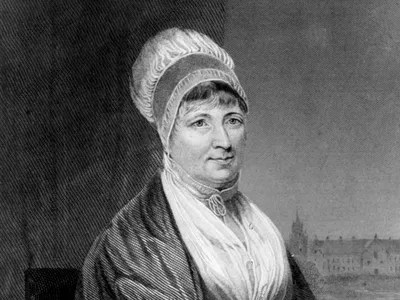
Elizabeth Fry, also known as Betsy Fry (1780-1845)

Voices as One
HER glory showers
Tremendous poignancy upon
Our persistent walk. We are
Joined. Siblings in Spirit.
Imbibing the hymn of
Reformation. The song
Of justice. The canticle
Of joy and freedom.
©Margot Van Sluytman

Continue reading “Prison Doors Open: Poetic Justice of Elizabeth Fry by by Margot Elizabeth Van Sluytman/Raven Speaks”