Normativity, Naming, and the Divine Image by Natalie Weaver

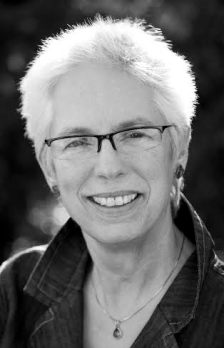
Natalie Weaver editedOver the past two days, I have been considering the challenges and competing perspectives on Carol Christ’s post, “Who is Gender Queer?”  I’d like to weigh in with some thoughts on normativity, naming, and the divine image.

I do not identify as genderqueer.  But, like Carol describes in her post, I have often felt misfit or misnamed.  As we all do, I internalized categories of masculine and feminine in childhood and somehow felt myself to be “masculine” in my physicality, my dark eyebrows (which people – frequently strangers – felt regularly inclined to describe, critique, and even molest in bathrooms, checkout lines, and salons), my hairy legs (which seemed hairier than my girlfriends’ legs in grade school), my interests, even the way I thought.  My sense of my sexual self felt somehow masculine because I never experienced my body passively.  I climbed and jumped and ran more than my female classmates, and I had much smaller breasts than the women in my family.  The real proof for me, though, was that I never had a period on a 28-day cycle.  I grew up thinking I was defective and generally not a very good female.  All of this, of course, I now know merely reflects the onslaught of normative messages I unwittingly accepted in my formation about the experience, presentation, and performance of physical sex and gender.   Continue reading “Normativity, Naming, and the Divine Image by Natalie Weaver”
The Case of Mary’s Decency by Xochitl Alvizo

Incarnation, Goddess spirituality, Xochitl Alvizo, god became flesh

This post builds on yesterday’s post on Marcella Althaus-Reid’s indecent theology.

In her book, From Feminist Theology to Indecent Theology, Marcella Althaus-Reid states that liberation theology has two dominant characteristics: the familiar ‘preferential option for the poor,’ with its suspicion of class structures and the influence these have on faith and church teachings to perpetuate and preserve its unjust systems of oppression and domination; and  for its praxis of transformation of said unjust systems (FFTIT, 11). Marcella Althaus-Reid credits liberation theology for “systematically and structurally using the concept of ideological formation in order to unveil class economic interests embedded in theology” (FFTIT, 11).

To build on this, Althaus-Reid uses the concepts of ‘decency’ and ‘indecency’ to challenge theology’s obsession to regulate and control “sexual performances, roles and behavioral patterns of people…through a sexually based patriarchal hierarchy based in a particular androcentric understanding of life according to predetermined identities” – in other words, heterosexism. Indecent theology, then, aims to strip away theology’s false claim to sexual neutrality and its obsession to control, and instead aims to develop a theology free from the heterosexism that confines it (FFTIT, 83). One key place in theology she seeks to indecent (she used the word as a verb) is the “legend of Mary” (IT, 40).

Continue reading “The Case of Mary’s Decency by Xochitl Alvizo”

A Little Indecency with Marcella Althaus-Reid by Xochitl Alvizo

Incarnation, Goddess spirituality, Xochitl Alvizo, god became fleshInspired by the conversation following Vanessa Rivera de la Fuente’s post yesterday, I offer here a little synopsis of Marcella Althaus-Reid’s work in Indecent Theology: Theological Perversion in Sex, Gender, and Politics.
Marcella Althaus-Reid opens her book by recalling a question she received from one of her colleagues: “What has sexuality to do with a Feminist Liberation Theology?” To answer she reflected on early liberation theology when it was still in formation and later liberation theology as it gained its place in the academy and the church:

[T]imes change and subversive theology becomes incorporated: church leaders claim that they themselves have always been liberation theologians. They guarantee to the state that there is no danger here…It is acceptable in the academy, entertaining to the wider public and a valuable commodity to publishers. Having reached calm waters, why would I as a feminist liberation theologian risk rocking the boat by introducing such a scandalous theme as sexuality, especially when it is not the theology of sanctified sexuality? (Indecent Theology, 2)

Continue reading “A Little Indecency with Marcella Althaus-Reid by Xochitl Alvizo”

Reading “Women” by Laury Silvers

My friends make my life difficult. They make me see what I could not see before. Kecia Ali, Aisha Geissinger, Karen Ruffle and Kathleen Self taught me how to read for gender in the classical texts I use for my academic work. It’s a way of doing close readings by paying attention to the way gender shows up in the text. Aisha sat with me one afternoon and walked me through my own sources pointing out references to gender in the sources. She showed me how the sources I was reading used gender to express social norms. She kept asking me, “What work is gender doing in the text?”

Don’t laugh you been-reading-gender-forever-and-a-day people! Okay laugh. I was a bit slow to pick up this gender thing at first, but I caught up okay. Now I cannot unsee it. I see it everywhere. For instance, I was heading to the stairs at work after a long day and was brain tired. I saw this sign at the stairs:

I nearly kept walking past the stairs thinking for a second that it meant they were for people that society designates as having “male” bodies only. I actually thought that. Then I started laughing at myself. I took a picture and posted it on social media with a story complaining how my friends have absolutely ruined me! Continue reading “Reading “Women” by Laury Silvers”

An Advent Journey by Victoria Rue

Victoria RueI decided to take the fall semester off from teaching.  I wanted to volunteer my abilities somewhere in the world.  With guidance from a friend and Volunteers in Global Service, I exchanged emails with Visthar: an Academy for Justice and Peace in Bengaluru, South India.  “Visthar” means open space.  What I discovered right away was that the work of Visthar dovetailed with my own: gender, sexuality, religion, education and theatre.

Visthar presents workshops on the intersection of gender, sexuality and religion to lgbtq activists, social workers, students, women pastors and inter-faith leaders. Within the trainings, Visthar asked me to offer a theatre workshop that allowed participants to creatively embody and strategize these issues.   Continue reading “An Advent Journey by Victoria Rue”

From Evangelical Christianity to Feminist Evangelism by Andreea Nica

AndreeaI always knew I was a feminist, despite my lack of knowledge in the movement and philosophy growing up. I did, however, have the religious support of my family and community to be an Evangelical Christian. I knew all the right words, mannerisms, and behaviors to represent myself as the proper Christian woman. I went on mission trips abroad, wore purity rings, attended sexual purity retreats and church camps, prayed fervently, spoke in tongues (glossolalia), contributed 10 percent of my meager earnings, and above all, fell in love with God.

As a first-generation college student, I was thirsty for knowledge and ready to take on the world. Some of my favorite courses during my undergraduate career included: “Psychology of Women,” “Women, Gender, and Ethnicity,” and “Psychology of Sexuality.” My coursework in gender, sexuality, and the social sciences compelled me to pursue graduate studies in gender, culture, and media at a university abroad. My studies in gender theory and feminist philosophy, and how it intersects with religion and social institutions ignited my spirit.

As a result, my relationship with god suffered. My newfound feminist beliefs were not solely to blame, however. Rather, a variety of reasons contributed to my detachment from god and the Evangelical church which I explain in my post, “Leaving Behind My First Love.” My new feminist identity was the main driver for questioning my relationship with god. Everything from the male-dominated language and rhetoric used in the church, to the discrimination and prohibition of female pastors, to the stringent gender roles expected of congregants. Continue reading “From Evangelical Christianity to Feminist Evangelism by Andreea Nica”

We Are All Jennifer Lawrence by Martha Cecilia Ovadia

Martha Cecilia OvadiaI don’t want to be an angry feminist.

I don’t want to be angry.

I’m angry.

I’m angry a lot.

I’m sad more often than I am angry.

The sadness that I speak of runs deep.

I had an entire blog ready to go for posting this week, but as news broke of Jennifer Lawrence’s stolen pictures, I couldn’t bring myself not to speak up.

If you have not heard yet, hackers broke into Jennifer Lawrence’s personal accounts and uploaded quite a stash of private photos on to the internet. They are currently threatening to upload stolen videos as well.  You can find the story chronicled here. I’ve decided to link to a feminist website that is withholding the photos because, trust me, you do NOT want to wade the waters of what is out there in regards to this story. It is rage inducing. Continue reading “We Are All Jennifer Lawrence by Martha Cecilia Ovadia”

Racism from Born Muslim Men is Hurting Latino Muslim Women by Vanessa Rivera de la Fuente

Vanessa Rivera de la Fuente. Racism against Latin WomenOne of the first things a newly Muslim woman convert learns is that Islam makes people equal and the only thing that differentiates a believer from another believer is their level of piety. They also learn that Islam raises the honor of women to levels that no religion has done, that they, as Muslims, have rights, and they are encouraged to get marry since marriage is a half of the Din.

However, when it comes to Latino Muslim women of marriageable age, some have not received respect in terms of their honor, their rights as Muslims, or equal treatment as with other Muslim born women. It seems racism and stereotypes about Latina women are stronger than faith and piety. Continue reading “Racism from Born Muslim Men is Hurting Latino Muslim Women by Vanessa Rivera de la Fuente”

Lessons Learned from the Atheist Alliance of America Convention by Andreea Nica

Andreea Nica, pentecostalismThe Atheist Alliance of America National Convention 2014 held earlier this month in Seattle, Washington granted me the opportunity to interview, converse with, and listen to renowned speakers, comedians, and influential figures in the atheist movement including the likes of David Fitzgerald, Dr. Steven Pinker, Dr. Rebecca Goldstein, Richard Haynes, and Dr. Richard Carrier.

This year’s convention drew in approximately 100 attendees throughout the weekend, according to Amy Monsky, Executive Director of Atheist Alliance of America (AAA). Monsky states that the AAA National Convention has several primary goals including: to bring atheists together; to hear great speakers; to network and socialize; and to raise awareness through education.

The family-friendly event was comprised of educational and activist-oriented sessions, debate, a comedy show, VIP non-prayer breakfast, film by Jeremiah Camara, “2014 Richard Dawkins Award” banquet, and a Sunday outing to Snoqualmie Falls and Chateau Ste. Michelle Winery.

Below is an overview of the sessions I attended, the conversations I had with presenters and experts, and the interviews I conducted. Continue reading “Lessons Learned from the Atheist Alliance of America Convention by Andreea Nica”

Enlivened Truth by Safa Plenty

aqua and red


My joy is rebellion, and so is my passion,
my excitement, and even my sexuality,
but only here where truth is kept secret.

Where joy exploding in my vocal cords
and coursing through my limbs is
silenced or censored looked upon as foreign
in this house haunted by sad spirits.


Where my passion rising above the lull
of everyday existence, more in tune with
childlike exuberance is drowned out by
the endless buzz of television noise.

Where my excitement for learning is
relegated to four walls of my blue bedroom,
and conversation and connection propels
me from our first floor to my sister’s
basement apartment.

Where my sexuality is cloistered inciting
fear that even its refined expression would
lead to some mythical disaster in which
men would prey on my delicate femininity.

Where my mind has constricted from being,
asked why I can’t force myself to be satisfied
with a linear spiritual existence or someone’s else
fears and expectations for my life.

My joy is rebellion, and so is my passion,
my excitement, and even my sexuality,
but with love as my fuel, I will be
a rebel with a cause and that cause
will be enlivened truth.

Safa N. Plenty ©2014


Postlude:
As an American Muslim women of African Caribbean, Native American, and European decent, this poem is a reflection on the remnants of both historical trauma and being partially raised in an ultra-conservative community . An experience I am still continuing to heal from. In essence, this is a deeply personal and poetic reflection on my own experience of how intergenerational trauma is often compounded by the practice of literalist interpretations of religion, particularly in my case, Islam. I am continuing a ten year journey in rediscovering my true cultural and spiritual heritage that had been partly denied me.  In writing this piece, I hoped to gain clarity on my path to heal and becoming a healer through a more fluid engagement with my own faith, while learning and benefiting from other faith traditions. Through a full engagement with  Sufism, an integral part of Islam’s sacred tradition, also known as the science of purification (Ihsan), I hope to continue on my journey of spiritual renewal and healing and to aid the world in healing from the fear and numbness that plagues us as moderns.

Safa N. Plenty is an educator and mental health counselor, who will be pursuing a Ph.D at Claremont Lincoln School of Theology with a focus in spiritual formation and peacebuilding.  She holds a Masters of Social Work from Columbia University and an undergraduate degree in interdisciplinary studies with a minor in Africana Studies. For the past two years, she has worked as a K-12 educational contractor and assistant counselor at a local community college. Her research interest include Sufism, Attachment to God, indigenous cosmology, particularly Native American and Somatic psychology. She is also interested in religious mysticism, mindfulness practice in Buddhism and the role of feminism and religion in cultivating a peacebuilding capacity among young Muslim women. She is currently working to develop a faith based healthy relationships program for Mothers and daughters. She enjoys writing poetry, research, and contemplative practice in art.