Matriarchal Politics The Vision of an Egalitarian Society (Part 3): Global Structures by Heide Goettner-Abendroth

To solve global problems, these steps from below must nevertheless be supplemented with more comprehensive structures. These are not „above,“ as there is no „above“ in this sense in matriarchal societies; they are simple more comprehensive.

National states no longer fit the bill: they are too big for humane, transparent political processes. At the same time, they are too small to solve global problems that the current patriarchy creates and leaves behind for posterity; this is especially true regarding problems related to advanced destruction of the biosphere on earth. It is no longer possible for national governments, or even regional ones, to solve these problems. They affect all of humanity, so global strategies are needed to solve them.

No more national states

Existing national governments must be dissolved in two directions: on one hand, in the direction of the autonomous regions, which are the basis for life; on the other hand, in the direction of a global structure with a purely executive status which has no state power. Such a structure could be a Global Council, which will be formed by the two halves of a Women’s Global Council and a Men’s Global Council. Today, the U.N.O. tries to form such a global council, but because of its patriarchal structure which excludes the issues of women and of many peoples, and because of the power plays of the super-powers on this level, fails to fulfill its ideals. They just continue the patriarchal status quo.

New distribution of national wealth

An initial and fundamental challenge is therefore to dissolve the financial wealth of each national state, first to the regions, and in the regions to the communities. Of course, it does not mean that the money goes to individuals or patriarchal institutions, rather it is only distributed for matriarchal communities. Exactly half of this wealth, that is 50 %, must go to women and the other half, that is 50 %, must go to the men of the communities, and not more to the men, as it is common in patriarchy. In that way, each sex can develop their respective area of the society and region. As there is already a double-occupancy of every agency in a new matriarchal society, this can be independently accomplished by each sex.

However, this money is not a paying for motherhood and women’s work – which in fact cannot be paid –, but it belongs to them as half of humanity. It is their modest share for all what women had done for free through long periods of time. This equitable division of wealth would enable women to stop begging for state aid, which for them is notoriously scanty anyway. And it should start just now for women’s communal and cultural projects!

The constant social and economic unbalance in which all of today’s national states find themselves would come to an end. The current horrendous flow of money into male projects – the military, multinational corporations, monumental prestige-buildings and ego-architecture, huge sports stadiums and events costing hundreds of millions of dollars – means that there is nothing left but pitifully small amounts for social services, as women are expected to provide these for free. It is the usual situation of exploiting women. With the equal division of financial national wealth, women would probably establish infrastructures to fulfil social needs, with the likely result that communities, healthcare, culture and education would flourish. And women would establish their own schools and universities, because their knowledge is never respected in patriarchal societies. But even men are not free to do what they want with their share of money, for the projects of women and men in the communities and regions would be agreed upon by the local and regional consensus councils, according to maternal values.

Global structures for global problems 

The other direction in which the public wealth of national states should be dissolved would be the structures of the Women’s Global Council and the Men’s Global Council. An agreed-upon percentage of women’s and men’s wealth from all the regions would go to these two halves of the Global Council, conducted by delegates of both sexes. The Global Council’s assets would be used exclusively to solve the global problems of the polluted air and water and soil and the damaged life on earth, that means, to clean up the technology-caused legacy of pollution by military powers and industrial corporations.

Members of the Women’s Global Council and the Men’s Global Council are always elected delegates from each region, and are responsible to their region; they have no power to make decisions independently of their region’s determinations. They moderate and coordinate the decisions of all regions of the world in precisely the same sense that a regional or local council coordinates the decisions of the matri-clans.

With these structures, what we call a “state” dissolves, regardless of whether it is a monarchy, an autocracy, a so-called democratic national state, an empire or a super-power. The concept and image of the hierarchical “state,” no matter how constituted, have become redundant. Patriarchal history of established domination began with the formation of “states” every time. With the development of new matriarchal societies, which are free of domination, a new, humane history of cultures could begin.

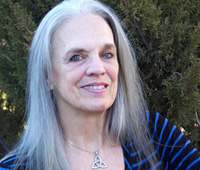
Dr. Heide Goettner-Abendroth is a mother and a grandmother. She earned her Ph.D. in philosophy of science at the University of Munich where she taught for ten years (1973-1983). She has published extensively on philosophy of science, in addition to various books on matriarchal society and culture, and is a founder of Modern Matriarchal Studies.  Her magnum opus: Matriarchal Societies. Studies on Indigenous Cultures across the Globe, (Lang 2012, New York) defines the topic and provides a world tour of examples of contemporary matriarchal cultures. She has been visiting professor at the University of Montreal in Canada, and the University of Innsbruck in Austria. In 1986, she founded the International ACADEMY HAGIA for Matriarchal Studies and Matriarchal Spirituality in Germany is its director. In 2003, 2005 and 2011 she organized three World Congresses on Matriarchal Studies in Europe and the U.S.A. In 2005, she was elected by the international initiative “1000 Peace Women Across the Globe” as a nominee for the Nobel Peace.

ANNA’S DANCE: A BALKAN ODYSSEY by Michele Levy – Book Review by Joyce Zonana

Toward the end of her complex odyssey, Anna finds herself alone in an ancient Istanbul synagogue, where at long last she unreservedly “name[s] herself” a Jew and experiences connection with a God that “fuse[s] both male and female” and “from that wholeness birth[s] mercy and love.” Vowing to work to “help repair [the] world”–tikkun olam–she moves forward to face her life with a “sense of wholeness” that had eluded her for so long.

202002_Zonana_JoyceHow to come to terms with the most maligned or vulnerable aspect of ourselves—whether it be race, ethnicity, religion, gender, sexuality, physical ability, or any other trait—remains among the most pressing questions of our time. Should we try to “pass,” identifying with the oppressor and denying or rejecting who we are? Should we assume a militant, defiant stance, wreaking vengeance on those who have harmed us? Or can we find a way to embrace and affirm ourselves, neither denying nor reifying the pain of our individual and collective pasts? Can we love those who have harmed us?

These are among the questions faced by 23-year-old Anna Rossi, the central character in Michele Levy’s complex, lyrical new novel Anna’s Dance: A Balkan Odyssey (Black Rose Writing, $20.95), set in the turbulent summer of 1968. 

Raised in the U.S. as a non-observant Jew, Anna has nevertheless been seared by anti-Semitism—both the indignities experienced by her parents, and those she has encountered herself. Her mother, a brilliant mathematician, had been denied admission to Purdue’s engineering school— “You’re a woman and a Jew”—and rejected by her Irish-American mother-in-law as a “filthy immigrant Jew.” Growing up in a Northern Virginia suburb, Anna was branded “Miss Israel” in the ninth grade and given low marks by a teacher who insisted she was “not like us.” Later, in college, a professor called her a “Jewish bitch.”

Continue reading “ANNA’S DANCE: A BALKAN ODYSSEY by Michele Levy – Book Review by Joyce Zonana”

Salmon of Wisdom by Judith Shaw

judith shaw photoSalmon, ancient symbol of wisdom and transformation, has been venerated by humankind since our pre-historic days.There exists one cave painting of a life-sized salmon – most likely part of a more complex composition – in the l’Abri de Poisson cave in the Dordogne, France, dated to 23,000 B.C.E.

Continue reading “Salmon of Wisdom by Judith Shaw”

This is What Female Leadership Looks Like! by Vicki Noble


Continue reading “This is What Female Leadership Looks Like! by Vicki Noble”

A Case for Context by Sara Frykenberg


I have a close family member who is staunchly Republican and frequently posts videos from the conservative platform PragerU or “Prager University.” Video topics include: why the Democratic Party is the “real” racist party (as though either party is innocent of racism), the “war on boys” and masculinity, and how feminists don’t care about Muslim women (as though some Muslim women aren’t also feminists), among other issues. You get the picture. It is a propaganda media source founded by radio talk show hosts which creates short videos on every topic there is, presenting the conservative viewpoint as the simple “God’s honest truth” about the issue.

I’ve seen some of these videos. They are as offensive as they are misleading. But one element that is particularly egregious to me is their complete disregard for larger context. Continue reading “A Case for Context by Sara Frykenberg”

Poem to Mary of Magdala by Anne Fricke


The first documented reference of Mary Magdalene as a prostitute was not until 594 C.E in a sermon by Pope Gregory. The Catholic Church has since, in 1969, officially repealed this declaration.

Mary’s gospel has been found, though a few pages are missing. Those are the pages that explain her teachings. We know that her teachings were of transforming powerful emotions (we know the what, but not the how).

The story line of Mary Magdalene as a prostitute is pervasive throughout our culture. If we have that one major detail wrong, imagine what else we are missing.

Did you know the way this would unfold?
Know before knowing how your story would be disguised?
Did you step into the circle, hands splayed in supplication,
ready to receive gifts of wisdom
in exchange for your dignity and your truth? Continue reading “Poem to Mary of Magdala by Anne Fricke”

Yes, There are Goddesses in the Bible – Part 2 by Janet Maika’i Rudolph


As I wrote in my last blog post, there are female deities and goddesses sprinkled all throughout the bible. They just aren’t obviously in plain sight.

One example is the Goddess and Her association with birds. Many ancient creation myths have stories about life emerging from a cosmic egg and the Goddess who carries and/or lays that primordial egg-of-life. Like the bird, women carry the eggs of life’s creation within our bodies. This has given rise to numerous cultural symbolisms that have come down to us associating the Goddess with birds. The dove is Venus’ hallmark. Mother Goose is the keeper of our cultural stories. It is the stork who brings us babies. As I will show below, divinity, or the biblical LORD is sometimes depicted as a bird, making this biblical description of god a female. Continue reading “Yes, There are Goddesses in the Bible – Part 2 by Janet Maika’i Rudolph”

Kamala Harris! “I Feel Heard” by Carol P. Christ

Shortly after Kamala Harris was announced as Joe Biden’s choice for his Vice Presidential running mate, a panel of black women were asked, “How do you feel right now?” “I feel heard” was the simple yet profound response of one of them. As is well-known to those who follow the polls, black women voters are the backbone of the Democratic party. In the primary election, black women in South Carolina delivered the Presidential nomination to Joe Biden. Yet all too often black women have felt that their votes were taken for granted.

Instead of focusing on the needs and priorities of black women and their communities, all too often the Democratic Party’s strategy has been to reach out to other groups—for example working class white men or white suburban women. To feel heard at this moment means to be taken seriously as a political actor and as a person. Right now, the fact that a black woman was selected is what matters most. There were other qualified women and out of all of them. a black woman, Kamala Harris was chosen. And because of this, black women feel heard. It’s about time. Period. Continue reading “Kamala Harris! “I Feel Heard” by Carol P. Christ”

In Sight (Part 2) by Sara Wright


This post follows In Sight (Part 1)

Yet, I was content enough here wasn’t I [living part of the year in Abiquiu, New Mexico]? The desert was starkly beautiful, and I loved the place I lived, doing my best to create a home, planting trees and creating small gardens. I had escaped the too long winters, the heavy physical work associated with them. Yet questions gnawed at me. What did it mean to feel at home? Why the profound feelings of emptiness and lack of clarity? And what about the light?

I couldn’t escape the problem of light. One of the reasons I set out for the river in the dark was because I wanted these walks to end before sunrise. There was a quality of intense light present during the day in the too thin air that I found disturbing. Too much light, air, wind, and on the other extreme, too much stone. The crust of the earth held little in the way of new life in the desert. Survival of any plant species was precarious and dependent on the rains that rarely came. Almost everything I planted ended up dead. The desert had little to offer in terms of containment for people or plants. The sky gods ruled the desert, and did so with an iron will. Stone doesn’t surrender; it is incapable of receiving. This was not a forgiving place. Continue reading “In Sight (Part 2) by Sara Wright”

Judaism or Christianity: Which Tradition Is More Open to Feminist Change? by Carol P. Christ

Jill Hammer’s recent post on midrash surrounding the Biblical figure of Eve (Hava in Hebrew) sparked me to muse again about the fact that, despite its patriarchal roots and overlay, Judaism is a much more flexible tradition than Christianity and, therefore, much more open to feminist change.

Part of this is due to the fact that Judaism is midrashic while Christianity has been and remains a doctrinal tradition. Midrash is a form of Biblical interpretation that includes retelling the story to fill in the blanks and to answer contemporary questions left unanswered in the original text. Jews consider the Torah (the 5 books of Moses) to be the “Word of God” though opinions vary as to what this means. In the rabbinical tradition, the Torah is interpreted through the Talmud which is an extensive collection of discussions and disputes that draw on Biblical texts in relation to contemporary (to the rabbis) questions. Midrash included in the Mishnah (a collection of teachings that preceded the Talmud) and the Talmud are considered part of the “oral Torah.” which is also “the Word of God.”

The Talmud is considered to be authoritative, but it includes conflicting interpretations that were never resolved into a single definitive view. Though different Jewish groups have declared certain views to be normative, other groups have disagreed. There is no central authority (such as a Pope or council) to resolve these disputes. Though some Jewish groups disagree strongly with the beliefs or practices of others, in Judaism as a whole an attitude of “live and let live” leads to inclusion rather than exclusion. Indeed. The Talmud records that in the midst of a particularly vehement dispute between two rabbis, a voice intervened, stating: “These and these are the words of the Living God.” (Quoted by Judith Plaskow in Goddess and God in the World.) Continue reading “Judaism or Christianity: Which Tradition Is More Open to Feminist Change? by Carol P. Christ”