

 Towards the end of Braiding Sweetgrass, mother, biologist, and member of the Citizen Potawami Nation Robin Wall Kimmerer sets out at the end of winter to visit a forest area near her home that she considers hers not in name but in virtue of her love and care for it. On arriving, she discovers that the forest is no more, having been clear-cut by the owner. The wildflowers and the plants she has harvested over the years have sprouted up, but Kimmerer knows that without the forest cover they will be burned by the sun and their places taken by brambles. Continue reading “Meeting the Windigo by Carol P. Christ”
Category: General
Practical Lessons in Kindness from the Grasshopper and the Ant (With apologies to Jean de La Fontaine for significant changes to his fable) by Barbara Ardinger
Note: This story was originally posted early in 2016. I’m posting it again because, thanks to the state of UNkindness the Abuser-in-chief has pasted all over the semi-civilized Semi-United States, we need lessons in kindness more than ever before. I bet you agree with me!

“Curses on that grasshopper!” exclaimed the ever-busy Madame Fourmi. “All he ever does is play. He’ll be sorry when winter comes.”
And so it went. Every day, Mme. Fourmi spent the morning scrubbing her front steps. And Monsieur Cigale?
“Partaaaaayyyyy!” Every day, he sped by on his skateboard. “Hey, Auntie Ant, stop cleaning the concrete and come and play with us. We’re gonna start a band!”
“Not on your life,” muttered this grandmother, most of whose conversations with her many daughters and granddaughters consisted of instructions on how to properly clean their homes and hills and how to prepare and store food for the winter. “Life is serious business, it is, it is. We need to plan ahead.”
New Beginnings: Re-Birthing Myself a Million Times and One by Elisabeth Schilling
 I think being a mother must be an amazing experience. I don’t really know the glimmers and shadows of any life but mine, even though I would be more than happy to listen. Recently, I’ve been reading the poems of Carol Ann Duffy, Scottish poet, U.K. Laureate, and once partner to poet Jackie Kay, and she writes something in one of her poems (“A Clear Note”) that I resonate with: “Never have kids. Give birth to yourself.” It is not Duffy, the narrator, who says this, but a character named Moll.
In the triptych poem, three women—Agatha, Moll, and Bernadette, three generations of women, speak to and about each other through time and space. The quote is just something Moll recalls saying to her daughter, Bernadette one night when she is drunk. I of course do not think a woman cannot give birth to herself if she has children. But it is certainly a good (in my opinion, for I wish it so) excuse for myself, revising this line of verse in my own voice: I will never have kids; I need the entirety of life to birth myself.
Continue reading “New Beginnings: Re-Birthing Myself a Million Times and One by Elisabeth Schilling”
Celtic Awen, Spiritual Homecoming, and Singing with Trees by Trelawney Grenfell-Muir

Does your name have a special meaning? Mine does. In fact, in one corner of the world, you would be very hard pressed to find anyone who did not know the significance of the name Trelawney and its history. They could probably even sing you a rousing song about it:
And shall Trelawny live? Or shall Trelawny die?
There’s twenty thousand Cornish here, will know the reason why![1]
But growing up in New England, no one had ever heard the name Trelawney before, or the name “Cornwall,” the land of Trelawney. If I said “Celtic,” they would finally nod.
Then with the internet came affordable communication “across the pond” to Britain, and my earliest internet explorations connected me with Cornwall, where my grandfather came from. I taught myself Cornish folk songs, I found folktales, recipes, and a more richly detailed cultural nourishment than my Cornish grandfather had managed to pass along to us. A lifelong mystic and Methodist minister, but if you ever asked my grandfather his religion, he would reply, “Druid,” with just that hint of mysterious twinkle in his eye.
Re-reading Mary Shelley’s FRANKENSTEIN by Joyce Zonana
And so is born the “monster” most people associate with the name Frankenstein–a lone and lonely terrorist who lashes out against a world that has no place for him. One by one, he strangles all the people his “maker” holds dear: his brother William, his best friend Clerval, and his cousin/bride Elizabeth. Yet the novel invites us to have compassion for the creature, even while it condemns the society that makes him as he is. Victor, raised by a devoted mother and tenderly loved by a doting cousin, should have known better. As should we.
 A few weeks ago, a former colleague invited me to visit one of his classes, to discuss Mary Wollstonecraft Shelley’s 1818 novel Frankenstein; or, The Modern Prometheus and the essay I’d published about it almost thirty years ago, “‘They Will Prove the Truth of My Tale: Safie’s Letters as the Feminist Core of Mary Shelley’s Frankenstein.” To prepare for that visit, I’ve spent the past few days re-reading the book, and I’m overwhelmed anew by the beauty of Shelley’s language, the brilliance of her plot, and the profoundness of her themes. The book moves me even more today than when I first read it.
Continue reading “Re-reading Mary Shelley’s FRANKENSTEIN by Joyce Zonana”
Logic and Intuition – Antithetical or Cooperative? by Judith Shaw

“Art does not reproduce the visible; rather, it makes visible.”-Klee
An artist is continually making decisions – decisions about subject matter, themes, materials, size. Does one do pre-planning with preliminary drawings are just dive right in? Once those decisions are made then one gets into the nitty-gritty of all the decisions needed to bring a particular piece to completion. But what is the best approach to use in making those decisions – logic or intuition?
Continue reading “Logic and Intuition – Antithetical or Cooperative? by Judith Shaw”
Time to Dismantle the Myth of the Nation State? by Carol P. Christ
 I am a citizen of two countries currently being torn apart by popular nationalism. In Greece, the cry is “Macedonia is only Greek,” while in the United States a nation of immigrants is being told that it must fear being invaded by immigrants. The truth is that the idea of a nation state is a fiction created in the nineteenth century. It is high time to dismantle it.
Here is the Greek case. Phillip of Macedon invaded from the north and created a federation of Greek states in 338 BCE. His son Alexander the (so-called) Great conquered territories extending as far as India before his death in 323 BCE, establishing the seat of his empire in the newly founded city of Alexandria in Egypt. Phillip and Alexander are claimed as Greek, but in fact Phillip forced independent Greek-speaking city states into union under his rule.
Although the Greek language became the lingua franca of the Alexandrian Empire, the people who spoke forms of Greek did not become an ethnically pure free Greek nation under Alexander. Rather they became subjects in an empire ruled by a king that united people of different cultural traditions under a newly imposed Greek language. It is probable that Phillip and Alexander originally spoke a form of Greek, but even this is debated by experts. Continue reading “Time to Dismantle the Myth of the Nation State? by Carol P. Christ”
Dear Mary by Sara Wright
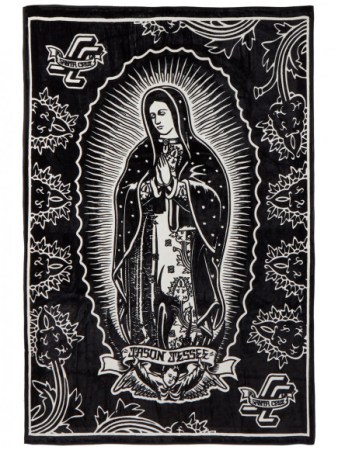
This piece was written in response to Gina Messina’s recent Feminism and Religion piece “Who is God?”
Dear Mary,
When I responded to a post on feminism and religion this morning I wrote that you were my first goddess. As a child I knew little beyond that you were the “Mother of God,” and I found your presence immensely comforting, even seeking you out in secret, entering your rose garden in a local monastery. I needed you so.
Early in adolescence I learned that your life was one of purity, sacrifice, and loss. Your purity left me bereft. How could a young Victorian girl be “good enough” to serve such a figure? I was fierce and passionate – a thorny red rose – with an empty hole in my heart.
Sadly, I released you and chose your sister the whore, the Black Goddess in disguise… but I didn’t know that then; I only knew that the “black” woman succumbed to her flesh as I did, covered herself in shame…What lies Patriarchy tells…
A Meditation on Revolution In the Vagina Monologues by Marie Cartier
“It’s like feminist summer camp, except it’s in February,” said Shaina, the director, “I’m not sure how to re-enter the world.”
I agreed. How to re-enter the world where vaginas have little voice? Where asking a woman what her vagina would wear does not make sense. Or what would it say? It’s not just what would it say, it’s not having a voice at all. My vagina.
I have performed in West Hollywood, California’s production of the Vagina Monologues (to benefit Planned Parenthood, check it out here and here) for the past three years. This year we raised over $5,000.
Continue reading “A Meditation on Revolution In the Vagina Monologues by Marie Cartier”
Who is God? by Gina Messina
 I often say I am a theologian who is uncomfortable with prayer and does not have a relationship with God. What I mean is that I am still trying to figure out how I understand the divine; conventional prayers feel exclusionary and that is not something I want to participate in. Instead, I believe there is so much more to these concepts than traditional theology offers.
I find comfort in Mary, mother of Jesus, Mary of Magdala, Maria Goretti, my grandmothers, and my own mother — in communing with the saints. I feel connected to them. I know what it means to be a woman, a mother, a daughter, and to live in a misogynistic world. Growing up with patriarchal imagery of God continues to influence my perceptions about the divine and I have not yet found a way to develop a sacred relationship with a being I have struggled to view as anything other than oppressive. I am on a journey, and one that often gets pushed to the side in favor of teaching, grading, parenting, writing, cooking, cleaning, laundry…and when I can get it, sleep.
It seems that my nine-year old daughter is also on a journey and having her first crisis of faith. She has come to me with many questions about God lately. Initially she asked if God is real and how we can know. Then she moved on to other questions…and then assumptions. Last week, Sarah came home from school and told me that God is a white man. My heart broke a little. I asked her why she thought that and she responded, “Haven’t you seen all the pictures of God? Duh.” Continue reading “Who is God? by Gina Messina”
 Feminism and Religion