A while back my family and I went up to the mountains to Lake Arrowhead Village. My metaphorical thinking took me on a fantastic mental voyage replicating our way up the mountain. I give thanks to Allah for the power of thought and imagery.
As we ascended the mountain getting closer and closer to Lake Arrowhead Village, that winding road mirrored the road of life, the life of a Muslim, my life.
Our lives are like winding roads, bending left and right, vacillating between high and low levels of faith , right and wrong, sin and repentance, over-consumption and charity, animalistic and angelic, ignorance and knowledge, pride and humility, blessings and trials, and the small and large defeats and victories in battles with our nafs [ego].
Yes, yes, I know; that road we took was just a road, but the symbolism cannot be denied. That road is like the road of belief, the road of knowledge, the road of love, the road of sabr [patient perseverance], the road of success, essentially, the sirat al-mustaqim, the straight path, though there is nothing physically straight about it. Continue reading “The Winding Road of Life by Jameelah X. Medina”
We are entering the season of Imbolc, a liminal time of year in which we experience the turning of the Wheel from winter to spring. Depending on where you live, it can be very difficult to see this change. In colder climates, winter is not over. Here in South Central Texas we can have snow and ice as late as the end of February! I have memories of living in cold climates where winter often continued on into May. What triggered me into an awareness of the coming spring were the beautiful crocus blooms peeking up out of the snow! Seeing that filled my heart with joy and the promise of spring. Continue reading “Imbolc and Transformation by Deanne Quarrie”
“If there are no dogs in Heaven, then when I die I want to go where they went.” ― Will Rogers
I spend a lot of time with my dogs – Collette and Malibu. This month I am thinking a lot and walking a lot – and it occurs to me that in terms of enlightenment we have no greater teacher than a dog, or in my case, dogs.
Deepak Chopra said, “According to Vedanta, there are only two symptoms of enlightenment, just two indications that a transformation is taking place within you toward a higher consciousness. The first symptom is that you stop worrying. Things don’t bother you anymore. You become light-hearted and full of joy. The second symptom is that you encounter more and more meaningful coincidences in your life, more and more synchronicities. And this accelerates to the point where you actually experience the miraculous,” (quoted by Carol Lynn Pearson in Consider the Butterfly). Continue reading “Walking with Gods and Dogs by Marie Cartier”
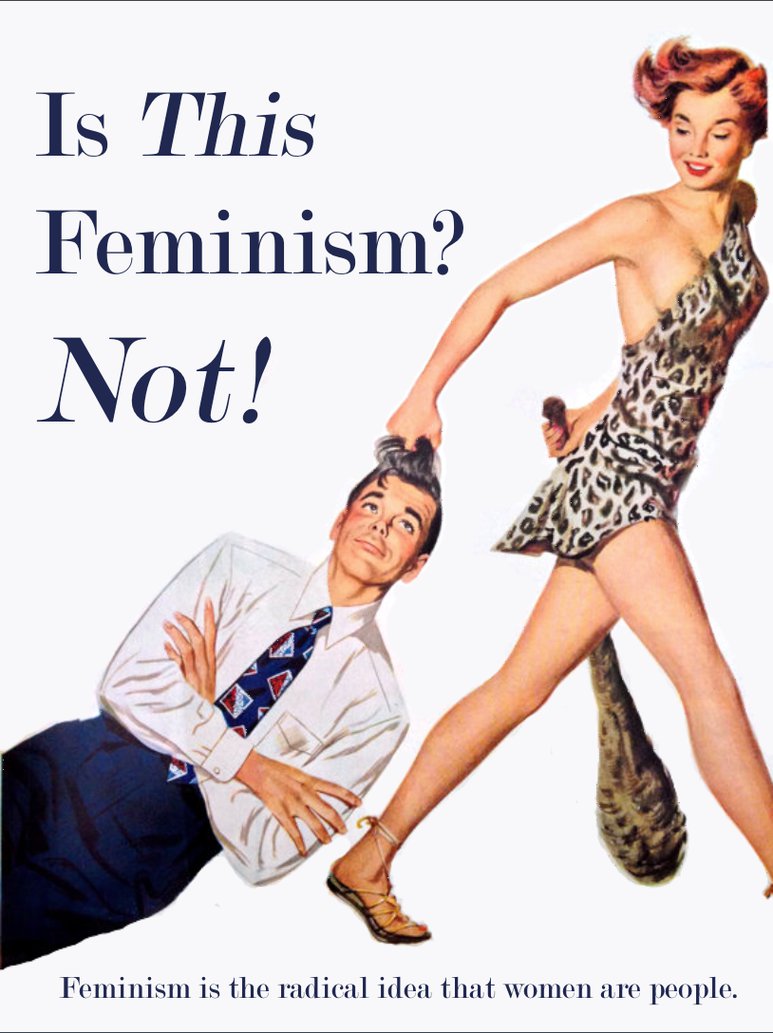
It is so easy to blame feminism for the ills of the world – mainly because of continued misconceptions and misunderstandings about the definition or meaning of feminism. Feminism is responsible for poverty, bad leadership, wars, the polar vortex, the list goes on. Feminism is still considered a derogatory term that serves to incite prejudice against those who label themselves as one. In fact, negative connotations surrounding feminism are exacerbated in today’s culture, especially in the media. Fox News seems to be the poster child of “femiphobia” – a term coined by Stephen Ducat and defined as “wanting to repress every man’s feminine side and demonize the feminine and gay wherever we see them.” Elisabeth Hasselbeck and Nick Adams, in a recent interview, illustrate this femiphobic viewpoint by blaming feminism for raising a culture of “wimps” and “wussies” and thus compromising the U. S.’s national security and weakening its global presence. In other words, feminism is to blame for the problems of the world.
According to Adams, men around the world are no longer allowed to be “manly” and that this phenomenon is a “dangerous” problem:
American men are of course very susceptible to it. It’s really important particularly in America given the leadership role that America has in the world that American men be allowed to be men.
What does in mean to be a man and how is Adams defining that stereotype? While I am aware of the discussion of gender identity and roles even gendered stereotypes, this post is not about what those roles mean. Rather, for this point of discussion, I want to address the issue of masculinity, feminism, and what it means to be a “wimp” as portrayed by popular media.
With that caveat in mind, I ask the following questions:
Is the author suggesting a move to a “hypermasculinity”?
Is Adams identifying masculinity with aggression and violence in a world where feminists and perhaps all women are demonized?
In a society dominated by the “alpha male” character trait,male honor and pride are paramount. Is Fox News telling men to replace so-called passive behavior with pride, abrasiveness, authoritarianism, and arrogance–in such a world if where women are demonized, then assaultand rape will follow. The call for “real men” or “hyper-masculinity” therefore provides a real potential to move us further towards a misogynistic rape culture of violence–in the direction of barbarianism.
Women: Architects and Engineers of a Franciscan World
This New Year’s Eve I find myself attending Mass at St. Austin’s Church in Austin, Texas. A long way from Hawaii and en route to Argentina which gave us Pope Francis. This Mass is also a celebration of the Solemnity of Mary, Mother of God.
This crossing of many currents is perhaps as eloquent a statement as any on where women have traditionally found themselves in the church—up on a pedestal or totally in service to others. Both exalted and silenced. Tradition has not served women in the church as well as women have themselves served the church and the community through many ministries. The male leaders of the church have been happy to raise their eyes heavenward and sing the praises of Mary and the many female saints while consigning the women around them to positions of pure service, if not servitude. Continue reading “Women for a Franciscan World by Dawn Morais Webster”
A few weeks ago, after delivering a sermon, a young woman approached me and said she had a question about my sermon. I of course braced myself for the question as I ran my sermon back over in my head trying to remember what I could have said that might have troubled her in some way. As it turned out, hers was a rather thoughtful question, reflective of an insightful theological observation. She said she noticed as I preached that I never used a pronoun for God. She asked if this was intentional. She went on to say that by not using a pronoun for god I forced her to try to image “the way god is, not the way god looks.” I complemented the young woman for her keen observation and astute theological insight. I responded that my avoidance of pronouns when speaking about god was in fact intentional. I explained to her that given the limitations of our finite language in trying to speak of a god who is infinite, that not only are we better served, but perhaps god is also better served when we avoid pronouns, or even nouns when speaking about god. Why, because we should try to speak about god the way in which god speaks to us. And so this begs the question: How it is that god speaks?
The god in which I have faith does not speak to us as a static being. Rather, god speaks to us as a dynamic, restless force in our world. This, for me, is what god’s revelation in Jesus is all about. The gospel of John tells us that in the beginning was the word and the word was with god, the word was god and the word became flesh. Inasmuch as Jesus is the incarnate word of god speaking to us, then for us to speak about god the way in which god speaks is for us to enflesh that very word that became flesh for us. What then does this mean? How are we to speak about god? Continue reading “How is it That God Speaks? by Kelly Brown Douglas”
Last week I reflected on Angela Yarber’s insightful essay and painting on Jephthah’s daughter. For those who did not read the earlier posts, the story of Jephthah’s daughter is found in the Hebrew Bible. Jephthah’s daughter was sacrificed by her father after he swore in the heat of battle that if his side won, he would sacrifice the first person he would see on returning home. Angela called us to reflect on who Jephthah’s daughter is in our time.
These words make my teeth buzz like the sound of chalk squeaking on a blackboard. I can vividly recall my sister and myself, as children, saying these words through clenched teeth. Not only were we Christians, we were the minister’s daughters. We had no choice. The only other words I hated as much: “I’m sorry,” also forced through clenched teeth.
Oddly enough I cannot recall my older brother being told to ask my forgiveness when he and his friend pummeled me. That fell into the category of: “you egged them on.” My mother did used to say of my brother, mournfully and anxiously: “he doesn’t know his own strength.” Which meant: it isn’t his fault that he hurt you. But my sister and I were supposed to be nice to each other. Continue reading “Beyond Clenched Teeth: Reflections on Forgiveness by Elizabeth Cunningham”
The start of the Spring 2014 semester is right around the corner, which means that many academics like me are madly trying to put the finishing touches on their syllabi.
The process of doing so has always been equal parts exciting and stress-inducing. Right now, however, I am feeling the pain. Why?
In a provocative essay and heart-breaking painting, Angela Yarber asked us to consider who Jephthah’s daughter is in our time. Angela reminded us that Jephthah was a heroic warrior in the Hebrew Bible who swore in the heat of battle that if his people won, he would sacrifice the first person he would see on returning home. That person turned out to be his unnamed daughter.
Reading Angela’s post and looking at her holy woman icon of Jephthah’s daughter, my mind turned to the story of Agamemnon’s daughter. In this case, the daughter is named: Iphigenia. Agamemnon had gathered his troops to sail to Troy, but lack of wind prevented them from setting off. According to the myth, Agamemnon was told by the Goddess Artemis that he must sacrifice his daughter if the ships were to sail. He did.


 A while back my family and I went up to the mountains to Lake Arrowhead Village. My metaphorical thinking took me on a fantastic mental voyage replicating our way up the mountain. I give thanks to Allah for the power of thought and imagery.


 er midrash on the story


