Writing Holy Women Icons by Angela Yarber

angelaFor two years I have had the great privilege of writing a monthly article about one of my Holy Women Icons with a folk feminist twist for Feminism and Religion. Virginia Woolf , the Shulamite, Mary Daly, Baby Suggs, Pachamama and Gaia, Frida Kahlo, Salome, Guadalupe and Mary, Fatima, Sojourner Truth, Saraswati, Jarena Lee, Isadora Duncan, Miriam, Lilith, Georgia O’Keeffe, Guanyin, Dorothy Day, Sappho, Jephthah’s daughter, Anna Julia Cooper, the Holy Woman Icon archetype, Maya Angelou, and many others that will follow in the months and years ahead have guided, empowered, and inspired me as an artist, activist, feminist, scholar, and preacher.

I knew from that outset that writing about them would deepen my relationship with each of these amazing women. I also knew that their power and efficacy monumentally increases when they join together. This colorful cloud of witnesses has filled myriad galleries, reminding viewers of the powerful women who have paved the way for us today. Many have left the group, finding a resting place in the homes, offices, and galleries of friends, colleagues, and strangers who have purchased or commissioned an icon along the way. And those that remain erupt the hallways of my home with a cavalcade of color, daily reminders of who I am called to be and become.

Between researching their stories, painting them, hanging them in galleries, and selling them, I knew that one day I would bind their stories together in a book. So, it is with tremendous joy that this dream has become a reality. Parson’s Porch Publishing, a non-profit publishing house whose mission is to “turn books to bread” by giving their profits to feed the poor, has lifted up the stories and images of nearly fifty of my beloved Holy Women Icons in a book. So, along with originals, commissions, and prints, Holy Women Icons are now available as a book and as individual greeting cards. It is my sincere hope that by binding the stories of these holy women together, they may provide inspiration and empowerment for all readers, binding all our diverse stories together in a collective cry for beautiful, unabashed, prophetic justice for all. Continue reading “Writing Holy Women Icons by Angela Yarber”

A Beltane Story by Barbara Ardinger

Barbara ArdingerOnce upon a time there was a beautiful princess—NO, stop right there. Tales like this do not require princesses. Let’s try again. Once upon a time there was a sturdy young woman who lived in a small town in Mitteleuropa not too far from the castle of the Holy Roman Emperor.

The girl’s name is Madchen. Her parents are a Farmer and a Cunning Woman. She is proud to say that just last fall she actually saw the Emperor, who is a stiff, elderly man who always wears a fussed-up military uniform and a pince nez and has enormous sidewhiskers. The Emperor did not, of course, notice the girl as he sat in his carriage and waved stiffly to his subjects. But what Madchen doesn’t know is that Crown Prince Rufus, whose uniform and sidewhiskers are considerably more modest than his father’s and who was riding on a great red Royal coachstallion in the parade behind his father’s coach, noticed her immediately. That girl, he said to himself, is a girl I must have! Continue reading “A Beltane Story by Barbara Ardinger”

Danu, Celtic Mother Goddess by Judith Shaw

judith Shaw

Danu, of the flowing waters, Queen of the fertile land – Danu, the Great Mother Goddess of the Irish Celts, known as Don by the Welsh Celts, is the Creator Goddess of the Tuatha De Danann, the first wave of Celtic tribes to invade Ireland.   She is also known as Danann, Ana, and Anann.  She gave birth to all life in the land of the Celts.

No stories of Her survive but Her power remains strong. She is the most ancient of all the Celtic deities. In a silver flash of iridescence she appears in my mind’s eye.

As the “Flowing One” She is associated with the seas, wells, springs and the Danube River, gifting Her children the magic of transformation, inspiration, and wisdom. As an Earth Goddess, She bestows abundance and earth mysteries. She embodies the wisdom of living in balance with the Earth. She is sometimes associated with Flidais of the cattle and deer. She is also connected with Brigid, Goddess of Healing, Poetry and Smithcraft, who the original Neolithic people of Ireland worshiped long before the Celts arrived. Continue reading “Danu, Celtic Mother Goddess by Judith Shaw”

Honoring the Sacred Yoni by Deanne Quarrie

Deanne QuarrieThe word Yoni is a Sanskrit word. Translated, it means womb, origin, source, and vulva. It is also known as the divine passage or sacred temple. The Yoni consists of the entire female genital system. Many of us have chosen to use the word Yoni in preference to vagina as it offers us the opportunity to reclaim the sacredness and power of our sexuality as women, as goddesses. The Yoni is where we find Shakti, the universal creative energy.

A woman’s yoni has been worshipped all over the world. In India the yoni is worshipped as the sacred symbol of the Divine Feminine, referred to as the Devi, the Great Goddess, the source of life, the Universal Womb. Continue reading “Honoring the Sacred Yoni by Deanne Quarrie”

THE DIVINE DRAMA AND THE UNIVERSALITY OF DEATH by Carol P. Christ

carol christIn Greece the liturgies of lent and especially of the week before Easter are known as the “divine drama,” in Greek theodrama.  This may refer to the “drama” of the capture, crucifixion, and resurrection of Jesus and to the suffering of God the Father and Mary.

However, it is important to recall that the drama in ancient Greece referred to both the tragedies and comedies, most specifically, those that were performed in the theater of Dionysios in Athens.  While we have been taught that the Greek tragedies celebrated “downfall of the hero” due to his “tragic flaw,” it is important to remember that Dionysios was the original protagonist of the Greek tragedy: it was his death and rebirth that was first celebrated.

Some have argued that the Greek tragedies should never be “read” alone, for they were always “performed” in tandem with the comedies, which were followed by the bawdy phallic humor of the satyr plays.  The tragedies end in death and irreparable loss.  But if the comedies and satyr plays are considered an integral part of the cycle, death is followed by the resurgence of life. Continue reading “THE DIVINE DRAMA AND THE UNIVERSALITY OF DEATH by Carol P. Christ”

What’s Good About Good Friday? by Barbara Ardinger

Barbara ArdingerI grew up Calvinist and Republican in a suburb of St. Louis, Missouri. My parents belonged to—but rarely attended—Immanuel Evangelical & Reformed Church in Ferguson, Missouri. When children reached the age of twelve, they were “confirmed” in the church, which meant taking a Bible class taught by the minister, Rev. Press, and then going through a ceremony that made them eligible to take communion, which in that church was grape juice and tasteless crackers. Transubstantiation? I learned what the word meant, but I had (and still have) no idea if it really happens.

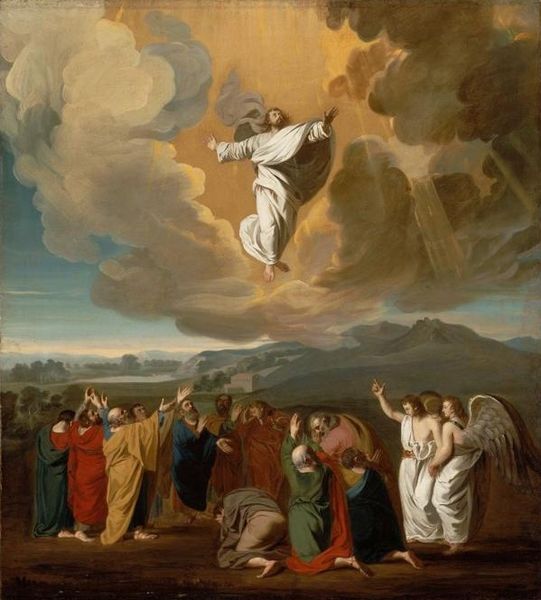
Ascension by John Singleton Copley (1775)

I’ve always been one to ask untidy questions, so of course I asked a lot of questions in confirmation class. God tells us half a dozen times in the Old Testament, for example, that he is a “jealous god.” How, I asked Rev. Press, can a jealous god be a loving god? What’s good about a jealous god? (A couple decades later, when I was studying the Aramaic Bible as translated by George M. Lamsa from the Pshitta manuscripts, I learned that the correct word is “zealous.” That was no help. I still don’t see much good in either jealousy or zealotry.) A week or two later, I asked Rev. Press, “What’s good about Good Friday?” Shortly thereafter, my mother advised me to stop asking questions in confirmation class. (Can we assume she’d received a pastoral phone call?) Continue reading “What’s Good About Good Friday? by Barbara Ardinger”

IS EVIL PART OF THE NATURE OF REALITY AND DIVINITY? by Carol P. Christ

 carol-christWhat is the origin of evil? Is it innate in human nature or even in the nature of the universe? Judith Plaskow and I discuss this question in our forthcoming book Goddess and God in the World and this is a chance to listen in our conversation.

I am responding to Judith’s allegation that in imagining Goddess as loving and good I am fantasizing an ideal deity who exists apart from the evil-and-good world that we know. Judith speaks of an “evil impulse” in human beings which she considers to be innate in human beings and in the nature of reality. Judith says that my “defense” of the goodness of God comes down to “the traditional free will defense.” She also questions my view that human beings can 

I argue that it does not because the traditional free will defense imagines an omnipotent God who existed before the creation of the world. Then I continue:

I think what you meant to say is that like those who invoke the traditional free will defense of the omnipotent God, I attribute humanly chosen evil entirely to human beings—and not to Goddess or God. Continue reading “IS EVIL PART OF THE NATURE OF REALITY AND DIVINITY? by Carol P. Christ”

The Bee Goddess Calls by Judith Shaw

judith ShawSpring arrived in the Northern Hemisphere and all of Goddess’s children are waking up from our winter slumbers.  Birds are singing, fruit trees are blossoming, bees are buzzing, and early spring bulb flowers are in full bloom.  Signs of spring fever are evident as we find ourselves full of energy and vitality for new projects and relationships.

As new life emerges from the Earth we can more easily reflect on our place in the greater scheme of life.  It’s a good time to question the values of our consumer society and ask if there is another way.

In contrast to these values of domination, separation, and consumption, ancient wisdom traditions teach that we are all connected – to each other, to all life, to the whole natural world and to the spiritual cosmos. Continue reading “The Bee Goddess Calls by Judith Shaw”

Women’s Ritual Dances: The Dancing Priestess of the Living Goddess by Laura Shannon

Laura ShannonKyria Loulouda calls to her sister to help her wind the yards of woven girdle around and around my waist. Kyria Stella’s aged fingers, still strong, tuck the sash ends in tightly, smoothing down the fabric she and Loulouda wove themselves. The snug embrace of the sash supports my back and encourages me to stand proudly upright.  As they help me with the intricate tucks and pleats of the festival dress, and the careful tying of the flowered headscarf, I see their tired, careworn faces come alight with joy and expectation. When they are satisfied, they turn me towards the mirror, smiling.

We gaze at ourselves, a row of three women, dressed alike. Like the butterflies embroidered in bright silks on the dark cloth of the bodice, we too are transformed. The food is prepared, the housework is done, the animals taken care of for the night; the other women await us in the square where, by tradition, they will open the dance with their own singing as they have done countless times throughout their lives. We are in the village of Pentalofos in Greek Thrace in the early twenty-first century, living a timeless scene which has been repeated through the generations for hundreds, perhaps thousands of years. Continue reading “Women’s Ritual Dances: The Dancing Priestess of the Living Goddess by Laura Shannon”

TWO TORTOISES IN THE WEB OF LIFE by Carol P. Christ

carol-christThe Gods made only one creature like them—man.  Greek TV documentary

The sight of a reptile or an amphibian usually provokes, at the very least, a feeling of repulsion in most people. Natural History of Lesbos

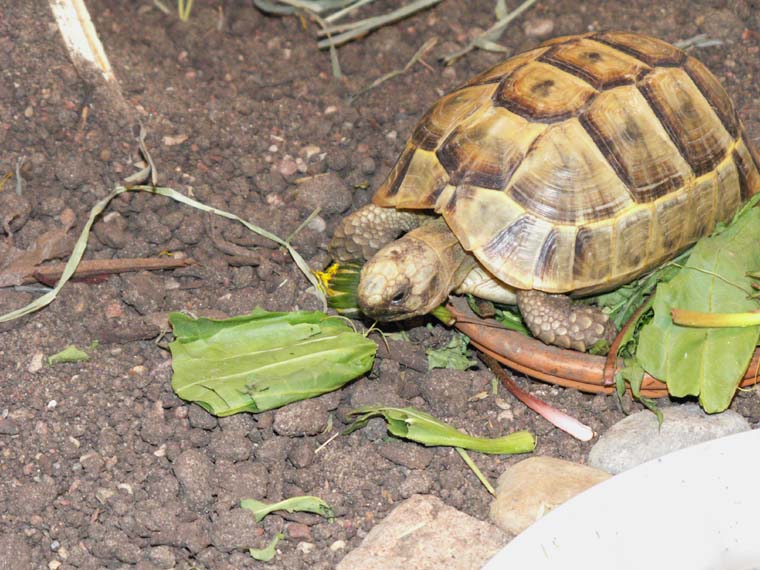
In the past days and weeks the two tortoises with whom I share my garden have woken up from a long winter’s sleep.  Henry, testudo marginata, has been up for a while now.  More than a month ago when I was cutting back and weeding in the area of the garden where he had been sleeping, Henry roused himself to sit in the sun near me for a few hours each day before creeping back under a shrub.  At first I thought I had disturbed him, but when he came back out day after day while I worked, I began to wonder if he was coming out to say hello.

KONICA MINOLTA DIGITAL CAMERAScotty, testudo graeca, was nowhere to be found.  As I moved my work around the garden, I did not find him in the corner where he had slept the previous winter.  This worried me slightly, but I figured he must be under the rue in the one area of the garden still to be trimmed back.  Imagine my surprise when I almost tripped on him on my way down the stairs to the cellar.  Clever boy, he must have found the garden entrance to the cellar open one day in early winter and slipped in.  The fact that I found him at the foot of the stairs and not in a dark corner was evidence that he too had heard the call of spring.

What we love we protect and what we know we love.  Natural History of Lesbos Continue reading “TWO TORTOISES IN THE WEB OF LIFE by Carol P. Christ”