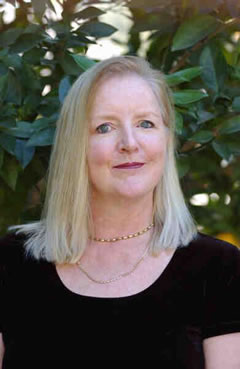
The Found Goddesses of Good Eats by Barbara Ardinger

August 1—Lughnasadh (pronounced LOON-us-uh) or Lammas—is the first of the three traditional harvest festivals of the traditional Celtic calendar that most pagans follow today. And what naturally follows harvest? Feasting, fairs, and festivals. To help us celebrate the season, here are two Found Goddesses of good eating. The term “found goddesses” was created in 1987 by Morgan Grey and Julia Penelope, authors of a hilarious book titled Found Goddesses. After reading this book and having never met a pun I didn’t instantly love and being of a naturally satirical state of mind, I started Finding—i.e., inventing—my own goddesses shortly before the turn of the century. After I found a hundred of them, they were published in 2003 in my book, Finding New Goddesses.

When Xochitl Alvizo wrote here about the philosophy of vegetarianism and veganism in late June, I was inspired to contribute to the conversation. Although I understand the philosophy of not eating meat, I’m still a meat eater. (Though I don’t go quite as far as the so-called paleo diet.) Yes, it’s an issue of consciousness. I admit it. I just refuse to think about cows and sheep and chickens when I’m eating. But I refuse to eat lobster (because they’re cooked alive) or veal (because of how the calves are treated). I guess I’m not very consistent, and I suspect I’ve just settled for the hungry coward’s way out of the diet dilemma. Continue reading “The Found Goddesses of Good Eats by Barbara Ardinger”

Aine, Summer Goddess of Love, Light and Fertility by Judith Shaw

judith Shaw photoAine, (pronounced AW-neh), was originally worshipped as a Sun Goddess. Like so many goddesses and gods, Aine has assumed many other roles over the years, being seen as a Moon Goddess, a Goddess of Love, a Fertility Goddess, a Healing Goddess, and a Sovereignty Goddess. Aine is also known as a Faery Queen. She is often called Aine, Goddess of Love, Light, and Fertility.  Her name means “brightness, glow, joy, radiance; splendor, glory, fame” and she is associated with the abundance of summer.

Continue reading “Aine, Summer Goddess of Love, Light and Fertility by Judith Shaw”

THE LABRYS: A RIVER OF BIRDS IN MIGRATION by Carol P. Christ

carol-christ“There’s a river of birds in migration, a nation of women with wings.” Goddess chant, Libanalabrys seal ring

On the Goddess Pilgrimage to Crete, I explain that many of the names given to “Minoan” (c. 3000-1450 BCE) Cretan artifacts and architecture are products of patriarchal and Eurocentric imaginations, and as such, are misleading.  For example the name “Minoan” was given to the culture of Bronze Age Crete in honor of “King Minos,” who was said to have ruled in Crete a few generations before the Trojan War–several hundred years after the end of the culture to which his name was attached.  In fact, despite his eagerness to find evidence that King Minos ruled at Knossos, the excavator Sir Arthur Evans finally had to concede that the best he could do was to produce a fresco of a “Prince of the Lilies” which he identifed as the image of the male ruler of the culture he called “Minoan.”  Evans’ Prince had white skin, a fact that Evans conveniently overlooked–because according to his own interpretation of “Minoan” iconography, white skin would mark the figure as female.  Mark Cameron, who reviewed Evans’ reconstruction of the fresco, suggested that the Prince is more likely to be a young woman who is perhaps leading a bull to take part in the bull-leaping games.  He also stated that the “crown” belonged to another fresco altogether.

Evans’ failure to find evidence of a King or for that matter a Queen at the complex of buildings he called “The Palace of Knossos” calls into question his idea that these structures were palaces.  Nanno Marinatos argued that the “palace” was instead a ritual center for the surrounding village, as well as a community gathering place, a place for storing grain, wine, and oil in a sacred way, and a place where ritual objects were fashioned of clay, bronze, stone, and gold.  Following her lead, I renamed the “Palaces” “Sacred Centers.” In this blog I will experiment with renaming the “Minoan” culture “Ariadnian,” after the pre-Greek name Ariadne, which may be one of the names of the Goddess of Bronze Age Crete.

One of the most pervasive–and many would say–most enigmatic symbols of the Ariadnian culture is the labrys.  Continue reading “THE LABRYS: A RIVER OF BIRDS IN MIGRATION by Carol P. Christ”

Tailtiu, Primal Earth Goddess for this Season by Deanne Quarrie

Deanne QuarrieWe are approaching the season of Lughnasadh, also known as Lammas.  This is the first of three harvest festivals.  This one focuses on what we call the “first fruits”, those fruits, vegetables and grains ripening early in the season. The other two are Mabon and Samhain, one celebrating the harvest of the last crops and the next that of the herd animals sacrificed to feed the tribes. Continue reading “Tailtiu, Primal Earth Goddess for this Season by Deanne Quarrie”

Two Ultimates: The Ground of Being and Goddess by Carol P. Christ

carol p. christ 2002 colorThe concept of two ultimates, the ground of being and Goddess, can be helpful in understanding differences of emphasis within and among religions.  Some religions or strands within religions focus on relationship with or worship of a personal God, while other religions or strands within religions focus on identifying with or merging with the impersonal ground of being or the whole of which we are part.  These two ultimates are found in feminist spiritualities and theologies.

In “Being Itself and the Existence of God”* process theologian John Cobb identifies two ultimates.  The ground of being as the metaphysical principles that structure all of life is unchanging; as the whole of which individuals are part, the ground of being is impersonal.  God, on the other hand, is an active presence in the world, is personal, and cares about individuals in the world.  If God is understood to be in some sense an individual in relation to other individuals, then God cannot be identified with the whole, because the whole is made up of God and other individuals.  Yet God is not simply one individual among other individuals.  Only God has perfect knowledge of the world and every individual within it and only God cares for the world in light of perfect knowledge of it.

I find Cobb’s notion of two ultimates helpful in understanding some of the differences in feminist views of Goddess and God.  Some spiritual feminists, especially Goddess feminists, view the sacred as the whole of which we are a part, structured by the seasons and cycles of birth, death, and regeneration.  Starhawk’s tree of life meditation in which the individual identifying with the tree draws energy from its ground imagines Goddess as the ground of being and life.  Z Budapest’s song “We all come from the Goddess, and to Her we shall return” connects us to the cycles of birth and death.

The view of Goddess as a personal presence who loves, understands, and inspires us to love is based on the notion of God as a person with whom individuals are in relation.  Jennifer Berizan invokes a Goddess who cares in her song “She Who Hears the Cries of the World,” addressed to the Goddess in the form of Chinese Goddess Kwan Yin.  Prayer to Goddess and a sense that She is always with us are based on the idea of a relational, personal God.  According to Cobb religions do not have to choose between the two ultimates. If both are real, then religions can and should recognize both.  Continue reading “Two Ultimates: The Ground of Being and Goddess by Carol P. Christ”

Where Does Poetry Come From? By Barbara Ardinger

Poetry is a gift from our ever-creating goddess, but you know what? She also has a major sense of humor. Nearly every night, I go to bed, pet the cats awhile, and think I’m going to go right to sleep. And what happens? Words happen. Beginnings of blogs. (This one. Last night.) Lines of dialogue or description that will end up in my revisionist fairy tales. First lines of poems. Most nights, I “talk” myself to sleep.

 Because the Goddess is endlessly, continuously creative and her art is our blessed planet, so are all her children creative, and so am I also creative and kinda artsy, too. I learned to embroider when I was about seven years old. I learned to sew, I learned to knit, I learned to crochet. For years I crocheted granny-square afghans, but I ran out of people to give them to about ten years ago. As a child, I sat on my father’s workbench and learned to work a little with wood. I started taking piano lessons the day after my sixth birthday. Although my mother and my brother were artists, I missed out on that talent, but made up for it by taking a right-brain drawing class and doing a magnificent contour drawing of a brussels sprout. I don’t remember when I couldn’t read, and I’m told that I started writing fiction when I saw seven years old and wrote a story for my daddy. Along the way, of course, I’ve also learned a lot of very practical creative skills, of course, like touch typing. Continue reading “Where Does Poetry Come From? By Barbara Ardinger”

What’s Your Super Power? (And Who’s Allowed to Have It?) by Sara Frykenberg

Sara FrykenbergI recently went to see Zack Snyder’s Man of Steel.  I saw it two times actually.  Readers familiar with my posts about cosplay and video gaming will not be surprised to learn that I am also a fan of comic book heroes and heroines; and Superman was my childhood favorite.

I was both attracted to and wanted to be like Superman, specifically, Christopher

Christopher Reeves as "Superman."
Christopher Reeves as “Superman.”

Reeves’ Superman.  One of my strongest childhood desires was also to fly like a bird.  I remember jumping off the end of my parent’s bed over and over again, convinced that if I flapped hard enough and kept on trying that I could fly.  The older I got, the more I realized that I also did not want to be “rescued” by Superman.  Rescue from the difficulties in my life was an unattainable fantasy.  So, I desperately wanted to be Superman.  Though I knew this too was impossible, perhaps I had only to try. Continue reading “What’s Your Super Power? (And Who’s Allowed to Have It?) by Sara Frykenberg”

Emergence and the Spirituality of the Sacred Feminine by Anne Kathleen McLaughlin

goddesses
Kathleen and Marie (R-L)

Kathleen and Marie are friends who met at the event in Canada that inspired this post. Marie has given her monthly spot on Feminism and Religion to Kathleen so she can share her reflection with you. 

Emergence: the universe flares forth out of darkness, creating, over billions of years, through trial and error and trying again, astounding newness: carbon for life in the middle of a star…. the birth of planets, our earth holding what is required for life to emerge…. the creation of water from hydrogen and oxygen….the emergence of a cell with a nucleus.

Each of these seemingly impossible happenings did happen, offering us humans the hope that the impossible tasks confronting us in our time can be creatively addressed, showing us, as Brian Swimme expressed it, a domain of the possible beyond imagination. Our human endeavour has been powered by non-renewable energy resources. Our task now is to reinvent the major forms of human presence on the planet in agriculture, architecture, education, economics…. We need to align ourselves with the powers of the universe, consciously assisting, amplifying, accelerating the process of creative endeavour. Continue reading “Emergence and the Spirituality of the Sacred Feminine by Anne Kathleen McLaughlin”

Fire, Her Bright Spirit by Deanne Quarrie

Deanne QuarrieIn Celtic Tradition our world is composed of Three Realms, those of Land, Sea, and Sky. In the midst of these Realms we find the Sacred Grove, the place of flowing together. There the Sacred Fire burns, by the Well of Wisdom, beneath the World Tree. Sacred Fire is that which weaves itself throughout the Three Realms.  It connects us and all of life to the Realms as well as to our gods and goddesses.  Fire is Sacred Spirit, Sacred Inspiration, without which life would have no meaning.

Fire is the spark, the flame, the heat of passion.  It is what ignites our creativity, fuels our passion and fires our hearts to love.  It is the Dance of Life, the joy found in movement, sexual energy and the warmth that germinates new life in seeds. It is the warmth of sunlight on our skin and the ecstatic pleasure of orgasm. Continue reading “Fire, Her Bright Spirit by Deanne Quarrie”

Sulis, Celtic Sun Goddess of Healing and Prophecy by Judith Shaw

judith Shaw photoAs we approach the summer solstice, the longest day of the the year, I find myself reflecting on my love of the long, hot days of summer.  The bliss of lying on a beach caressed by the kisses of sun and breeze, with the promise of the cool inviting embrace of the sea by my side, is one of my most favorite forms of relaxation.  Though the ozone layer has thinned and I can only indulge this desire in small doses now, I still love the feeling of the sun on my skin as She paints colored visions in my mind’s eye.

Sulis painting by Judith ShawShe –  how can I personify the sun as She when from across the world we hear only of Sun Gods and Moon Goddesses?  Yet hidden deep in mythology one discovers that long, long ago the sun was worshipped as a goddess. From Aditi – Hindu Solar Goddess from India to Uelanuhi – Cherokee Goddess of the Sun, the sun Goddesses symbolize, with female imagery, the power and life force of the sun. Aditi was seen as the  keeper of the light that illuminates all life and ensures consciousness. She was the source of all, giving birth to the universe and the heavenly bodies. Uelanuhi was responsible for dividing time into units. She was aided by Grandmother Spiderwoman’s web to capture the sun’s warmth for humankind. Continue reading “Sulis, Celtic Sun Goddess of Healing and Prophecy by Judith Shaw”