Painting Lottie Moon, Redeeming Lottie Moon by Angela Yarber

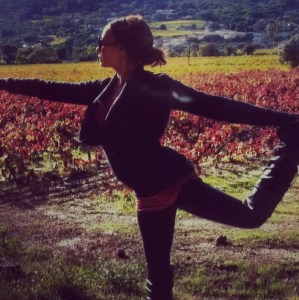
angelaI never imagined I’d paint her. Though I was not raised in church, I have vivid memories of worshiping in Southern Baptist Churches, churches where women’s voices were not permitted behind the pulpit, churches where women could never dream of ordination, churches that damned LGBTQ folks to hell with a pound of a fiery fist on a well-worn bible perched atop an angry pulpit. Canonize a Southern Baptist woman into the sainthood of Holy Women Icons? No, thank you.

Though I am an ordained Baptist minister myself, it’s important to remember that there is a vast spectrum of belief and practice when it comes to the Baptist church. Because our polity is non-hierarchical and we are anti-creedal, one cannot easily say, “All Baptists believe ______ or all Baptists practice _______.” Whether you are as conservative as the Southern Baptist Convention or as liberal as the Association of Welcoming and Affirming Baptists, we all share some core Baptist distinctives: the separation of church and state, believer’s baptism, the autonomy of the local church, freedom of conscious, and the priesthood of all believers. Learning of these distinctives as a young feminist searching for a faith to call my own, I was immediately drawn to the core Baptist tradition. They reject hierarchy. All are supposed to be equal. It is up to the individual conscious to determine what one believes. And it is up to the individual church to determine how that particular community of faith will practice those beliefs. It is feminist to its core. Southern Baptists feel otherwise, which is why they refrain for ordaining women and claim that they should be submissive to their husbands.

Continue reading “Painting Lottie Moon, Redeeming Lottie Moon by Angela Yarber”

The Lesbian Bar of “The Lord is With You All…” by Marie Cartier

puerto rico-marie cartierWhile attending the recent National Women’s Studies Conference this past month, I had a unique and –yes—a religious experience.

I was staying with a friend who (luckily for me) owns a home in Puerto Rico. I saw more of Puerto Rico in four days then I believe many might see on a two week vacation! I saw the ocean, swam in the ocean, walked all over Old San Juan with its blue streets, gambled and danced salsa at the famous Hotel San Juan, ate amazing food (especially at my friend’s sister’s restaurant Mom and Dad’s Café) —and of course went to the conference.

And I went to an “old school” lesbian bar. A bar where women loving women gather who were diverse in age—ranging from women in their twenties to women in their fifties and sixties.

My friend said this is the best lesbian bar in Puerto Rico. I brought three friends of mine with me from the conference—wanting to share the wealth of experience that my Puerto Rican friend was allowing me to have with others.

We danced in Spanish to “Last Dance,” danced salsa, ate empanadas—I was already having a somewhat religious experience when I met the owner of the bar—Mildred. Continue reading “The Lesbian Bar of “The Lord is With You All…” by Marie Cartier”

Reclaiming the Feminist Beginnings of America’s Thanksgiving by Michele Stopera Freyhauf

Freyhauf, Feminism, Religion, Durham, Old Testament, Blogger, Bible, Gender, Violence, Ursuline, John CarrollFor those who are unaware of my research focus and methodology, I try to use history to reconstruct or reclaim the feminine voice through more of an exegetical lens rather than an eisegetical or ideological lens. When it comes to Thanksgiving, I have yet another opportunity to restore credit to or at least bring visibility back to a woman who fought for Thanksgiving to be recognized as a national holiday on the last Thursday of November. Her works, though plentiful and sometimes known only by title, are largely forgotten to history; Sarah Josepha Buell Hale (1788-1879) is responsible for Thanksgiving becoming a national holiday in the United States.

Certainly, I do not have to go into the disparity that befell women during the 1800’s when it came to education and overall fundamental rights – that is a history with which we are all well familiar. Hale was educated through her brother, Horatio Gates Buell, who shared his education while attending Dartmouth College and “seemed very unwilling that [Hale] should be deprived of all his collegiate advantages,” and through her husband, David Hale, a lawyer who helped her cultivate her writing skills in the evenings. They even established a small literary club with their friends that allowed her to write. Hale was left a widow at a very young age with five children, the oldest age 7. Hale, like so many women during that time period, had to find a way to support herself and her family.

Sarah Josepha Buell Hale

After authoring a book of poems with her sister-in-law, The Genius of Oblivion and Other Original Poems, Hale, in 1827, published her first novel called Northwood – a book published the same year as Uncle Tom’s Cabin that also challenged slavery. From fame gained through this novel, Hale obtained a job as an editor of a women’s magazine, Ladies Book (later Godey’s Ladies Book then American Ladies Magazine), where she worked for about 40 years. She wrote about half of the material contained in the magazines, as a means of helping to educated women. Hale helped to discover and promote such authors as Edger Allen Poe, Nathaniel Hawthorne, Harriet Beecher Stowe, Lydia Maria Child, Catherine Sedgwick, Lucretia Mott, Emma Willard, Susan B. Anthony, Henry David Longfellow, Ralph Waldo Emerson, and Oliver Wendell Holmes.

She is credited for helping to establish Vassar College for women and wrote the familiar child’s poem “Mary had a Little Lamb” in 1830 (Poems for Our Children, republished in Juvenile Miscellany), Traits of American Life, which contained the story of “The Thanksgiving of the Heart:”

Continue reading “Reclaiming the Feminist Beginnings of America’s Thanksgiving by Michele Stopera Freyhauf”

Max Dashu: Feminist Scholar, Author, Historian, Artist by Jassy Watson

JassyI had the honour of hosting Max Dashu, Feminist Scholar, Historian and Artist here at Goddesses Studio this weekend past. Max is currently on her second Australian tour and we were blessed for her to come on quite the journey to present to an intimate group of Wide bay Goddesses, “Rebel Woman Shamans: Women Confront Empire” and “Deasophy: Goddess Wisdom” with a little “Female Iconography” thrown in.

Max’s knowledge and gift of story-telling is inspirational. “Rebel Woman Shamans: Woman Confront Empire” looked at holy women and female prophets who led many rebellions to resist conquest, slavery, and colonization. These women visionaries, priestesses, diviners and medicine women challenged systems of domination on multiple levels and drew on their cultural traditions to resist empire. It was their direct access to transformative power that these women had, that makes the spiritual political, as they act to lead, defend, and protect their peoples. Continue reading “Max Dashu: Feminist Scholar, Author, Historian, Artist by Jassy Watson”

The Descent of Inanna to the Underworld by Deanne Quarrie

Deanne QuarrieInanna provides a many-faceted image of the feminine. She is a goddess of order, fertility, grains, love, war, heaven and earth, healing, and emotion. She is called the “Lady of Myriad Offices”. Most of the powers once held by her, “the embodied, playful, passionately erotic feminine; the powerful, independent, self-willed feminine; the ambitious, regal, many-sided feminine” were eroded by the patriarchy throughout time.

Her descent to the Underworld is a valuable story at any time of the year but even more so here as the wheel turns fully into the dark of the year. During the dark of the year, we are to turn inward, our most introspective work is to be accomplished at this time. It is vital that we enter the darkness as did Inanna, bare and bowed low. Continue reading “The Descent of Inanna to the Underworld by Deanne Quarrie”

Writing: Changing the World and Ourselves. By Ivy Helman

I still remember the first tim20140903_180423e I read Mary Daly’s Gyn/Ecology. It awoke something within me. Her use of language, the power of her writing and the ease with which she created new words taught me so much about the world around me and about the way the language, and subsequently its use in writing, shapes lives, choices, abilities and destinies. She also taught me about myself.

I was hooked, but not just on Mary Daly. Shortly after I finished her book, I moved onto other feminists writing about religion like Katie Cannon, Judith Plaskow, Alice Walker, Carol Christ, Rita Gross, Gloria Anzaldua, Audre Lorde, Adrienne Rich, Margaret Farley and Starhawk to name just a few. All of them, in fact every feminist I’ve ever read, has shown me the way in which words have power and how words speak truth to power. Ever since, I’ve wanted to be the kind of writer whose words carry a power that not only affects people but also inspires a more just, more equal, more compassionate and more humane world. In other words, I wanted to be a writer activist.

Yet, I’ve always carried around with me a sneaky suspicion that people don’t consider writers true activists. If you aren’t holding a sign, screaming or participating in some sort of public demonstration or civil disobedience, then you have no right to call yourself an activist. Is that really true? Continue reading “Writing: Changing the World and Ourselves. By Ivy Helman”

Painting Tiamat/Tehom by Angela Yarber

angelaToday I am honored to give a lecture on “Queering Iconography: Holy Women Icons from Sappho to Pauli Murray” at the North Star LGBT Center in Winston-Salem, NC. So, I want to continue the theme of featuring some of my queer Holy Women Icons. Joining Virginia Woolf , the Shulamite, Mary Daly, Baby Suggs, Pachamama and Gaia, Frida Kahlo, Salome, Guadalupe and Mary, Fatima, Sojourner Truth, Saraswati, Jarena Lee, Isadora Duncan, Miriam, Lilith, Georgia O’Keeffe, Guanyin, Dorothy Day, Sappho, Jephthah’s daughter, Anna Julia Cooper, the Holy Woman Icon archetype, Maya Angelou, Martha Graham, Pauli Murray, La Negrita, and all my other Holy Women Icons with a folk feminist twist is the often overlooked and misunderstood primordial goddess of creation: tehom.

In Genesis 1 we read, “In beginning, God created the heavens and the earth, the earth was a formless void and darkness covered the face of the deep, while a wind from God swept over the face of the waters.” It is the creation narrative held dear, formative, and meaningful for countless Jews and Christians. Interestingly, this word, deep, in Hebrew is tehom. Tehom translates as “deep or depths,” but it’s also a cognate for Tiamat, a Babylonian Goddess of creation. Out of the face of the deep, the world begins. Out of tehom, God creates. Out of Tiamat, the earth comes into being. This dancing Babylonian goddess syncretistically intermingles with the creation myth so pivotal to the faith of Christians and Jews in a way that could be terrifying, or beautiful, or—like the chaotic body of Tiamat that brings the world into being—both. Continue reading “Painting Tiamat/Tehom by Angela Yarber”

“THE OLD RELIGION” OR A “NEW CREATIVE SYNTHESIS”? by Carol P. Christ

carol christIs Goddess feminism an old religion or a new creative synthesis? Can it be both?  Goddess feminism draws on the feminist affirmation of women’s experiences, women’s bodies, and women’s connection to nature; the feminist critique of transcendent male monotheism as the symbolic expression of male domination of women and nature; and 19th and early 20th century discussions of Goddesses and matriarchy.

Most Goddess and other spiritual feminists have experienced Wiccan rituals, which are often simply called Goddess rituals.  For many of us, elements of Wiccan practice strike a chord of knowing, while other aspects seem odd or strange or even just plain weird.  What are the roots of Wiccan ritual?

In their syntheses of women’s experiences, ancient Goddess religions, and feminism, Z Budapest and Starhawk drew upon the earlier creative synthesis of the Englishman Gerald Gardner which he variously called “the Old Religion,” “Witchcraft,” and “Wicca.” Continue reading ““THE OLD RELIGION” OR A “NEW CREATIVE SYNTHESIS”? by Carol P. Christ”

Painting Martha Graham by Angela Yarber

angela

Joining Virginia Woolf , the Shulamite, Mary Daly, Baby Suggs, Pachamama and Gaia, Frida Kahlo, Salome, Guadalupe and Mary, Fatima, Sojourner Truth, Saraswati, Jarena Lee, Isadora Duncan, Miriam, Lilith, Georgia O’Keeffe, Guanyin, Dorothy Day, Sappho, Jephthah’s daughter, Anna Julia Cooper, the Holy Woman Icon archetype, Maya Angelou, and all my other Holy Women Icons with a folk feminist twist  is the dancing revolutionary Martha Graham. So, as the contemporary and modern dancers on So You Think You Can Dance continue to amaze us this summer, let us remember from whence they came.

Martha Graham’s contribution to the world of dance cannot be overestimated. She is regaled as the Picasso of the dance world, revolutionizing it by introducing an entirely new quality of movement known as modern dance. Not only did Graham revolutionize the dance world, like Isadora Duncan before her, she also made great contributions to feminist spirituality. One of her most famous statements may well have been “wherever a dancer stands is holy ground.” Like most dancers who are so in tune with their bodies, Graham new the holiness therein, the ways in which the body can express the ineffable when words alone simply cannot. “The body never lies,” she famously reminds us.

Martha Graham Continue reading “Painting Martha Graham by Angela Yarber”

COMPLICATIONS AND CONFUSIONS IN DISCUSSIONS OF THE GODDESS by Carol P. Christ

carol christAlthough writing in patriarchal Greece from a patriarchal perspective, Hesiod said in his Theogony or Birth of the Gods that Gaia or Earth alone was the mother of the Mountains, Sky, and Sea. With the male Sky she gave birth to the next generation of deities known as the “Titans,” who were overthrown by Zeus. Hesiod’s was a “tale with a point of view” in which “it was necessary” for the “forces of civilization”–for him represented by warrior God and rapist Zeus–to violently overthrow and replace earlier conceptions of the origin life on earth and presumably also to overthrow and replace the people and societies that created them.

With the triumph of Christianity in the age of Constantine in the 4th century AD, Christus Victor replaced Zeus in the cities, while the religion of Mother Earth continued to be practiced in the countryside. Over time, many of the attributes of Mother Earth were assimilated into the image of Mary, and priests began to perform rituals earlier dedicated to Mother Earth, such as blessing the fields and the seeds before planting. In the Middle Ages “the Goddess” re-emerged within Western Christianity in devotion to the Virgin Mary, the female saints, and figures such as Lady Wisdom, at the same time that the history of the Goddess was being erased.

In the middle of the 19th century, in Das Mutterrecht (The Mother Right), J. J. Bachofen stunned the scholarly world with his theory that matrilineal kinship, matrilineal inheritance, and reverence for the Great Mother were to be found at the origins of civilization. Bachofen challenged the view that patriarchy and the worship of male Gods had existed “from the beginning .” Continue reading “COMPLICATIONS AND CONFUSIONS IN DISCUSSIONS OF THE GODDESS by Carol P. Christ”